Tu Zhanhan, Gormley Jack, Sheth Viral, Seydel Karl B, Taylor Terrie, Beare Nicholas, Barrera Valentina, Proudlock Frank A, Manda Chatonda, Harding Simon, Gottlob Irene
Department of Neuroscience, Psychology and Behaviour, Ulverscroft Eye Unit, University of Leicester, Robert Kilpatrick Clinical Sciences Building, Leicester Royal Infirmary, Leicester, LE2 7LX, UK.
Department of Eye and Vision Science, Institute of Ageing and Chronic Disease, University of Liverpool, Member of Liverpool Health Partners, Liverpool, UK.
Sci Rep. 2021 Aug 3;11(1):15722. doi: 10.1038/s41598-021-94495-9.
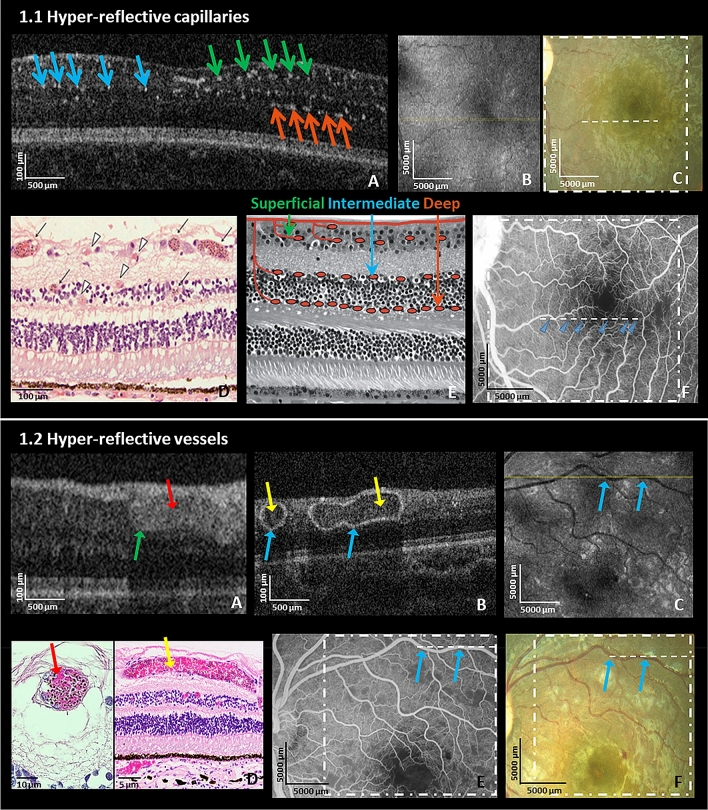
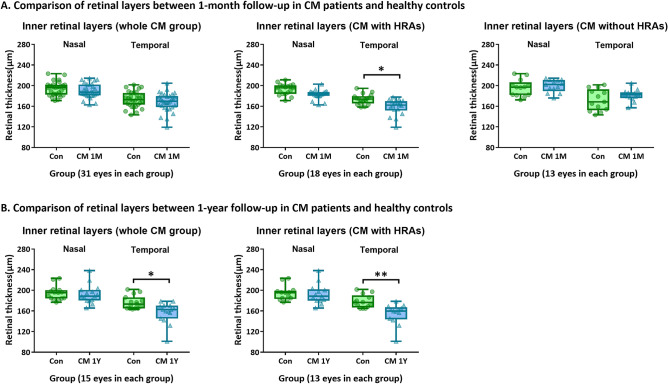
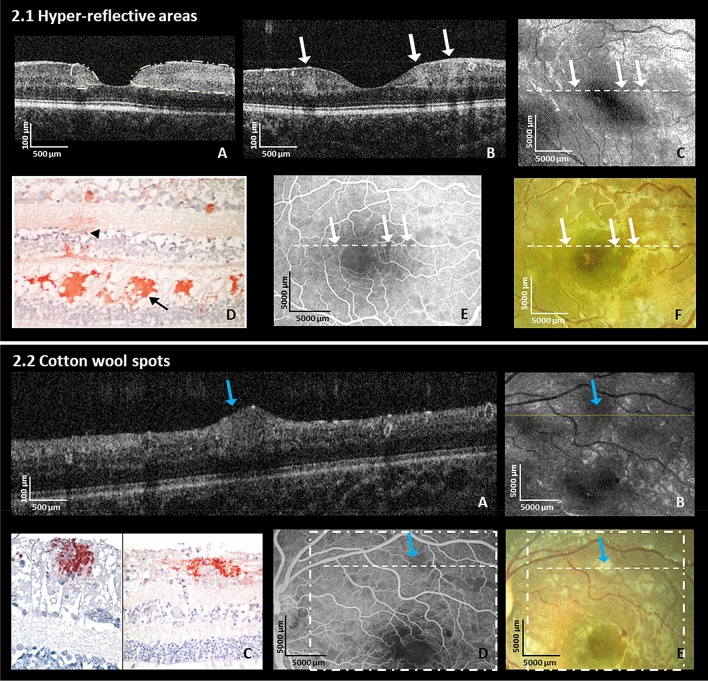
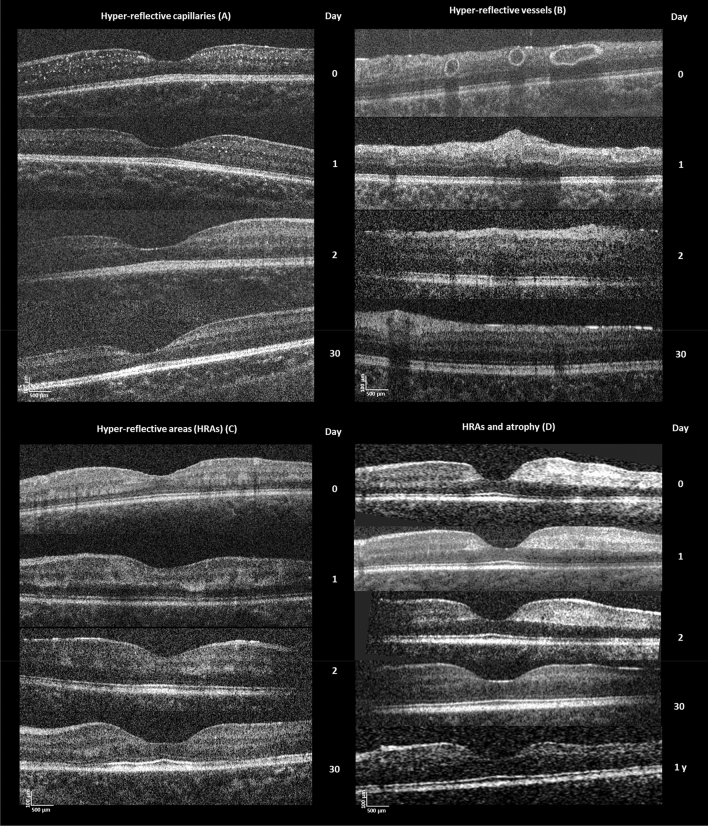
We aimed to investigate structural retinal changes in malarial retinopathy (MR) using hand-held optical coherence tomography (HH-OCT) to assess its diagnostic potential. Children with MR (n = 43) underwent ophthalmoscopy, fluorescein angiography and HH-OCT during admission, 1-month (n = 31) and 1-year (n = 8) post-discharge. Controls were comatose patients without malaria (n = 6) and age/sex-matched healthy children (n = 43). OCT changes and retinal layer thicknesses were compared. On HH-OCT, hyper-reflective areas (HRAs) were seen in the inner retina of 81% of MR patients, corresponding to ischaemic retinal whitening on fundus photography. Cotton wool spots were present in 37% and abnormal hyper-reflective dots, co-localized to capillary plexus, in 93%. Hyper-reflective vessel walls were present in 84%, and intra-retinal cysts in 9%. Vascular changes and cysts resolved within 48 h. HRAs developed into retinal thinning at 1 month (p = 0.027) which was more pronounced after 1 year (p = 0.009). Ischaemic retinal whitening is located within inner retinal layers, distinguishing it from cotton wool spots. Vascular hyper-reflectivity may represent the sequestration of parasitized erythrocytes in vessels, a key CM feature. The mechanisms of post-ischemic retinal atrophy and cerebral atrophy with cognitive impairment may be similar in CM survivors. HH-OCT has the potential for monitoring patients, treatment response and predicting neurological deficits.
我们旨在利用手持式光学相干断层扫描(HH-OCT)研究疟疾性视网膜病变(MR)的视网膜结构变化,以评估其诊断潜力。患有MR的儿童(n = 43)在入院期间、出院后1个月(n = 31)和1年(n = 8)接受了眼底检查、荧光素血管造影和HH-OCT检查。对照组为无疟疾的昏迷患者(n = 6)和年龄/性别匹配的健康儿童(n = 43)。比较了OCT变化和视网膜层厚度。在HH-OCT上,81%的MR患者视网膜内层可见高反射区(HRA),对应于眼底照片上的缺血性视网膜变白。37%的患者出现棉絮斑,93%的患者在毛细血管丛处出现异常高反射点。84%的患者出现高反射血管壁,9%的患者出现视网膜内囊肿。血管变化和囊肿在48小时内消失。HRA在1个月时发展为视网膜变薄(p = 0.027),1年后更为明显(p = 0.009)。缺血性视网膜变白位于视网膜内层,与棉絮斑不同。血管高反射可能代表寄生虫感染的红细胞在血管中的滞留,这是脑型疟疾的一个关键特征。在脑型疟疾幸存者中,缺血后视网膜萎缩和伴有认知障碍的脑萎缩机制可能相似。HH-OCT有潜力监测患者、治疗反应并预测神经功能缺损。