Banerjee Somesh, Katiyar Parul, Kumar Vijay, Waghmode Bhairavnath, Nathani Sandip, Krishnan Vengadesan, Sircar Debabrata, Roy Partha
Molecular Endocrinology Laboratory, Department of Biotechnology, Indian Institute of Technology Roorkee, Roorkee 247667, Uttarakhand, India.
Laboratory of Structural Microbiology, Regional Centre for Biotechnology, Faridabad 121001, Haryana, India.
Curr Res Toxicol. 2021 Feb 23;2:116-127. doi: 10.1016/j.crtox.2021.02.005. eCollection 2021.
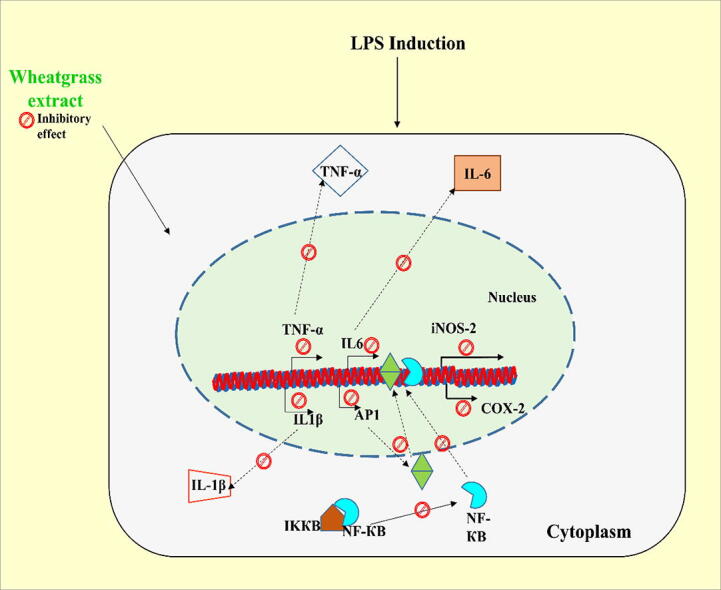
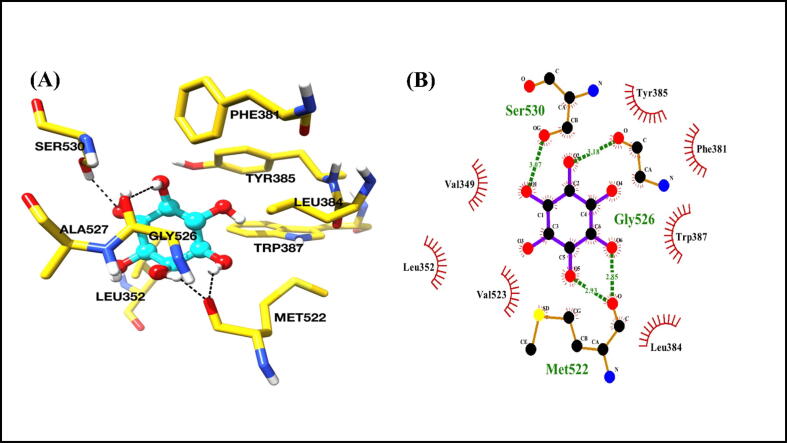
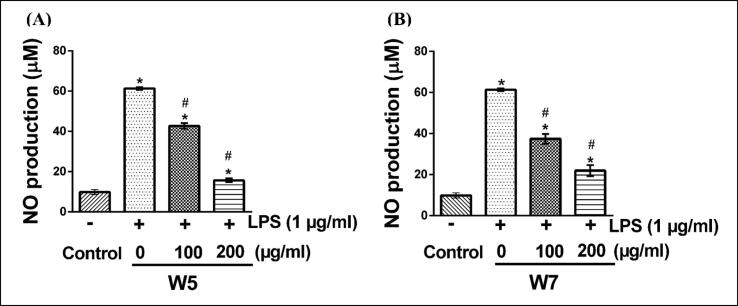
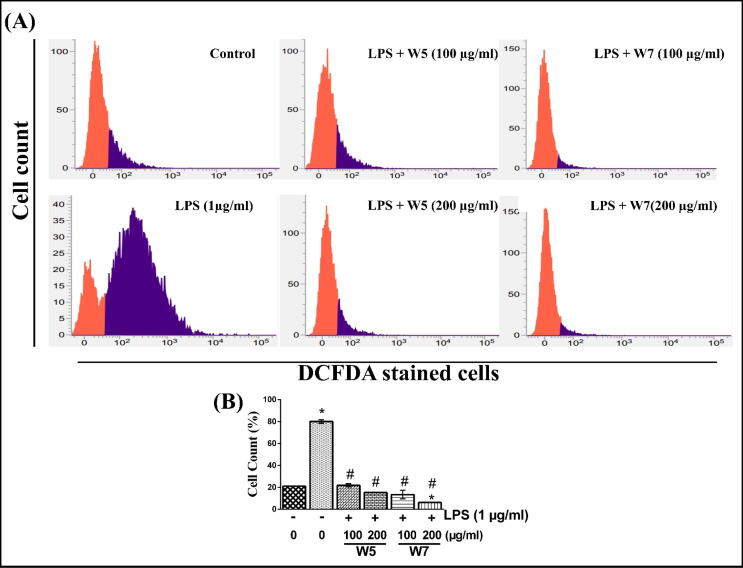
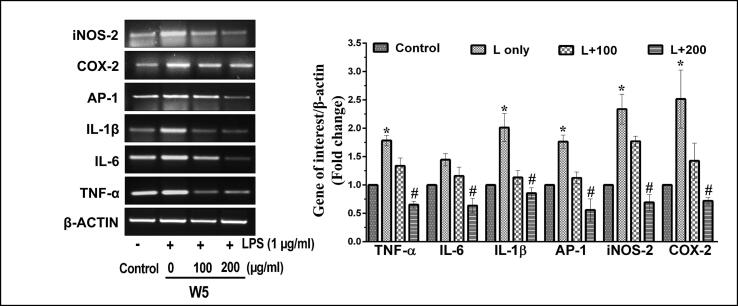
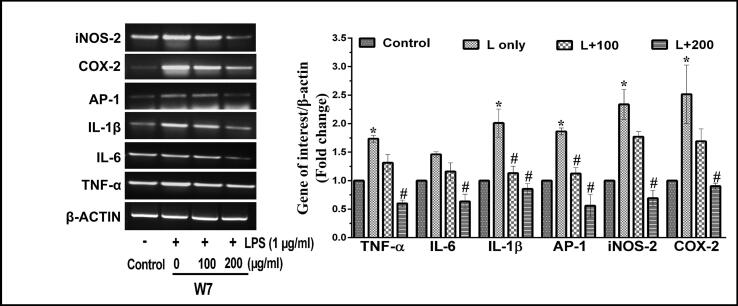
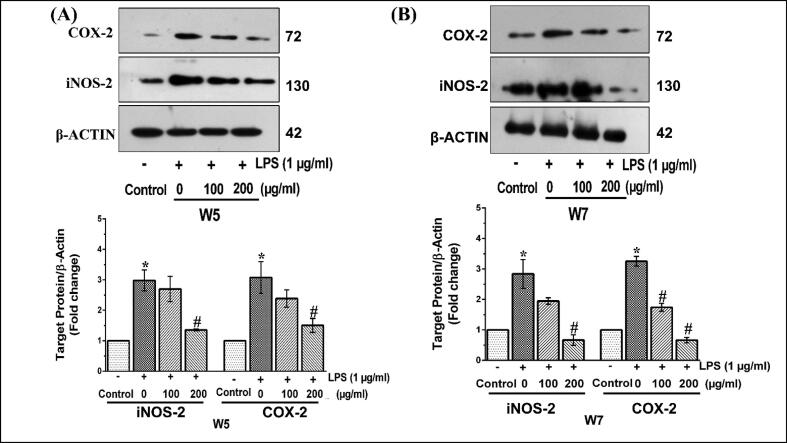
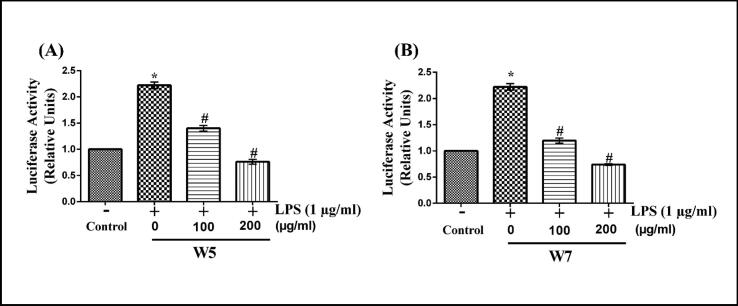
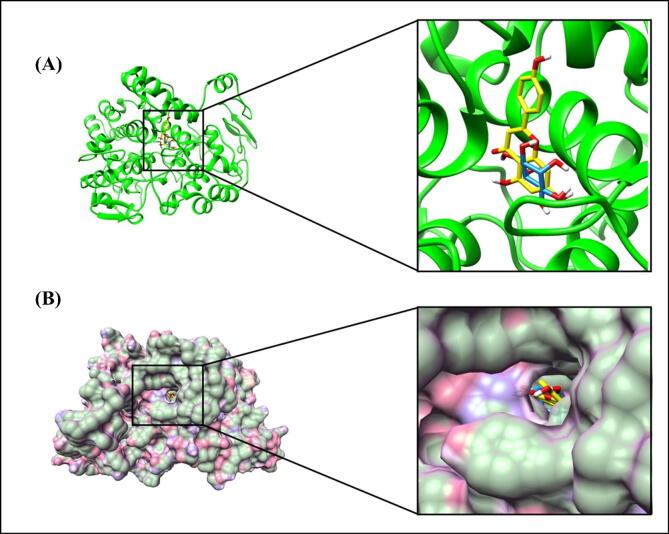
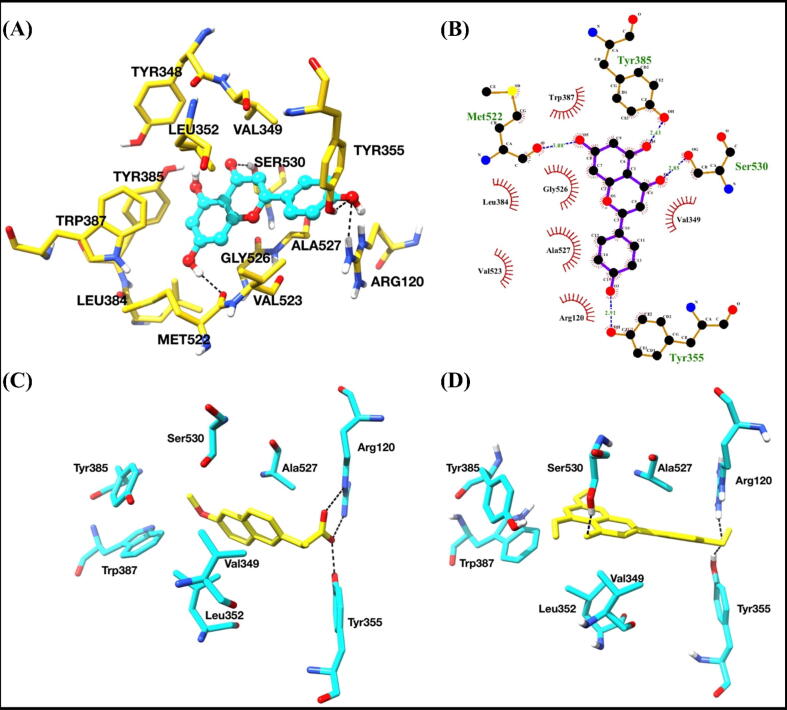
Inflammation is a multifaceted set of cellular communications generated against foreign infection, toxic influence or autoimmune injury. The present study investigates the anti-inflammatory effect of wheatgrass extract against the harmful impact of lipopolysaccharide (LPS) in macrophage cells, i.e., RAW 264.7 cells. Our results indicate that 5- and 7- days old wheatgrass extracts inhibit the LPS-stimulated production of nitric oxide. Moreover, wheatgrass extract significantly downregulates the mRNA expression of LPS-stimulated various pro-inflammatory markers, tumor necrosis factor-α, interleukin-6, interleukin-1β, AP-1 and also iNOS-2 and COX-2. Our flow cytometry analyses confirmed that wheatgrass extract prevents the generation of reactive oxygen species in LPS-stimulated RAW 264.7 cells, thus arresting oxidative stress in cells. The immunoblot analyses also confirmed a significant reduction in the expression of inflammatory proteins, namely, iNOS-2 and COX-2, in wheatgrass extract-treated cells, compared to LPS-stimulated condition. The NF-κB transactivation assay further confirmed the inhibitory effect of wheatgrass extracts on the LPS-stimulated expression of NF-κB. Molecular docking based studies showed the plausible binding of two significant wheatgrass constituents, i.e., apigenin and myoinositol with COX-2 protein, with binding energies of -10.59 kcal/mol and -7.88 kcal/mol, respectively. Based on the above results, wheatgrass may be considered as a potential therapeutic candidate for preventing inflammation.
炎症是针对外来感染、毒性影响或自身免疫损伤产生的一系列多方面的细胞通讯。本研究调查了小麦草提取物对巨噬细胞(即RAW 264.7细胞)中脂多糖(LPS)有害影响的抗炎作用。我们的结果表明,5天和7天大的小麦草提取物可抑制LPS刺激的一氧化氮产生。此外,小麦草提取物显著下调LPS刺激的各种促炎标志物、肿瘤坏死因子-α、白细胞介素-6、白细胞介素-1β、AP-1以及诱导型一氧化氮合酶-2(iNOS-2)和环氧化酶-2(COX-2)的mRNA表达。我们的流式细胞术分析证实,小麦草提取物可防止LPS刺激的RAW 264.7细胞中产生活性氧,从而阻止细胞中的氧化应激。免疫印迹分析还证实,与LPS刺激的条件相比,小麦草提取物处理的细胞中炎症蛋白iNOS-2和COX-2的表达显著降低。NF-κB反式激活测定进一步证实了小麦草提取物对LPS刺激的NF-κB表达的抑制作用。基于分子对接的研究表明,小麦草的两种重要成分芹菜素和肌醇与COX-2蛋白可能存在结合,结合能分别为-10.59千卡/摩尔和-7.88千卡/摩尔。基于上述结果,小麦草可被视为预防炎症的潜在治疗候选物。