Department of Pharmacology, School of Pharmacy, Wannan Medical College, Wuhu, China.
School of Pharmacy, Nantong University, Nantong, China.
Cell Prolif. 2021 Sep;54(9):e13107. doi: 10.1111/cpr.13107. Epub 2021 Aug 3.
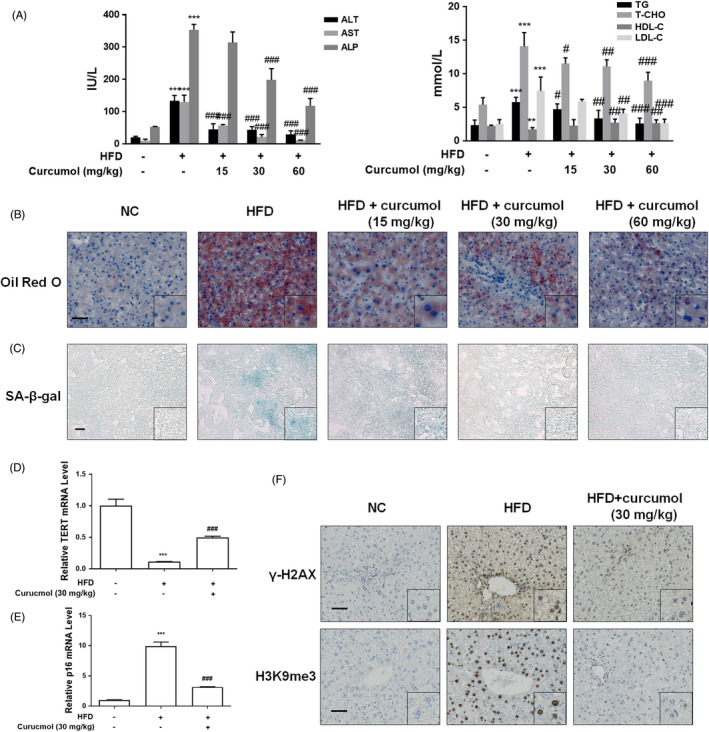
In recent years, cellular senescence has attracted a lot of interest in researchers due to its involvement in non-alcoholic fatty liver disease (NAFLD). However, the mechanism of cellular senescence is not clear. The purpose of this study was to investigate the effect of curcumol on hepatocyte senescence in NAFLD and the molecular mechanisms implicated.
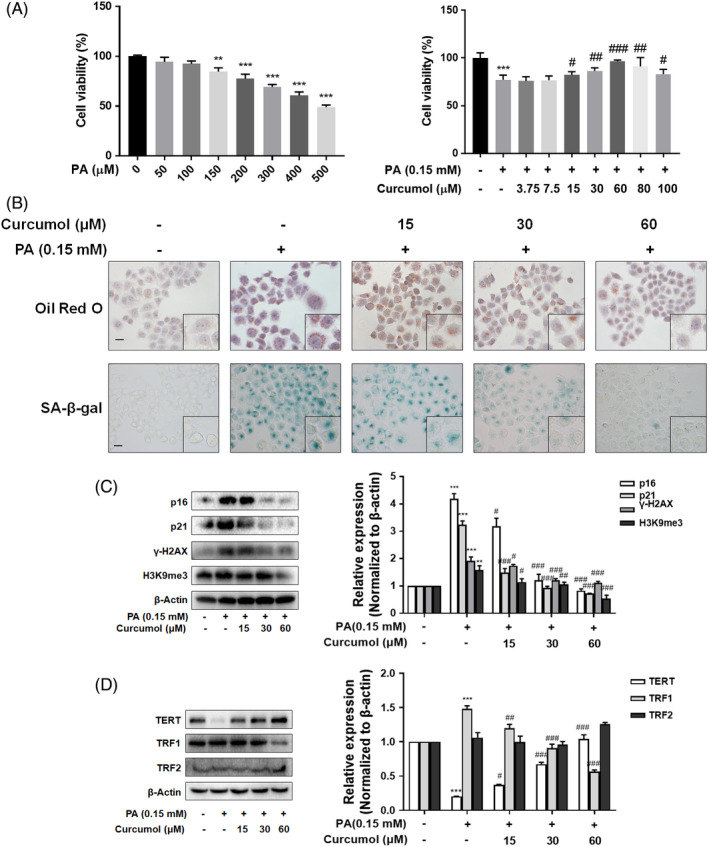
LVG Golden Syrian hamsters, C57BL/6J mice and human hepatocyte cell line LO2 were used. Cellular senescence was assessed by analyses of senescence marker SA-β-gal, p16 and p21, H3K9me3, γ-H2AX and telomerase activity.
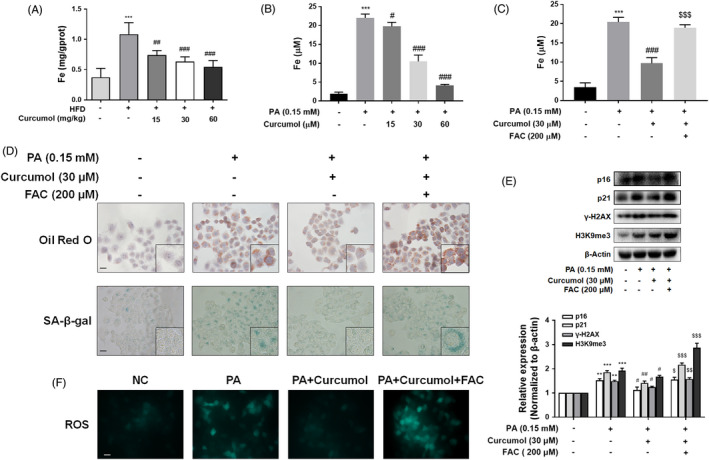
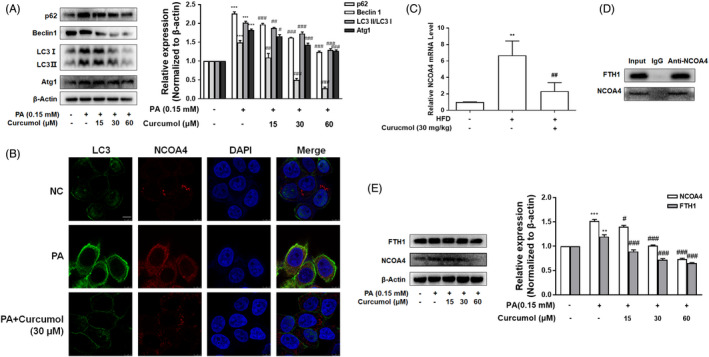
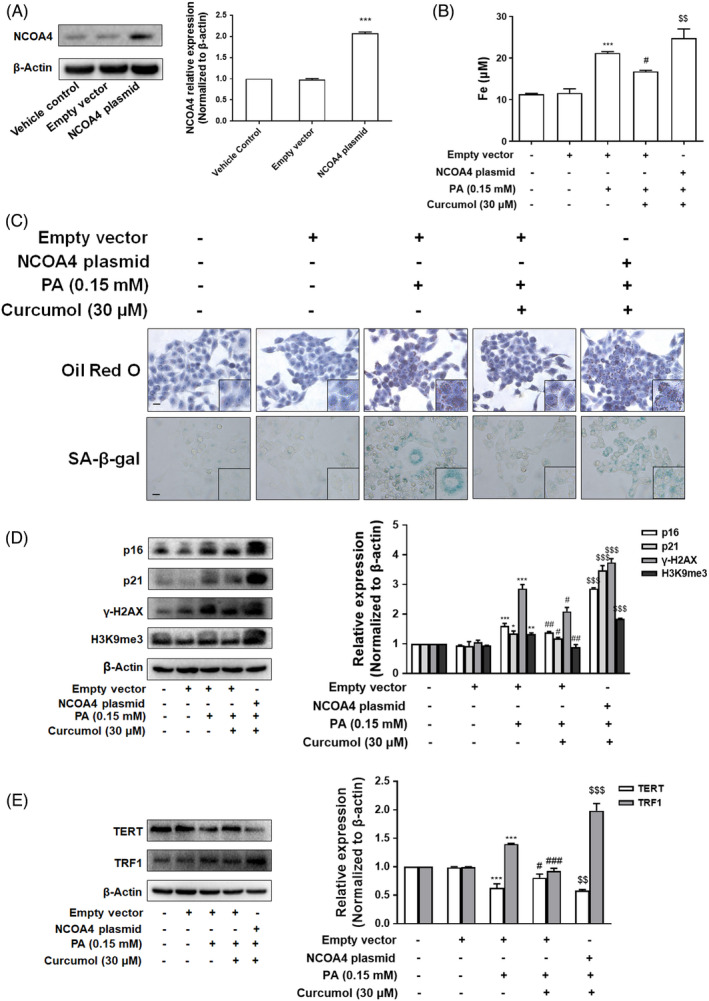
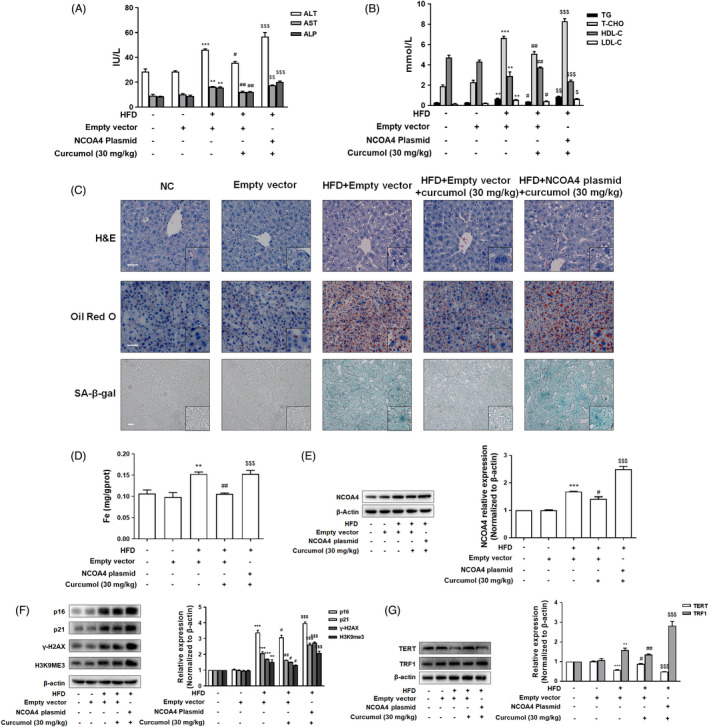
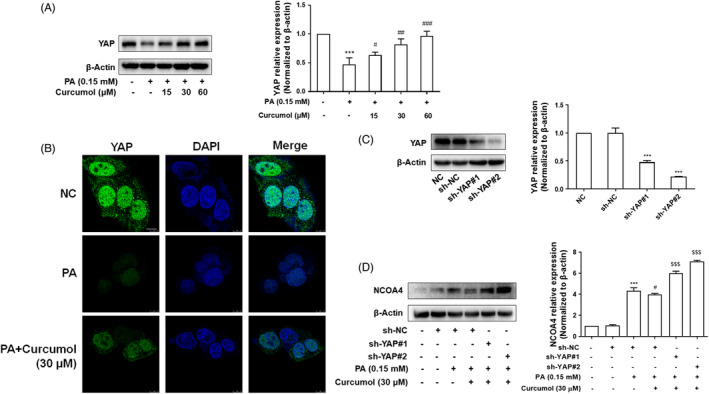
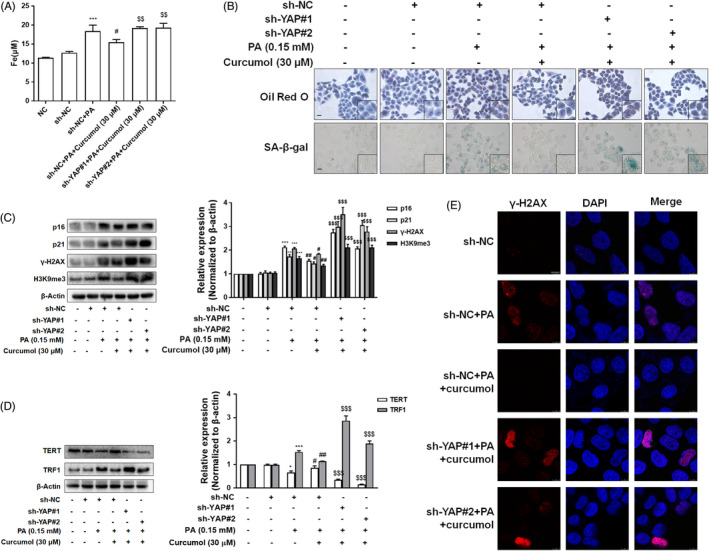
The results showed that curcumol could inhibit hepatocyte senescence in both in vivo and in vitro NAFLD models, and the mechanism might be related to its regulation of ferritinophagy and subsequent alleviation of iron overload. Moreover, overexpression of nuclear receptor coactivator 4 (NCOA4) weakened the effect of curcumol on ferritinophagy-mediated iron overload and cellular senescence. Furthermore, we demonstrated that curcumol reduced the expression of NCOA4 by Yes-associated protein (YAP). In addition, depression of YAP could impair the effect of curcumol on iron overload and cellular senescence.
Our results clarified the mechanism of curcumol inhibition of hepatocyte senescence through YAP/NCOA4 regulation of ferritinophagy in NAFLD. These findings provided a promising option of curcumol to regulate cellular senescence by target YAP/NCOA4 for the treatment of NAFLD.
近年来,细胞衰老因其与非酒精性脂肪性肝病(NAFLD)的关系而引起了研究人员的极大兴趣。然而,细胞衰老的机制尚不清楚。本研究旨在探讨姜黄素对NAFLD肝细胞衰老的影响及其涉及的分子机制。
使用 LVG 金黄叙利亚仓鼠、C57BL/6J 小鼠和人肝细胞系 LO2。通过衰老标志物 SA-β-gal、p16 和 p21、H3K9me3、γ-H2AX 和端粒酶活性分析来评估细胞衰老。
结果表明,姜黄素可以抑制体内和体外 NAFLD 模型中的肝细胞衰老,其机制可能与其对铁蛋白自噬的调节以及随后缓解铁过载有关。此外,核受体共激活因子 4(NCOA4)的过表达削弱了姜黄素对铁蛋白自噬介导的铁过载和细胞衰老的作用。此外,我们证明姜黄素通过 Yes 相关蛋白(YAP)降低 NCOA4 的表达。此外,YAP 的抑制会损害姜黄素对铁过载和细胞衰老的作用。
我们的研究结果阐明了姜黄素通过 YAP/NCOA4 调节铁蛋白自噬抑制肝细胞衰老的机制,为通过靶向 YAP/NCOA4 调节细胞衰老来治疗 NAFLD 提供了一种有前途的姜黄素选择。