College of Resource and Environmental Engineering, Wuhan University of Science and Technology, Wuhan, 430081, China.
Hubei Key Laboratory for Efficient Utilization and Agglomeration of metallurgic Mineral Resources, Wuhan University of Science and Technology, Wuhan, 430081, Hubei, China.
BMC Biotechnol. 2021 Aug 5;21(1):47. doi: 10.1186/s12896-021-00709-3.
Although laccase has a good catalytic oxidation ability, free laccase shows a poor stability. Enzyme immobilization is a common method to improve enzyme stability and endow the enzyme with reusability. Adsorption is the simplest and common method. Modified biochar has attracted great attention due to its excellent performance.
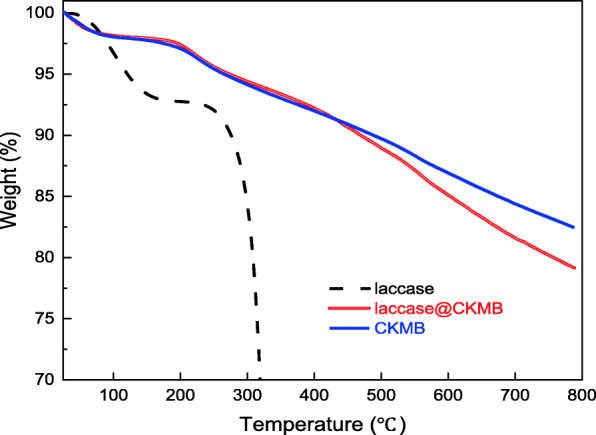
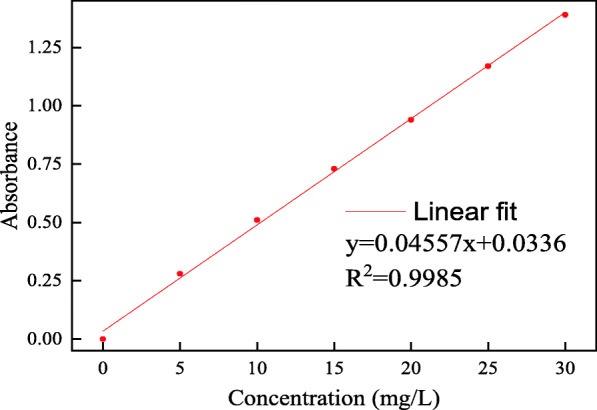
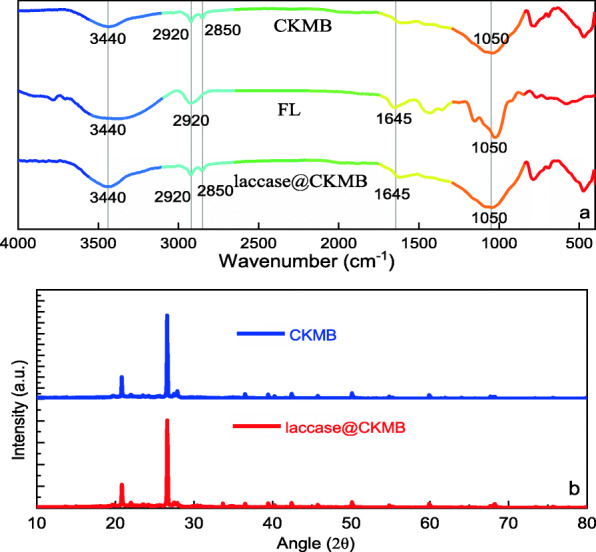
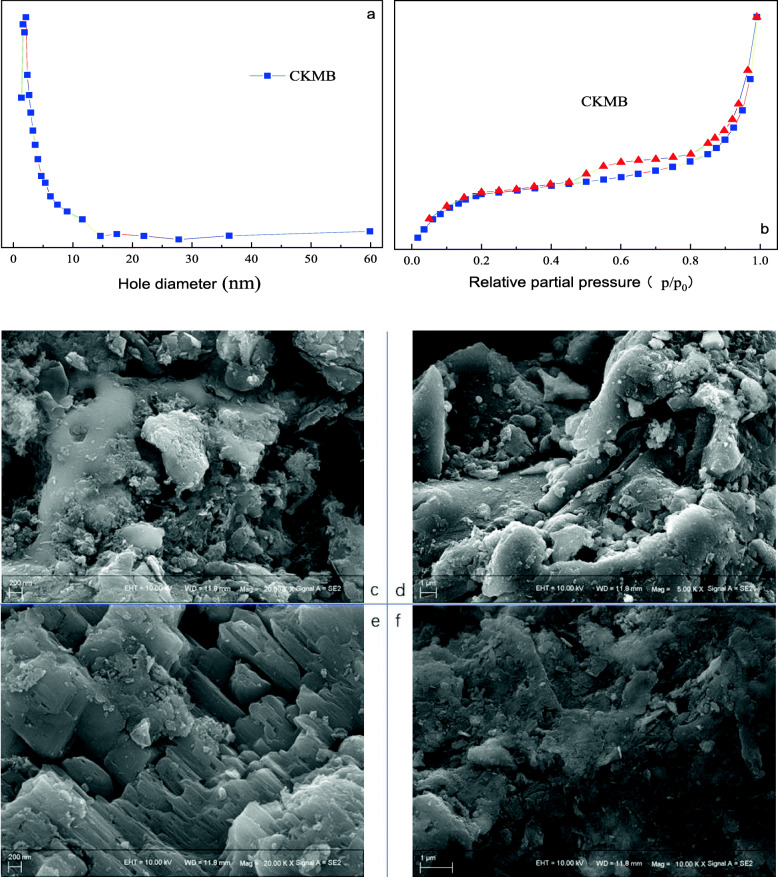
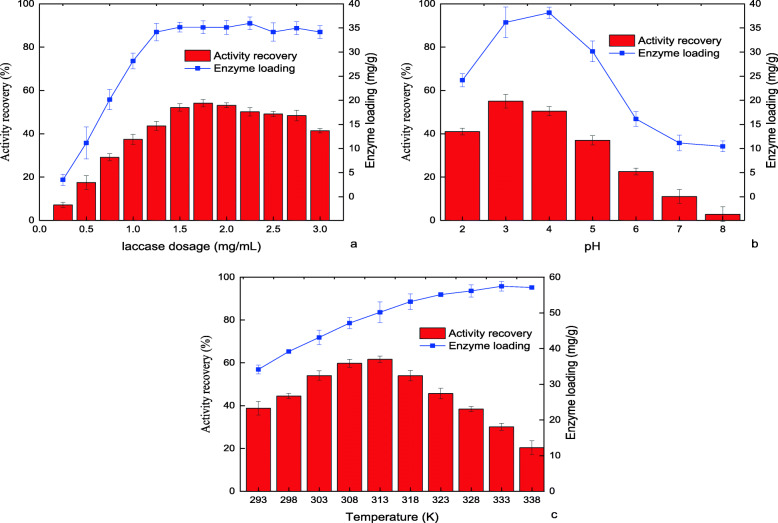
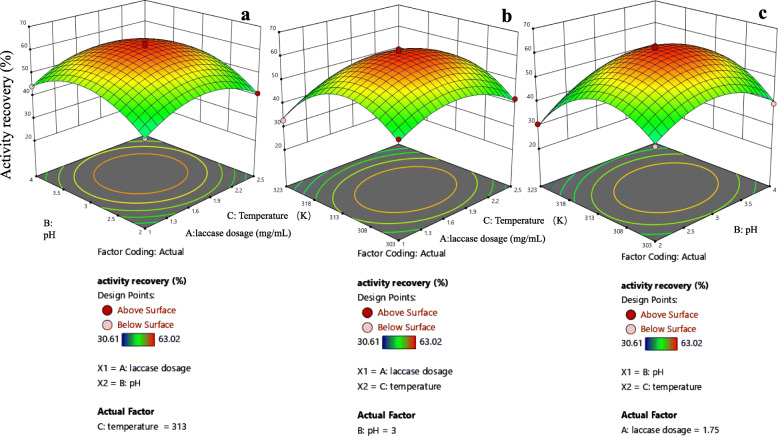
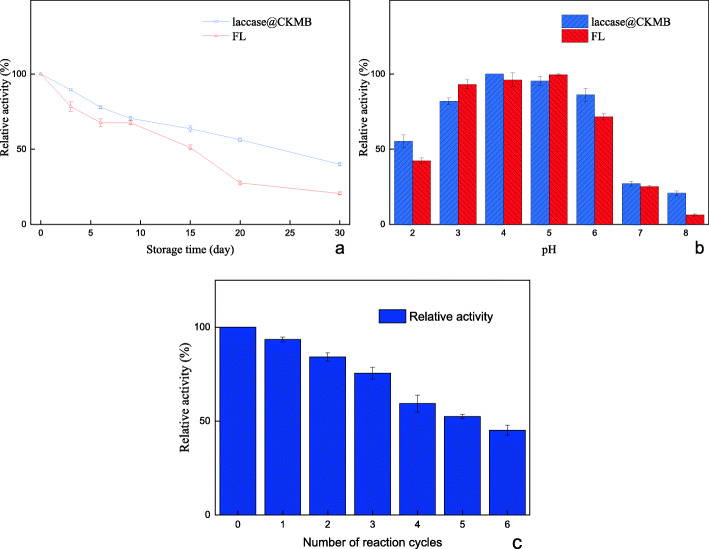
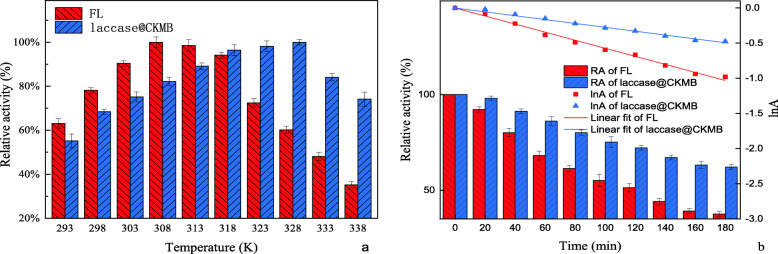
In this paper, cetyltrimethylammonium bromide (CTAB)-KOH modified biochar (CKMB) was used to immobilize laccase by adsorption method (laccase@CKMB). Based on the results of the single-factor experiments, the optimal loading conditions of laccase@CKMB were studied with the assistance of Design-Expert 12 and response surface methods. The predicted optimal experimental conditions were laccase dosage 1.78 mg/mL, pH 3.1 and 312 K. Under these conditions, the activity recovery of laccase@CKMB was the highest, reaching 61.78%. Then, the CKMB and laccase@CKMB were characterized by TGA, FT-IR, XRD, BET and SEM, and the results showed that laccase could be well immobilized on CKMB, the maximum enzyme loading could reach 57.5 mg/g. Compared to free laccase, the storage and pH stability of laccase@CKMB was improved greatly. The laccase@CKMB retained about 40% of relative activity (4 °C, 30 days) and more than 50% of relative activity at pH 2.0-6.0. In addition, the laccase@CKMB indicated the reusability up to 6 reaction cycles while retaining 45.1% of relative activity. Moreover, the thermal deactivation kinetic studies of laccase@CKMB showed a lower k value (0.00275 min) and higher t values (252.0 min) than the k value (0.00573 min) and t values (121.0 min) of free laccase.
We explored scientific and reasonable immobilization conditions of laccase@CKMB, and the laccase@CKMB possessed relatively better stabilities, which gave the immobilization of laccase on this cheap and easily available carrier material the possibility of industrial applications.
漆酶具有良好的催化氧化能力,但游离漆酶的稳定性较差。酶固定化是提高酶稳定性并赋予酶可重复使用性的常用方法。吸附是最简单和常见的方法。由于具有优异的性能,改性生物炭引起了极大的关注。
本文采用十六烷基三甲基溴化铵(CTAB)-KOH 改性生物炭(CKMB)通过吸附法固定化漆酶(laccase@CKMB)。基于单因素实验结果,借助 Design-Expert 12 和响应面法研究了 laccase@CKMB 的最佳负载条件。预测的最佳实验条件为漆酶用量 1.78mg/mL、pH 3.1 和 312K。在此条件下,laccase@CKMB 的活性回收率最高,达到 61.78%。然后,通过 TGA、FT-IR、XRD、BET 和 SEM 对 CKMB 和 laccase@CKMB 进行了表征,结果表明漆酶可以很好地固定在 CKMB 上,最大酶载量可达 57.5mg/g。与游离漆酶相比,laccase@CKMB 的储存和 pH 稳定性得到了很大提高。laccase@CKMB 在 4°C 下 30 天保留了约 40%的相对活性(4°C,30 天),在 pH 2.0-6.0 下保留了超过 50%的相对活性。此外,laccase@CKMB 显示出可重复使用性,可进行 6 次反应循环,同时保留 45.1%的相对活性。此外,laccase@CKMB 的热失活动力学研究表明,k 值(0.00275min)和 t 值(252.0min)均低于游离漆酶的 k 值(0.00573min)和 t 值(121.0min)。
我们探索了 laccase@CKMB 的科学合理的固定化条件,laccase@CKMB 具有相对较好的稳定性,为在这种廉价易得的载体材料上固定化漆酶提供了可能。