School of Population and Public Health, University of British Columbia, 2206 E Mall, Vancouver, BC, V6T 1Z3, Canada.
Department of Global Health and Population, Harvard T. H. Chan School of Public Health, Boston, MA, USA.
Hum Resour Health. 2021 Aug 5;19(1):96. doi: 10.1186/s12960-021-00636-6.
A simple indicator of technical efficiency, such as productivity of health workers, measured using routine health facility data, can be a practical approach that can inform initiatives to improve efficiency in low- and middle-income countries. This paper presents a proof of concept of using routine information from primary healthcare (PHC) facilities to measure health workers' productivity and its application in three regions of Ethiopia.
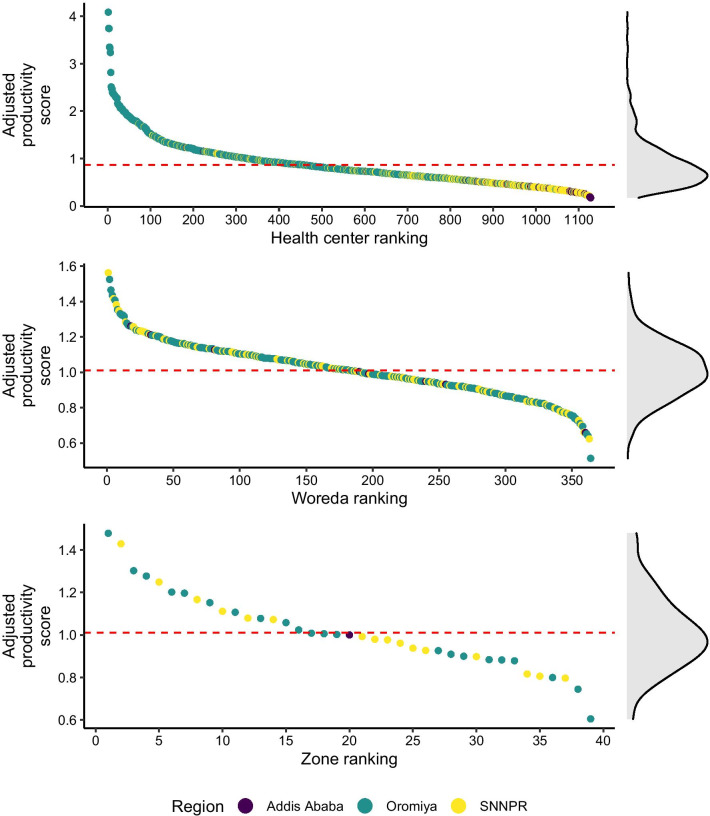
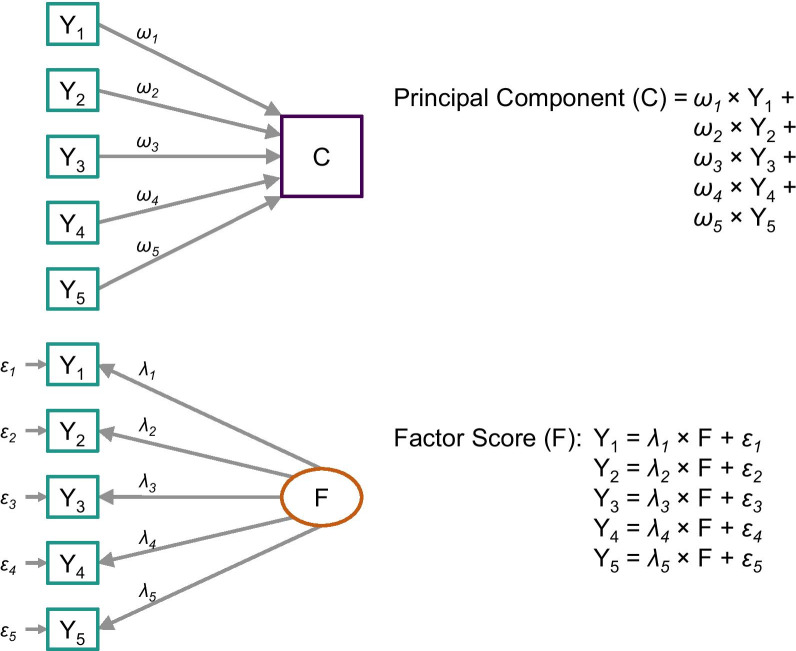
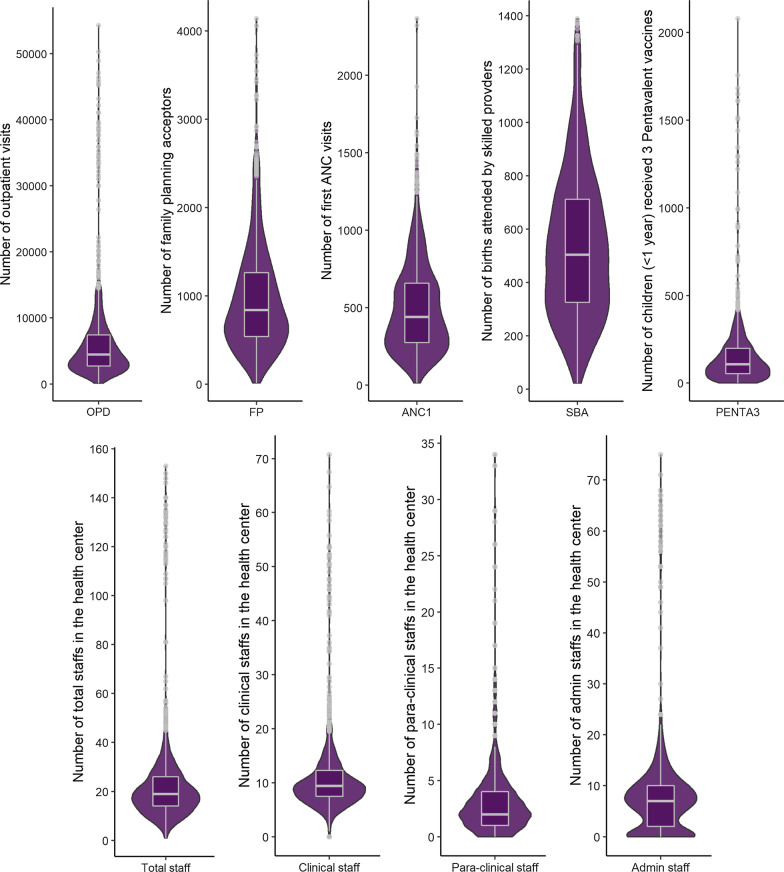
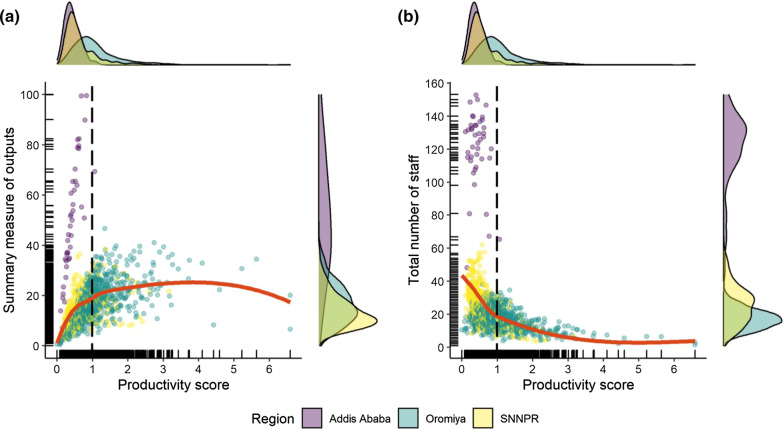
In four steps, we constructed a productivity measure of the health workforce of Health Centers (HCs) and demonstrated its practical application: (1) developing an analytical dataset using secondary data from health management information systems (HMIS) and human resource information system (HRIS); (2) principal component analysis and factor analysis to estimate a summary measure of output from five indicators (annual service volume of outpatient visits, family planning, first antenatal care visits, facility-based deliveries by skilled birth attendants, and children [< 1 year] with three pentavalent vaccines); (3) calculating a productivity score by combining the summary measure of outputs and the total number of health workers (input), and (4) implementing regression models to identify the determinant of productivity and ranking HCs based on their adjusted productivity score.
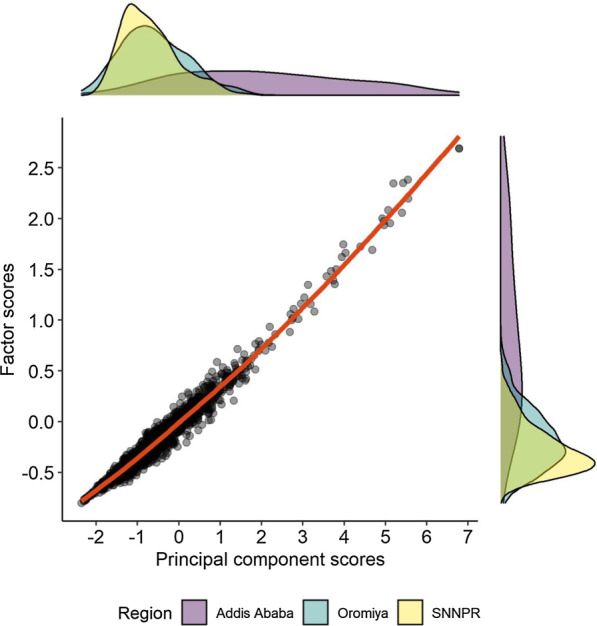
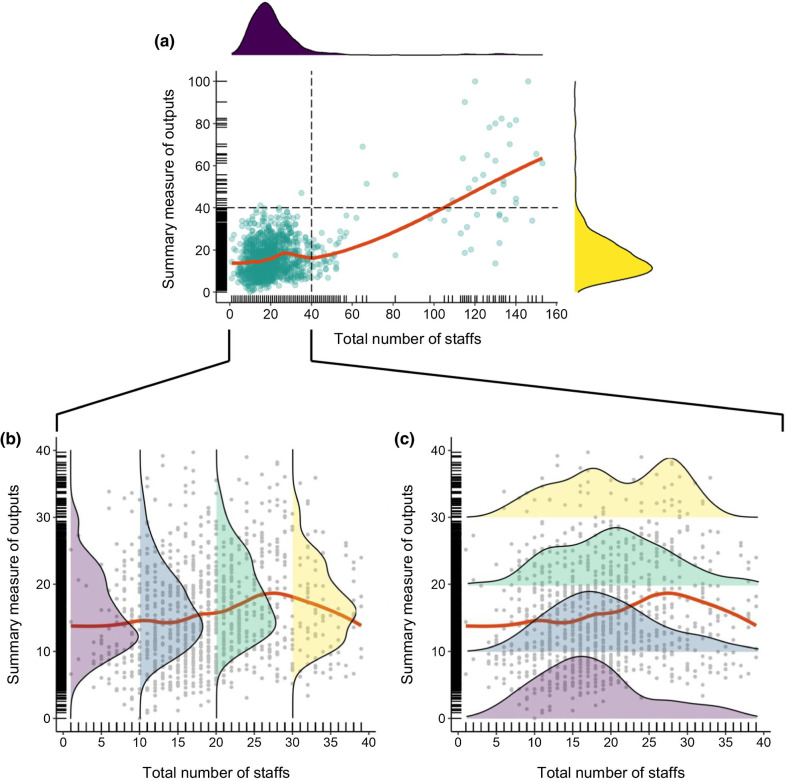
We developed an analytical dataset of 1128 HCs; however, significant missing values and outliers were reported in the data. The principal component and factor scores developed from the five output measures were highly consistent (correlation coefficient = 0.98). We considered the factor score as the summary measure of outputs for estimating productivity. A very weak association was observed between the summary measure of output and the total number of staff. The result also highlighted a large variability in productivity across similar health facilities in Ethiopia, represented by the significant dispersion in summary measure of output occurring at similar levels of the health workers.
We successfully demonstrated the analytical steps to estimate health worker productivity and its practical application using HMIS and HRIS. The methodology presented in this study can be readily applied in low- and middle-income countries using widely available data-such as DHIS2-that will allow further explorations to understand the causes of technical inefficiencies in the health system.
使用常规卫生机构数据衡量卫生工作者的简单技术效率指标,例如生产力,可以作为一种实用方法,为改善中低收入国家的效率提供信息。本文提出了使用初级卫生保健(PHC)设施的常规信息来衡量卫生工作者的生产力的概念验证,并在埃塞俄比亚的三个地区进行了应用。
我们分四步构建了卫生中心(HCs)卫生人力的生产力衡量标准,并展示了其实用性:(1)使用来自健康管理信息系统(HMIS)和人力资源信息系统(HRIS)的二次数据构建分析数据集;(2)主成分分析和因子分析,从五个指标(门诊服务量、计划生育、首次产前检查、熟练接生员的产房分娩、1 岁以下儿童的五种疫苗接种)估计产出的综合指标;(3)通过组合产出综合指标和卫生工作者总数(投入)来计算生产力得分;(4)实施回归模型确定生产力的决定因素,并根据调整后的生产力得分对 HCs 进行排名。
我们开发了一个由 1128 个 HCs 组成的分析数据集;然而,数据中报告了大量的缺失值和异常值。从五个产出指标得出的主成分和因子得分非常一致(相关系数=0.98)。我们认为因子得分是产出的综合指标,用于估计生产力。产出综合指标与员工总数之间的相关性非常弱。结果还突出了埃塞俄比亚类似卫生设施之间生产力的巨大差异,表现在相似水平的卫生工作者中产出综合指标的显著离散。
我们成功地展示了使用 HMIS 和 HRIS 估计卫生工作者生产力的分析步骤及其实际应用。本研究提出的方法可以在中低收入国家使用广泛可用的数据(如 DHIS2)轻松应用,从而进一步探索了解卫生系统技术效率低下的原因。