Li Hong-Lei, Wu Lin, Dong Zhaoming, Jiang Yusong, Jiang Sanjie, Xing Haitao, Li Qiang, Liu Guocheng, Tian Shuming, Wu Zhangyan, Li Zhexin, Zhao Ping, Zhang Yan, Tang Jianmin, Xu Jiabao, Huang Ke, Liu Xia, Zhang Wenlin, Liao Qinhong, Ren Yun, Huang Xinzheng, Li Qingzhi, Li Chengyong, Wang Yi, Xavier-Ravi Baskaran, Li Honghai, Liu Yang, Wan Tao, Liu Qinhu, Zou Yong, Jian Jianbo, Xia Qingyou, Liu Yiqing
College of Landscape Architecture and Life Science/Institute of Special Plants, Chongqing University of Arts and Sciences, Yongchuan, Chongqing, China.
Engineering Research Center for Special Plant Seedlings of Chongqing, Chongqing University of Arts and Sciences, Yongchuan, Chongqing, China.
Hortic Res. 2021 Aug 5;8(1):189. doi: 10.1038/s41438-021-00627-7.
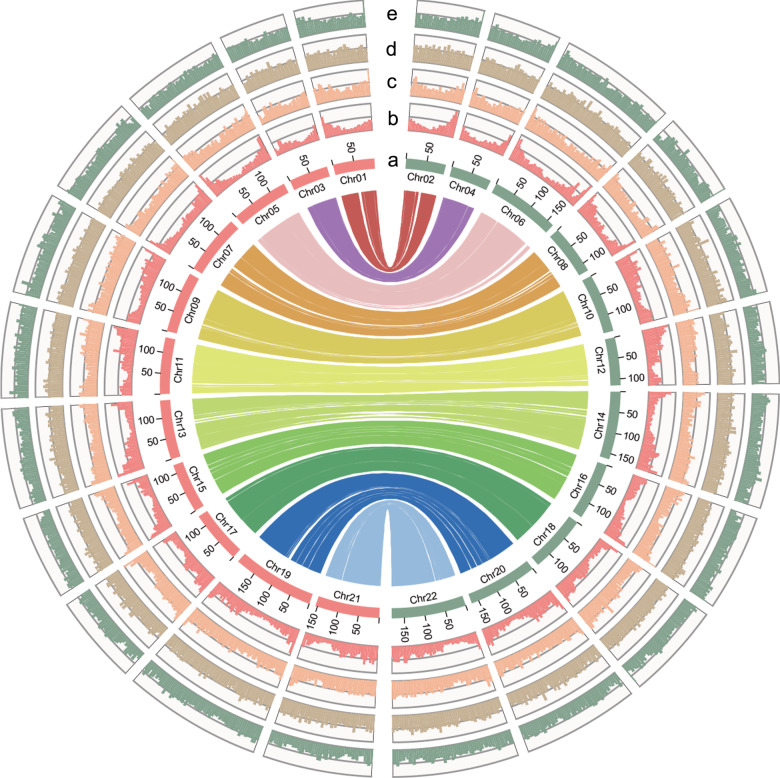
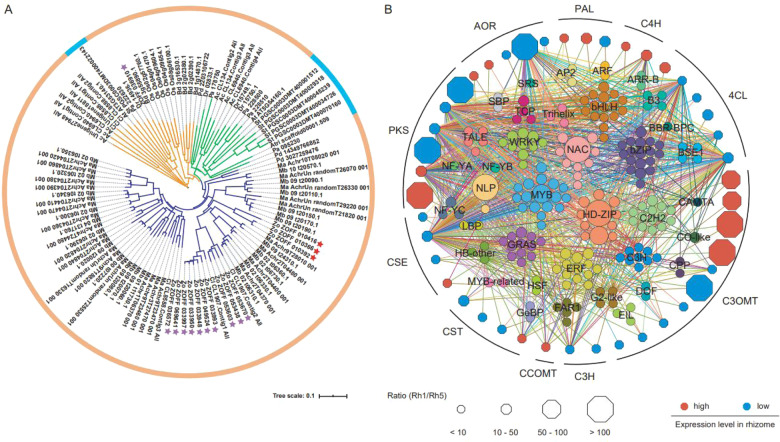
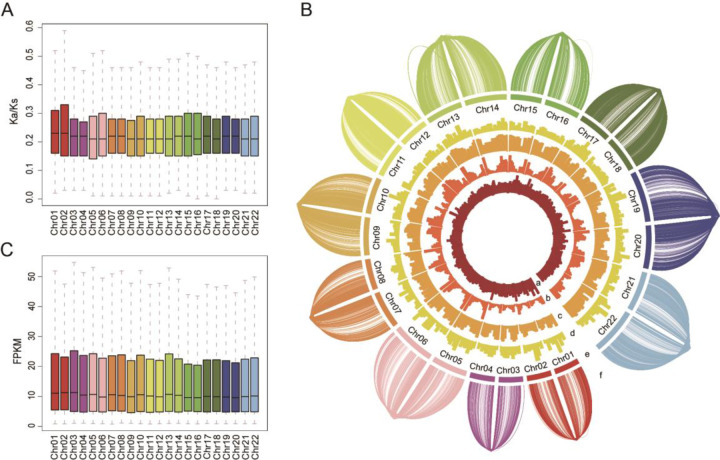
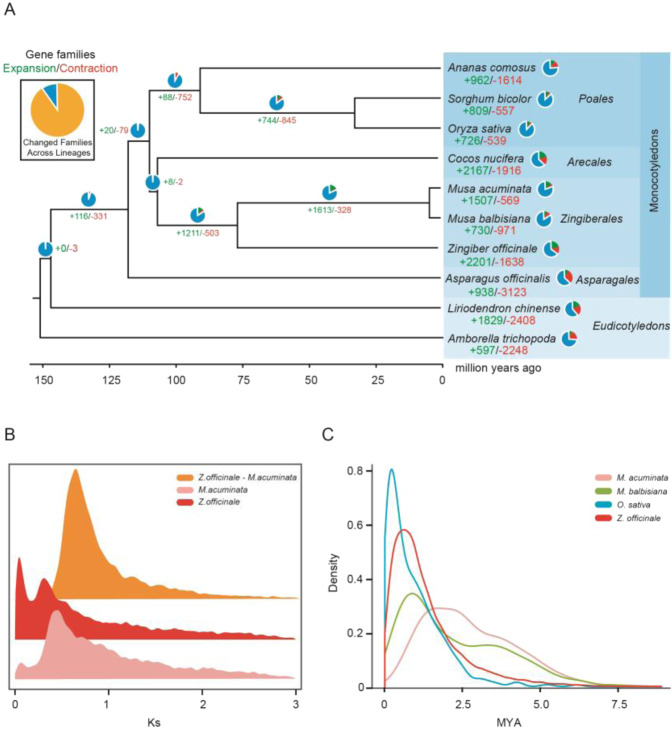
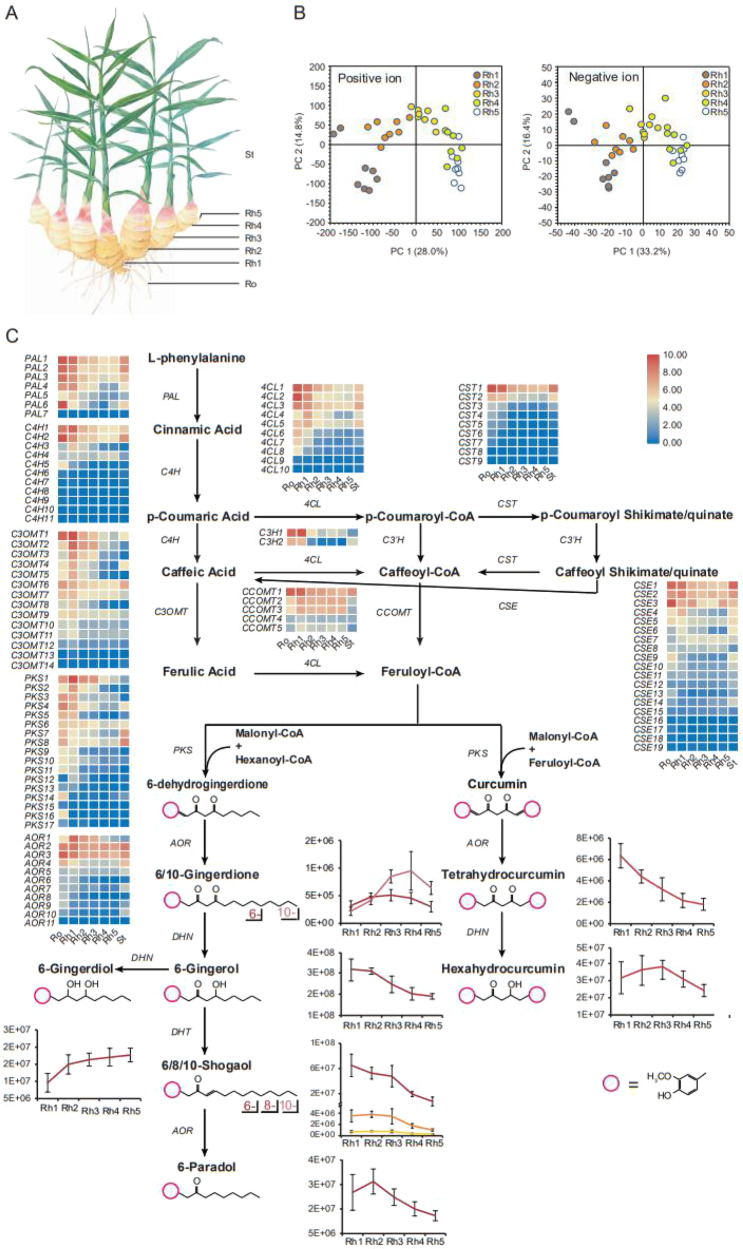
Ginger (Zingiber officinale), the type species of Zingiberaceae, is one of the most widespread medicinal plants and spices. Here, we report a high-quality, chromosome-scale reference genome of ginger 'Zhugen', a traditionally cultivated ginger in Southwest China used as a fresh vegetable, assembled from PacBio long reads, Illumina short reads, and high-throughput chromosome conformation capture (Hi-C) reads. The ginger genome was phased into two haplotypes, haplotype 1 (1.53 Gb with a contig N50 of 4.68 M) and haplotype 0 (1.51 Gb with a contig N50 of 5.28 M). Homologous ginger chromosomes maintained excellent gene pair collinearity. In 17,226 pairs of allelic genes, 11.9% exhibited differential expression between alleles. Based on the results of ginger genome sequencing, transcriptome analysis, and metabolomic analysis, we proposed a backbone biosynthetic pathway of gingerol analogs, which consists of 12 enzymatic gene families, PAL, C4H, 4CL, CST, C3'H, C3OMT, CCOMT, CSE, PKS, AOR, DHN, and DHT. These analyses also identified the likely transcription factor networks that regulate the synthesis of gingerol analogs. Overall, this study serves as an excellent resource for further research on ginger biology and breeding, lays a foundation for a better understanding of ginger evolution, and presents an intact biosynthetic pathway for species-specific gingerol biosynthesis.
姜(Zingiber officinale)是姜科的模式种,是分布最广的药用植物和香料之一。在此,我们报告了姜“竹根姜”的高质量染色体级参考基因组,它是中国西南地区传统种植的一种用作新鲜蔬菜的姜,该基因组由PacBio长读长、Illumina短读长和高通量染色体构象捕获(Hi-C)读长组装而成。姜基因组被划分为两个单倍型,单倍型1(1.53Gb,重叠群N50为4.68M)和单倍型0(1.51Gb,重叠群N50为5.28M)。同源姜染色体保持了良好的基因对共线性。在17226对等位基因中,11.9%的等位基因间存在差异表达。基于姜基因组测序、转录组分析和代谢组分析的结果,我们提出了姜辣素类似物的主干生物合成途径,该途径由12个酶基因家族组成,分别是PAL、C4H、4CL、CST、C3'H、C3OMT、CCOMT、CSE、PKS、AOR、DHN和DHT。这些分析还确定了可能调控姜辣素类似物合成的转录因子网络。总体而言,本研究为进一步开展姜生物学和育种研究提供了优质资源,为更好地理解姜的进化奠定了基础,并展示了物种特异性姜辣素生物合成的完整生物合成途径。