Programa de Laboratório de Genética Humana e Médica, Pós-Graduação em Genética e Biologia Molecular, Universidade Federal do Pará, Belém, Brazil.
Núcleo de Pesquisas em Oncologia, Universidade Federal do Pará, Belém, Brazil.
NPJ Biofilms Microbiomes. 2021 Aug 5;7(1):65. doi: 10.1038/s41522-021-00237-0.
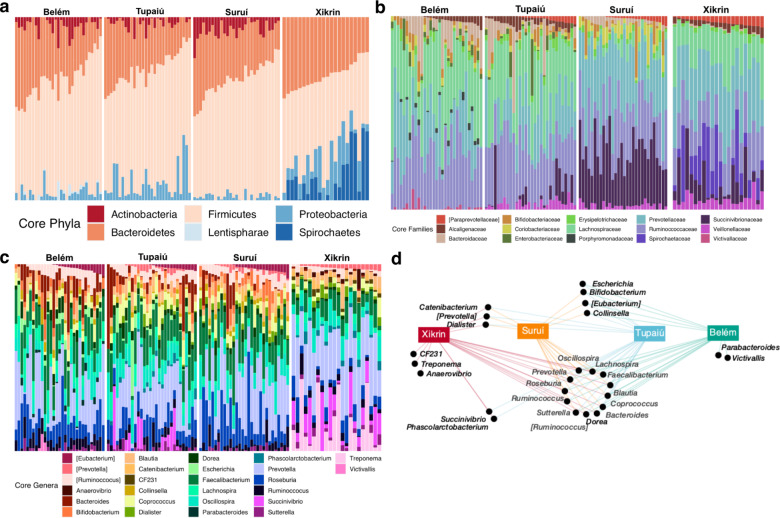
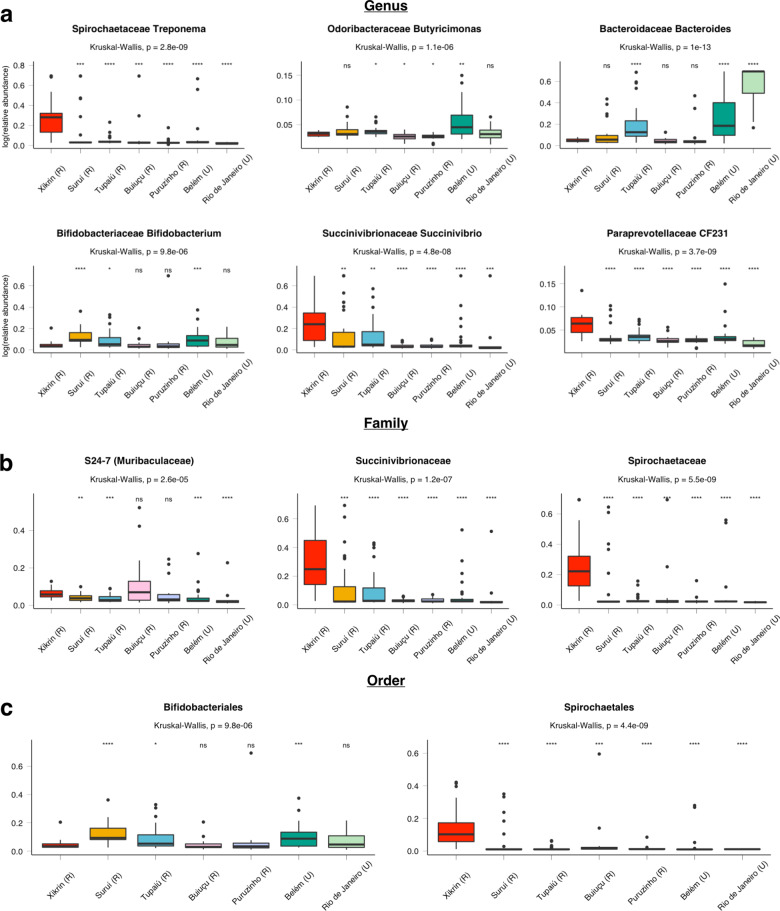
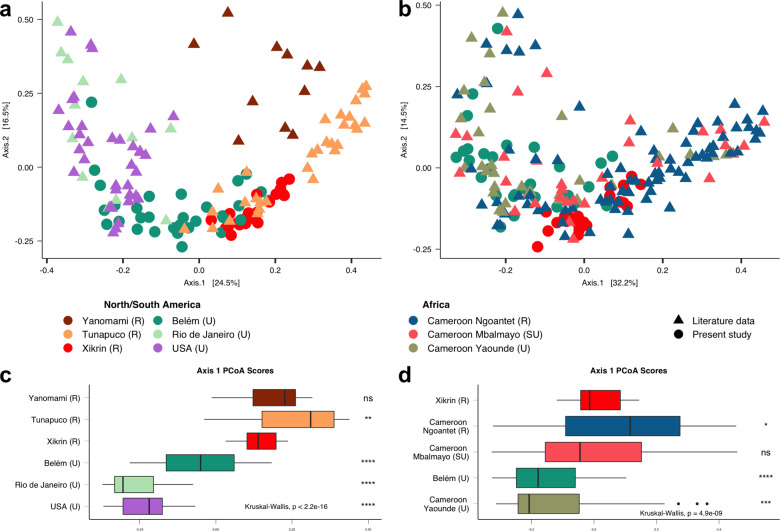
Shifts in subsistence strategy among Native American people of the Amazon may be the cause of typically western diseases previously linked to modifications of gut microbial communities. Here, we used 16S ribosomal RNA sequencing to characterise the gut microbiome of 114 rural individuals, namely Xikrin, Suruí and Tupaiú, and urban individuals from Belém city, in the Brazilian Amazon. Our findings show the degree of potential urbanisation occurring in the gut microbiome of rural Amazonian communities characterised by the gradual loss and substitution of taxa associated with rural lifestyles, such as Treponema. Comparisons to worldwide populations indicated that Native American groups are similar to South American agricultural societies and urban groups are comparable to African urban and semi-urban populations. The transitioning profile observed among traditional populations is concerning in light of increasingly urban lifestyles. Lastly, we propose the term "tropical urban" to classify the microbiome of urban populations living in tropical zones.
shifts in subsistence strategy among Native American people of the Amazon may be the cause of typically western diseases previously linked to modifications of gut microbial communities. Here, we used 16S ribosomal RNA sequencing to characterise the gut microbiome of 114 rural individuals, namely Xikrin, Suruí and Tupaiú, and urban individuals from Belém city, in the Brazilian Amazon. Our findings show the degree of potential urbanisation occurring in the gut microbiome of rural Amazonian communities characterised by the gradual loss and substitution of taxa associated with rural lifestyles, such as Treponema. Comparisons to worldwide populations indicated that Native American groups are similar to South American agricultural societies and urban groups are comparable to African urban and semi-urban populations. The transitioning profile observed among traditional populations is concerning in light of increasingly urban lifestyles. Lastly, we propose the term "tropical urban" to classify the microbiome of urban populations living in tropical zones.
亚马逊地区的美洲原住民的生计策略的转变可能是导致以前与肠道微生物群落改变相关的典型西方疾病的原因。在这里,我们使用 16S 核糖体 RNA 测序来描述 114 名农村个体(即 Xikrin、Suruí 和 Tupaiú)和来自巴西亚马逊地区贝伦市的城市个体的肠道微生物组。我们的研究结果表明,肠道微生物组中存在潜在的城市化程度,其特征是与农村生活方式相关的分类群逐渐减少和替代,例如 Treponema。与全球人口的比较表明,美洲原住民群体与南美农业社会相似,而城市群体与非洲城市和半城市人口相似。考虑到越来越多的城市生活方式,传统人群中观察到的过渡特征令人担忧。最后,我们提出了“热带城市”一词来对生活在热带地区的城市人口的微生物组进行分类。