Department of Bioinformatics and Genomics, University of North Carolina at Charlotte, Charlotte, NC, 28223, USA.
Department of Biostatistics, Gillings School of Global Public Health, University of North Carolina at Chapel Hill, Chapel Hill, NC, 27516, USA.
Microbiome. 2017 Sep 15;5(1):121. doi: 10.1186/s40168-017-0338-7.
Urbanization is associated with an increased risk for a number of diseases, including obesity, diabetes, and cancer, which all also show associations with the microbiome. While microbial community composition has been shown to vary across continents and in traditional versus Westernized societies, few studies have examined urban-rural differences in neighboring communities within a single country undergoing rapid urbanization. In this study, we compared the gut microbiome, plasma metabolome, dietary habits, and health biomarkers of rural and urban people from a single Chinese province.
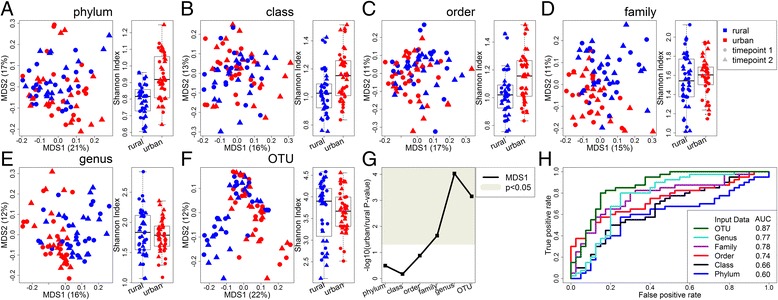
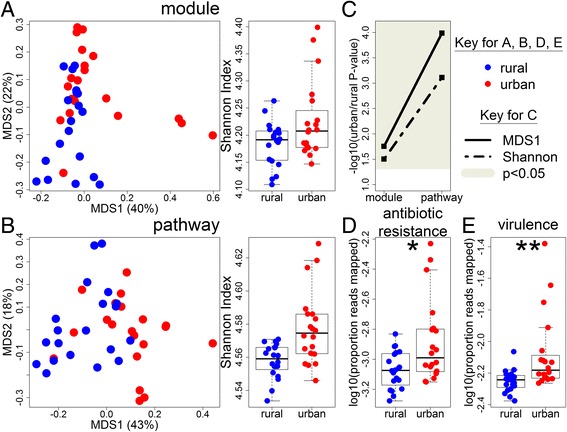
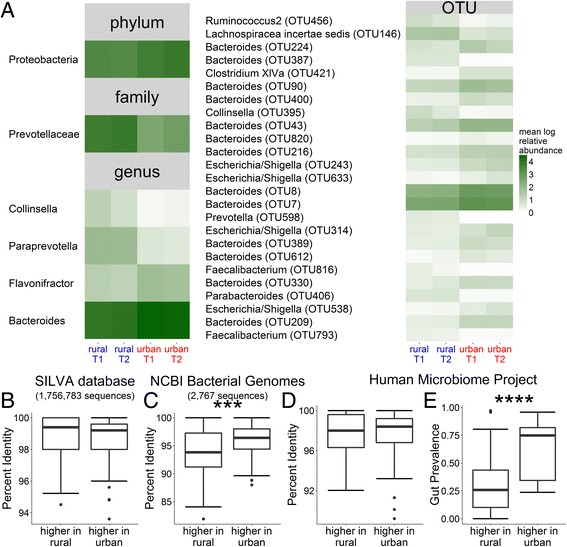
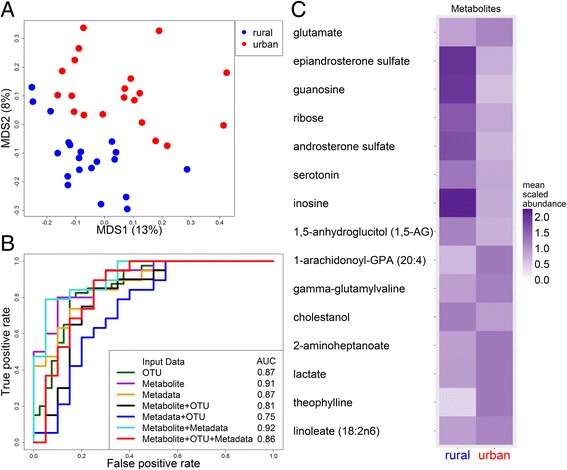
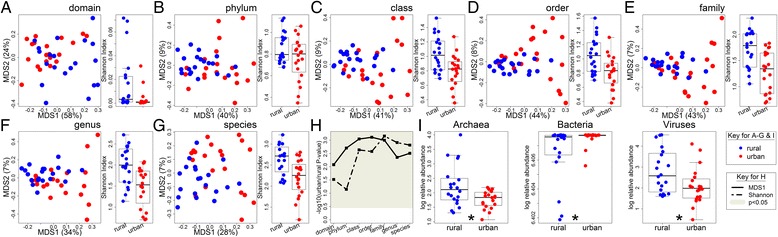
We identified significant differences in the microbiota and microbiota-related plasma metabolites in rural versus recently urban subjects from the Hunan province of China. Microbes with higher relative abundance in Chinese urban samples have been associated with disease in other studies and were substantially more prevalent in the Human Microbiome Project cohort of American subjects. Furthermore, using whole metagenome sequencing, we found that urbanization was associated with a loss of microbial diversity and changes in the relative abundances of Viruses, Archaea, and Bacteria. Gene diversity, however, increased with urbanization, along with the proportion of reads associated with antibiotic resistance and virulence, which were strongly correlated with the presence of Escherichia and Shigella.
Our data suggest that urbanization has produced convergent evolution of the gut microbial composition in American and urban Chinese populations, resulting in similar compositional patterns of abundant microbes through similar lifestyles on different continents, including a loss of potentially beneficial bacteria and an increase in potentially harmful genes via increased relative abundance of Escherichia and Shigella.
城市化与多种疾病的风险增加有关,包括肥胖、糖尿病和癌症,这些疾病也与微生物组有关。虽然微生物群落组成已被证明在不同大陆和传统与西方化社会之间存在差异,但很少有研究在一个经历快速城市化的单一国家内,在相邻社区内研究城乡差异。在这项研究中,我们比较了来自中国湖南省的农村和城市人群的肠道微生物组、血浆代谢组、饮食习惯和健康生物标志物。
我们在中国湖南省发现了农村和最近城市化人群的微生物群和与微生物群相关的血浆代谢物存在显著差异。在中国城市样本中相对丰度较高的微生物与其他研究中的疾病有关,并且在美国人类微生物组计划队列中更为普遍。此外,通过全宏基因组测序,我们发现城市化与微生物多样性的丧失以及病毒、古菌和细菌相对丰度的变化有关。然而,随着城市化的发展,基因多样性增加,与抗生素耐药性和毒力相关的读数比例增加,这与大肠杆菌和志贺氏菌的存在密切相关。
我们的数据表明,城市化导致了美国和中国城市人口肠道微生物组成的趋同进化,通过不同大陆的相似生活方式产生了丰富微生物的相似组成模式,包括有益细菌的减少和通过大肠杆菌和志贺氏菌相对丰度的增加而增加的潜在有害基因。