School of Pharmacy, Boots Science Building, University of Nottingham, Nottingham NG7 2RD, UK.
TBG Solutions Ltd. 3A Midland Court, Barlborough Links, Barlborough, Chesterfield, Derbyshire S43 4UL, UK.
Biosensors (Basel). 2021 Jul 14;11(7):238. doi: 10.3390/bios11070238.
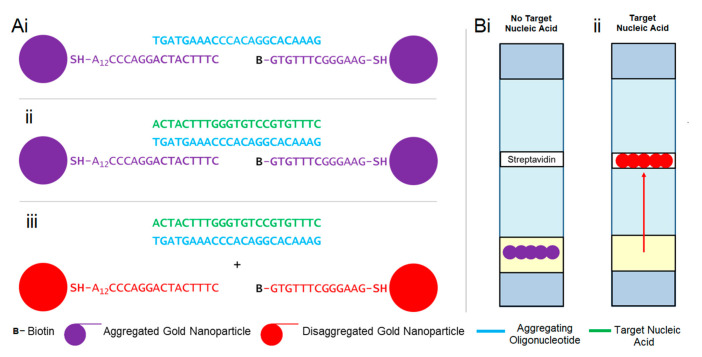
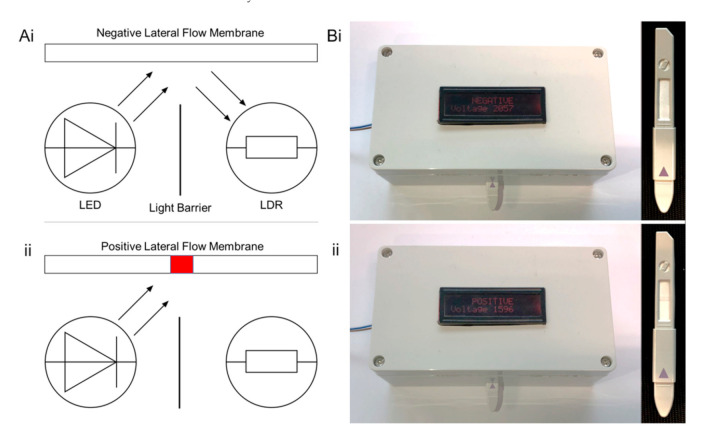
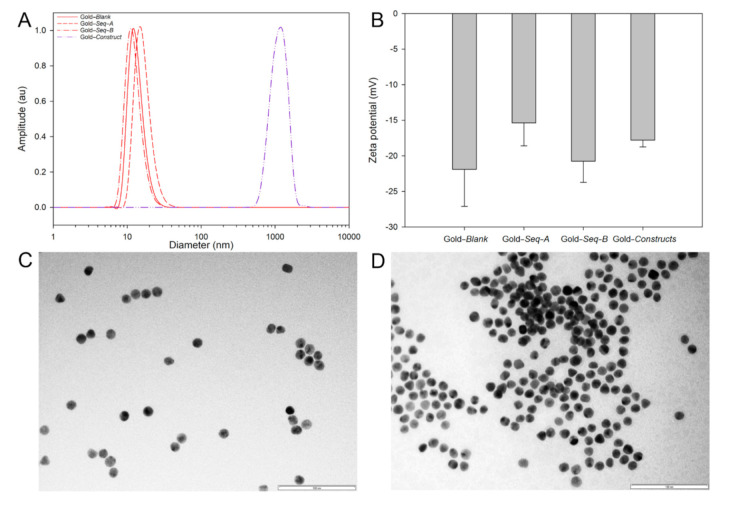
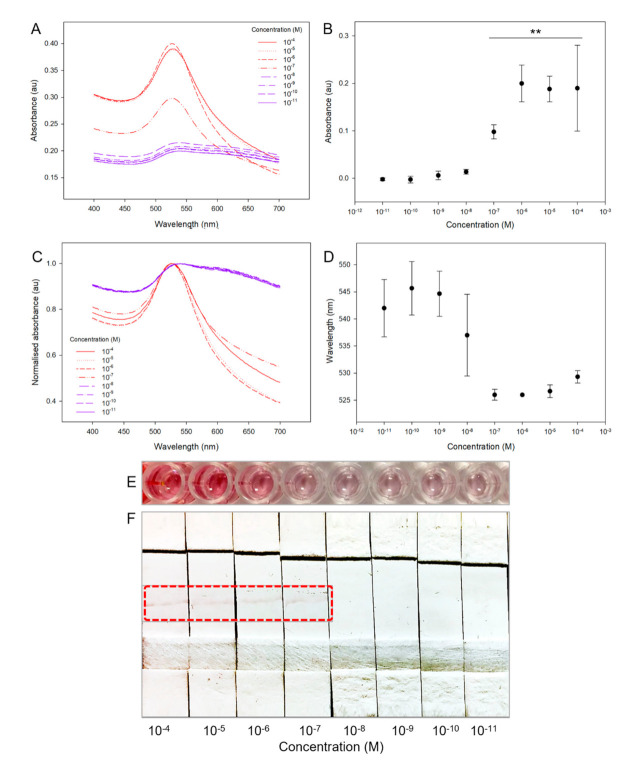
Enteroviruses are ubiquitous mammalian pathogens that can produce mild to life-threatening disease. We developed a multimodal, rapid, accurate and economical point-of-care biosensor that can detect nucleic acid sequences conserved amongst 96% of all known enteroviruses. The biosensor harnesses the physicochemical properties of gold nanoparticles and oligonucleotides to provide colourimetric, spectroscopic and lateral flow-based identification of an exclusive enteroviral nucleic acid sequence (23 bases), which was identified through in silico screening. Oligonucleotides were designed to demonstrate specific complementarity towards the target enteroviral nucleic acid to produce aggregated gold-oligonucleotide nanoconstructs. The conserved target enteroviral nucleic acid sequence (≥1 × 10 M, ≥1.4 × 10 g/mL) initiates gold-oligonucleotide nanoconstruct disaggregation and a signal transduction mechanism, producing a colourimetric and spectroscopic blueshift (544 nm (purple) > 524 nm (red)). Furthermore, lateral-flow assays that utilise gold-oligonucleotide nanoconstructs were unaffected by contaminating human genomic DNA, demonstrated rapid detection of conserved target enteroviral nucleic acid sequence (<60 s), and could be interpreted with a bespoke software and hardware electronic interface. We anticipate that our methodology will translate in silico screening of nucleic acid databases to a tangible enteroviral desktop detector, which could be readily translated to related organisms. This will pave the way forward in the clinical evaluation of disease and complement existing strategies to overcome antimicrobial resistance.
肠道病毒是普遍存在的哺乳动物病原体,可以引起轻度至危及生命的疾病。我们开发了一种多模式、快速、准确和经济的即时检测生物传感器,可以检测所有已知肠道病毒中 96%保守的核酸序列。该生物传感器利用金纳米粒子和寡核苷酸的物理化学性质,提供比色、光谱和横向流动检测,以识别独特的肠道病毒核酸序列(23 个碱基),该序列是通过计算机筛选确定的。寡核苷酸的设计旨在展示针对目标肠道病毒核酸的特异性互补性,以产生聚集的金-寡核苷酸纳米结构。保守的目标肠道病毒核酸序列(≥1×10 M,≥1.4×10 g/mL)引发金-寡核苷酸纳米结构的解聚集和信号转导机制,产生比色和光谱蓝移(544nm(紫色)>524nm(红色))。此外,利用金-寡核苷酸纳米结构的横向流动检测不受污染的人类基因组 DNA 的影响,能够快速检测保守的目标肠道病毒核酸序列(<60s),并且可以通过定制的软件和硬件电子接口进行解释。我们预计,我们的方法将把核酸数据库的计算机筛选转化为有形的肠道病毒桌面检测器,这可以很容易地转化为相关的生物体。这将为疾病的临床评估铺平道路,并补充现有的克服抗生素耐药性的策略。