Babaei Abouzar, Pouremamali Amir, Rafiee Nastaran, Sohrabi Hessamaddin, Mokhtarzadeh Ahad, de la Guardia Miguel
Department of Virology, Faculty of Medical Sciences, Tarbiat Modares University, Tehran, Iran.
Department of Analytical Chemistry, Faculty of Chemistry, University of Tabriz, Tabriz, Iran.
Trends Analyt Chem. 2022 Oct;155:116686. doi: 10.1016/j.trac.2022.116686. Epub 2022 May 19.
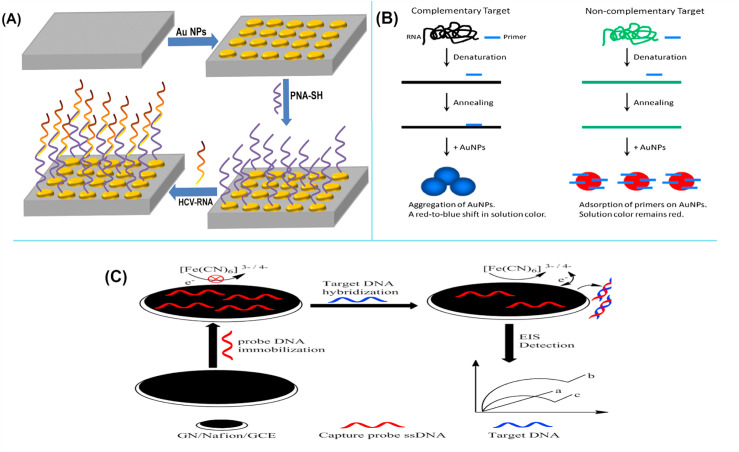
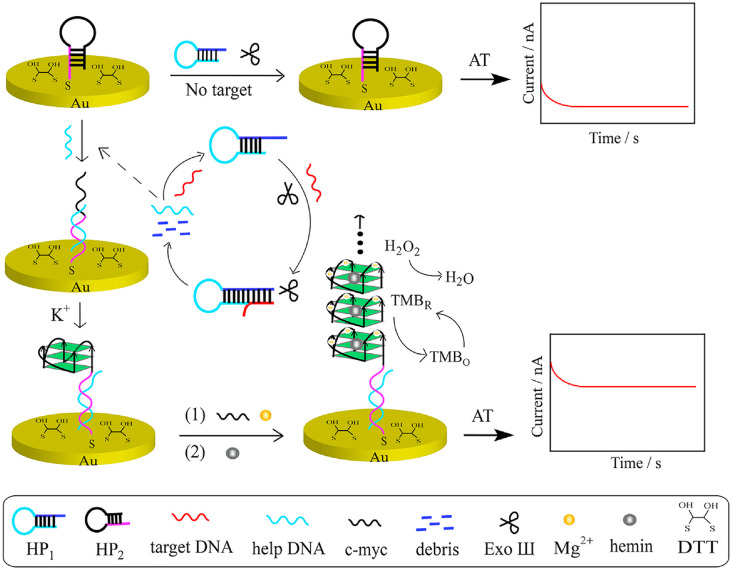
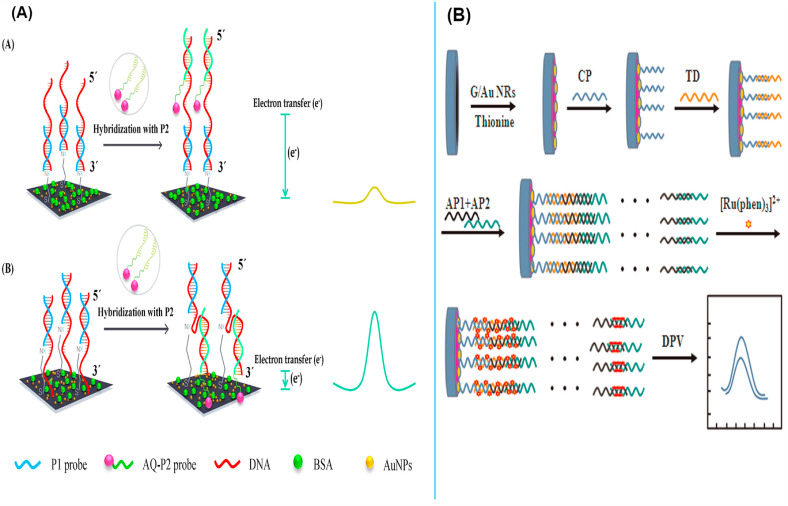
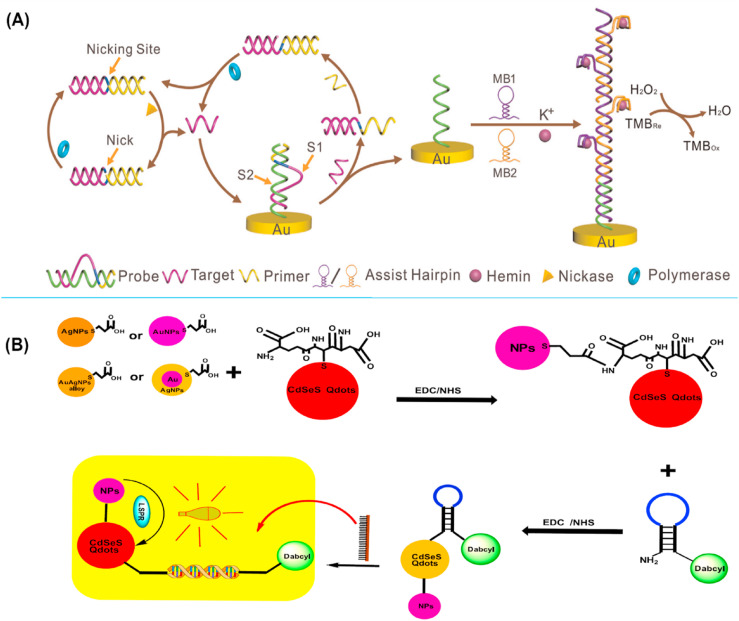
Viral infections are responsible for the deaths of millions of people throughout the world. Since outbreak of highly contagious and mutant viruses such as contemporary sars-cov-2 pandemic, has challenged the conventional diagnostic methods, the entity of a thoroughly sensitive, specific, rapid and inexpensive detecting technique with minimum level of false-positivity or -negativity, is desperately needed more than any time in the past decades. Biosensors as minimized devices could detect viruses in simple formats. So far, various nucleic acid, immune- and protein-based biosensors were designed and tested for recognizing the genome, antigen, or protein level of viruses, respectively; however, nucleic acid-based sensing techniques, which is the foundation of constructing genosensors, are preferred not only because of their ultra-sensitivity and applicability in the early stages of infections but also for their ability to differentiate various strains of the same virus. To date, the review articles related to genosensors are just confined to particular pathogenic diseases; In this regard, the present review covers comprehensive information of the research progress of the electrochemical, optical, and surface plasmon resonance (SPR) genosensors that applied for human viruses' diseases detection and also provides a well description of viruses' clinical importance, the conventional diagnosis approaches of viruses and their disadvantages. This review would address the limitations in the current developments as well as the future challenges involved in the successful construction of sensing approaches with the functionalized nanomaterials and also allow exploring into core-research works regarding this area.
病毒感染导致全球数百万人死亡。自从出现高传染性和突变性病毒,如当代的新冠疫情,传统诊断方法受到挑战,因此比过去几十年的任何时候都更迫切需要一种高度灵敏、特异、快速且廉价的检测技术,其假阳性或假阴性水平最低。生物传感器作为小型化设备,可以以简单的形式检测病毒。到目前为止,已经设计并测试了各种基于核酸、免疫和蛋白质的生物传感器,分别用于识别病毒的基因组、抗原或蛋白质水平;然而,基于核酸的传感技术作为构建基因传感器的基础,不仅因其超灵敏度和在感染早期的适用性而更受青睐,还因其能够区分同一病毒的不同毒株。迄今为止,与基因传感器相关的综述文章仅局限于特定的致病疾病;在这方面,本综述涵盖了用于人类病毒疾病检测的电化学、光学和表面等离子体共振(SPR)基因传感器研究进展的全面信息,还详细描述了病毒的临床重要性、病毒的传统诊断方法及其缺点。本综述将阐述当前发展中的局限性以及成功构建基于功能化纳米材料的传感方法所涉及的未来挑战,还将探讨该领域的核心研究工作。