Börner Friedemann, Werner Markus, Ertelt Johannes, Meins Jürgen, Abdel-Tawab Mona, Werz Oliver
Department of Pharmaceutical/Medicinal Chemistry, Institute of Pharmacy, Friedrich-Schiller-University, Philosophenweg 14, 07743 Jena, Germany.
Heidelberg-Apotheke/AureliaSan GmbH, Steinhofener Str. 12-16, 72406 Bisingen, Germany.
Pharmaceuticals (Basel). 2021 Jul 10;14(7):660. doi: 10.3390/ph14070660.
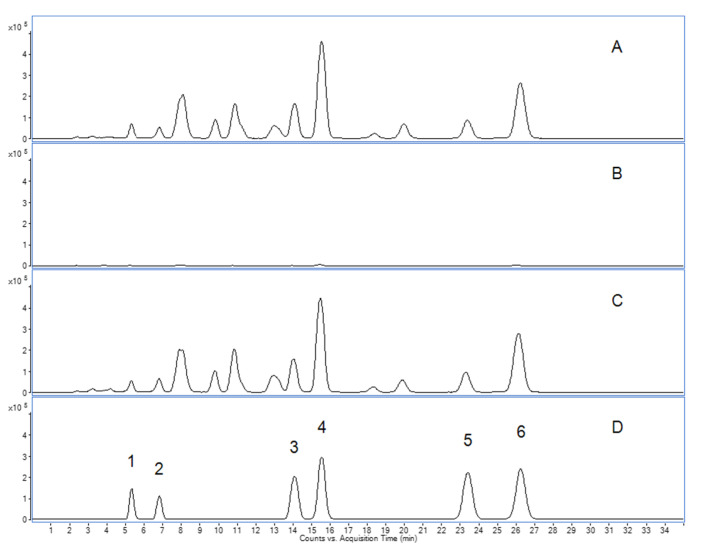
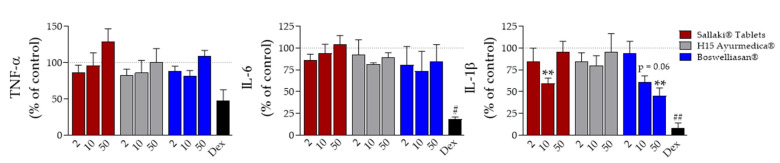
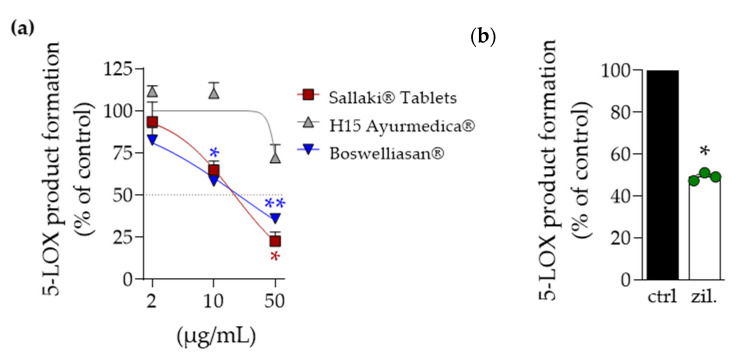
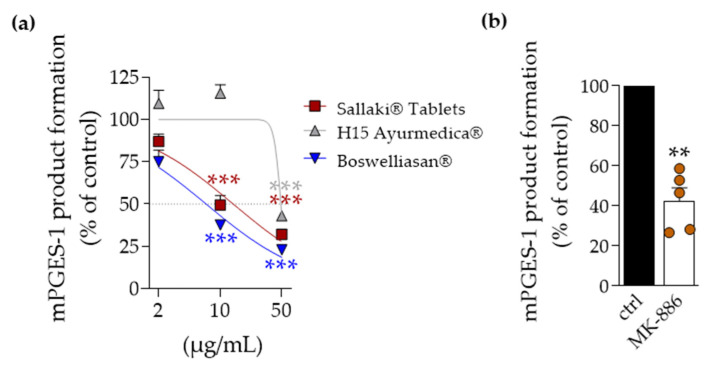
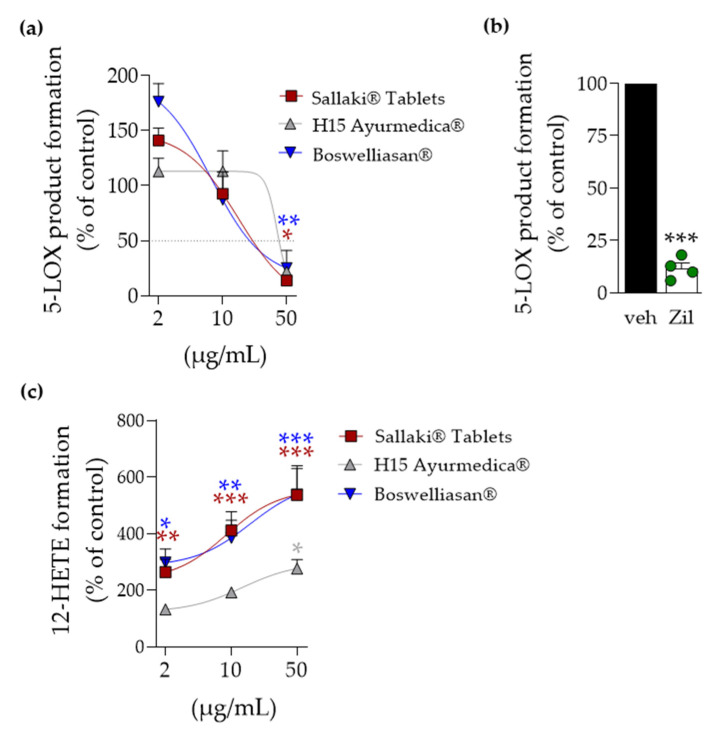
Extracts of frankincense, the gum resin of species, have been extensively used in traditional folk medicine since ancient times and are still of great interest as promising anti-inflammatory remedies in Western countries. Despite their common therapeutic use and the intensive pharmacological research including studies on active ingredients, modes of action, bioavailability, pharmacokinetics, and clinical efficacy, frankincense preparations are available as nutraceuticals but have not yet approved as a drug on the market. A major issue of commercially available frankincense nutraceuticals is the striking differences in their composition and quality, especially related to the content of boswellic acids (BAs) as active ingredients, mainly due to the use of material from divergent species but also because of different work-up and extraction procedures. Here, we assessed three frequently used frankincense-based preparations for their BA content and the interference with prominent pro-inflammatory actions and targets that have been proposed, that is, 5-lipoxygenase and leukotriene formation in human neutrophils, microsomal prostaglandin E synthase-1, and inflammatory cytokine secretion in human blood monocytes. Our data reveal striking differences in the pharmacological efficiencies of these preparations in inflammation-related bioassays which obviously correlate with the amounts of BAs they contain. In summary, high-quality frankincense extracts display powerful anti-inflammatory effectiveness against multiple targets which can be traced back to BAs as bioactive ingredients.
乳香是一种植物的树胶树脂,其提取物自古以来就在传统民间医学中广泛使用,在西方国家作为有前景的抗炎药物仍然备受关注。尽管乳香有常见的治疗用途且有深入的药理学研究,包括对其活性成分、作用方式、生物利用度、药代动力学和临床疗效的研究,但乳香制剂作为营养保健品可用,尚未被批准作为药物上市。市售乳香营养保健品的一个主要问题是其成分和质量存在显著差异,特别是与作为活性成分的乳香酸(BAs)含量有关,这主要是由于使用了来自不同品种的原料,也因为不同的后处理和提取程序。在此,我们评估了三种常用的基于乳香的制剂的乳香酸含量以及对已提出的突出促炎作用和靶点的干扰,即人类中性粒细胞中的5-脂氧合酶和白三烯形成、微粒体前列腺素E合酶-1以及人类血液单核细胞中的炎性细胞因子分泌。我们的数据揭示了这些制剂在炎症相关生物测定中的药理效率存在显著差异,这显然与它们所含的乳香酸量相关。总之,高质量的乳香提取物对多个靶点显示出强大的抗炎效果,这可追溯到作为生物活性成分的乳香酸。