Department of Oral Biology, University Clinic of Dentistry, Medical University of Vienna, Vienna, Austria.
Department of Oral Surgery, University Clinic of Dentistry, Medical University of Vienna, Vienna, Austria.
Clin Oral Implants Res. 2021 Oct;32(10):1200-1208. doi: 10.1111/clr.13817. Epub 2021 Sep 1.
Resonance frequency analysis (RFA) is used to monitor implant stability. Its output, the Implant Stability Quotient (ISQ), supposedly correlates with insertion torque, a common measurement of primary stability. However, the reliability of RFA in condensed bone remains unclear.
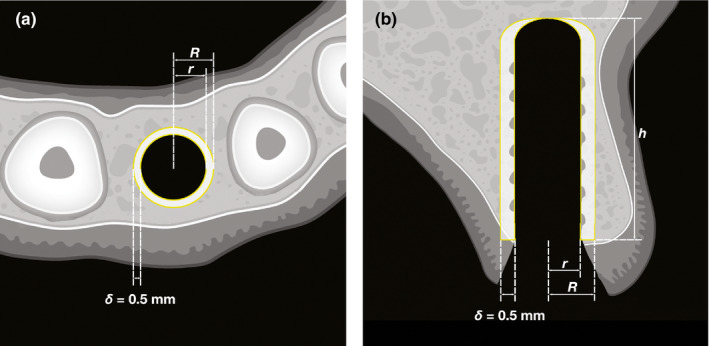
In this human cadaver study in edentulous jaws and fresh extraction sockets, implants were inserted using a split-mouth approach into condensed or untreated bone. Mean ISQ, peak insertion torque, and pre- and postoperative bone volume fractions (BV/TV) were assessed.
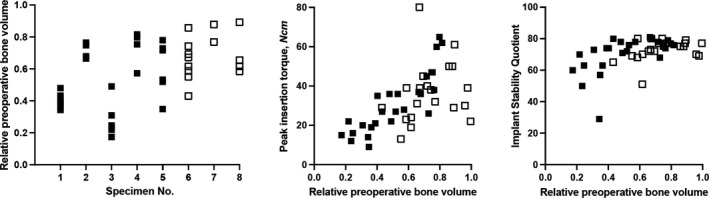
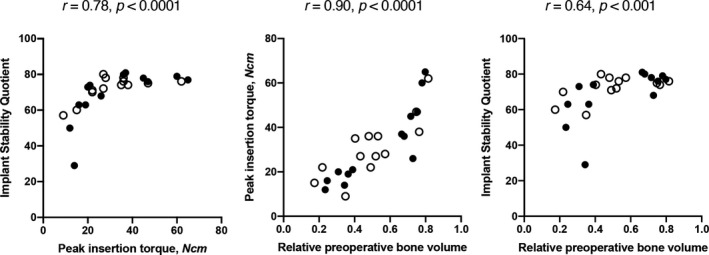
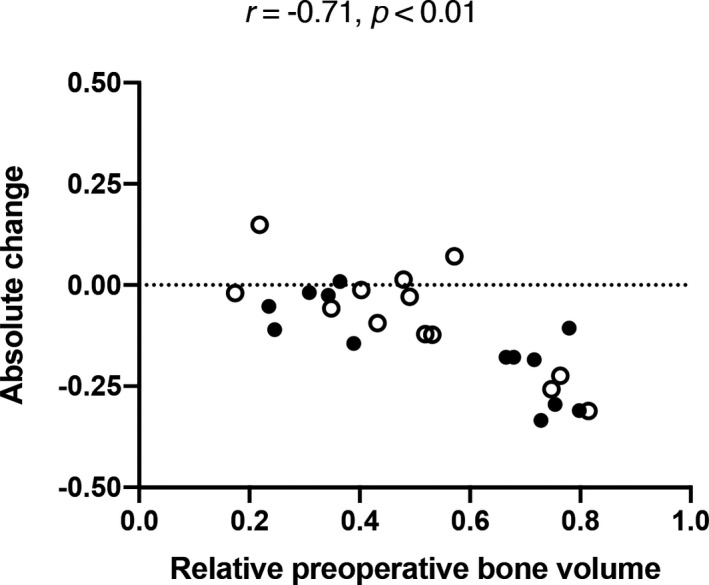
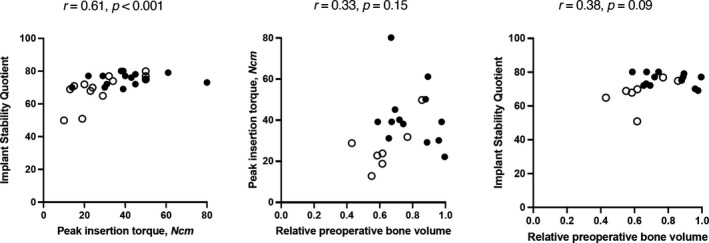
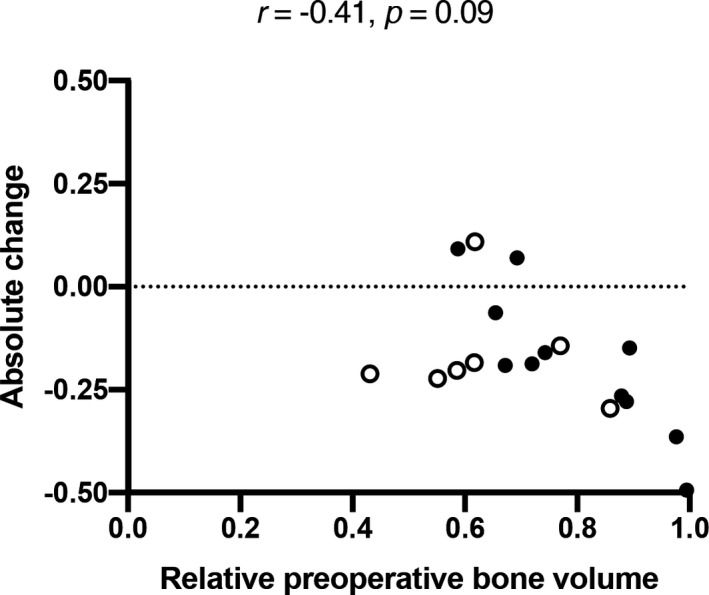
In edentulous jaws, insertion torque and ISQ correlated both in untreated (r = 0.63, p = 0.02) and in condensed (r = 0.82, p < 0.01) bone. In extraction sockets, insertion torque and ISQ only correlated in untreated (r = 0.78, p < 0.01), but not in condensed bone (r = 0.15, p = 0.58). In all edentulous jaws, preoperative BV/TV correlated with insertion torque (r = 0.90, p < 0.0001), ISQ (r = 0.64, p < 0.001), and changes in BV/TV (r = -0.71, p < 0.01). In all extraction sockets, preoperative BV/TV did not correlate with either insertion torque (r = 0.33, p = 0.15), ISQ (r = 0.38, p = 0.09), or changes in BV/TV (r = -0.41, p = 0.09). Joint analysis identified preoperative BV/TV as a predictor of postoperative BV/TV (p < 0.001), insertion torque (p < 0.001), and ISQ (p < 0.001).
RFA is feasible for monitoring stability after late implant placement into condensed bone, but not after immediate placement into condensed fresh extraction sites.
共振频率分析(RFA)用于监测种植体稳定性。其输出值,即种植体稳定性指数(ISQ),据称与初始稳定性的常用测量指标——种植体初始扭矩相关。然而,RFA 在密集骨中的可靠性尚不清楚。
在这项关于无牙颌和新鲜拔牙窝的人体尸体研究中,采用分口入路将种植体植入到致密或未处理的骨中。评估平均 ISQ、最大种植体初始扭矩、术前和术后骨体积分数(BV/TV)。
在无牙颌中,初始扭矩和 ISQ 在未处理(r = 0.63,p = 0.02)和致密(r = 0.82,p <0.01)骨中均相关。在拔牙窝中,初始扭矩和 ISQ 仅在未处理的骨中相关(r = 0.78,p <0.01),而在致密骨中不相关(r = 0.15,p = 0.58)。在所有无牙颌中,术前 BV/TV 与初始扭矩(r = 0.90,p <0.0001)、ISQ(r = 0.64,p <0.001)和 BV/TV 变化(r = -0.71,p <0.01)相关。在所有拔牙窝中,术前 BV/TV 与初始扭矩(r = 0.33,p = 0.15)、ISQ(r = 0.38,p = 0.09)或 BV/TV 变化(r = -0.41,p = 0.09)均不相关。联合分析确定术前 BV/TV 是术后 BV/TV(p <0.001)、初始扭矩(p <0.001)和 ISQ(p <0.001)的预测因素。
RFA 可用于监测晚期种植体植入致密骨后的稳定性,但不能监测即刻植入致密新鲜拔牙窝后的稳定性。