Department of Plastic Surgery, The First Medical Center, Chinese PLA General Hospital, Beijing, 100853, China.
Medical School of Chinese PLA, Chinese PLA General Hospital, Beijing, 100853, China.
Stem Cell Res Ther. 2021 Aug 6;12(1):442. doi: 10.1186/s13287-021-02528-x.
Efficient and stable delivery of neurotrophic factors (NTFs) is crucial to provide suitable microenvironment for peripheral nerve regeneration. Neurotrophin-3 (NT-3) is an important NTF during peripheral nerve regeneration which is scarce in the first few weeks of nerve defect. Exosomes are nanovesicles and have been served as promising candidate for biocarrier. In this work, NT-3 mRNA was encapsulated in adipose-derived stem cell (ADSC)-derived exosomes (Exo). These engineered exosomes were applied as NT-3 mRNA carrier and then were loaded in nerve guidance conduit (Exo-NGC) to bridge rat sciatic nerve defect.
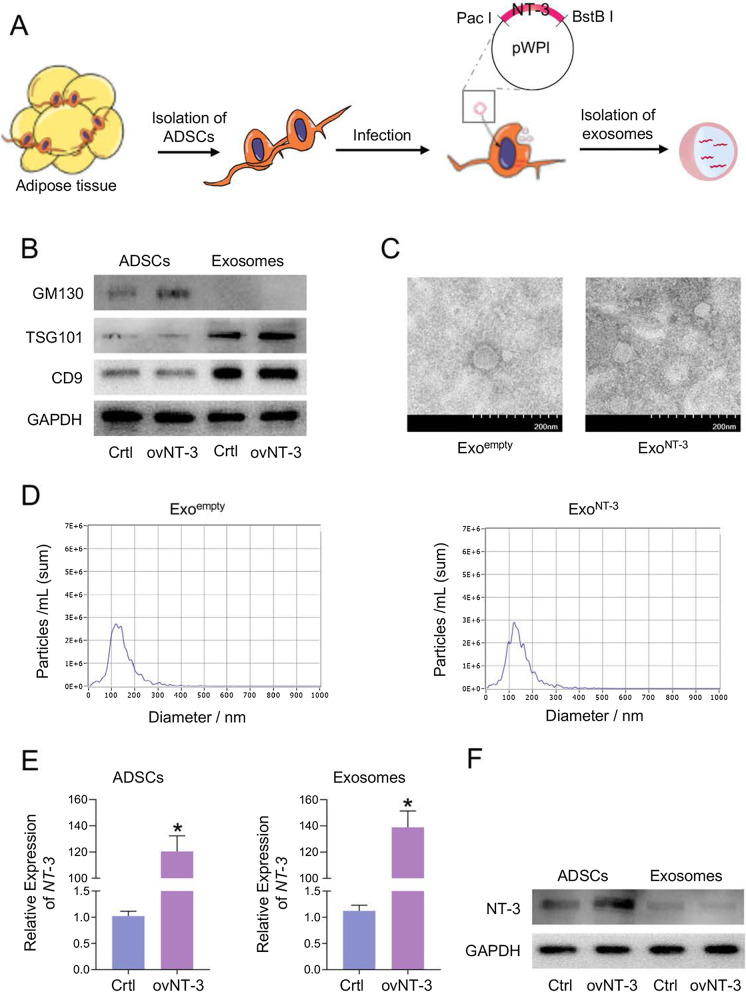
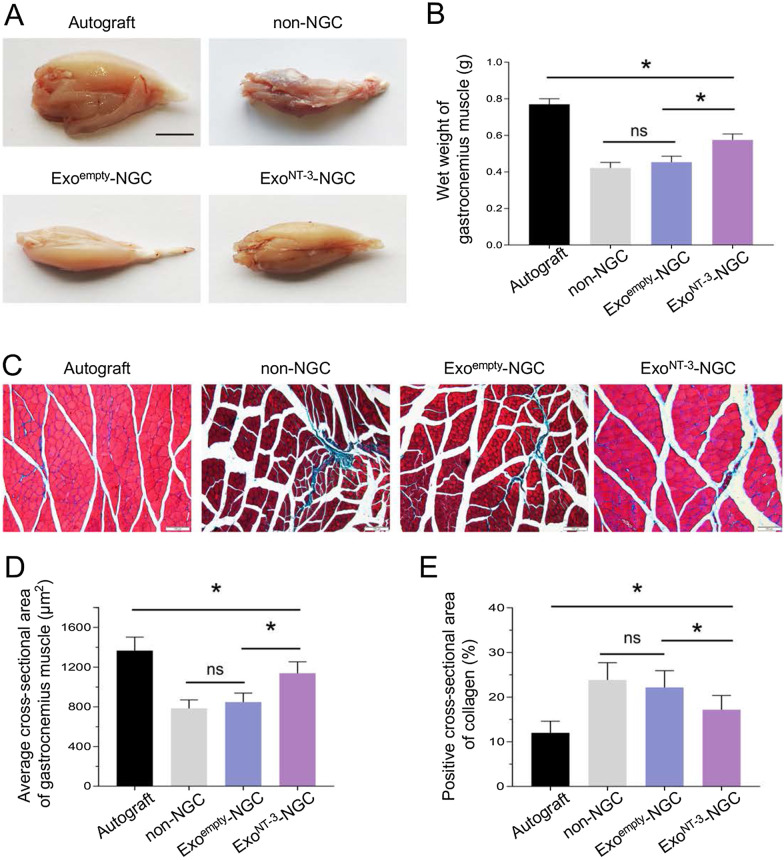
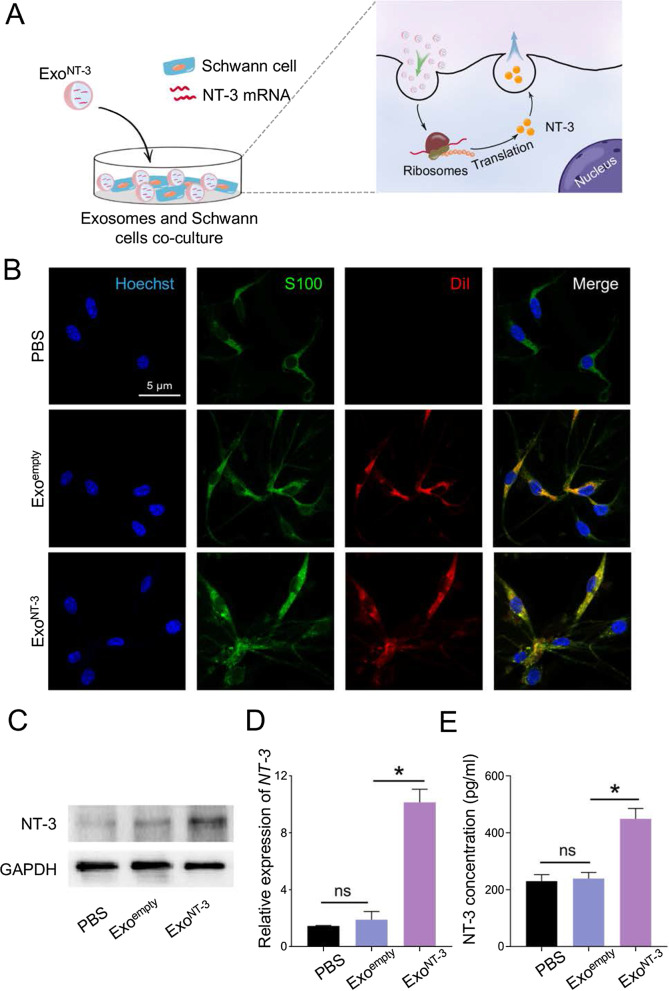
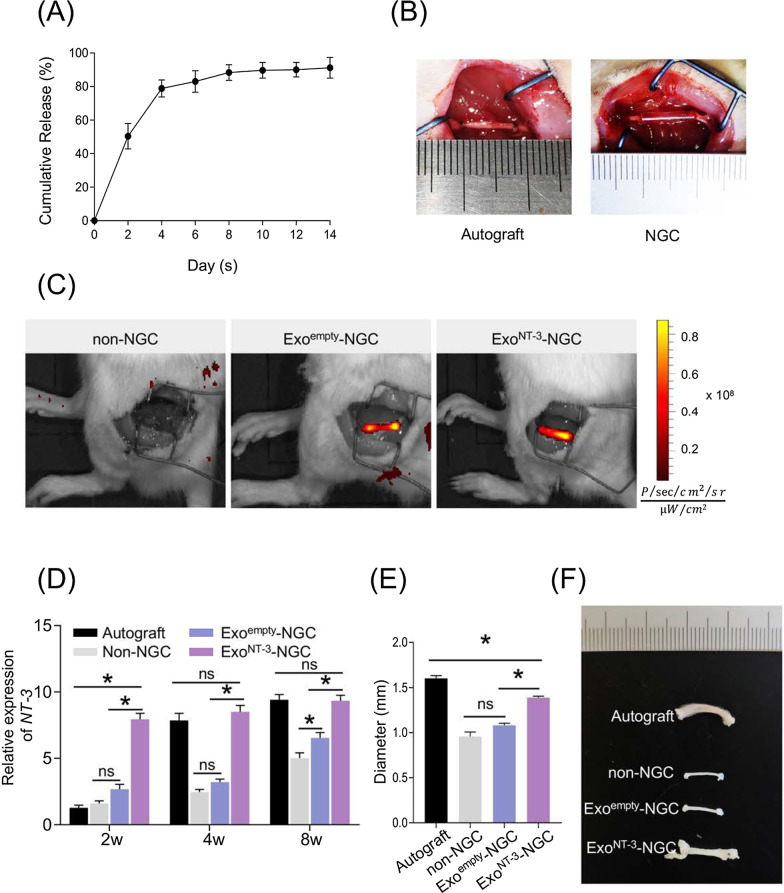
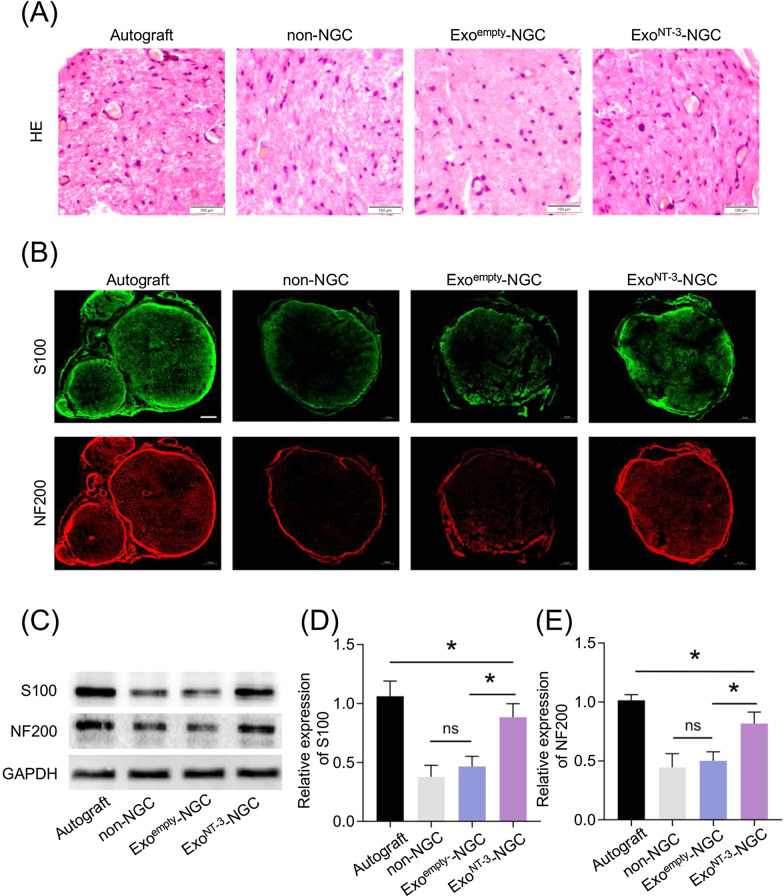
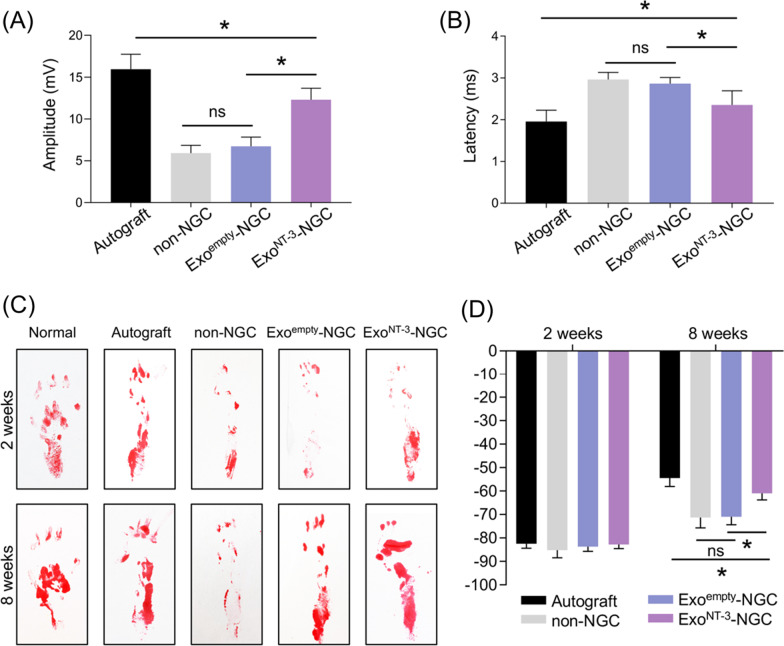
NT-3 mRNA was encapsulated in exosomes by forcedly expression of NT-3 mRNA in the donor ADSCs. Exo were co-cultured with SCs in vitro; after 24 h of culture, the efficiency of NT-3 mRNA delivery was evaluated by qPCR, western blotting and ELISA. Then, Exo were loaded in alginate hydrogel to construct the nerve guidance conduits (Exo-NGC). Exo-NGC were implanted in vivo to reconstruct 10 mm rat sciatic nerve defect. The expression of NT-3 was measured 2 weeks after the implantation operation. The sciatic nerve functional index (SFI) was examined at 2 and 8 weeks after the operation. Moreover, the therapeutic effect of Exo-NGC was also evaluated by morphology assay, immunofluorescence staining of regenerated nerves, function evaluation of gastrocnemius muscles after 8 weeks of implantation.
The engineered exosomes could deliver NT-3 mRNA to the recipient cells efficiently and translated into functional protein. The constructed NGC could realize stable release of exosomes at least for 2 weeks. After NGC implantation in vivo, Exo-NGC group significantly promote nerve regeneration and improve the function recovery of gastrocnemius muscles compared with control exosomes (Exo-NGC) group.
In this work, NGC was constructed to allow exosome-mediated NT-3 mRNA delivery. After Exo-NGC implantation in vivo, the level of NT-3 could restore which enhance the nerve regeneration. Our study provide a potential approach to improve nerve regeneration.
高效稳定地递送达神经营养因子(NTFs)对于为周围神经再生提供合适的微环境至关重要。神经营养因子-3(NT-3)是周围神经再生过程中的一种重要 NTF,但在神经缺损的最初几周内含量很少。外泌体是一种纳米囊泡,已被用作有前途的生物载体。在这项工作中,将 NT-3 mRNA 包裹在脂肪来源干细胞(ADSC)衍生的外泌体(Exo)中。这些工程化的外泌体被用作 NT-3 mRNA 载体,然后装载在神经引导管(Exo-NGC)中以桥接大鼠坐骨神经缺损。
通过在供体 ADSC 中强制表达 NT-3 mRNA 将 NT-3 mRNA 包裹在 Exo 中。将 Exo 与 SC 共培养体外 24 h 后,通过 qPCR、Western blot 和 ELISA 评估 NT-3 mRNA 传递效率。然后,将 Exo 装载到藻酸盐水凝胶中构建神经引导管(Exo-NGC)。将 Exo-NGC 植入体内以重建 10 mm 大鼠坐骨神经缺损。植入手术后 2 周测量 NT-3 的表达。手术后 2 周和 8 周检测坐骨神经功能指数(SFI)。此外,还通过形态学检测、再生神经免疫荧光染色、植入 8 周后腓肠肌功能评估来评估 Exo-NGC 的治疗效果。
工程化的外泌体可以将 NT-3 mRNA 有效地递送到受体细胞,并翻译成功能性蛋白。构建的 NGC 可以至少稳定释放 2 周的外泌体。植入体内后,与对照外泌体(Exo-NGC)组相比,Exo-NGC 组显著促进神经再生,改善腓肠肌功能恢复。
在这项工作中,构建了 NGC 以允许外泌体介导的 NT-3 mRNA 传递。植入体内后,Exo-NGC 组的 NT-3 水平恢复,增强了神经再生。我们的研究为改善神经再生提供了一种潜在的方法。