Hofmann Elena, Soppert Josefin, Ruhl Tim, Gousopoulos Epameinondas, Gerra Simona, Storti Gabriele, Tian Yuan, Brandhofer Markus, Schweizer Riccardo, Song Seung-Yong, Lindenblatt Nicole, Pallua Norbert, Bernhagen Jürgen, Kim Bong-Sung
Department of Plastic Surgery and Hand Surgery-Burn Center, University Hospital RWTH Aachen, Aachen, Germany.
Institute of Biochemistry and Molecular Cell Biology, University Hospital RWTH Aachen, Aachen, Germany.
Front Physiol. 2021 Jul 21;12:638448. doi: 10.3389/fphys.2021.638448. eCollection 2021.
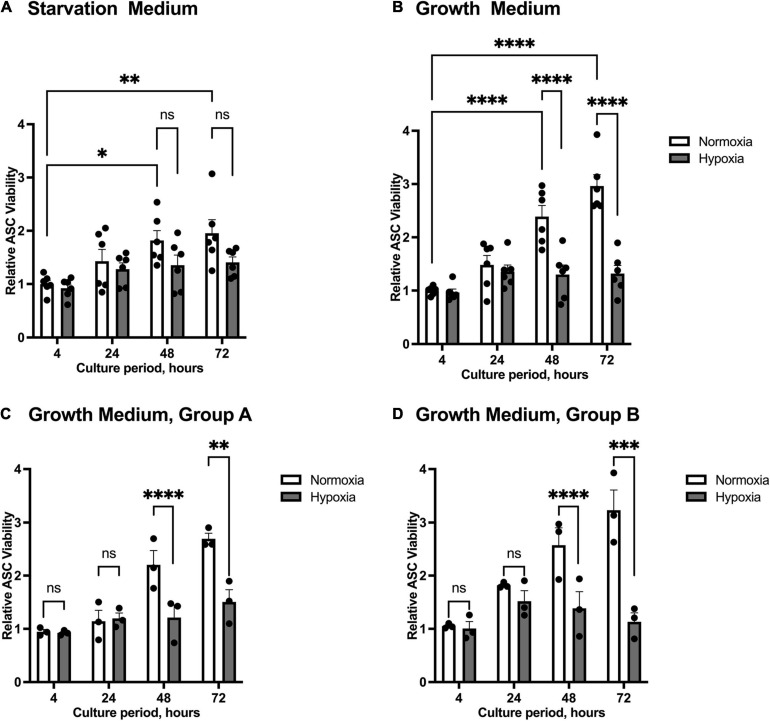
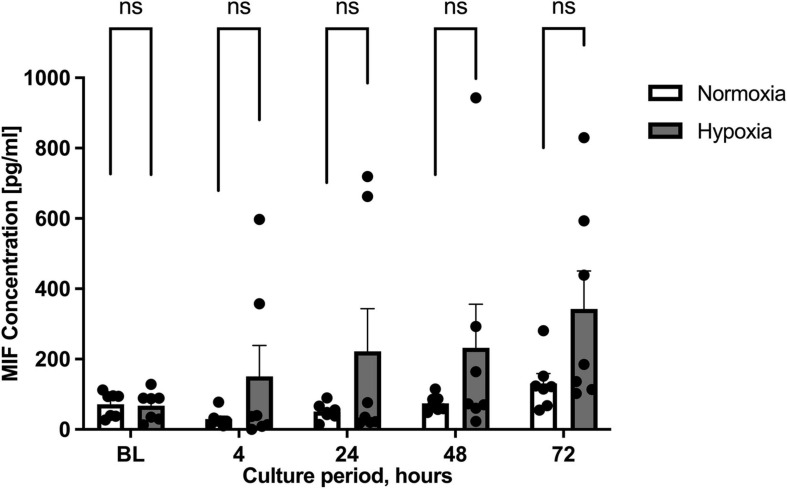
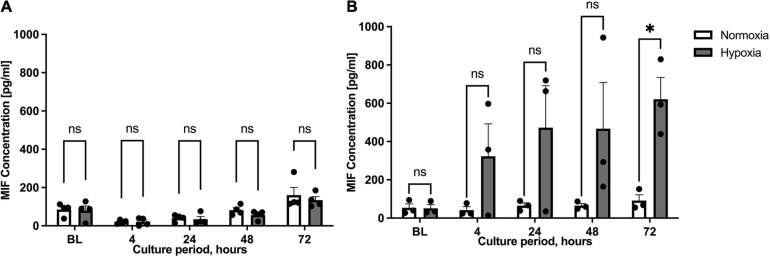
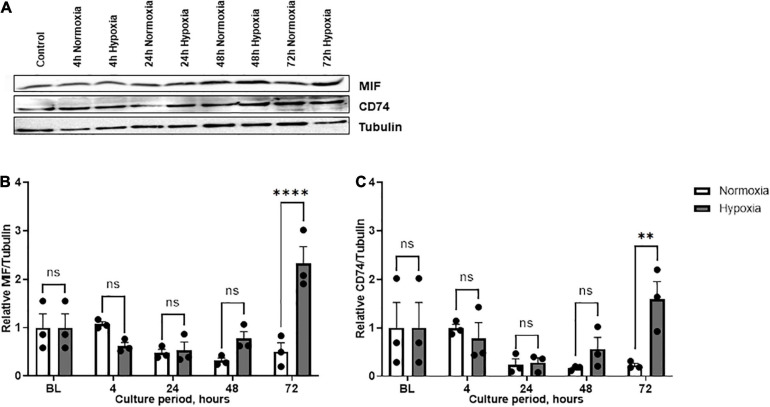
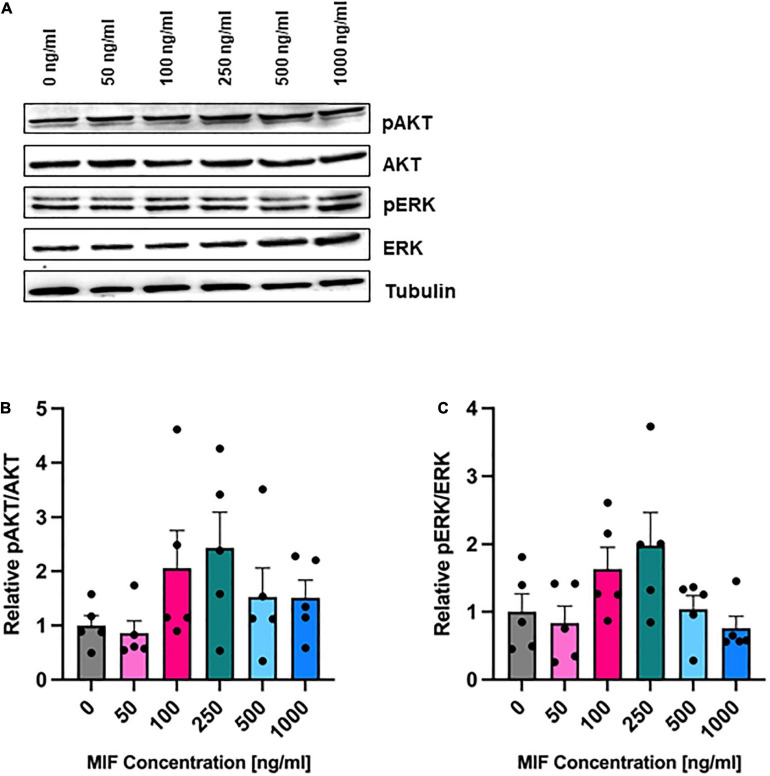
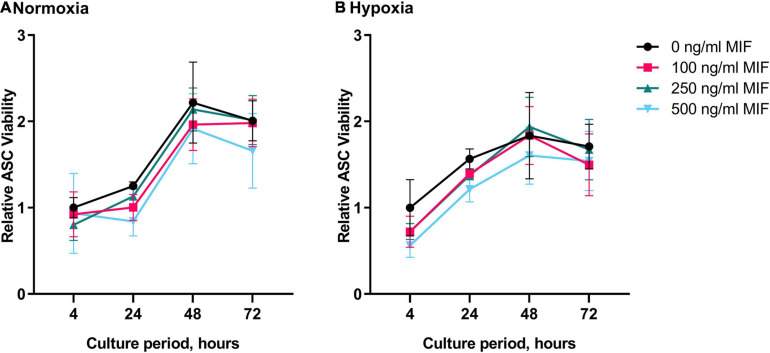
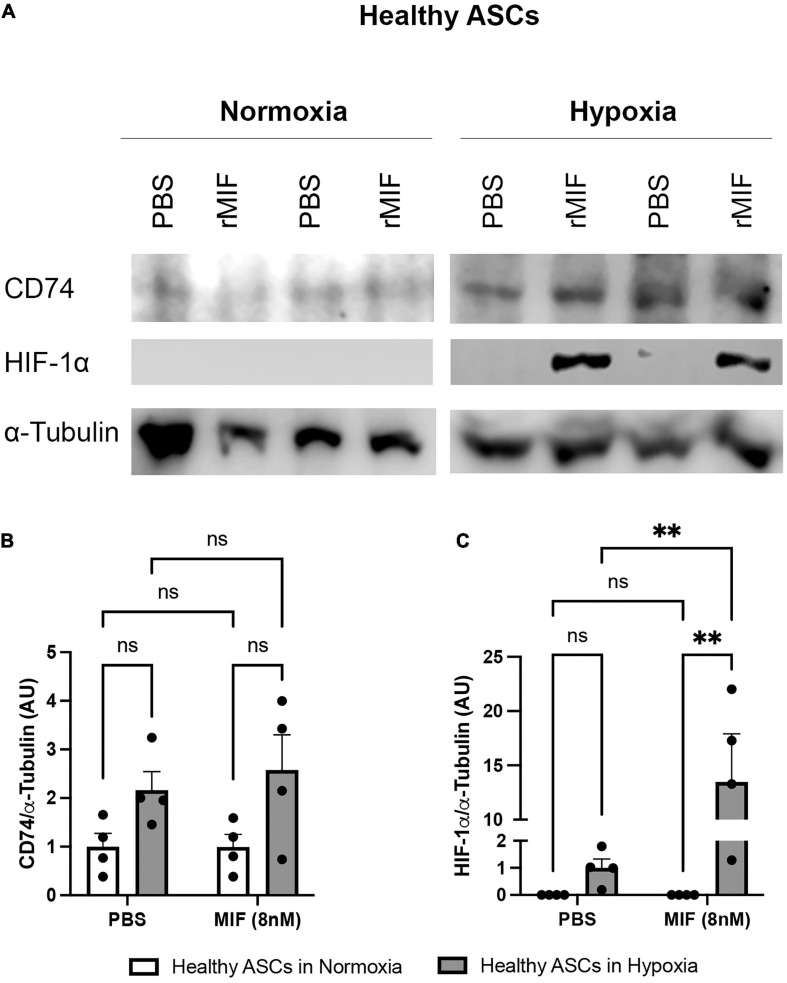
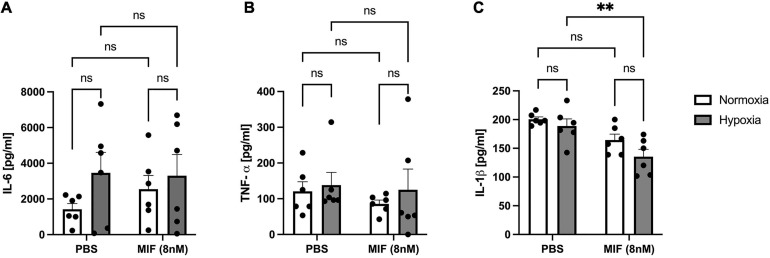
Adipose-derived stem cells (ASCs) are multipotent mesenchymal stem cells characterized by their strong regenerative potential and low oxygen consumption. Macrophage migration inhibitory factor (MIF) is a multifunctional chemokine-like cytokine that is involved in tissue hypoxia. MIF is not only a major immunomodulator but also is highly expressed in adipose tissue such as subcutaneous adipose tissue of chronic non-healing wounds. In the present study, we investigated the effect of hypoxia on MIF in ASCs isolated from healthy versus inflamed adipose tissue. Human ASCs were harvested from 17 patients (11 healthy adipose tissue samples, six specimens from chronic non-healing wounds). ASCs were treated in a hypoxia chamber at <1% oxygen. ASC viability, MIF secretion as well as expression levels of MIF, its receptor CD74, hypoxia-inducible transcription factor-1α (HIF-1α) and activation of the AKT and ERK signaling pathways were analyzed. The effect of recombinant MIF on the viability of ASCs was determined. Finally, the effect of MIF on the viability and production capacity of ASCs to produce the inflammatory cytokines tumor necrosis factor (TNF), interleukin (IL)-6, and IL-1β was determined upon treatment with recombinant MIF and/or a blocking MIF antibody. Hypoxic treatment inhibited proliferation of ASCs derived from healthy or chronic non-healing wounds. ASCs from healthy adipose tissue samples were characterized by a low degree of MIF secretion during hypoxic challenge. In contrast, in ASCs from adipose tissue samples of chronic non-healing wounds, secretion and expression of MIF and CD74 expression were significantly elevated under hypoxia. This was accompanied by enhanced ERK signaling, while AKT signaling was not altered. Recombinant MIF did stimulate HIF-1α expression under hypoxia as well as AKT and ERK phosphorylation, while no effect on ASC viability was observed. Recombinant MIF significantly reduced the secretion of IL-1β under hypoxia and normoxia, and neutralizing MIF-antibodies diminished TNF-α and IL-1β release in hypoxic ASCs. Collectively, MIF did not affect the viability of ASCs from neither healthy donor site nor chronic wounds. Our results, however, suggest that MIF has an impact on the wound environment by modulating inflammatory factors such as IL-1β.
脂肪来源干细胞(ASC)是多能间充质干细胞,其特点是具有强大的再生潜力和低氧消耗。巨噬细胞迁移抑制因子(MIF)是一种多功能趋化因子样细胞因子,参与组织缺氧过程。MIF不仅是主要的免疫调节因子,而且在脂肪组织如慢性难愈合伤口的皮下脂肪组织中高表达。在本研究中,我们调查了缺氧对从健康与炎症性脂肪组织分离的ASC中MIF的影响。从17名患者(11个健康脂肪组织样本,6个慢性难愈合伤口样本)中获取人ASC。将ASC置于氧含量<1%的缺氧箱中处理。分析ASC的活力、MIF分泌以及MIF、其受体CD74、缺氧诱导转录因子-1α(HIF-1α)的表达水平以及AKT和ERK信号通路的激活情况。确定重组MIF对ASC活力的影响。最后,在用重组MIF和/或阻断性MIF抗体处理后,确定MIF对ASC产生炎性细胞因子肿瘤坏死因子(TNF)、白细胞介素(IL)-6和IL-1β的活力和产生能力的影响。缺氧处理抑制了源自健康或慢性难愈合伤口的ASC的增殖。来自健康脂肪组织样本的ASC在缺氧刺激下MIF分泌程度较低。相比之下,在慢性难愈合伤口脂肪组织样本的ASC中,缺氧条件下MIF的分泌和表达以及CD74表达显著升高。这伴随着ERK信号增强,而AKT信号未改变。重组MIF在缺氧条件下确实刺激了HIF-1α表达以及AKT和ERK磷酸化,但未观察到对ASC活力的影响。重组MIF在缺氧和常氧条件下均显著降低IL-1β的分泌,中和性MIF抗体减少了缺氧ASC中TNF-α和IL-1β的释放。总体而言,MIF对来自健康供体部位和慢性伤口的ASC的活力均无影响。然而,我们的结果表明,MIF通过调节诸如IL-1β等炎性因子对伤口环境产生影响。