Translational Immunology Research Program, University of Helsinki and Helsinki University Hospital, Helsinki, Finland.
Human Microbiome Research Program, Faculty of Medicine, University of Helsinki, Helsinki, Finland.
Front Immunol. 2021 Jul 22;12:668219. doi: 10.3389/fimmu.2021.668219. eCollection 2021.
APECED is a rare autoimmune disease caused by mutations in the Autoimmune Regulator gene. A significant proportion of patients also have gastrointestinal symptoms, including malabsorption, chronic diarrhea, and obstipation. The pathological background of the gastrointestinal symptoms remains incompletely understood and involves multiple factors, with autoimmunity being the most common underlying cause. Patients with APECED have increased immune responses against gut commensals. Our objective was to evaluate whether the intestinal microbiota composition, predicted functions or fungal abundance differ between Finnish patients with APECED and healthy controls, and whether these associate to the patients' clinical phenotype and gastrointestinal symptoms.
DNA was isolated from fecal samples from 15 patients with APECED (median age 46.4 years) together with 15 samples from body mass index matched healthy controls. DNA samples were subjected to analysis of the gut microbiota using 16S rRNA gene amplicon sequencing, imputed metagenomics using the PICRUSt2 algorithm, and quantitative PCR for fungi. Extensive correlations of the microbiota with patient characteristics were determined.
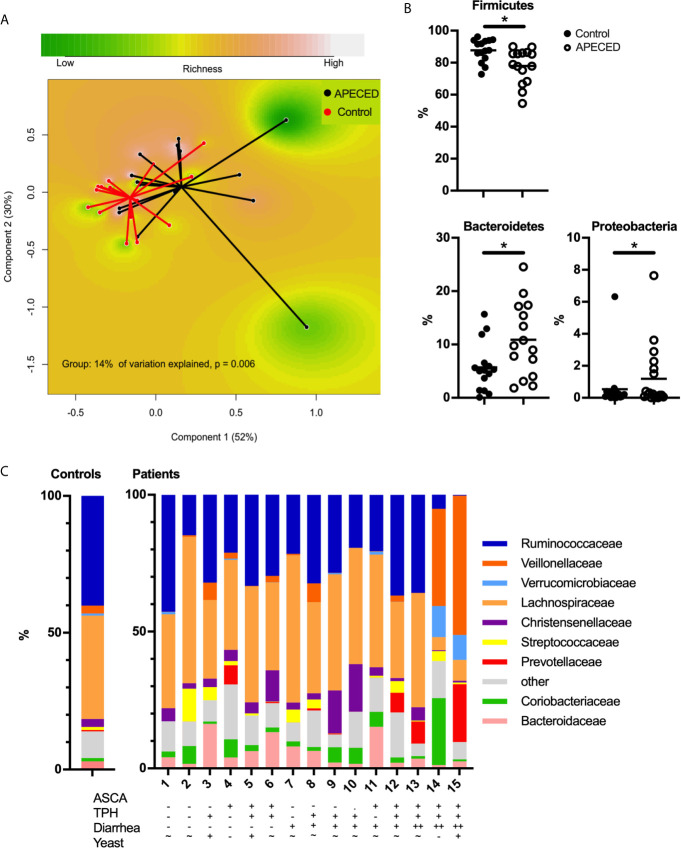
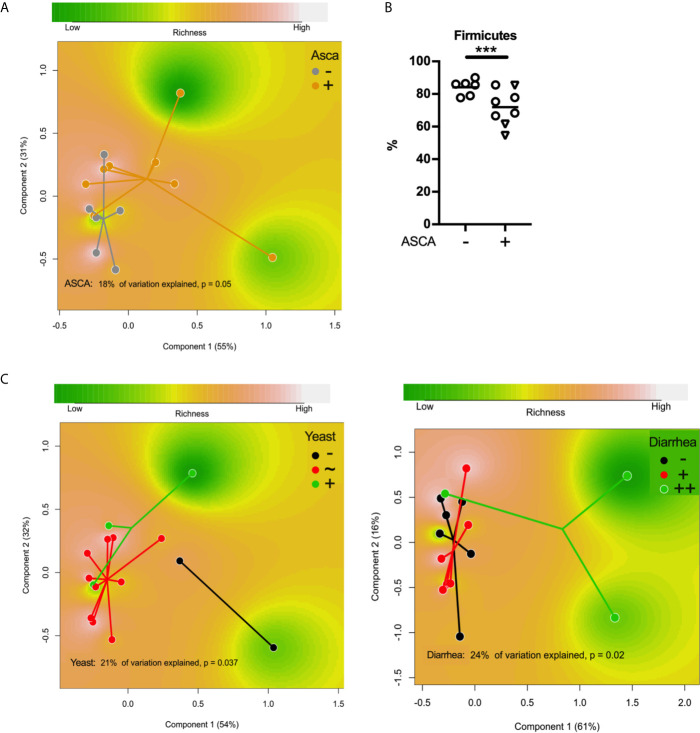
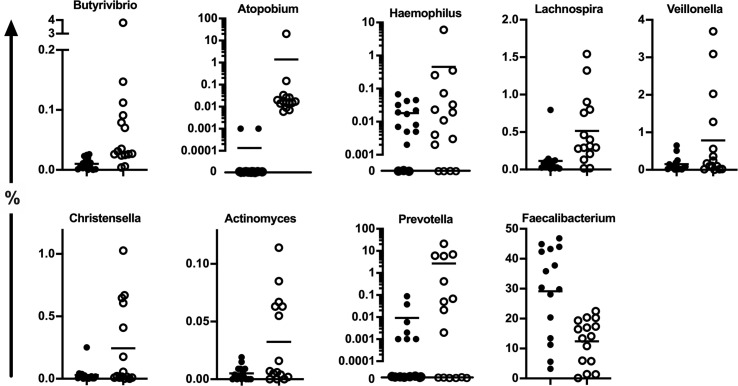
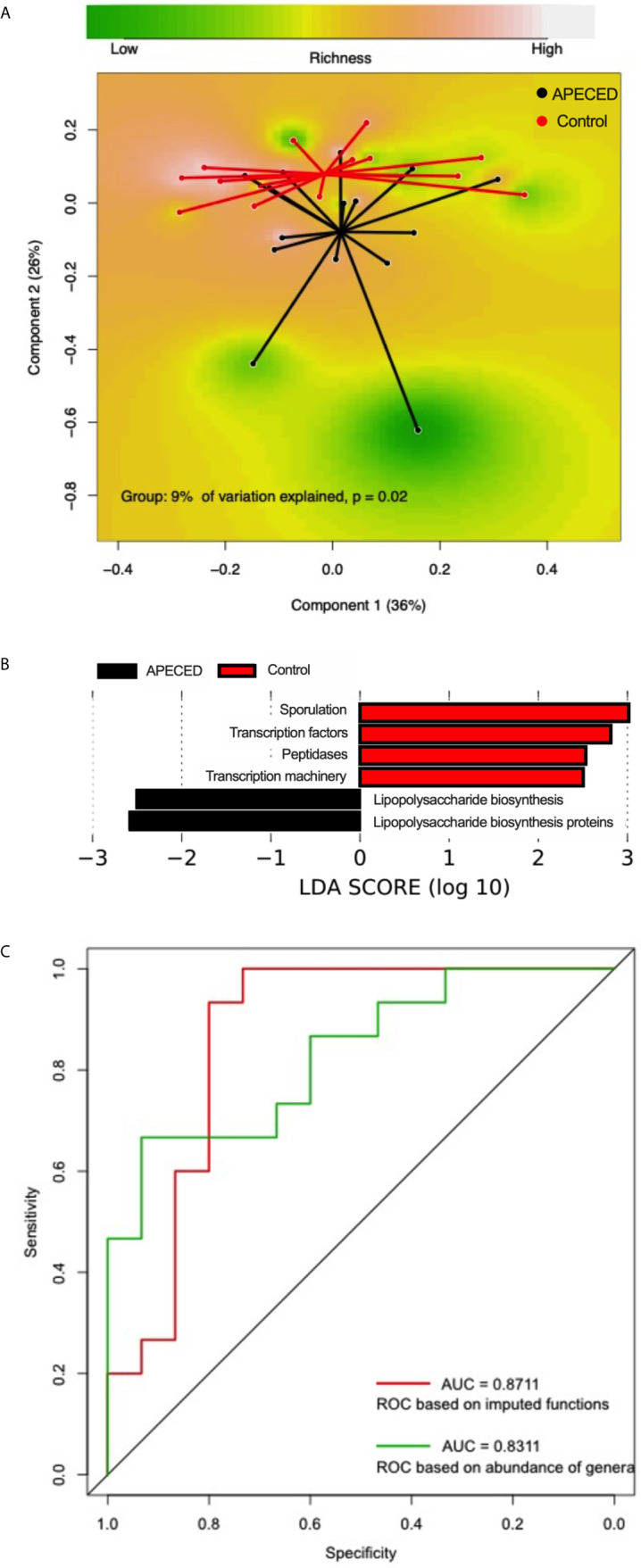
Analysis of gut microbiota indicated that both alpha- and beta-diversity were altered in patients with APECED compared to healthy controls. The fraction of was reduced in patients with APECED while that of spp. and several gram-negative genera previously implicated in biofilm formation, e.g. and , were increased in parallel to lipopolysaccharide (LPS) synthesis in imputed metagenomics. The differences in gut microbiota were linked to patient characteristics, especially the presence of anti- antibodies (ASCA) and severity of gastrointestinal symptoms.
Gut microbiota of patients with APECED is altered and enriched with predominantly gram-negative bacterial taxa that may promote biofilm formation and lead to increased exposure to LPS in the patients. The most pronounced alterations in the microbiota were associated with more severe gastrointestinal symptoms.
APECED 是一种由自身免疫调节基因(Autoimmune Regulator gene)突变引起的罕见自身免疫性疾病。相当一部分患者还存在胃肠道症状,包括吸收不良、慢性腹泻和便秘。胃肠道症状的病理背景尚不完全清楚,涉及多个因素,其中自身免疫是最常见的潜在原因。APECED 患者对肠道共生菌有增强的免疫反应。我们的目的是评估芬兰 APECED 患者和健康对照者的肠道微生物群落组成、预测功能或真菌丰度是否存在差异,以及这些差异是否与患者的临床表型和胃肠道症状相关。
从 15 名 APECED 患者(中位年龄 46.4 岁)和 15 名体重指数匹配的健康对照者的粪便样本中提取 DNA。使用 16S rRNA 基因扩增子测序分析肠道微生物群,使用 PICRUSt2 算法推断宏基因组,并使用定量 PCR 检测真菌。确定了微生物群与患者特征的广泛相关性。
肠道微生物群分析表明,与健康对照组相比,APECED 患者的 alpha 多样性和 beta 多样性均发生改变。患者中 的比例降低,而 spp.和几种先前与生物膜形成有关的革兰氏阴性属,如 和 ,在推断的宏基因组中 LPS 合成的同时增加。肠道微生物群的差异与患者特征相关,特别是抗抗体(ASCA)的存在和胃肠道症状的严重程度。
APECED 患者的肠道微生物群发生改变,富含主要的革兰氏阴性细菌类群,可能促进生物膜形成,并导致患者 LPS 暴露增加。微生物群的最显著变化与更严重的胃肠道症状相关。