Department of Otorhinolaryngology, Renji Hospital, School of Medicine, Shanghai Jiaotong University, Shanghai, China.
Department of Laboratory Medicine, Renji Hospital, School of Medicine, Shanghai Jiaotong University, Shanghai, China.
Front Cell Infect Microbiol. 2021 Jul 23;11:672355. doi: 10.3389/fcimb.2021.672355. eCollection 2021.
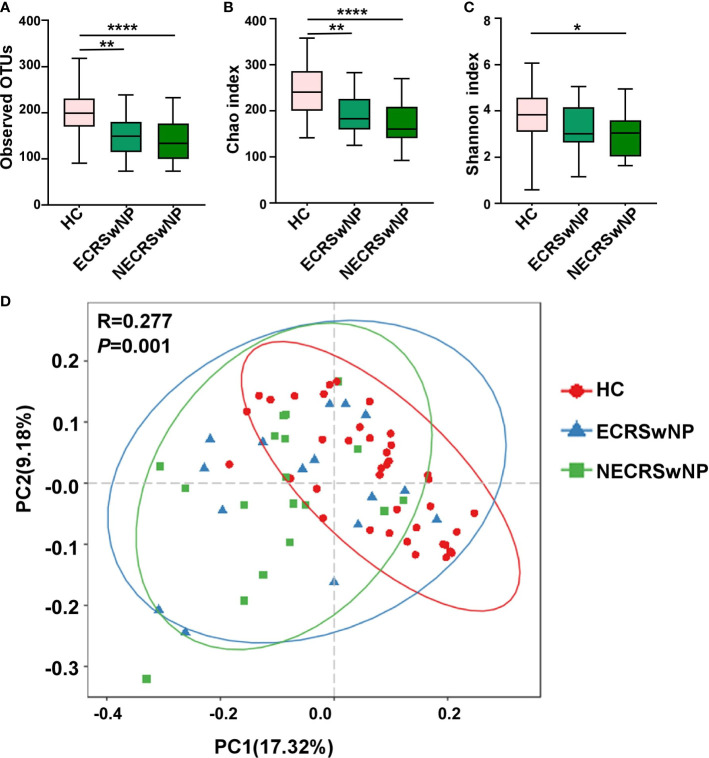
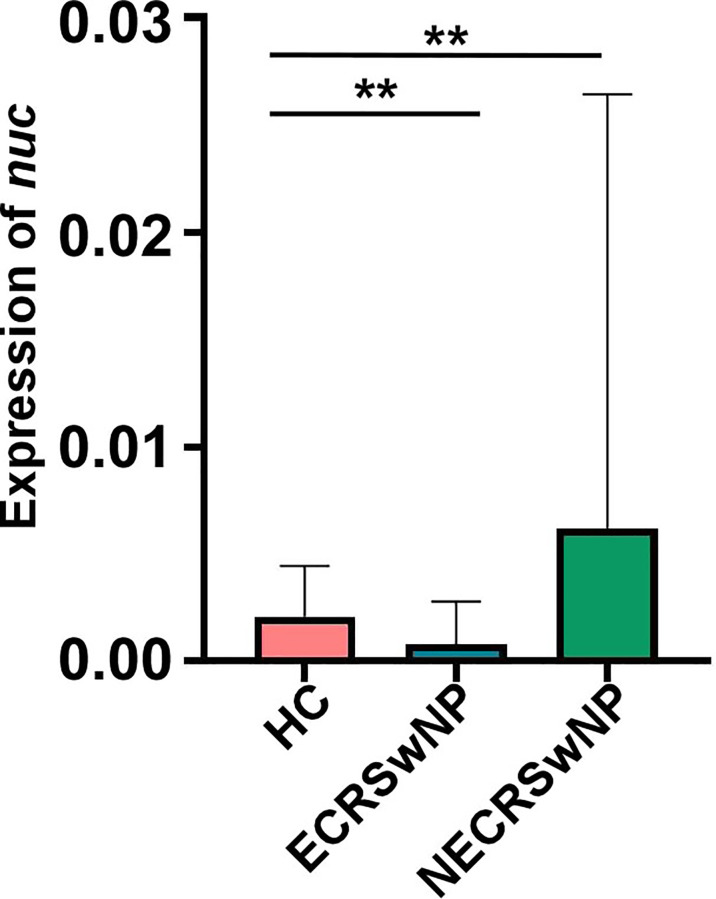
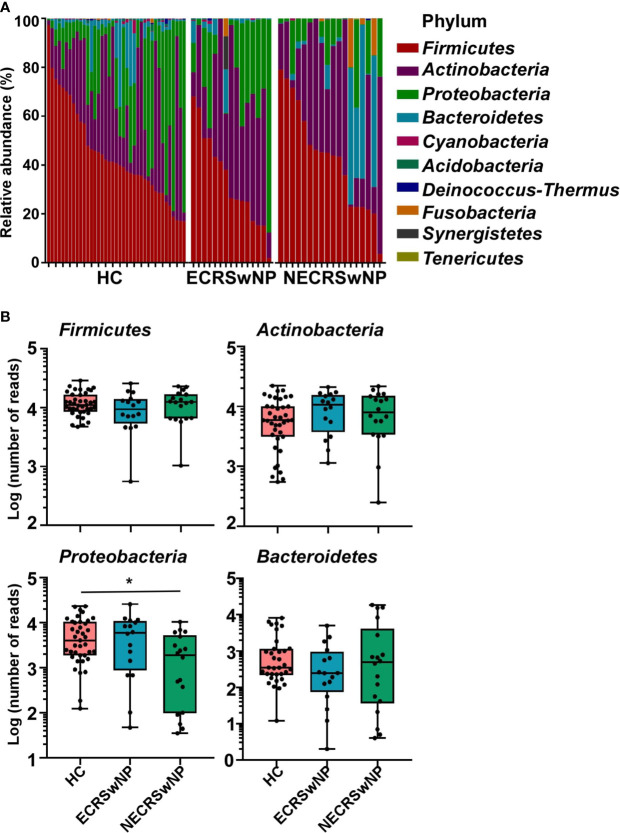
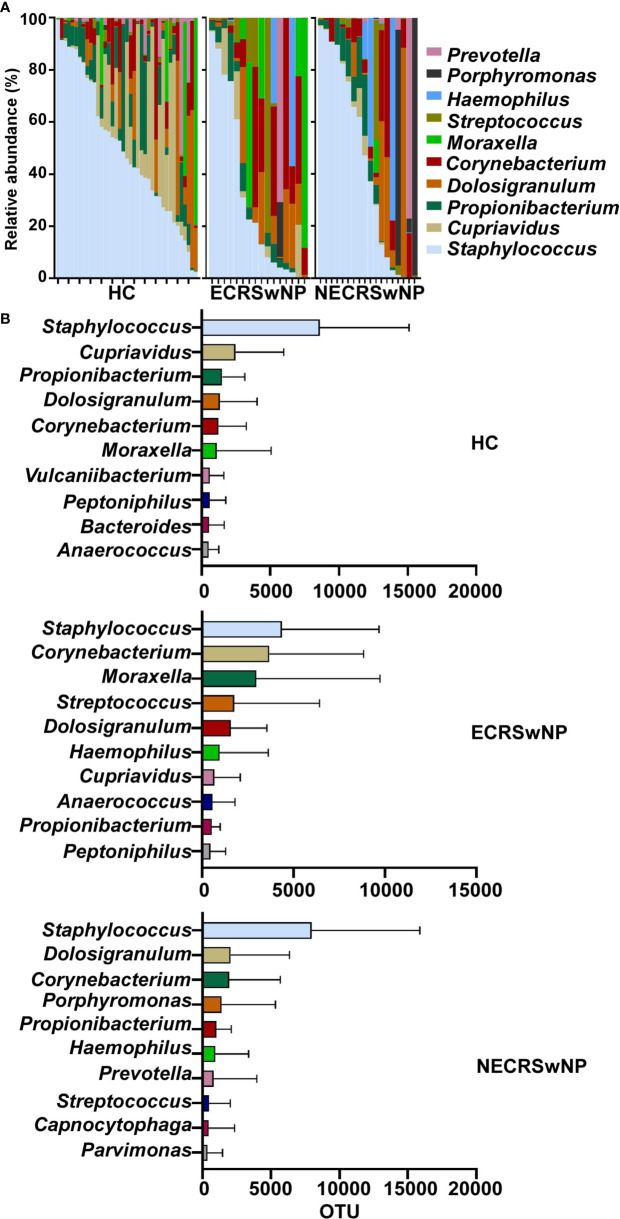
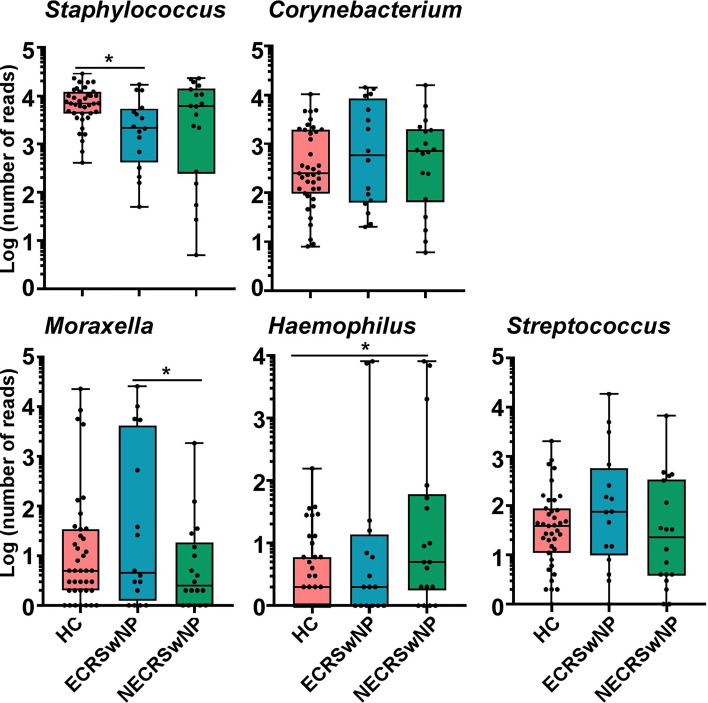
Chronic rhinosinusitis with nasal polyps (CRSwNP) is characterized by Th2-skewed inflammation and increased colonization by . CRSwNP can be distinguished as eosinophilic (ECRSwNP) and non-eosinophilic (NECRSwNP) by the infiltration of eosinophils. The local microbiota plays an important role in the persistent inflammation of CRSwNP. To evaluate the bacterial community composition on the distinct types of CRSwNP patients, we collected nasal swabs from 16 ECRSwNP patients, 18 NECRSwNP patients, and 39 healthy control subjects. The microbiome structure for all the samples were analyzed by high-throughput 16S rRNA gene sequencing. Concentration of was determined using TaqMan quantitative polymerase chain reaction (qPCR) targeting the nuclease () gene. The result showed significant differences in the sinus microbiome among healthy control subjects and CRSwNP patients. Microbiota community diversity was significantly lower in NECRSwNP samples compared to that of healthy control subjects. Interestingly, the abundance of several pathogenic bacteria was diverse between ECRSwNP and NECRSwNP patients. Although prevailed in all groups, the abundance of was significantly higher in the healthy control group than the ECRSwNP group. More importantly, the abundance of was much higher in NECRSwNP patients. This study highlights that microbiota composition may contribute to the different clinical types of CRSwNP, inspiring new therapeutic strategies to resolve this chronic inflammation process.
慢性鼻-鼻窦炎伴鼻息肉(CRSwNP)的特征是 Th2 偏向性炎症和 定植增加。通过嗜酸性粒细胞的浸润,CRSwNP 可以分为嗜酸性粒细胞(ECRSwNP)和非嗜酸性粒细胞(NECRSwNP)。局部微生物群在 CRSwNP 的持续炎症中起着重要作用。为了评估不同类型 CRSwNP 患者的细菌群落组成,我们从 16 名 ECRSwNP 患者、18 名 NECRSwNP 患者和 39 名健康对照者中收集了鼻腔拭子。所有样本的微生物组结构均通过高通量 16S rRNA 基因测序进行分析。使用针对核酸酶()基因的 TaqMan 定量聚合酶链反应(qPCR)来确定 的浓度。结果表明,健康对照者和 CRSwNP 患者之间的鼻窦微生物组存在显著差异。与健康对照者相比,NECRSwNP 样本中的微生物群落多样性显著降低。有趣的是,ECRSwNP 和 NECRSwNP 患者之间几种致病菌的丰度存在差异。尽管 在所有组中均占优势,但在健康对照组中的丰度明显高于 ECRSwNP 组。更重要的是,NECRSwNP 患者中 的丰度要高得多。这项研究强调了微生物组组成可能有助于 CRSwNP 的不同临床类型,为解决这种慢性炎症过程提供了新的治疗策略。