Neuroscience & Behavioral Disorders Programme, Duke-NUS Medical School, Singapore, Singapore.
Temasek Life Sciences Laboratory, Department of Biological Sciences, National University of Singapore, Singapore, Singapore.
EMBO J. 2021 Oct 1;40(19):e104549. doi: 10.15252/embj.2020104549. Epub 2021 Aug 9.
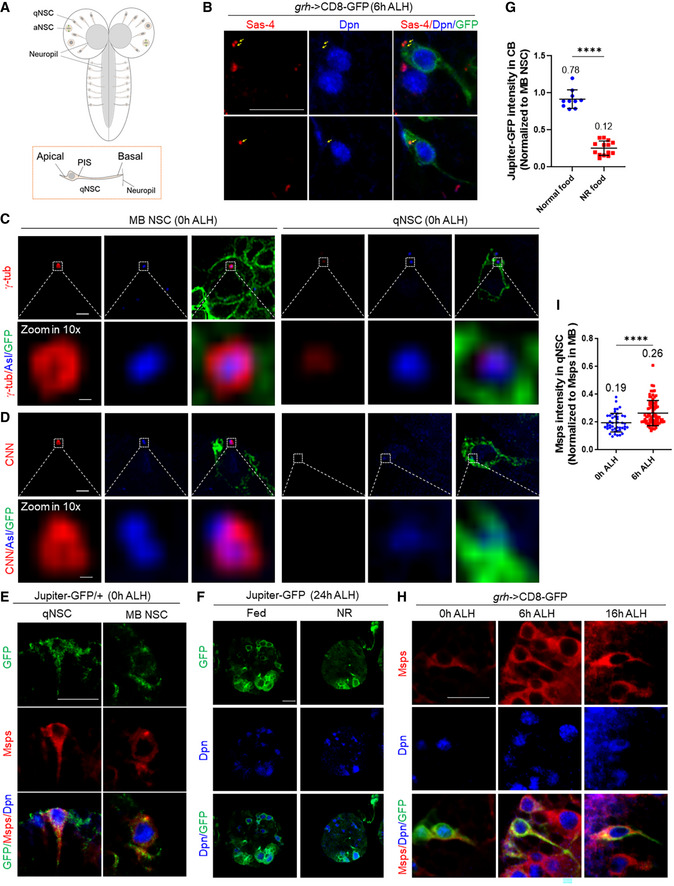
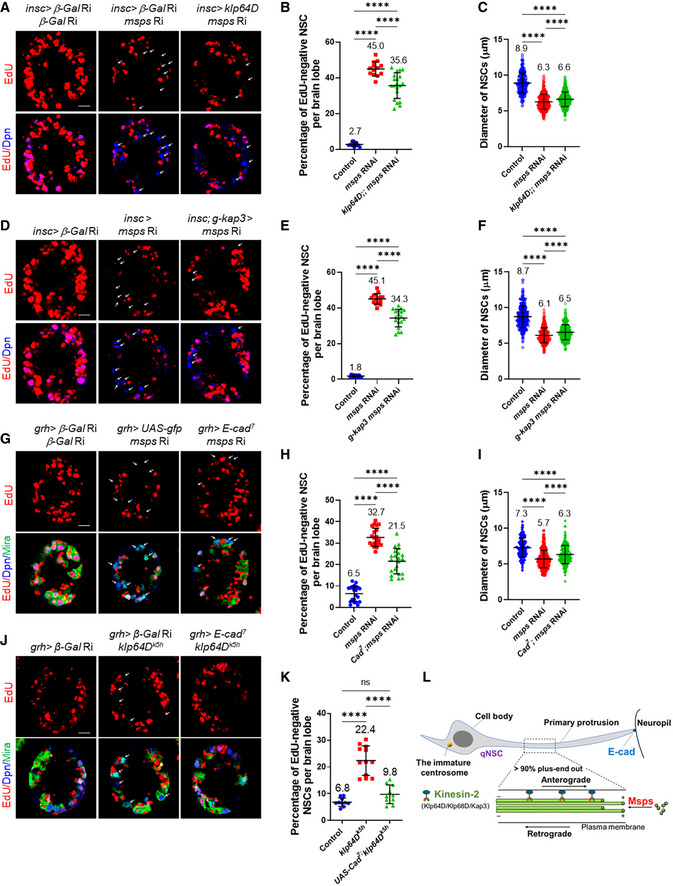
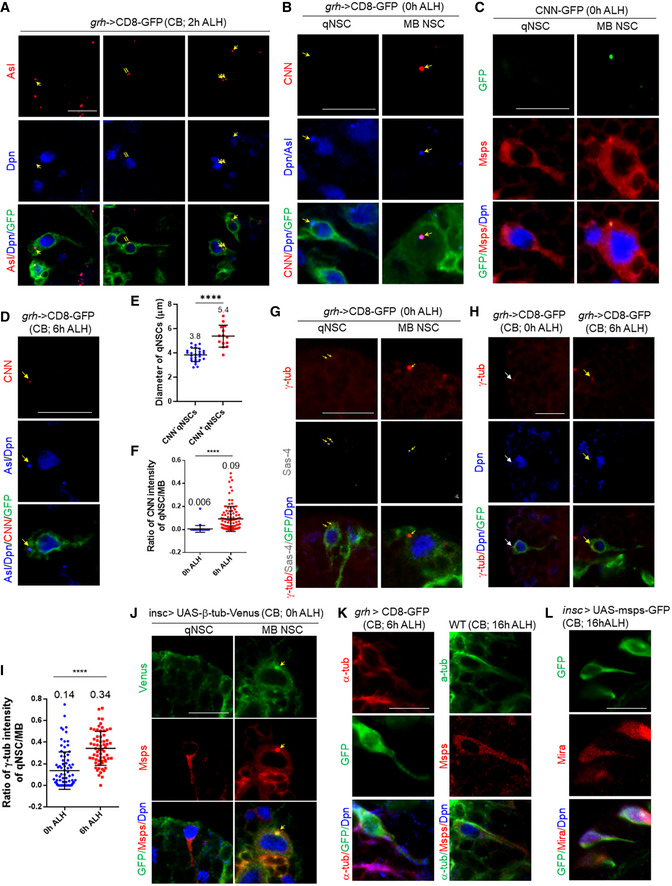
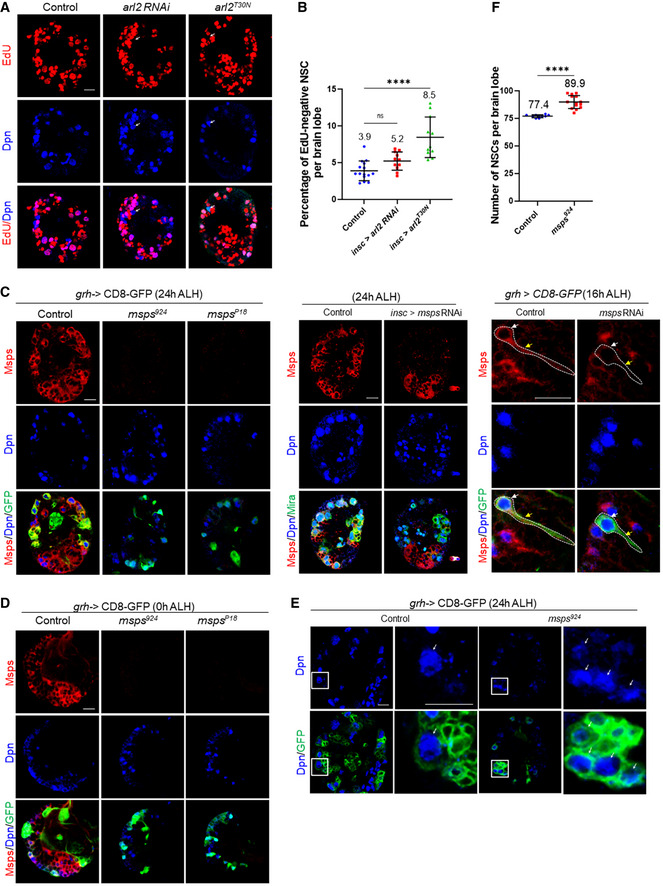
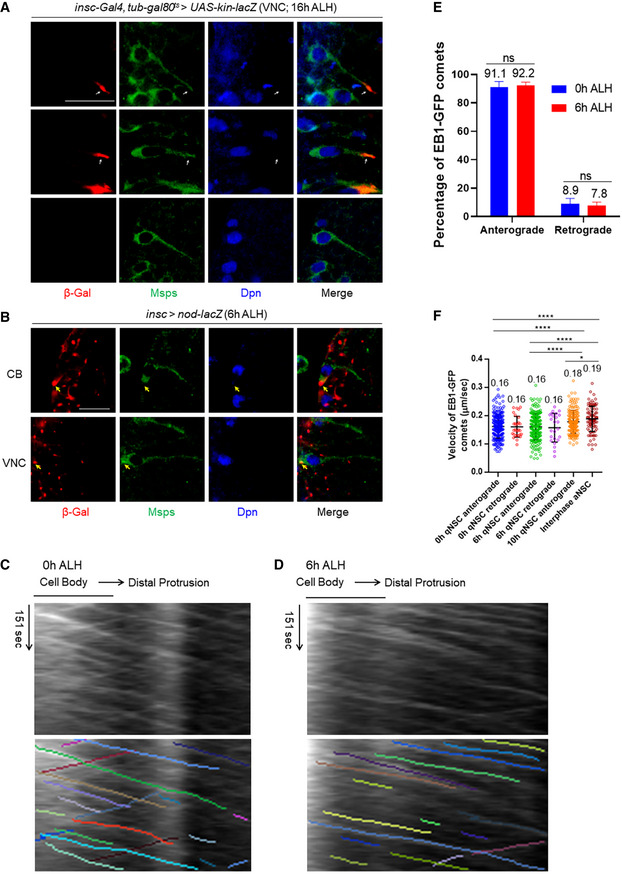
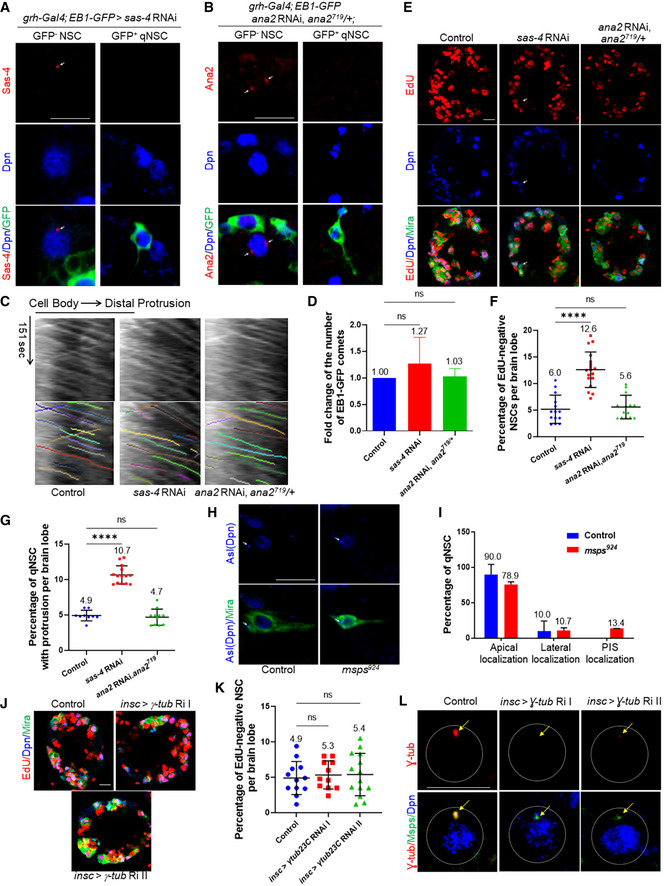
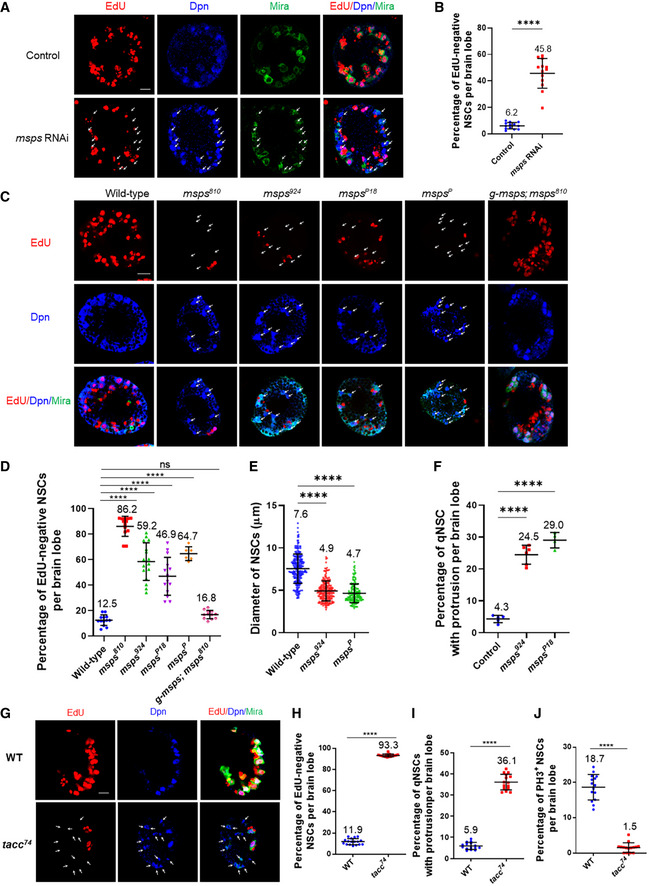
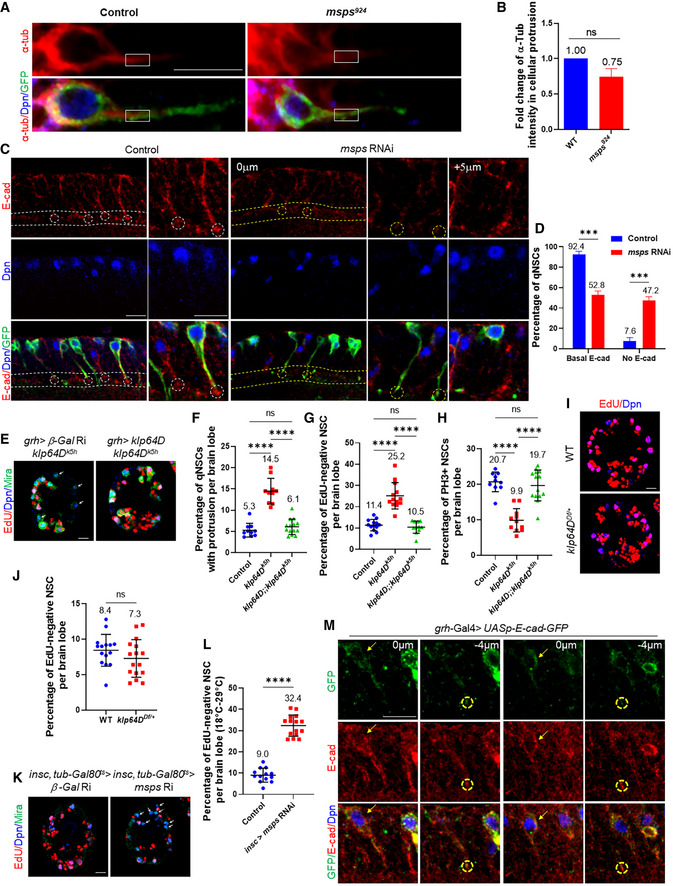
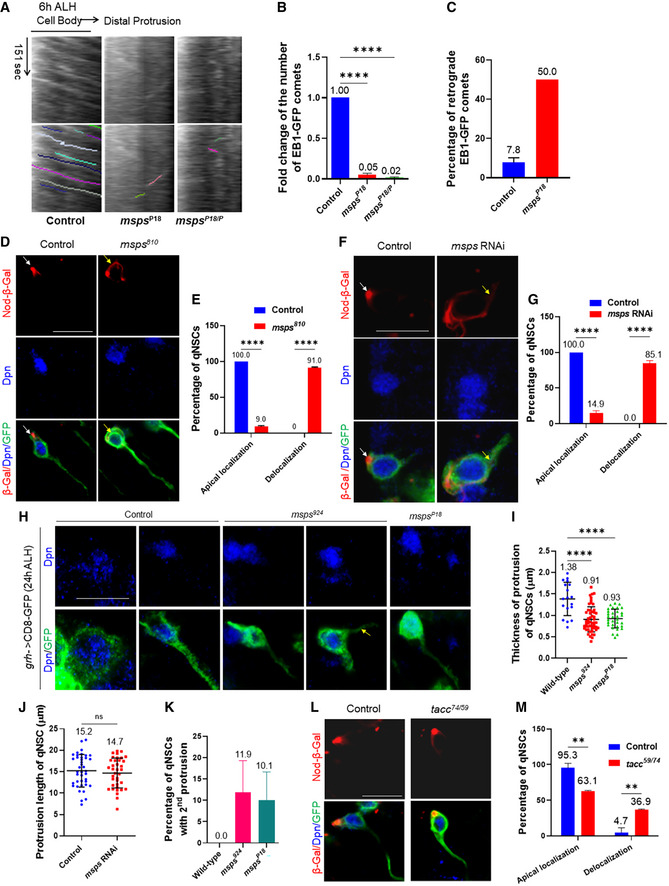
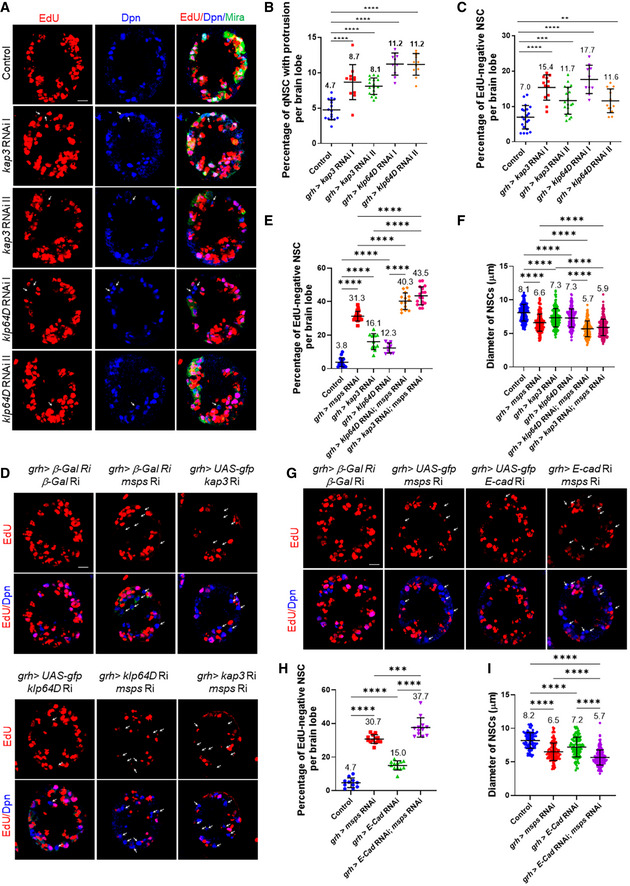
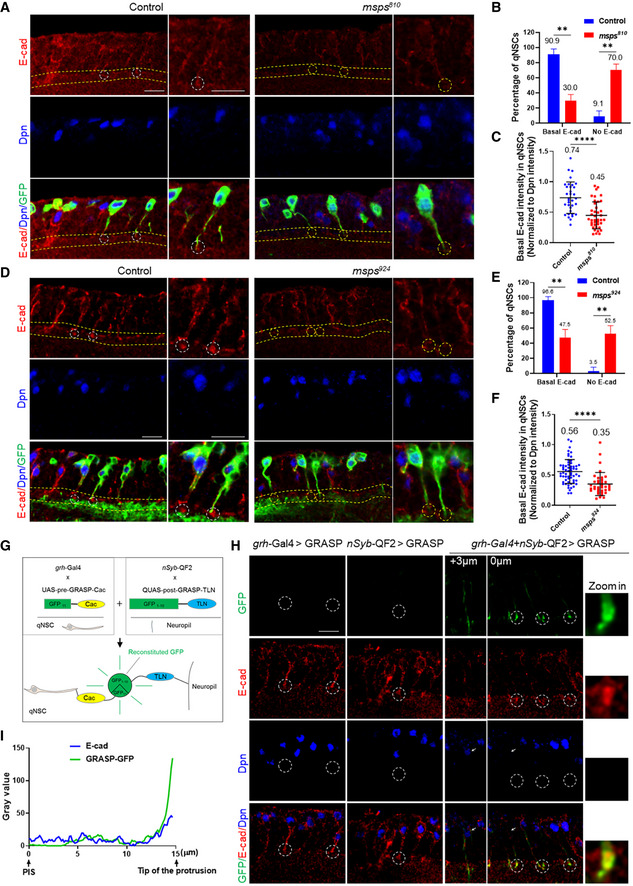
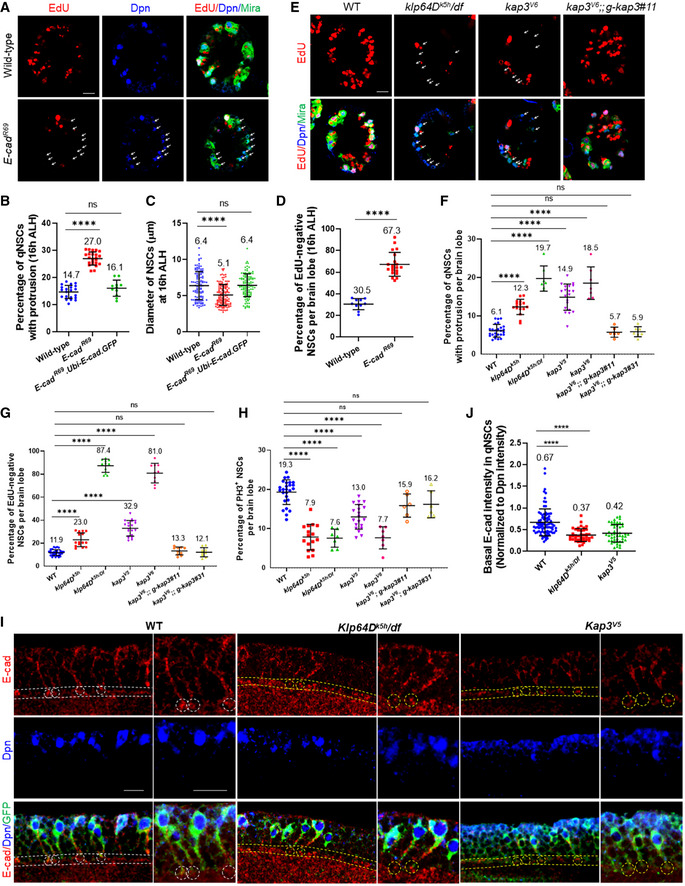
The ability of stem cells to switch between quiescence and proliferation is crucial for tissue homeostasis and regeneration. Drosophila quiescent neural stem cells (NSCs) extend a primary cellular protrusion from the cell body prior to their reactivation. However, the structure and function of this protrusion are not well established. Here, we show that in the protrusion of quiescent NSCs, microtubules are predominantly acentrosomal and oriented plus-end-out toward the tip of the primary protrusion. We have identified Mini Spindles (Msps)/XMAP215 as a key microtubule regulator in quiescent NSCs that governs NSC reactivation via regulating acentrosomal microtubule growth and orientation. We show that quiescent NSCs form membrane contact with the neuropil and E-cadherin, a cell adhesion molecule, localizes to these NSC-neuropil junctions. Msps and a plus-end directed motor protein Kinesin-2 promote NSC cell cycle re-entry and target E-cadherin to NSC-neuropil contact during NSC reactivation. Together, this work establishes acentrosomal microtubule organization in the primary protrusion of quiescent NSCs and the Msps-Kinesin-2 pathway that governs NSC reactivation, in part, by targeting E-cad to NSC-neuropil contact sites.
干细胞在静息和增殖之间转换的能力对于组织稳态和再生至关重要。果蝇静息神经干细胞 (NSC) 在重新激活之前从细胞体伸出一个主要的细胞突起。然而,这个突起的结构和功能尚未得到很好的确定。在这里,我们表明在静息 NSCs 的突起中,微管主要是无中心体的,并且朝向主突起的尖端呈正端向外取向。我们已经确定了 Mini Spindles (Msps)/XMAP215 是静息 NSCs 中的一个关键微管调节因子,通过调节无中心体微管的生长和取向来控制 NSC 的重新激活。我们表明,静息 NSCs 与神经丛形成膜接触,并且细胞粘附分子 E-cadherin 定位于这些 NSC-神经丛连接处。Msps 和一个指向正极的动力蛋白 Kinesin-2 促进 NSC 细胞周期重新进入,并在 NSC 重新激活期间将 E-cadherin 靶向 NSC-神经丛接触。总之,这项工作确立了静息 NSCs 中的主要突起中的无中心体微管组织,以及 Msps-Kinesin-2 途径,该途径部分通过将 E-cad 靶向 NSC-神经丛接触位点来控制 NSC 的重新激活。