Stefanov Martin A, Rashkov Georgi D, Yotsova Ekaterina K, Borisova Preslava B, Dobrikova Anelia G, Apostolova Emilia L
Institute of Biophysics and Biomedical Engineering, Bulgarian Academy of Sciences, Acad. Georgi Bonchev Street, Block 21, 1113 Sofia, Bulgaria.
Plants (Basel). 2021 Jul 17;10(7):1469. doi: 10.3390/plants10071469.
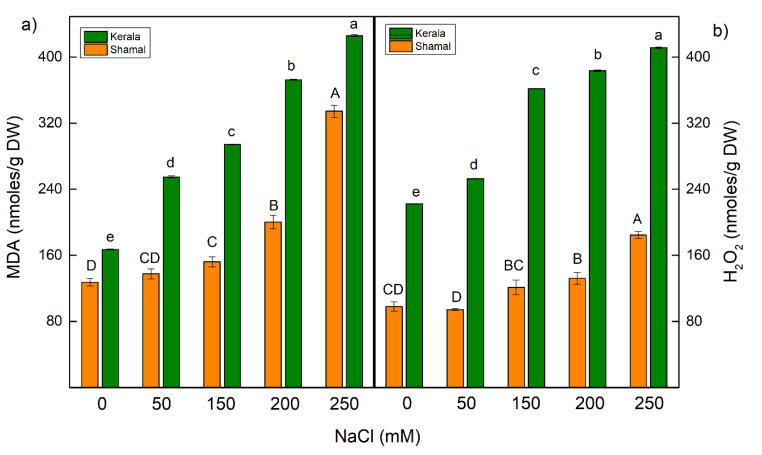
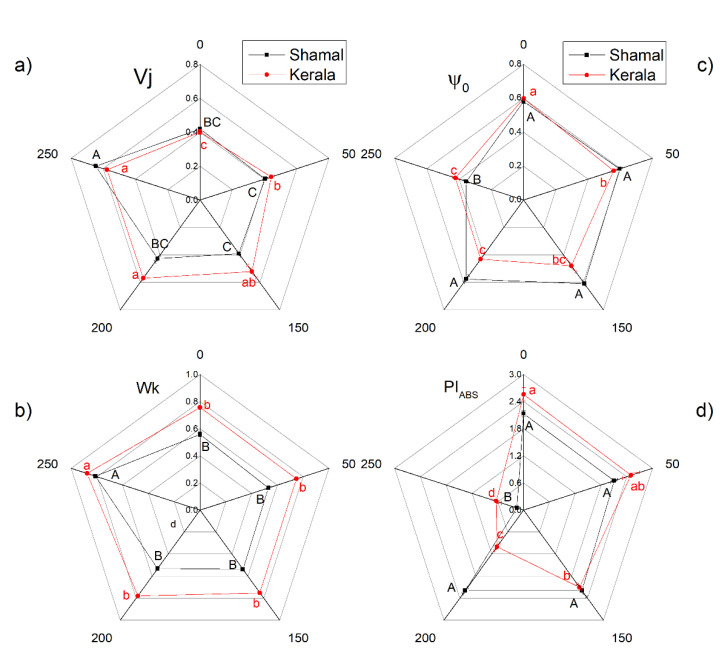
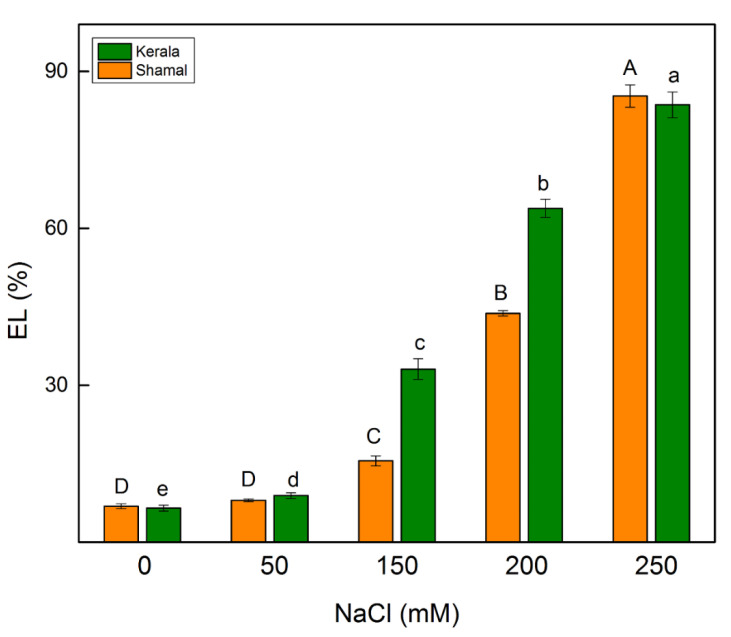
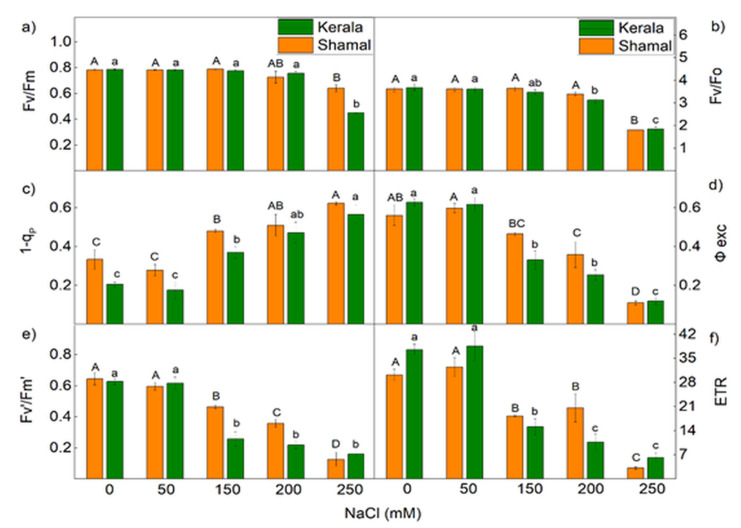
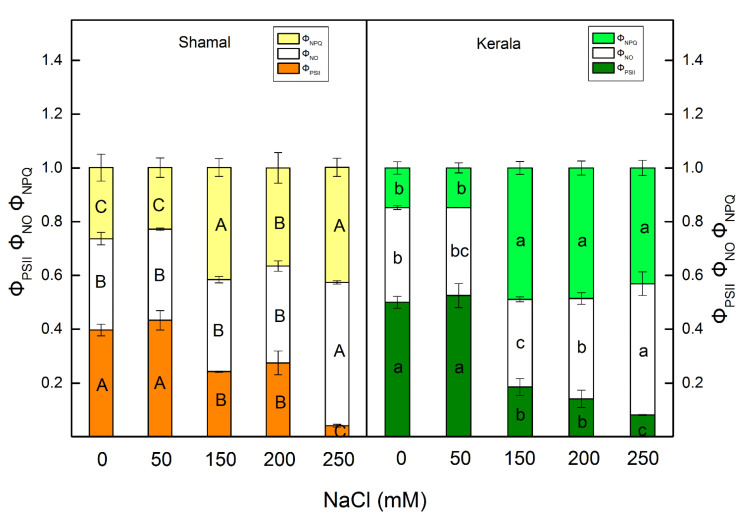
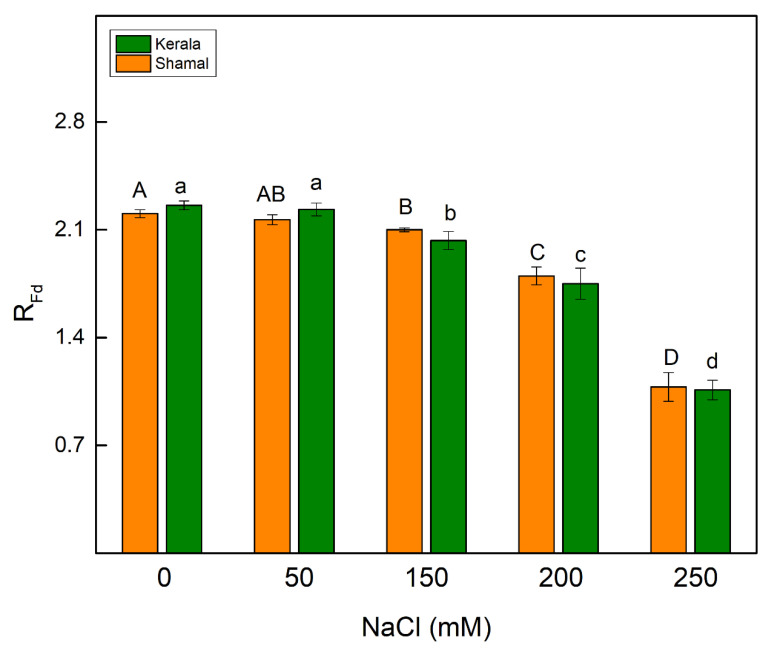
The impacts of different NaCl concentrations (0-250 mM) on the photosynthesis of new hybrid lines of maize ( L. Kerala) and sorghum ( L. Shamal) were investigated. Salt-induced changes in the functions of photosynthetic apparatus were assessed using chlorophyll fluorescence (PAM and OJIP test) and P photooxidation. Greater differences between the studied species in response to salinization were observed at 150 mM and 200 mM NaCl. The data revealed the stronger influence of maize in comparison to sorghum on the amount of closed PSII centers (1-qp) and their efficiency (Φ), as well as on the effective quantum yield of the photochemical energy conversion of PSII (Φ). Changes in the effective antenna size of PSII (ABS/RC), the electron flux per active reaction center (REo/RC) and the electron transport flux further Q (ETo/RC) were also registered. These changes in primary PSII photochemistry influenced the electron transport rate (ETR) and photosynthetic rate (parameter R), with the impacts being stronger in maize than sorghum. Moreover, the lowering of the electron transport rate from Q to the PSI end electron acceptors (REo/RC) and the probability of their reduction (φRo) altered the PSI photochemical activity, which influenced photooxidation of P and its decay kinetics. The pigment content and stress markers of oxidative damage were also determined. The data revealed a better salt tolerance of sorghum than maize, associated with the structural alterations in the photosynthetic membranes and the stimulation of the cyclic electron flow around PSI at higher NaCl concentrations. The relationships between the decreased pigment content, increased levels of stress markers and different inhibition levels of the function of both photosystems are discussed.
研究了不同NaCl浓度(0 - 250 mM)对玉米(喀拉拉邦品种)和高粱(沙马尔品种)新杂交系光合作用的影响。使用叶绿素荧光(PAM和OJIP测试)和P光氧化评估盐诱导的光合机构功能变化。在150 mM和200 mM NaCl浓度下,观察到所研究物种对盐渍化的响应存在更大差异。数据显示,与高粱相比,玉米对关闭的PSII中心数量(1 - qp)及其效率(Φ)以及PSII光化学能量转换的有效量子产率(Φ)的影响更强。还记录了PSII有效天线大小(ABS/RC)、每个活性反应中心的电子通量(REo/RC)和进一步的电子传输通量Q(ETo/RC)的变化。PSII初级光化学的这些变化影响了电子传输速率(ETR)和光合速率(参数R),玉米受到的影响比高粱更强。此外,从Q到PSI末端电子受体的电子传输速率降低(REo/RC)及其还原概率(φRo)改变了PSI光化学活性,这影响了P的光氧化及其衰减动力学。还测定了色素含量和氧化损伤应激标记物。数据显示高粱的耐盐性优于玉米,这与光合膜的结构改变以及在较高NaCl浓度下PSI周围循环电子流的刺激有关。讨论了色素含量降低与应激标记物水平升高以及两个光系统功能不同抑制水平之间的关系。