School of Health Sciences, College of Health, Medicine and Wellbeing, University of Newcastle, Callaghan, NSW 2308, Australia.
Department of Rural Health, College of Health, Medicine and Wellbeing, University of Newcastle, Port Macquarie, NSW 2444, Australia.
Nutrients. 2021 Jul 12;13(7):2381. doi: 10.3390/nu13072381.
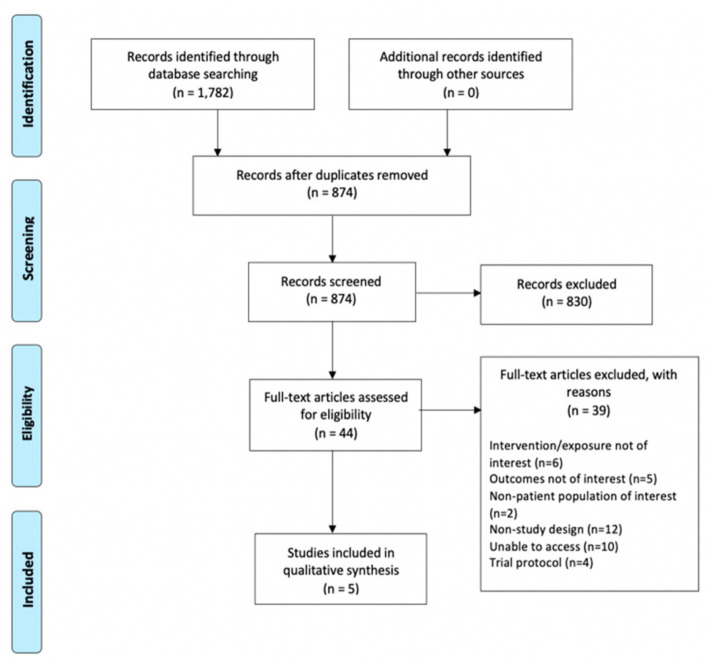
Non-alcoholic fatty liver disease (NAFLD) is the leading cause of chronic liver disease in developed countries. Coffee is one of the most consumed beverages in the world and has been shown to be beneficial in limiting progression in chronic liver disease in general. However, research surrounding the impact of coffee consumption on NAFLD progression is limited. This systematic review aimed to investigate the relationship between coffee consumption and the progression of liver disease, specifically for cases of NAFLD. MEDLINE, EMBASE, CINAHL, the Cochrane Library, and Scopus were searched for published studies that evaluated the effects of coffee consumption on the progression of NAFLD. The results are presented in a narrative synthesis with principal summary measures, including odds ratios, -values, and differences in mean coffee intake in relation to severity of NAFLD. Five studies met the inclusion criteria and were included in this review. There was no trial evidence among NAFLD patients, rather all studies were of a cross-sectional design. Using the Academy of Nutrition and Dietetics Quality Criteria Checklist, four studies received a positive rating, with the remaining study receiving a neutral rating. Overall, four out of the five studies reported a statistically significant relationship between coffee consumption and the severity of fibrosis. Methods around capturing and defining coffee consumption were heterogeneous and therefore an effective dose could not be elucidated. Results suggest that higher coffee consumption is inversely associated with the severity of hepatic fibrosis in individuals with NAFLD. However, further research is required to elucidate the optimum quantity and form/preparation of coffee required to exert this hepatoprotective role.
非酒精性脂肪性肝病(NAFLD)是发达国家慢性肝病的主要病因。咖啡是世界上消费最多的饮料之一,一般来说,它已被证明有助于限制慢性肝病的进展。然而,关于咖啡消费对 NAFLD 进展影响的研究有限。本系统评价旨在研究咖啡消费与肝病进展之间的关系,特别是针对 NAFLD 病例。检索了 MEDLINE、EMBASE、CINAHL、Cochrane 图书馆和 Scopus 中评估咖啡消费对 NAFLD 进展影响的已发表研究。结果以叙述性综合呈现,主要汇总指标包括比值比、P 值以及与 NAFLD 严重程度相关的平均咖啡摄入量差异。有 5 项研究符合纳入标准并包含在本综述中。在 NAFLD 患者中没有试验证据,所有研究均为横断面设计。使用营养与饮食学会的质量标准检查表,其中 4 项研究获得了积极评价,其余研究获得了中性评价。总体而言,5 项研究中有 4 项报告了咖啡消费与纤维化严重程度之间存在统计学显著关系。用于捕获和定义咖啡消费的方法存在异质性,因此无法确定有效剂量。结果表明,在 NAFLD 患者中,较高的咖啡消费与肝纤维化严重程度呈负相关。然而,需要进一步的研究来阐明发挥这种肝保护作用所需的咖啡最佳数量和形式/制备方法。