NHC Key Lab. of Reproduction Regulation (Shanghai Institute of Planned Parenthood Research), Fudan University, Shanghai, China.
Shanghai-MOST Key Laboratory of Health and Disease Genomics, Chinese National Human Genome Center at Shanghai, Shanghai, China.
PLoS One. 2021 Aug 10;16(8):e0255446. doi: 10.1371/journal.pone.0255446. eCollection 2021.
Obesity is the cause of cardiovascular diseases and other diseases, leading to increased medical costs, and causing a great burden to individuals, families and society. The prevalence of obesity is increasing and has become a global health problem. There is growing evidence that gut microbiota plays an important role in obesity. In this article, we revealed the differences in the gut microbiota between 21 people with obesity and 21 control subjects, and predicted the functional potential changes by 16S rRNA sequencing of the fecal bacteria of the subjects.
The raw sequencing data of 21 healthy Beijing volunteers was downloaded from Microbial Genome Database System. Microbial 16S rRNA genes of 21 adults with obesity were sequenced on an Illumina MiSeq instrument and analyzed by using bioinformatics and statistical methods.
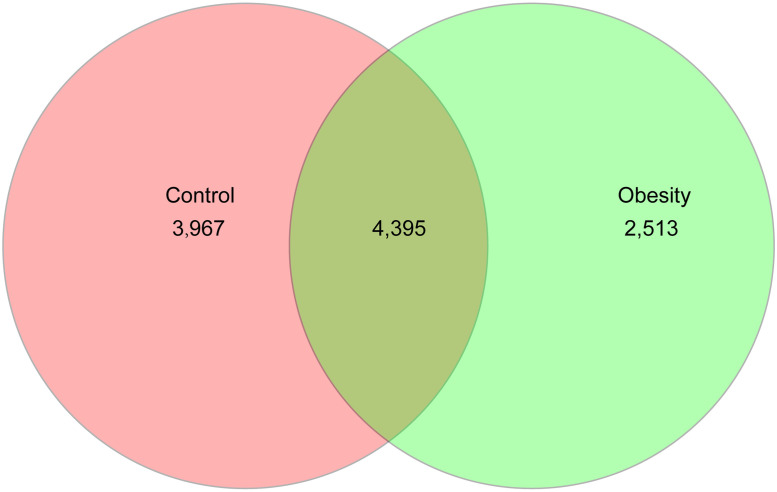
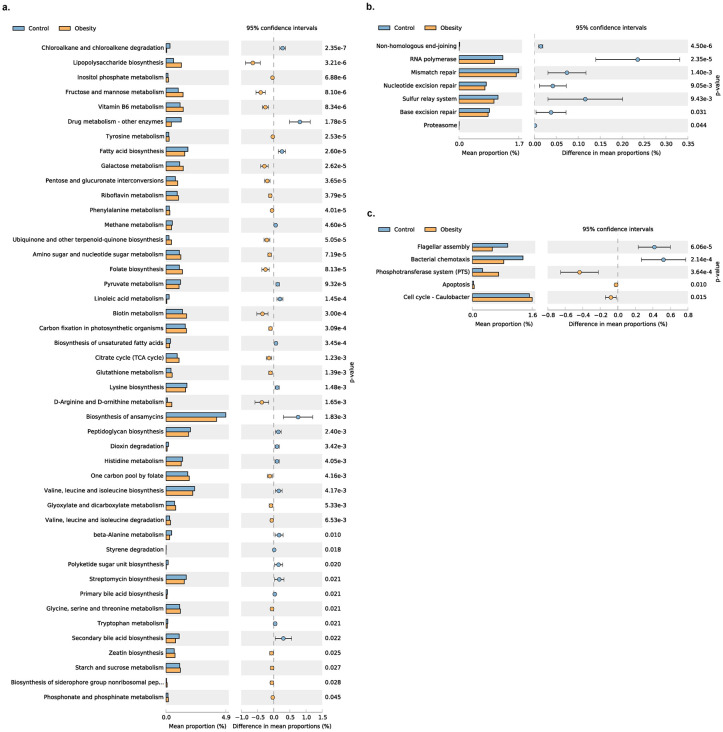
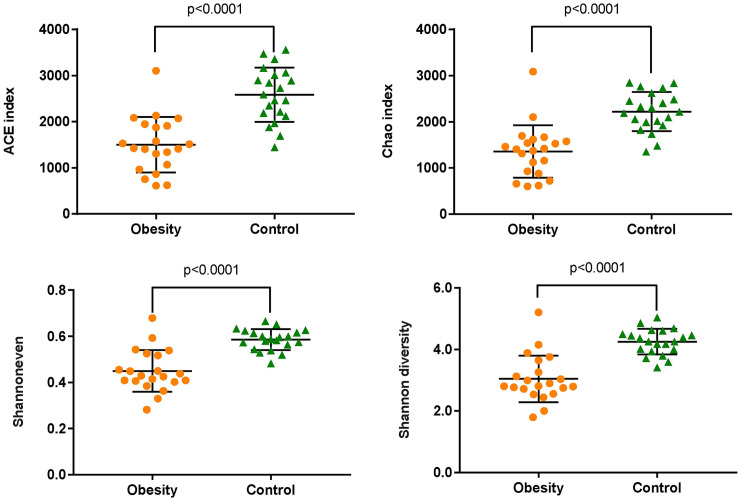
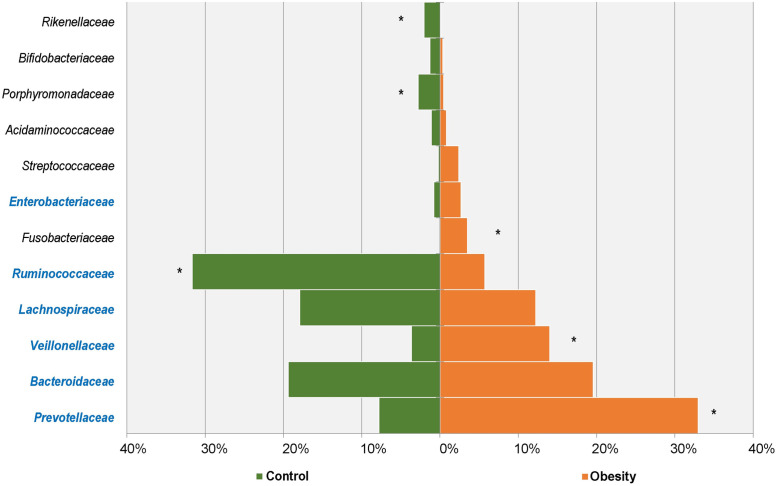
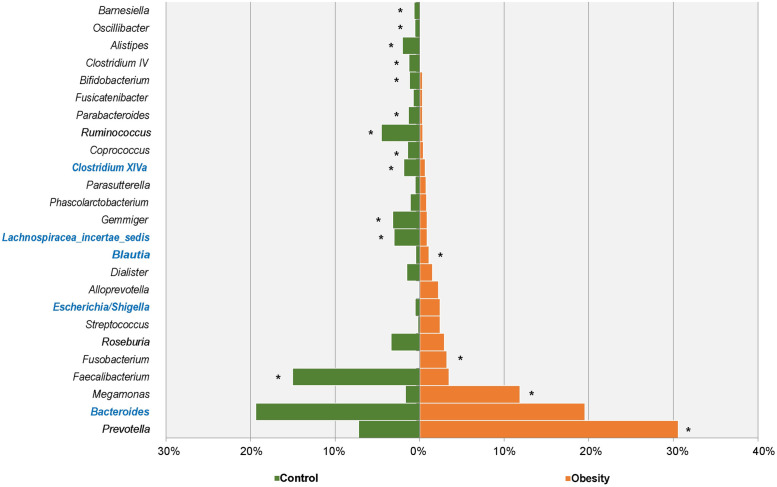
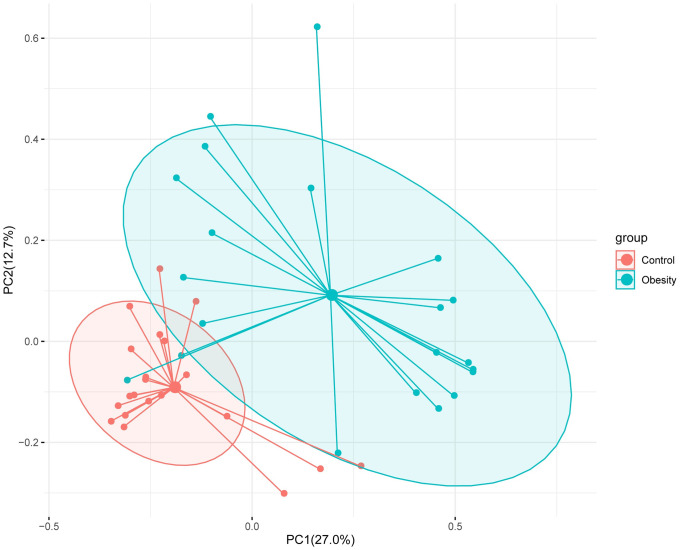
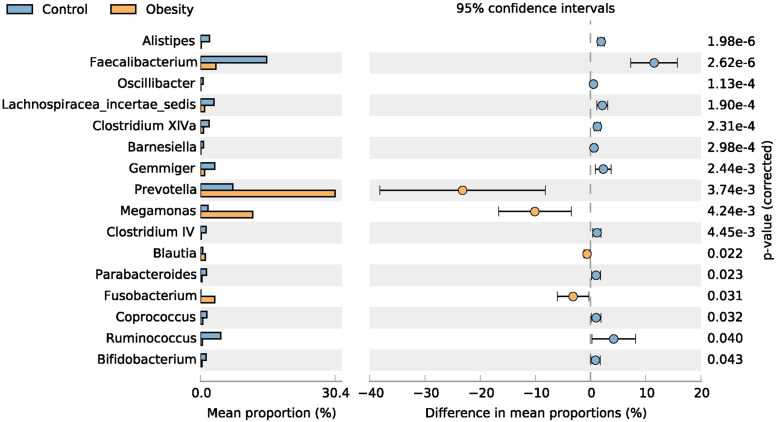
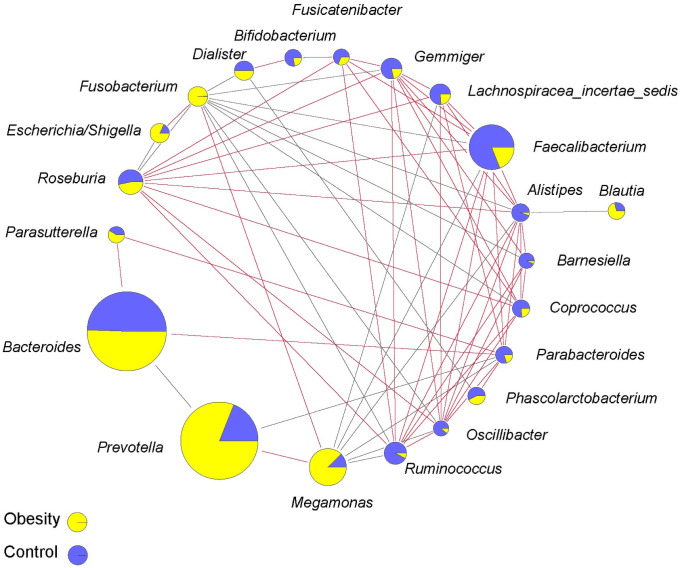
The diversity of gut microbiota in people with obesity decreased significantly. There were significant differences in gut microbiota between the Obesity and Control group at different levels. At the phylum level, Firmicutes, Bacteroidetes, Actinobacteria and Fusobacteria are significantly different between the Obesity and Control group. In people with obesity, the ratio of Firmicutes/Bacteroidetes decreased significantly. At the genus level, there were significant differences among the 16 major genera, of which four genera Prevotella, Megamonas, Fusobacterium and Blautia increased significantly in people with obesity, while the remaining 12 genera, Faecalibacterium, Lachnospiracea_incertae_sedis, Gemmiger and Clostridium XlVa, etc. decreased significantly. At the species level, nine species including Bacteroides uniformis and Prevotella copri had significant differences. Compared with the control group, subjects with obesity were abnormalities in 57 pathways, mainly in Carbohydrate metabolism and Lipid metabolism.
Overall, our study revealed differences in the gut microbiota between people with obesity and control subjects, providing novel target for the treatment of individuals with obesity.
肥胖是心血管疾病和其他疾病的病因,导致医疗费用增加,给个人、家庭和社会带来巨大负担。肥胖的患病率正在上升,已成为全球性的健康问题。越来越多的证据表明,肠道微生物群在肥胖中起着重要作用。在本文中,我们揭示了 21 名肥胖者和 21 名对照者之间的肠道微生物群差异,并通过对受试者粪便细菌的 16S rRNA 测序预测了功能潜力的变化。
从微生物基因组数据库系统下载了 21 名健康北京志愿者的原始测序数据。对 21 名肥胖成年人的微生物 16S rRNA 基因进行测序,采用生物信息学和统计方法进行分析。
肥胖人群肠道微生物群的多样性显著降低。肥胖组和对照组在不同水平的肠道微生物群存在显著差异。在门水平上,肥胖组和对照组之间的Firmicutes、Bacteroidetes、Actinobacteria 和 Fusobacteria 有显著差异。在肥胖人群中,Firmicutes/Bacteroidetes 的比例显著降低。在属水平上,有 16 个主要属存在显著差异,其中普雷沃氏菌属、巨单胞菌属、梭菌属和卟啉单胞菌属在肥胖人群中显著增加,而其余 12 个属,如 Faecalibacterium、Lachnospiracea_incertae_sedis、Gemmiger 和 Clostridium XlVa 等,显著减少。在种水平上,有 9 个种,包括均匀杆菌和普雷沃氏菌属,有显著差异。与对照组相比,肥胖组的 57 个通路发生异常,主要是在碳水化合物代谢和脂质代谢。
总的来说,我们的研究揭示了肥胖者和对照组之间肠道微生物群的差异,为肥胖个体的治疗提供了新的靶点。