Liu Hai, Wang Jicheng, Liu Jianhao, Liu Tong, Xue Shaowu
College of Life Science and Technology, Huazhong Agricultural University, Wuhan, 430070 China.
aBIOTECH. 2021;2(1):32-63. doi: 10.1007/s42994-021-00035-4. Epub 2021 Mar 1.
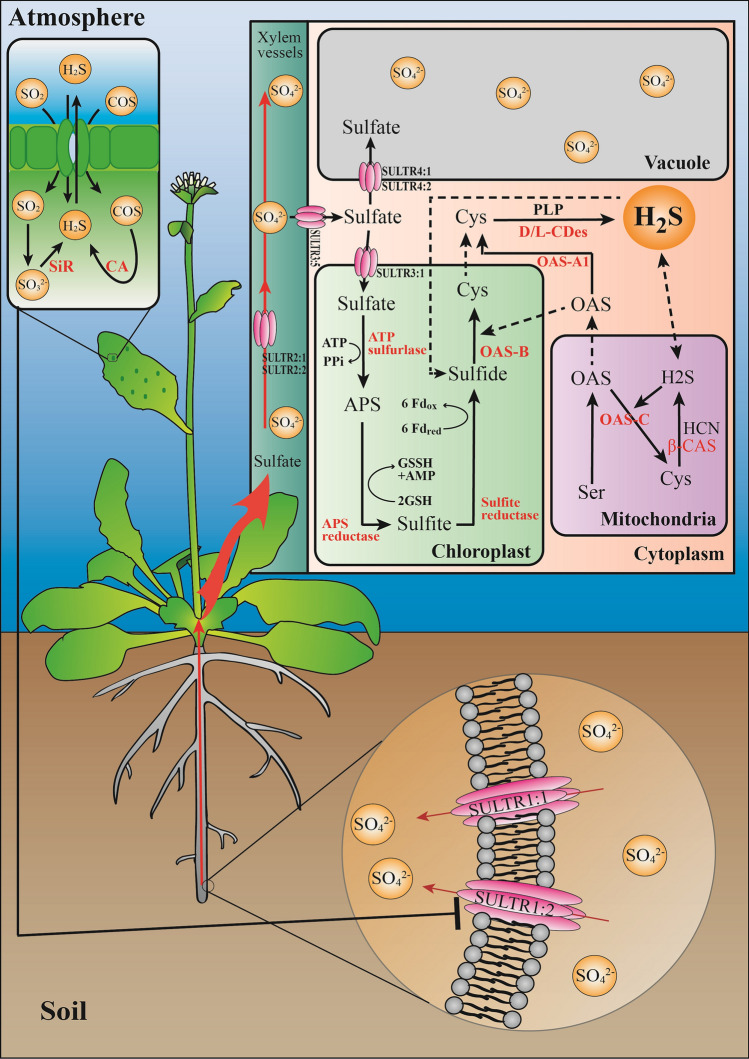
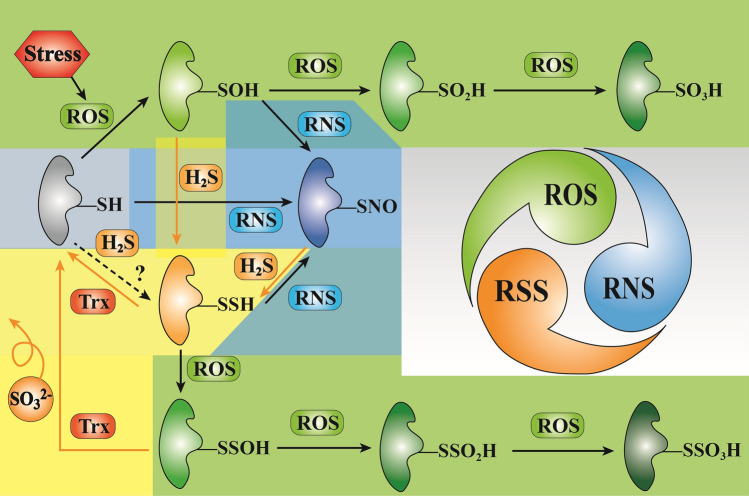
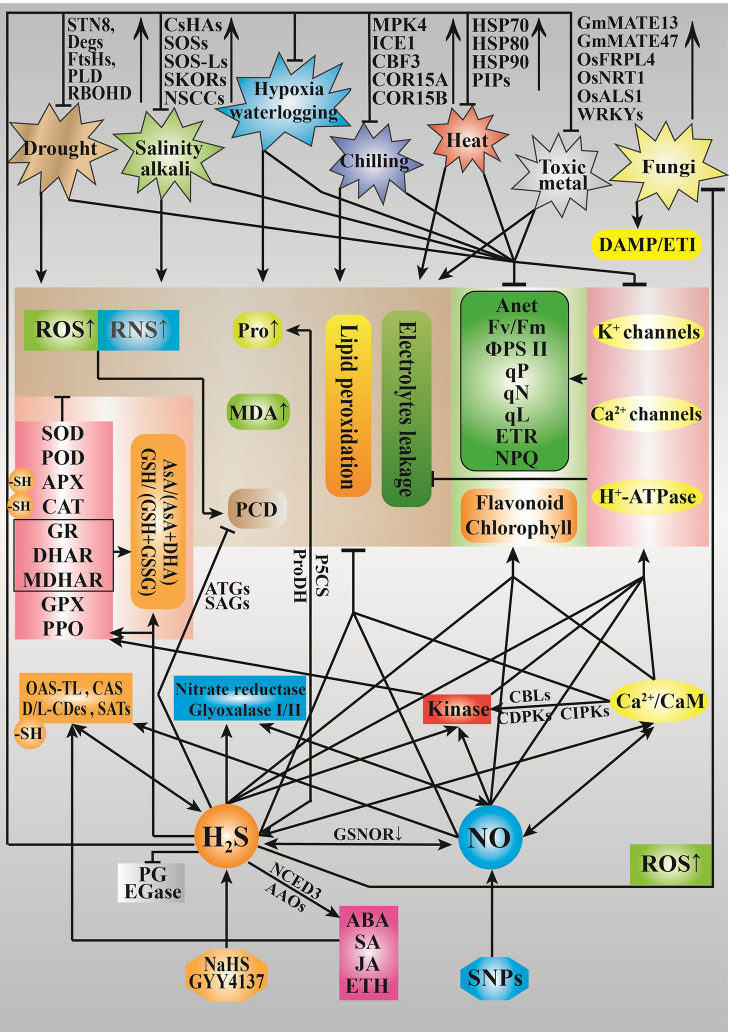
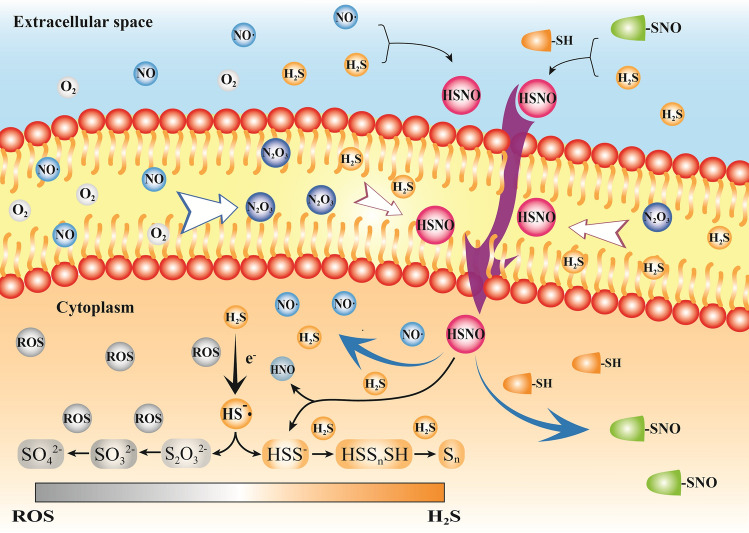
Hydrogen sulfide (HS) was initially recognized as a toxic gas and its biological functions in mammalian cells have been gradually discovered during the past decades. In the latest decade, numerous studies have revealed that HS has versatile functions in plants as well. In this review, we summarize HS-mediated sulfur metabolic pathways, as well as the progress in the recognition of its biological functions in plant growth and development, particularly its physiological functions in biotic and abiotic stress responses. Besides direct chemical reactions, nitric oxide (NO) and hydrogen peroxide (HO) have complex relationships with HS in plant signaling, both of which mediate protein post-translational modification (PTM) to attack the cysteine residues. We also discuss recent progress in the research on the three types of PTMs and their biological functions in plants. Finally, we propose the relevant issues that need to be addressed in the future research.
The online version contains supplementary material available at 10.1007/s42994-021-00035-4.
硫化氢(HS)最初被认为是一种有毒气体,在过去几十年中,其在哺乳动物细胞中的生物学功能逐渐被发现。在最近十年中,大量研究表明HS在植物中也具有多种功能。在本综述中,我们总结了HS介导的硫代谢途径,以及在认识其在植物生长发育中的生物学功能方面取得的进展,特别是其在生物和非生物胁迫响应中的生理功能。除了直接化学反应外,一氧化氮(NO)和过氧化氢(HO)在植物信号传导中与HS存在复杂关系,二者均介导蛋白质翻译后修饰(PTM)以作用于半胱氨酸残基。我们还讨论了这三种类型的PTM及其在植物中的生物学功能的研究进展。最后,我们提出了未来研究中需要解决的相关问题。
在线版本包含可在10.1007/s42994-021-00035-4获取的补充材料。