Theodorakis N G, Morimoto R I
Department of Biochemistry, Molecular Biology and Cell Biology, Northwestern University, Evanston, Illinois 60201.
Mol Cell Biol. 1987 Dec;7(12):4357-68. doi: 10.1128/mcb.7.12.4357-4368.1987.
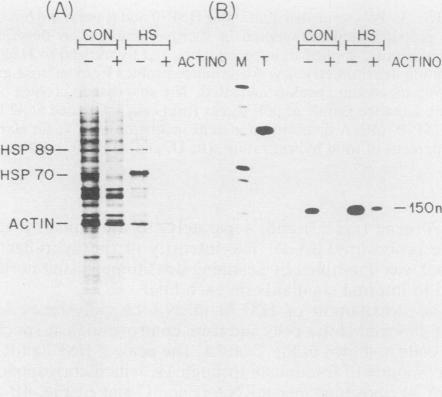
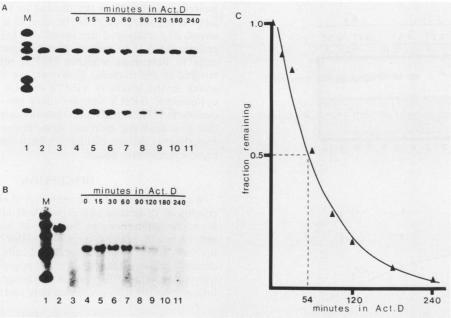
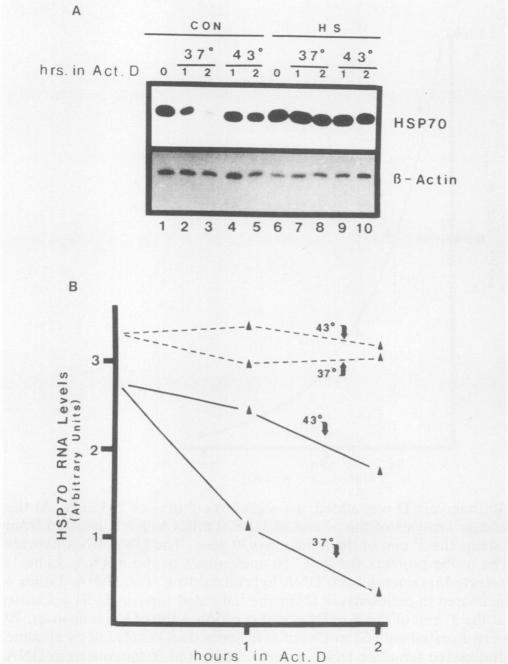
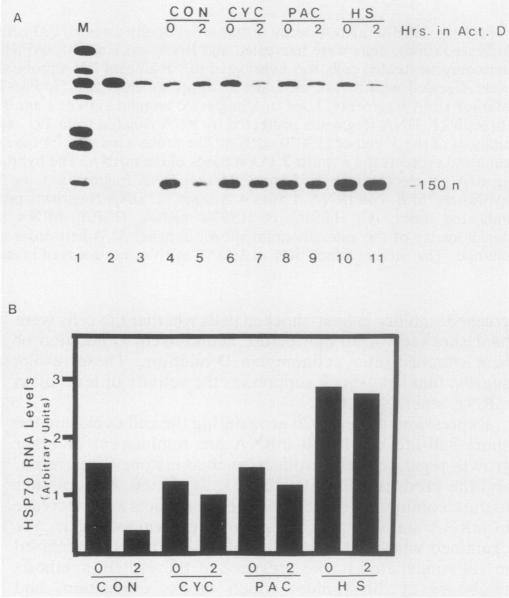
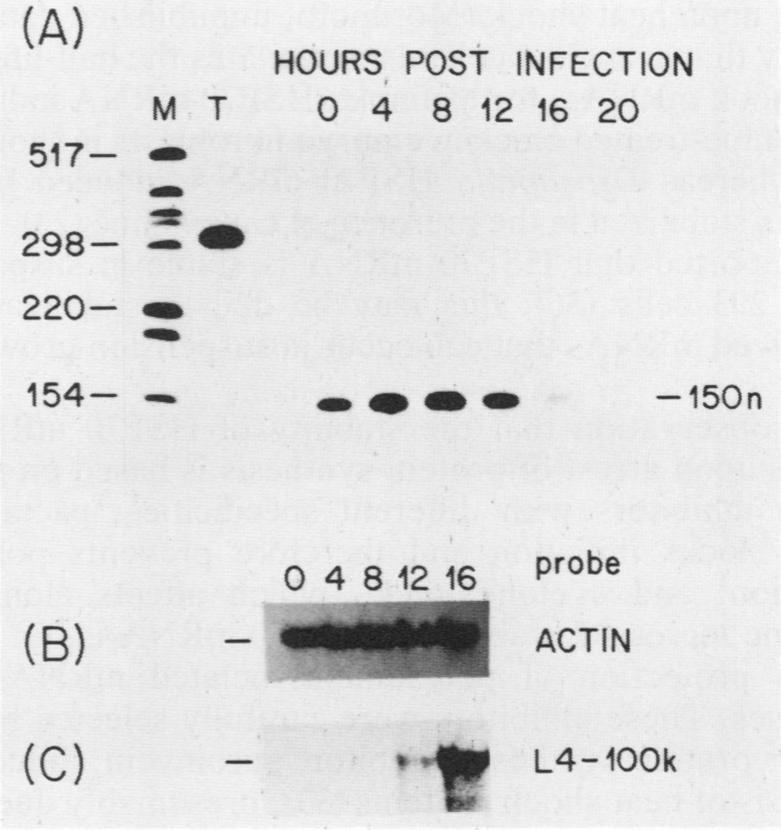
We have examined the posttranscriptional regulation of hsp70 gene expression in two human cell lines, HeLa and 293 cells, which constitutively express high levels of HSP70. HSP70 mRNA translates with high efficiency in both control and heat-shocked cells. Therefore, heat shock is not required for the efficient translation of HSP70 mRNA. Rather, the main effect of heat shock on translation is to suppress the translatability of non-heat shock mRNAs. Heat shock, however, has a marked effect on the stability of HSP70 mRNA; in non-heat-shocked cells the half-life of HSP70 mRNA is approximately 50 min, and its stability increases at least 10-fold upon heat shock. Moreover, HSP70 mRNA is more stable in cells treated with protein synthesis inhibitors, suggesting that a heat shock-sensitive labile protein regulates its turnover. An additional effect on posttranscriptional regulation of hsp70 expression can be found in adenovirus-infected cells, in which HSP70 mRNA levels decline precipititously late during infection although hsp70 transcription continues unabated.
我们研究了在两种人类细胞系HeLa和293细胞中hsp70基因表达的转录后调控,这两种细胞系组成性地高水平表达HSP70。HSP70 mRNA在对照细胞和热休克细胞中均高效翻译。因此,HSP70 mRNA的高效翻译不需要热休克。相反,热休克对翻译的主要作用是抑制非热休克mRNA的可翻译性。然而,热休克对HSP70 mRNA的稳定性有显著影响;在非热休克细胞中,HSP70 mRNA的半衰期约为50分钟,热休克后其稳定性至少增加10倍。此外,HSP70 mRNA在用蛋白质合成抑制剂处理的细胞中更稳定,这表明一种热休克敏感的不稳定蛋白调节其周转。在腺病毒感染的细胞中可以发现对hsp70表达转录后调控的另一个影响,在感染后期,尽管hsp70转录持续不减,但HSP70 mRNA水平急剧下降。