Yang Hongmei, Xie Jiao, Wang Nanlan, Zhou Qianqian, Lu Yang, Qu Zihan, Wang Huiqun
School of Public Health, the key Laboratory of Environmental Pollution Monitoring and Disease Control Ministry of Education Guizhou Medical University Guiyang China.
Guiyang Maternal and Child Healthcare Hospital Guiyang China.
Food Sci Nutr. 2021 Jun 23;9(8):4266-4277. doi: 10.1002/fsn3.2394. eCollection 2021 Aug.
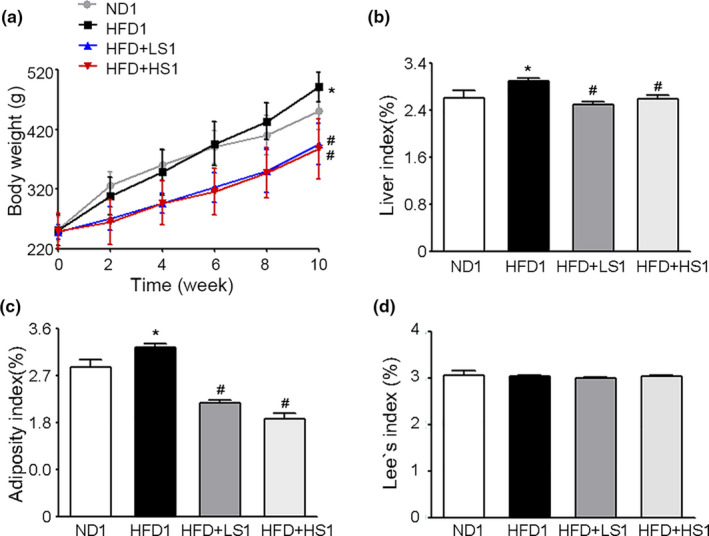
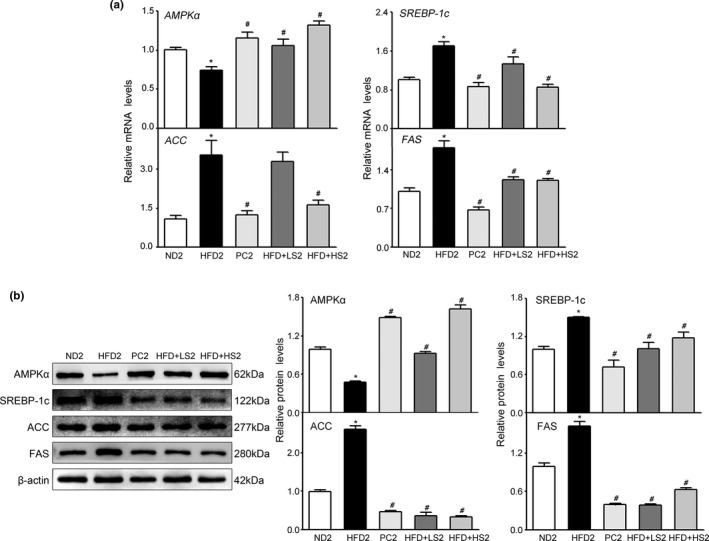
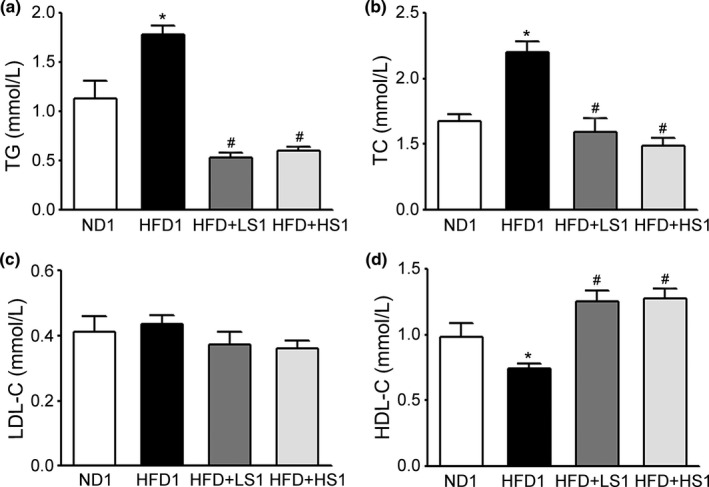
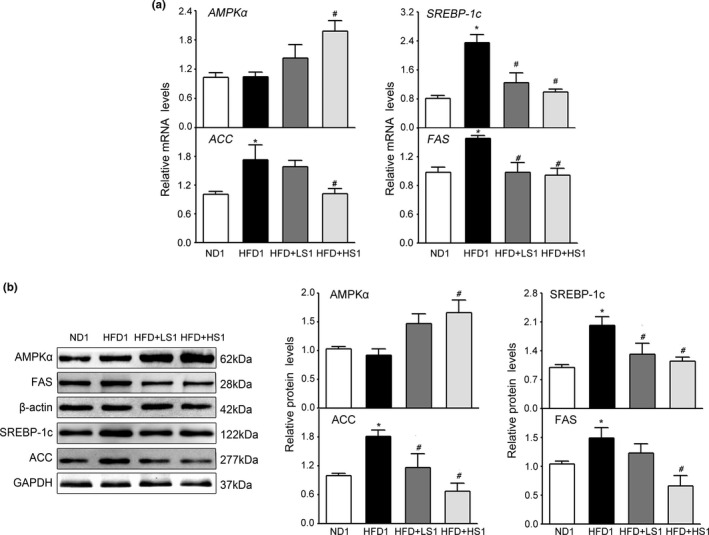
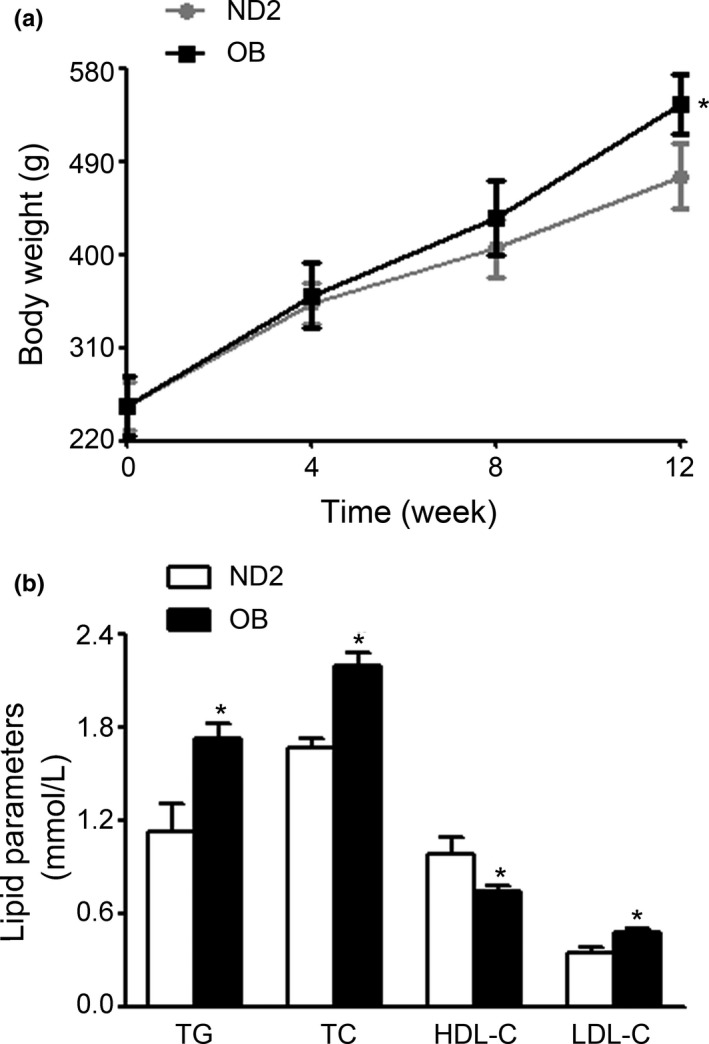
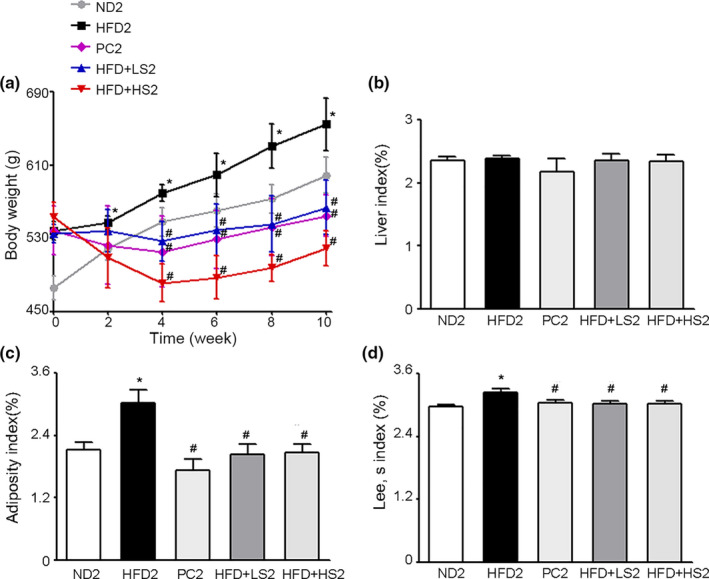
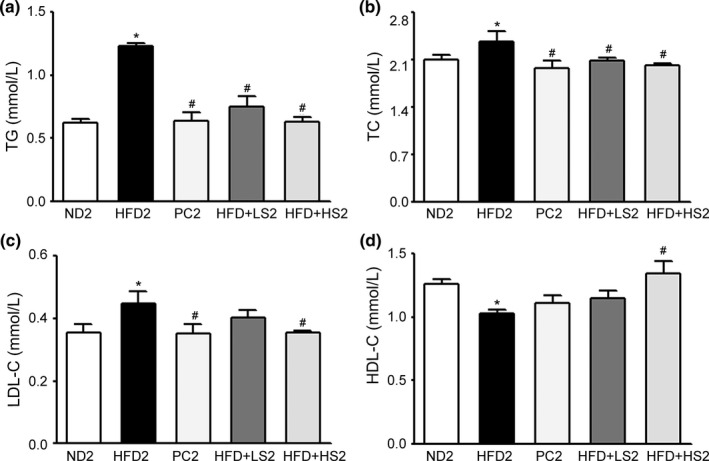
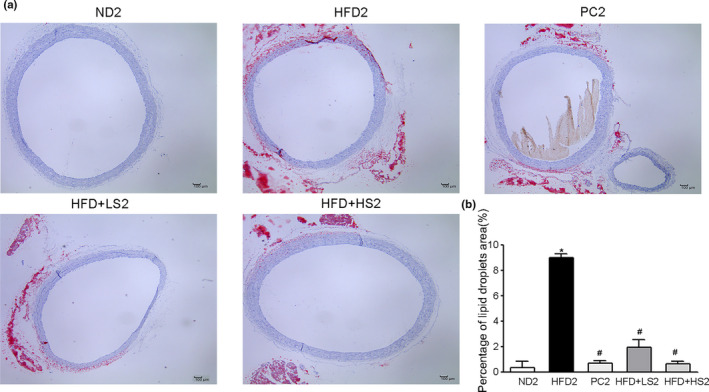
Hyperlipidemia is a common characteristic of obese animals. Identifying the factors involved in the regulation of dietary lipid metabolism is the most beneficial way to improve health. Miao sour soup (MSS) is a fermented food made from tomato and red pepper that contains lycopene, capsaicin, and organic acids. We conducted this study to investigate the regulatory functions and mechanisms of MSS on the blood lipid levels of high-fat diet-induced obese rats. In our preventive study, rats were fed normal diet (ND1), high-fat diet (HFD1), HFD + 4 g/kg BW MSS (HFD + LS1), and HFD + 8 g/kg BW MSS (HFD + HS1). We found that MSS significantly reduced the body weight and fat accumulation and improved the blood lipid levels of rats. MSS significantly increased the expression of AMP-activated protein kinase-alpha (AMPKα), attenuated the expression of the adipogenic transcription factor sterol regulatory element-binding protein-1c (SREBP-1c), and suppressed the expression of fatty acid synthase (FAS) and acetyl-CoA carboxylase alpha (ACCα), the critical regulators of hepatic lipid metabolism. Additionally, we also conducted a treatment study, and we grouped rats to receive ND2, HFD2, PC2, HFD + LS2, and HFD + HS2 for another 10 weeks. MSS treatment reduced the body weight, fat deposition, and percentage of lipid droplets and regulated the plasma lipid content. MSS significantly increased the expression of AMPK and alleviated the expression of SREBP-1c, ACC, and FAS. Taken together, these findings suggest that MSS prevents and treats hyperlipidemia in obese rats by regulating the AMPK signaling pathway.
高脂血症是肥胖动物的常见特征。确定参与膳食脂质代谢调节的因素是改善健康的最有益方法。苗酸汤(MSS)是一种由番茄和红辣椒制成的发酵食品,含有番茄红素、辣椒素和有机酸。我们进行这项研究以探讨MSS对高脂饮食诱导的肥胖大鼠血脂水平的调节作用及其机制。在我们的预防性研究中,给大鼠喂食正常饮食(ND1)、高脂饮食(HFD1)、HFD + 4 g/kg体重的MSS(HFD + LS1)和HFD + 8 g/kg体重的MSS(HFD + HS1)。我们发现MSS显著降低了大鼠的体重和脂肪堆积,并改善了其血脂水平。MSS显著增加了AMP激活的蛋白激酶α(AMPKα)的表达,减弱了脂肪生成转录因子固醇调节元件结合蛋白-1c(SREBP-1c)的表达,并抑制了脂肪酸合酶(FAS)和乙酰辅酶A羧化酶α(ACCα)的表达,这两种酶是肝脏脂质代谢的关键调节因子。此外,我们还进行了一项治疗性研究,将大鼠分组再接受10周的ND2、HFD2、PC2、HFD + LS2和HFD + HS2处理。MSS处理降低了体重、脂肪沉积和脂滴百分比,并调节了血浆脂质含量。MSS显著增加了AMPK的表达,并减轻了SREBP-1c、ACC和FAS的表达。综上所述,这些发现表明MSS通过调节AMPK信号通路预防和治疗肥胖大鼠的高脂血症。