Informatics Innovative Center of Excellence (IICE), School of Informatics, Walailak University, Nakhon Si Thammarat, Thailand.
School of Medicine, Walailak University, Nakhon Si Thammarat, Thailand.
J Educ Eval Health Prof. 2021;18:22. doi: 10.3352/jeehp.2021.18.22. Epub 2021 Aug 18.
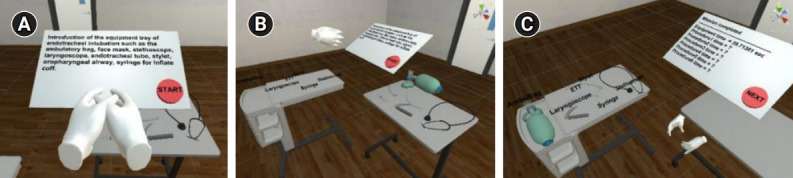
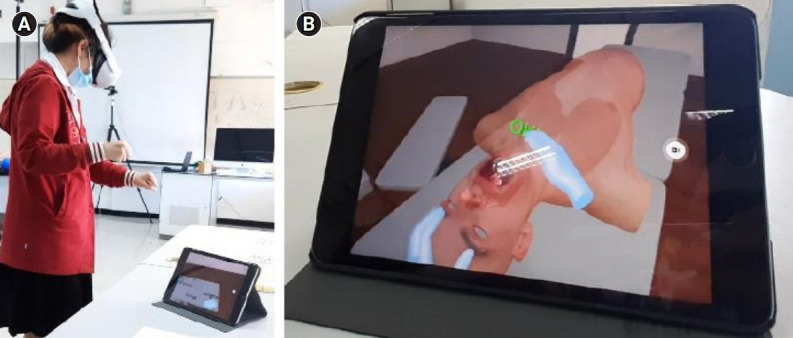
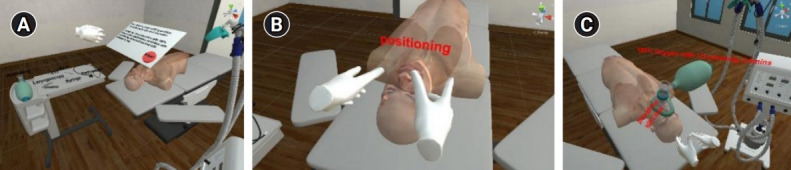
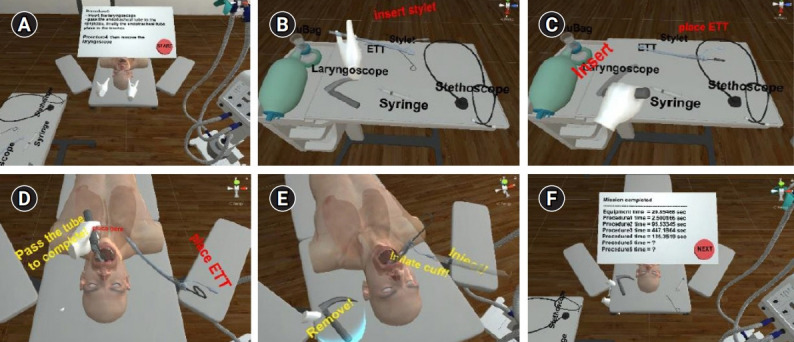
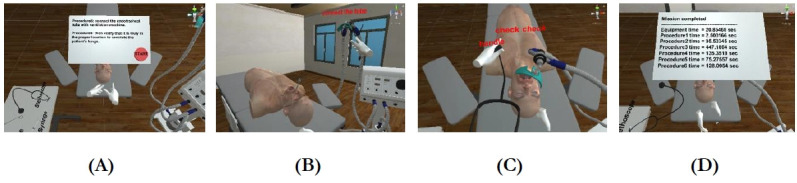
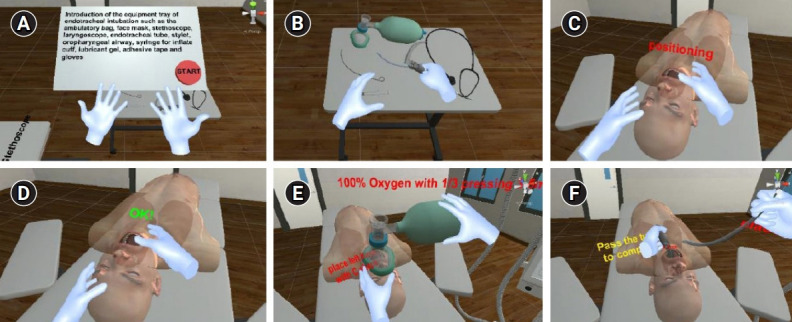
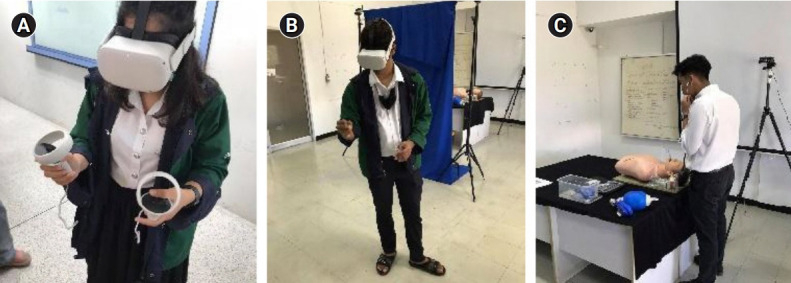
We developed a virtual reality (VR) endotracheal intubation training that applied 2 interaction modalities (hand-tracking or controllers). It aimed to investigate the differences in usability between using hand tracking and controllers during the VR intervention for intubation training for medical students from February 2021 to March 2021 in Thailand.
Forty-five participants were divided into 3 groups: video only, video with VR controller training, and video with VR hand tracking training. Pre-test, post-test, and practice scores were used to assess learning outcomes. The System Usability Scale (SUS) and User Satisfaction Evaluation Questionnaire (USEQ) questionnaires were used to evaluate the differences between the VR groups. The sample comprised 45 medical students (undergraduate) who were taking part in clinical training at Walailak University in Thailand.
The overall learning outcomes of both VR groups were better than those of the video group. The post-test scores (P=0.581) and practice scores (P=0.168) of both VR groups were not significantly different. Similarly, no significant between-group differences were found in the SUS scores (P=0.588) or in any aspects of the USEQ scores.
VR enhanced medical training. Interactions using hand tracking or controllers were not significantly different in terms of the outcomes measured in this study. The results and interviews provided a better understanding of support learning and training, which will be further improved and developed to create a self-learning VR medical training system in the future.
我们开发了一种虚拟现实(VR)气管插管培训,应用了 2 种交互模式(手部跟踪或控制器)。本研究旨在探讨 2021 年 2 月至 2021 年 3 月期间在泰国,医学生使用 VR 干预进行插管培训时,使用手部跟踪和控制器的差异。
45 名参与者被分为 3 组:仅视频组、视频加 VR 控制器培训组和视频加 VR 手部跟踪培训组。使用预测试、后测试和练习分数来评估学习结果。使用系统可用性量表(SUS)和用户满意度评估问卷(USEQ)评估 VR 组之间的差异。该样本包括 45 名正在泰国瓦莱拉大学接受临床培训的医学生(本科生)。
两个 VR 组的整体学习效果均优于视频组。两个 VR 组的后测分数(P=0.581)和练习分数(P=0.168)没有显著差异。同样,SUS 分数(P=0.588)或 USEQ 分数的任何方面均无显著组间差异。
VR 增强了医学培训。在本研究中测量的结果方面,使用手部跟踪或控制器的交互方式没有显著差异。结果和访谈提供了对支持学习和培训的更好理解,这将进一步改进和开发,以创建未来的自我学习 VR 医学培训系统。