Department Biomolecular Health Sciences, Division Infectious Diseases and Immunology, Faculty of Veterinary Medicine, Utrecht University, Utrecht, The Netherlands.
Department Population Health Sciences, Division Farm Animal Health, Faculty of Veterinary Medicine, Utrecht University, Utrecht, The Netherlands.
Vet Res. 2021 Aug 17;52(1):109. doi: 10.1186/s13567-021-00978-y.
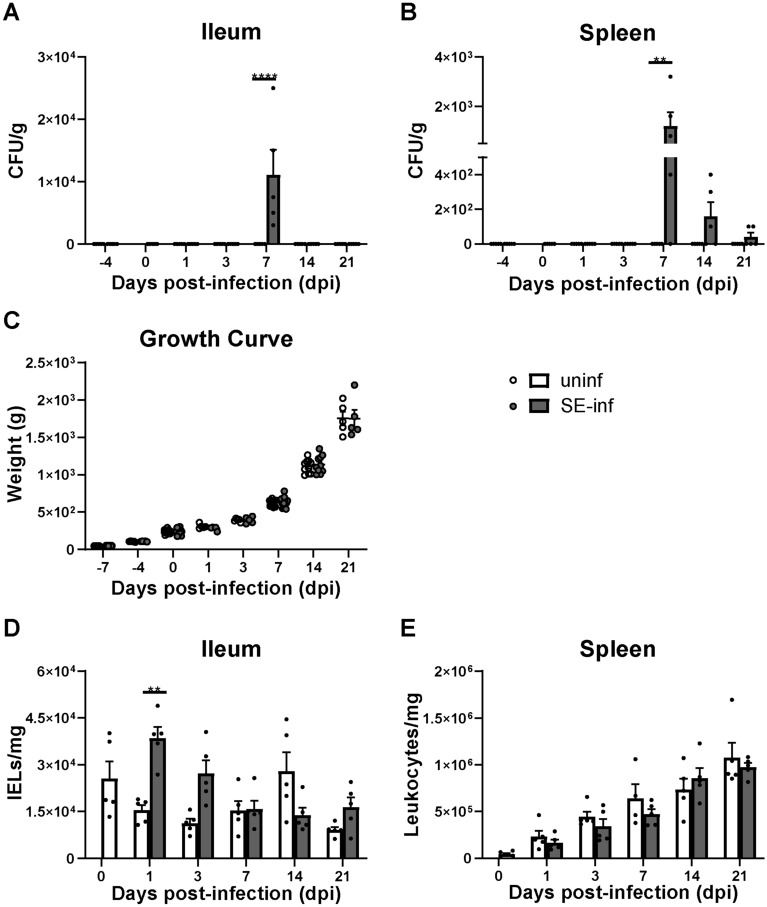
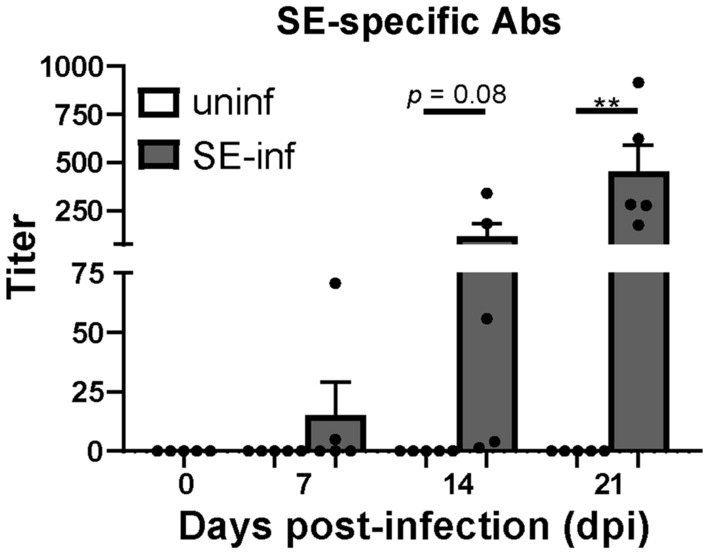
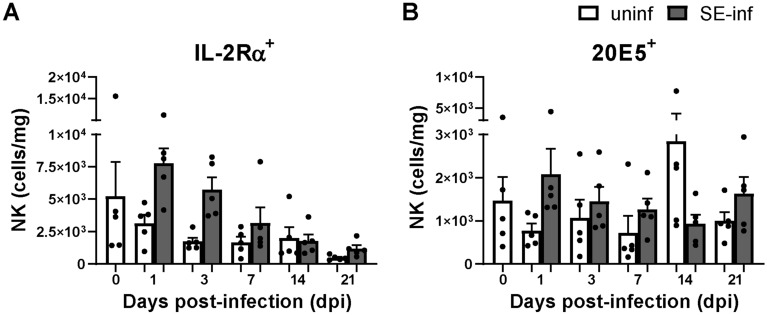
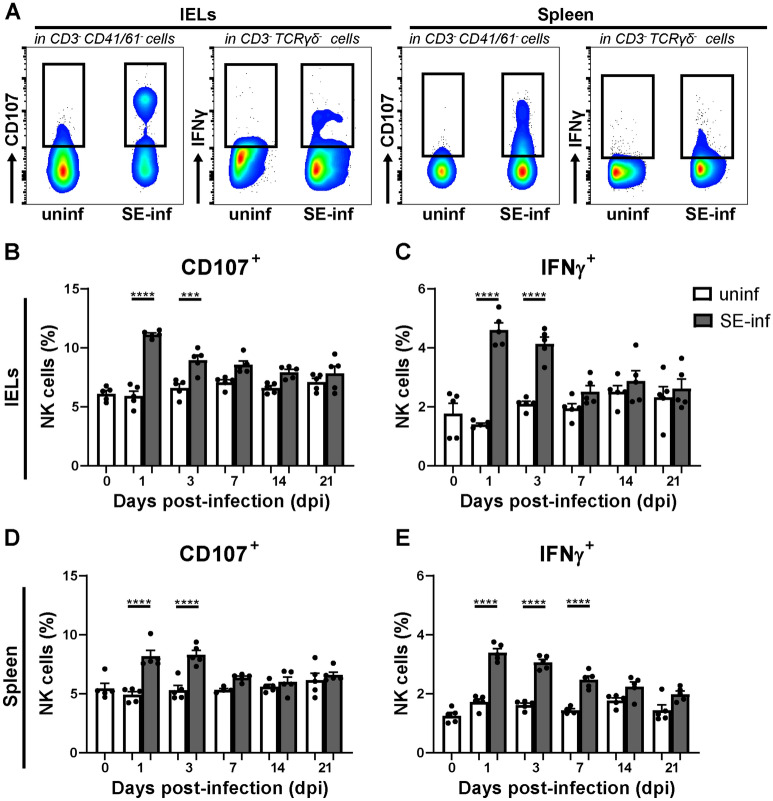
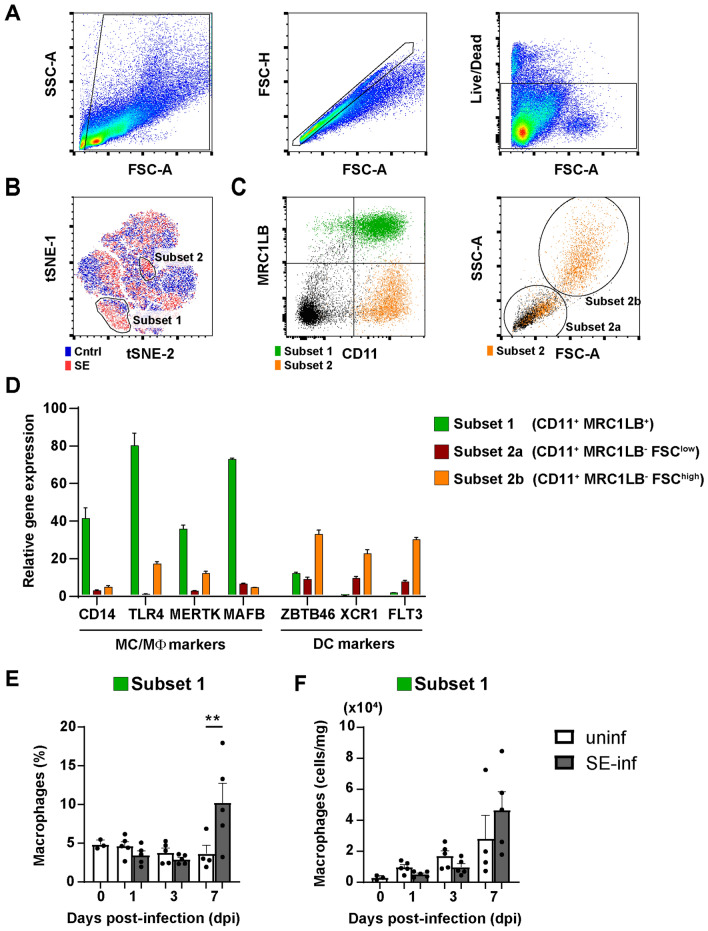
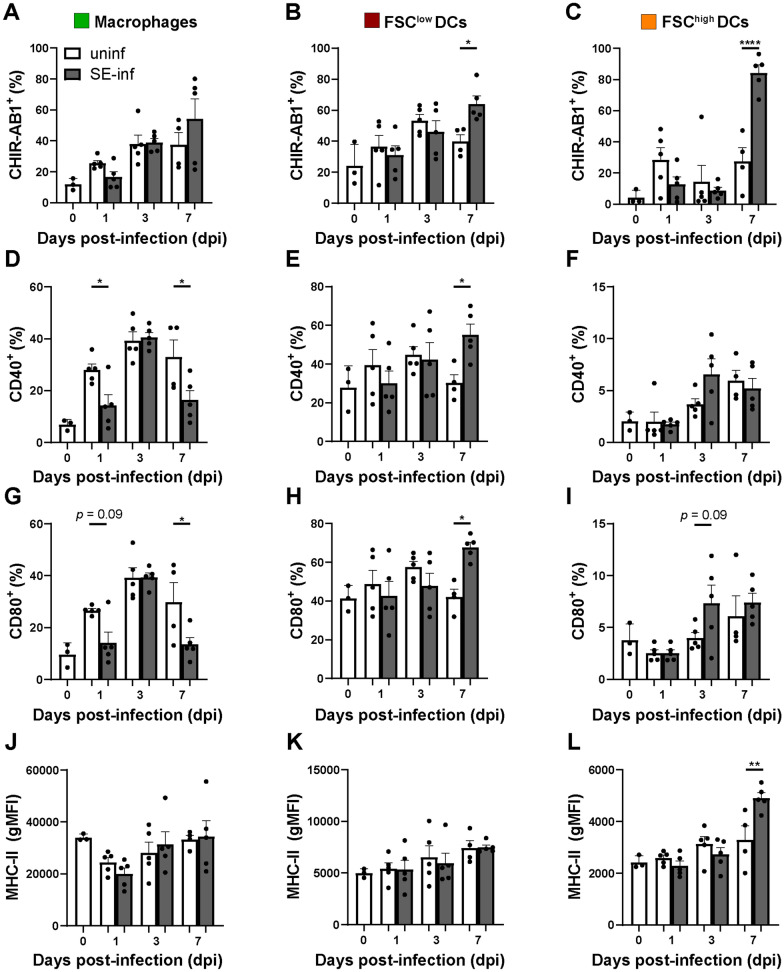
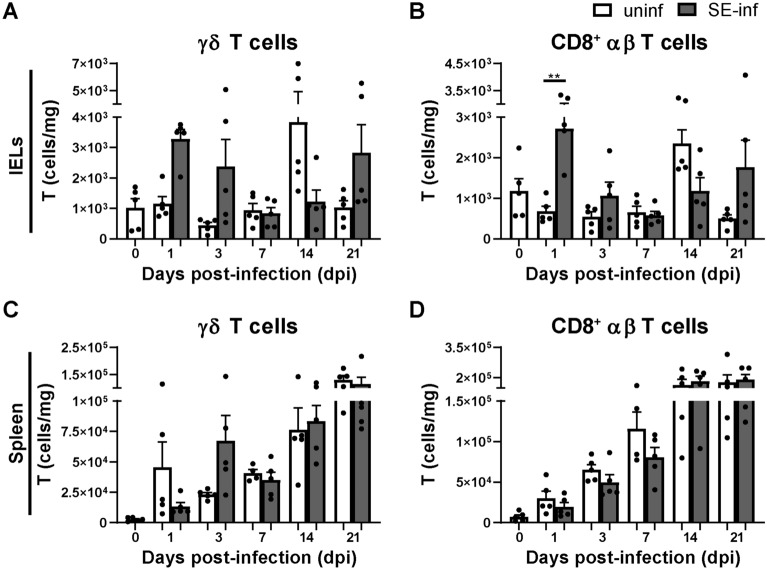
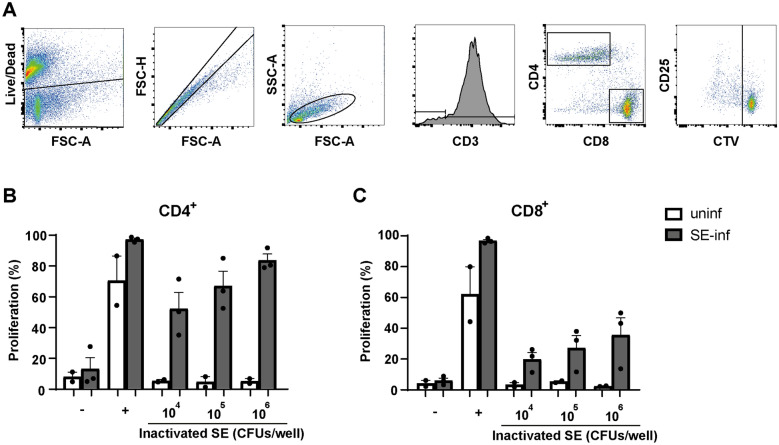
Salmonella enterica serotype Enteritidis (SE) is a zoonotic pathogen which causes foodborne diseases in humans as well as severe disease symptoms in young chickens. More insight in innate and adaptive immune responses of chickens to SE infection is needed to understand elimination of SE. Seven-day-old broiler chickens were experimentally challenged with SE and numbers and responsiveness of innate and adaptive immune cells as well as antibody titers were assessed. SE was observed in the ileum and spleen of SE-infected chickens at 7 days post-infection (dpi). At 1 dpi numbers of intraepithelial cytotoxic CD8 T cells were significantly increased alongside numerically increased intraepithelial IL-2Rα and 20E5 natural killer (NK) cells at 1 and 3 dpi. At both time points, activation of intraepithelial and splenic NK cells was significantly enhanced. At 7 dpi in the spleen, presence of macrophages and expression of activation markers on dendritic cells were significantly increased. At 21 dpi, SE-induced proliferation of splenic CD4 and CD8 T cells was observed and SE-specific antibodies were detected in sera of all SE-infected chickens. In conclusion, SE results in enhanced numbers and activation of innate cells and we hypothesized that in concert with subsequent specific T cell and antibody responses, reduction of SE is achieved. A better understanding of innate and adaptive immune responses important in the elimination of SE will aid in developing immune-modulation strategies, which may increase resistance to SE in young broiler chickens.
肠炎沙门氏菌血清型肠炎亚种(SE)是一种人畜共患病病原体,可导致人类食源性疾病,并使幼鸡出现严重疾病症状。为了了解 SE 的消除机制,需要深入了解鸡对 SE 感染的固有和适应性免疫反应。本研究以 7 日龄肉鸡为实验模型,对其进行 SE 攻毒,评估固有免疫和适应性免疫细胞的数量和反应性以及抗体滴度。结果显示,SE 感染鸡的回肠和脾脏在感染后 7 天(dpi)可观察到 SE。在 1 dpi 时,上皮内细胞毒性 CD8 T 细胞的数量显著增加,同时上皮内 IL-2Rα和 20E5 自然杀伤(NK)细胞的数量在 1 和 3 dpi 时也增加。在这两个时间点,上皮内和脾 NK 细胞的激活均显著增强。在 7 dpi 时,脾脏中巨噬细胞的存在和树突状细胞激活标记物的表达显著增加。在 21 dpi 时,观察到 SE 诱导的脾脏 CD4 和 CD8 T 细胞增殖,并在所有 SE 感染鸡的血清中检测到 SE 特异性抗体。综上所述,SE 导致固有细胞数量和激活增加,我们假设固有免疫细胞与随后的特异性 T 细胞和抗体反应协同作用,从而实现 SE 的减少。深入了解在 SE 消除中起重要作用的固有和适应性免疫反应,将有助于开发免疫调节策略,从而提高肉鸡对 SE 的抵抗力。