Department of Pathology and Laboratory Medicine, University of Rochester Medical Center, Rochester, NY 14642, USA.
Center for Pediatric Biomedical Research and Department of Pediatrics, University of Rochester Medical Center, Rochester, NY 14642, USA.
Cell Rep. 2021 Aug 17;36(7):109562. doi: 10.1016/j.celrep.2021.109562.
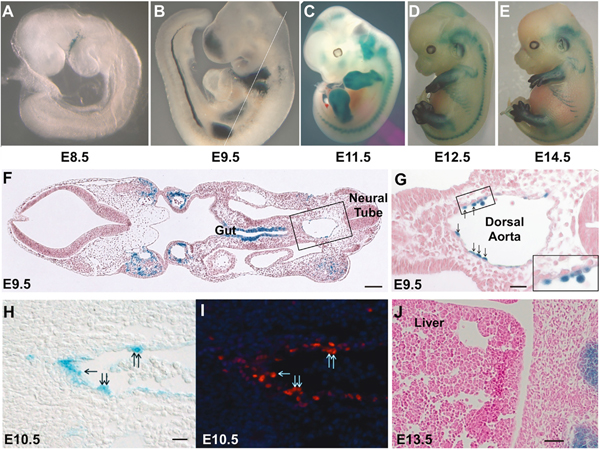
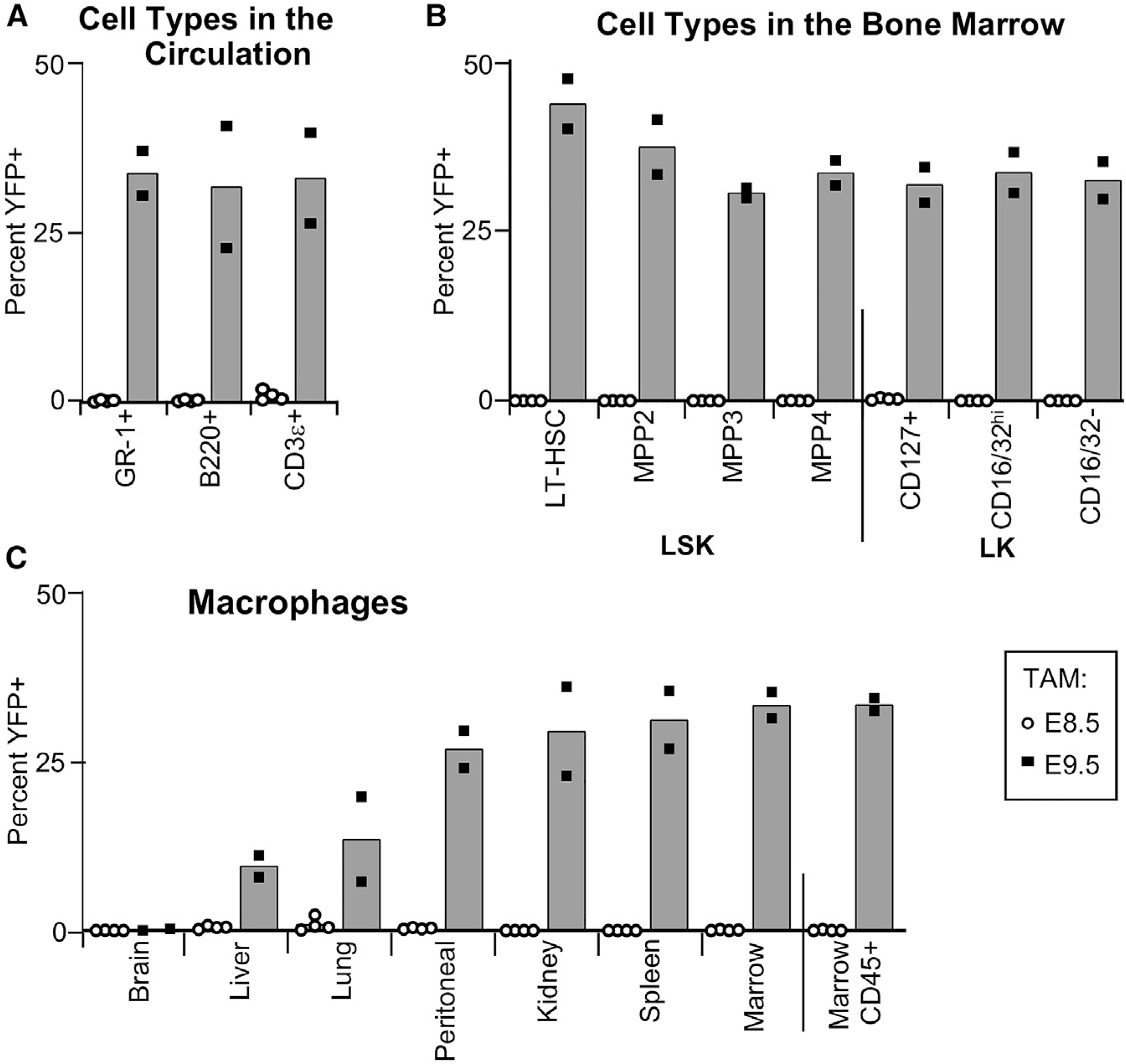
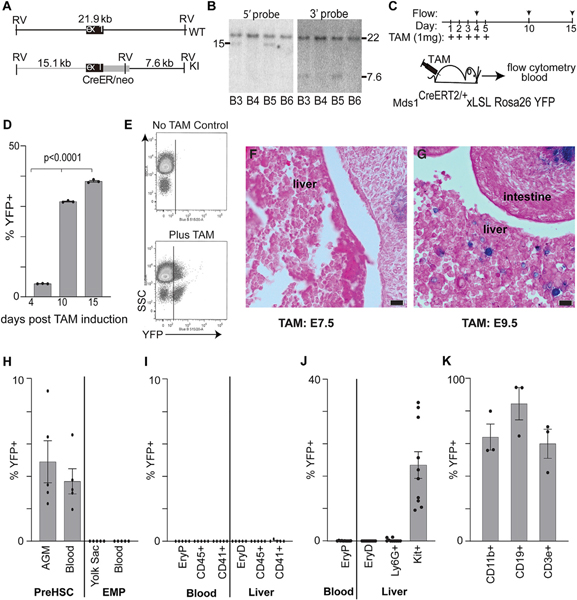
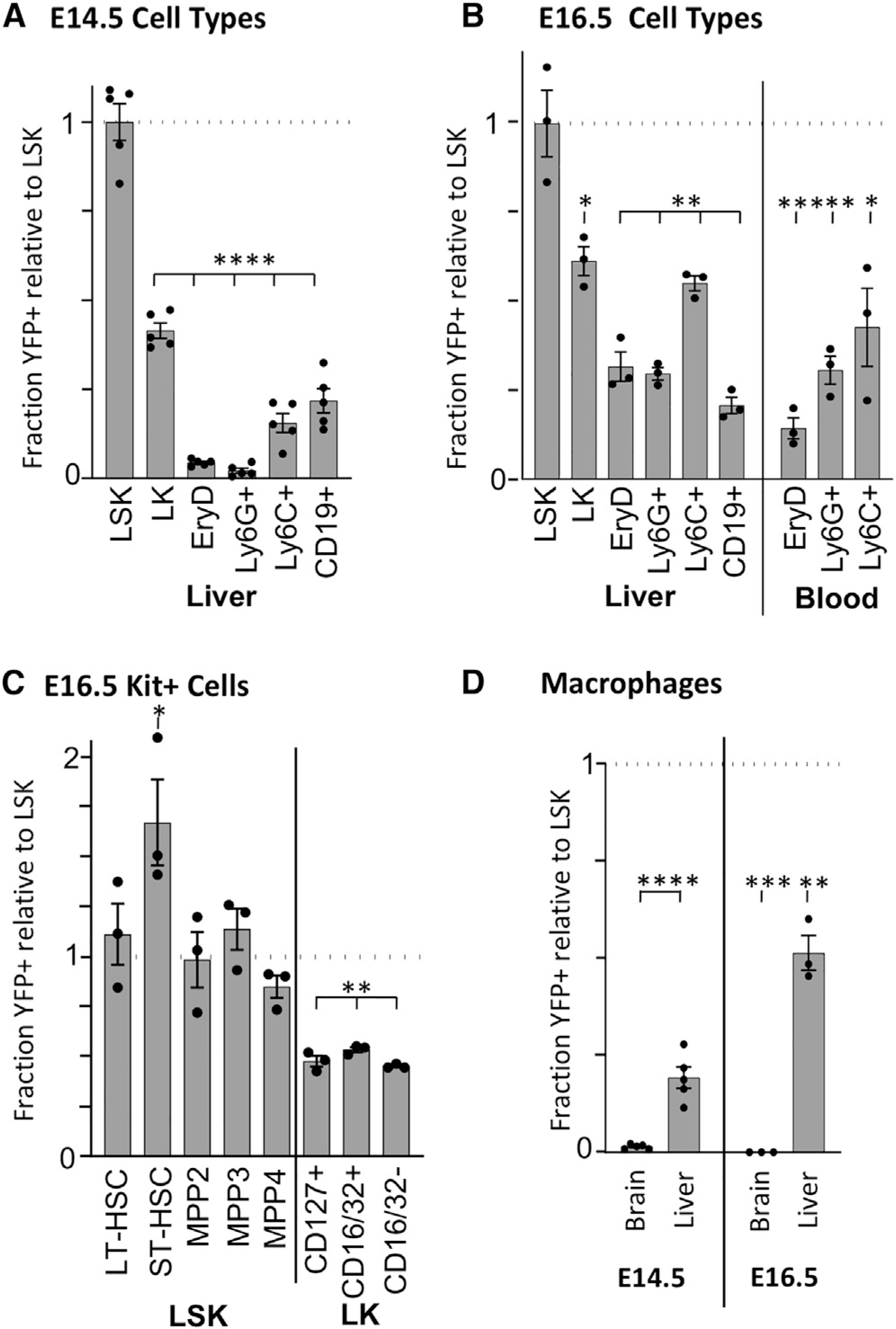
Hematopoietic ontogeny consists of two broad programs: an initial hematopoietic stem cell (HSC)-independent program followed by HSC-dependent hematopoiesis that sequentially seed the fetal liver and generate blood cells. However, the transition from HSC-independent to HSC-derived hematopoiesis remains poorly characterized. To help resolve this question, we developed Mds1 mice, which inducibly express Cre-recombinase in emerging HSCs in the aorta and label long-term adult HSCs, but not HSC-independent yolk-sac-derived primitive or definitive erythromyeloid (EMP) hematopoiesis. Our lineage-tracing studies indicate that HSC-derived erythroid, myeloid, and lymphoid progeny significantly expand in the liver and blood stream between E14.5 and E16.5. Additionally, we find that HSCs contribute the majority of F4/80+ macrophages in adult spleen and marrow, in contrast to their limited contribution to macrophage populations in brain, liver, and lungs. The Mds1 mouse model will be useful to deconvolute the complexity of hematopoiesis as it unfolds in the embryo and functions postnatally.
首先是造血干细胞(HSC)非依赖性程序,然后是 HSC 依赖性造血,其顺序为胎儿肝脏播种和产生血细胞。然而,HSC 非依赖性到 HSC 衍生的造血的转变仍未得到很好的描述。为了帮助解决这个问题,我们开发了 Mds1 小鼠,其在主动脉中诱导性表达 Cre 重组酶以标记新兴的 HSCs,并标记长期的成年 HSCs,但不标记 HSC 非依赖性卵黄囊衍生的原始或确定性红骨髓(EMP)造血。我们的谱系追踪研究表明,HSC 衍生的红细胞、髓样细胞和淋巴样祖细胞在 E14.5 和 E16.5 之间在肝脏和血液中显著扩增。此外,我们发现 HSCs 贡献了成年脾脏和骨髓中大多数 F4/80+巨噬细胞,而它们在大脑、肝脏和肺部中的巨噬细胞群体中的贡献有限。Mds1 小鼠模型将有助于解析胚胎中造血发生的复杂性以及出生后的功能。