Department of Microbiology and Immunology, Institute of Biomedicine, The Sahlgrenska Academy at the University of Gothenburg, Box 435, 405 30, Göteborg, Sweden.
Department of Surgery, Institute of Clinical Sciences, The Sahlgrenska Academy at the University of Gothenburg, Blå stråket 5, 413 45, Göteborg, Sweden.
BMC Immunol. 2021 Aug 19;22(1):58. doi: 10.1186/s12865-021-00449-1.
Intratumoral regulatory T cells (Treg) in colon cancer are a heterogeneous cell population, with potential impact on patient outcome. Generally, a high Treg infiltration has been correlated to a worse patient outcome, but it is still unclear how the composition of different Treg subsets affects patient relapse and survival. In this study, we used mass and flow cytometry to characterize Treg in colon tumors and corresponding unaffected tissue, followed by a correlation to clinical parameters and patient outcome.
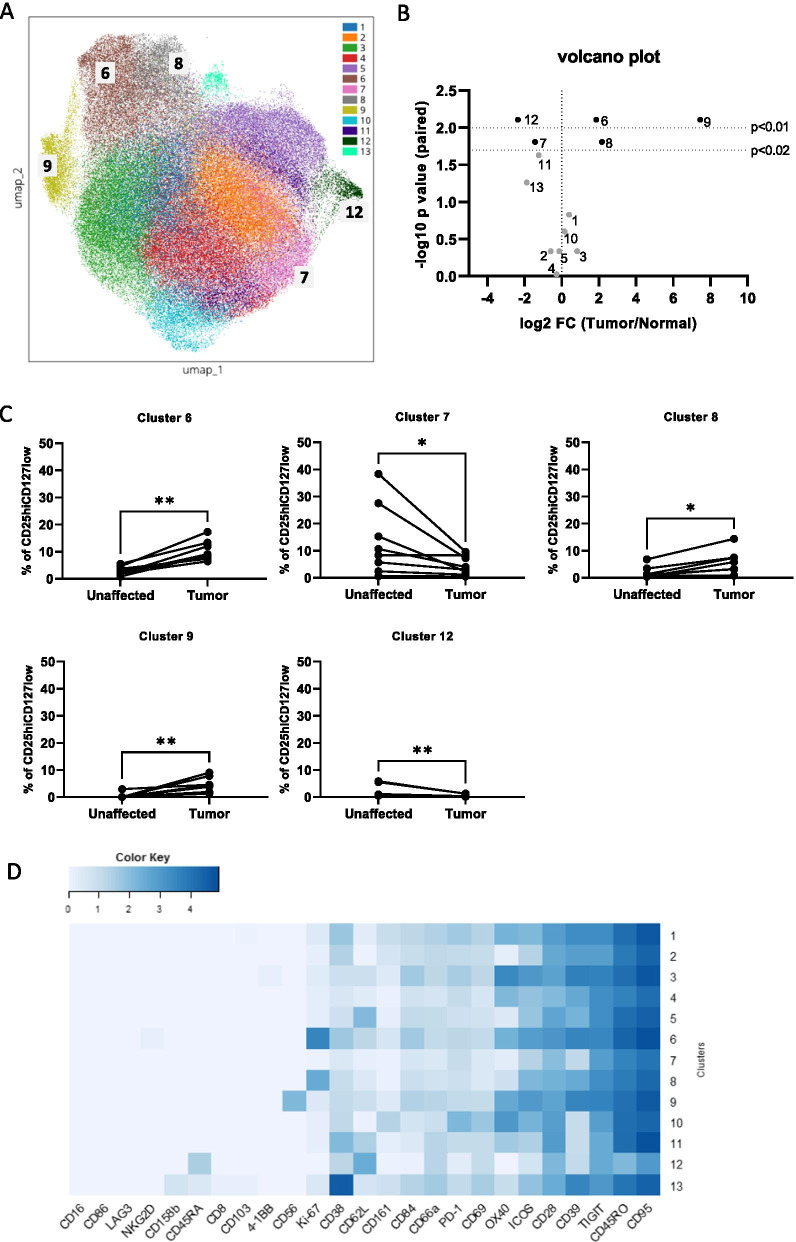
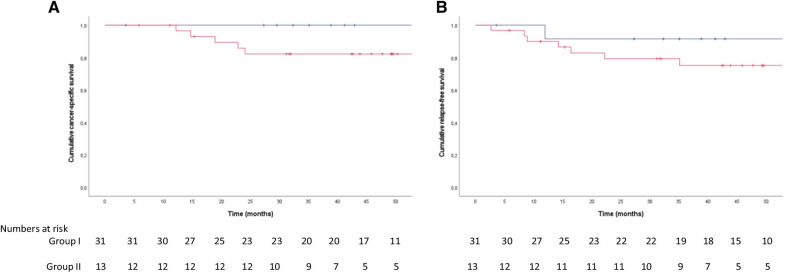
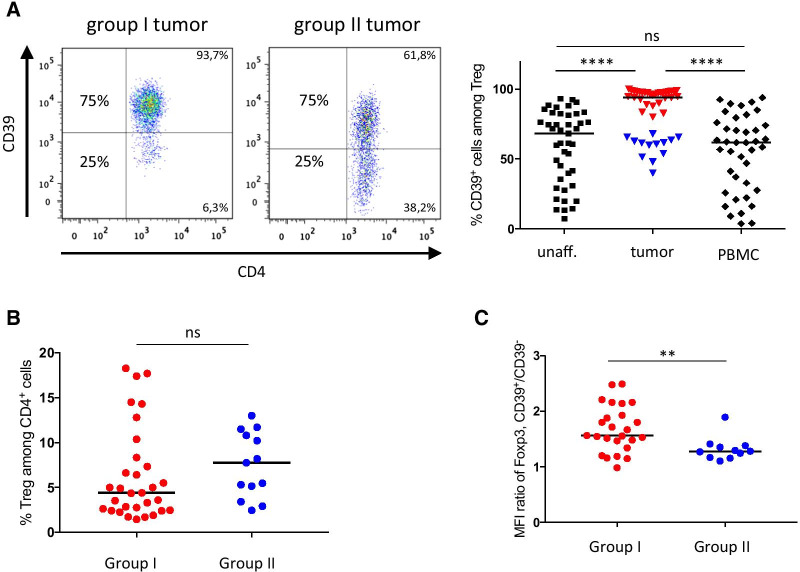
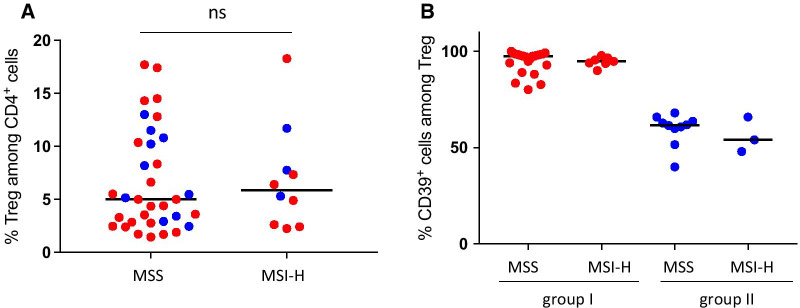
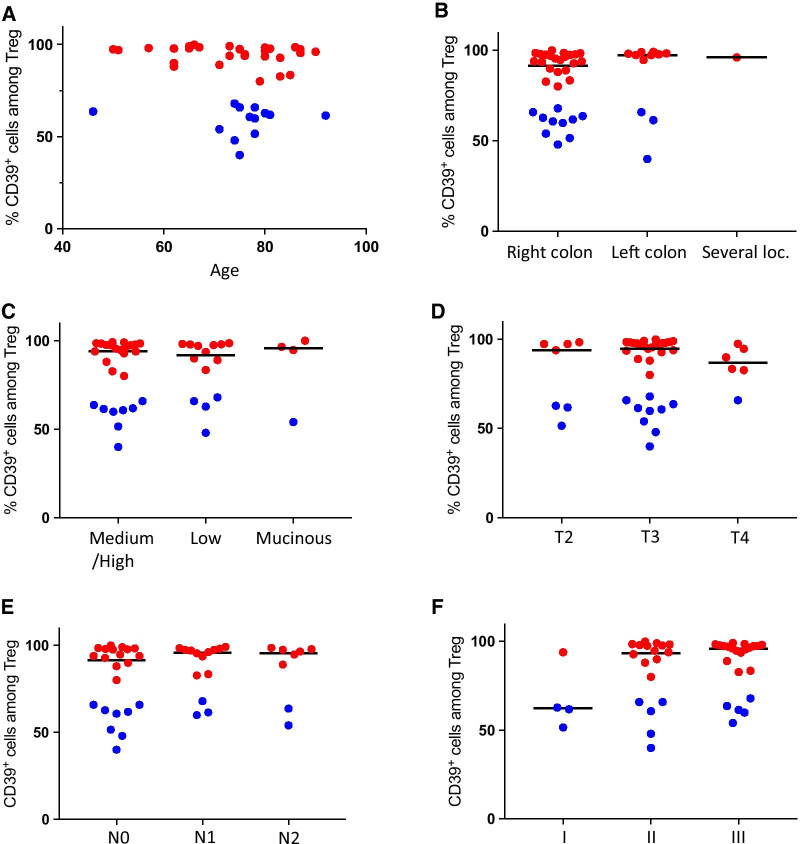
Using mass cytometry, we defined 13 clusters of intestinal Treg, three of which were enriched in the tumors. The two most enriched clusters were defined by their expression of the proliferation marker Ki67 and CD56, respectively. The Treg accumulating in the tumors expressed inducible T-cell co-stimulator (ICOS), OX-40, and CD39, indicating that they were effector Treg (eTreg). Intratumoral CD39 Treg also had a higher expression of Foxp3, suggesting a higher suppressive activity, and we subsequently used CD39 as a marker for eTreg. Our further studies showed that colon tumors can be divided into two tumor groups, based on the proportion of CD39 putative eTreg in the tumors. This property was independent of both tumor microsatellite status and tumor stage, which are important factors in predicting cancer disease progression. In a prospective study of forty-four colon cancer patients, we also showed that patients with a high CD39 expression on tumor-infiltrating Treg have a tendency towards a less favorable patient outcome in terms of cumulative cancer-specific survival.
This study uncovers novel subsets of tumor-infiltrating Treg in colon cancer, and suggests that CD39 may be a potential therapeutic target in patients with microsatellite stable colon tumors, which are usually refractory to checkpoint blockade therapy.
结肠癌中的肿瘤内调节性 T 细胞(Treg)是一种异质性细胞群体,可能对患者的预后有影响。通常,Treg 浸润程度高与患者预后较差相关,但 Treg 亚群的组成如何影响患者的复发和生存仍不清楚。在这项研究中,我们使用质谱流式细胞术对结肠癌肿瘤和相应的未受影响的组织中的 Treg 进行了特征分析,然后对其与临床参数和患者预后进行了相关性分析。
使用质谱流式细胞术,我们定义了 13 个肠道 Treg 簇,其中 3 个在肿瘤中富集。两个最富集的簇分别由其增殖标志物 Ki67 和 CD56 的表达定义。在肿瘤中积累的 Treg 表达可诱导 T 细胞共刺激因子(ICOS)、OX-40 和 CD39,表明它们是效应性 Treg(eTreg)。肿瘤内 CD39 Treg 也具有更高的 Foxp3 表达,提示其具有更高的抑制活性,我们随后使用 CD39 作为 eTreg 的标志物。我们的进一步研究表明,根据肿瘤中 CD39 推定的 eTreg 的比例,结肠肿瘤可以分为两组肿瘤。该特性独立于肿瘤微卫星状态和肿瘤分期,这是预测癌症疾病进展的重要因素。在对 44 例结肠癌患者的前瞻性研究中,我们还表明,肿瘤浸润性 Treg 上 CD39 高表达的患者在累积癌症特异性生存方面有倾向于预后不良。
这项研究揭示了结肠癌中肿瘤浸润性 Treg 的新亚群,并表明 CD39 可能是微卫星稳定的结肠癌患者的潜在治疗靶点,这些患者通常对检查点阻断治疗有抗性。