Department of Gynaecology and Obstetrics, Union Hospital, Tongji Medical College, Huazhong University of Science and Technology, Wuhan, China.
Ann Med. 2021 Dec;53(1):1377-1389. doi: 10.1080/07853890.2021.1966087.
Endometriosis is one of the most common reproductive system diseases, but the mechanisms of disease progression are still unclear. Due to its high recurrence rate, searching for potential therapeutic biomarkers involved in the pathogenesis of endometriosis is an urgent issue.
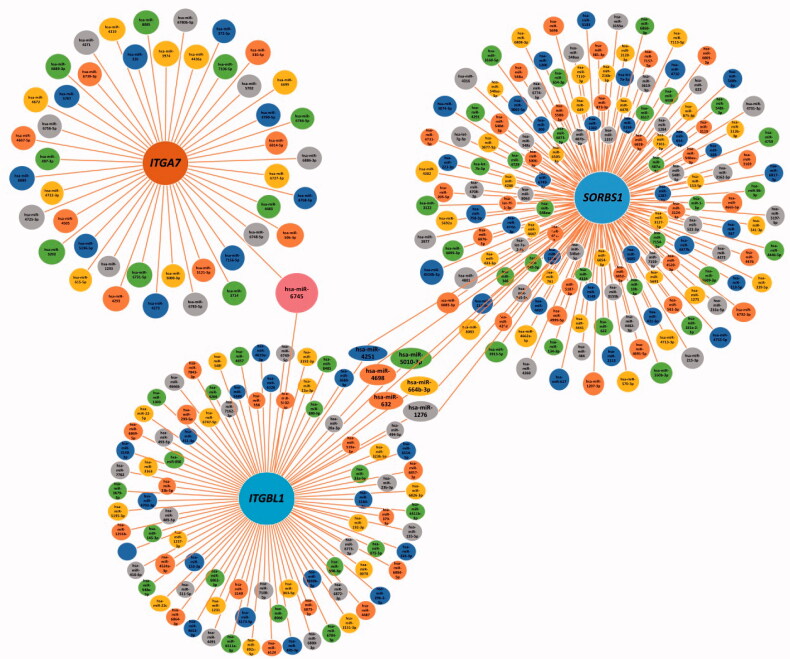
Due to the similarities between endometriosis and ovarian cancer, four endometriosis datasets and one ovarian cancer dataset were downloaded from Gene Expression Omnibus (GEO) database. Differentially expressed genes (DEGs) were identified, followed by gene ontology (GO), Kyoto Encyclopedia of Genes and Genomes (KEGG) pathway and protein-protein interaction (PPI) analyses. Then, we validated gene expression and performed survival analysis with ovarian serous cystadenocarcinoma (OV) datasets in TCGA/GTEx database, and searched for potential drugs in the Drug-Gene Interaction Database. Finally, we explored the miRNAs of key genes to find biomarkers associated with the recurrence of endometriosis.
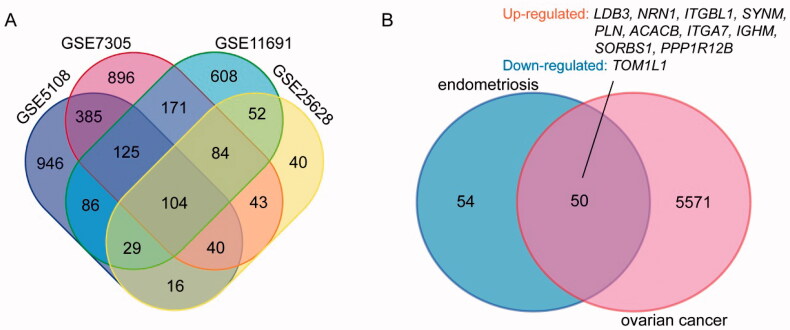
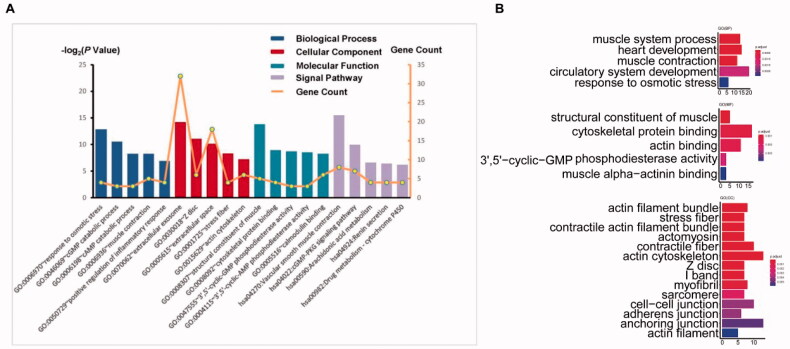
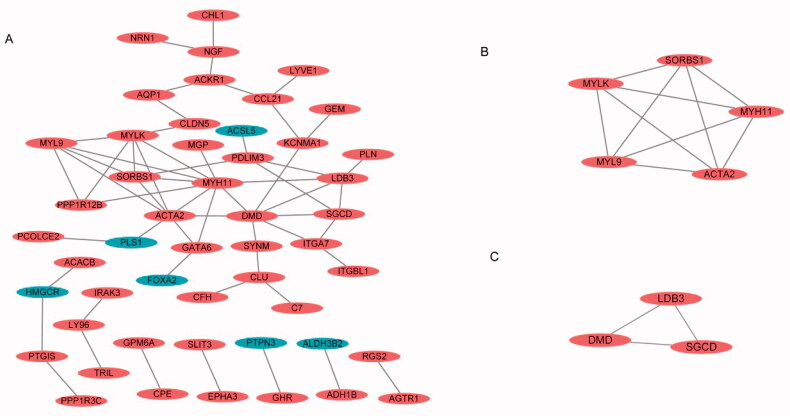
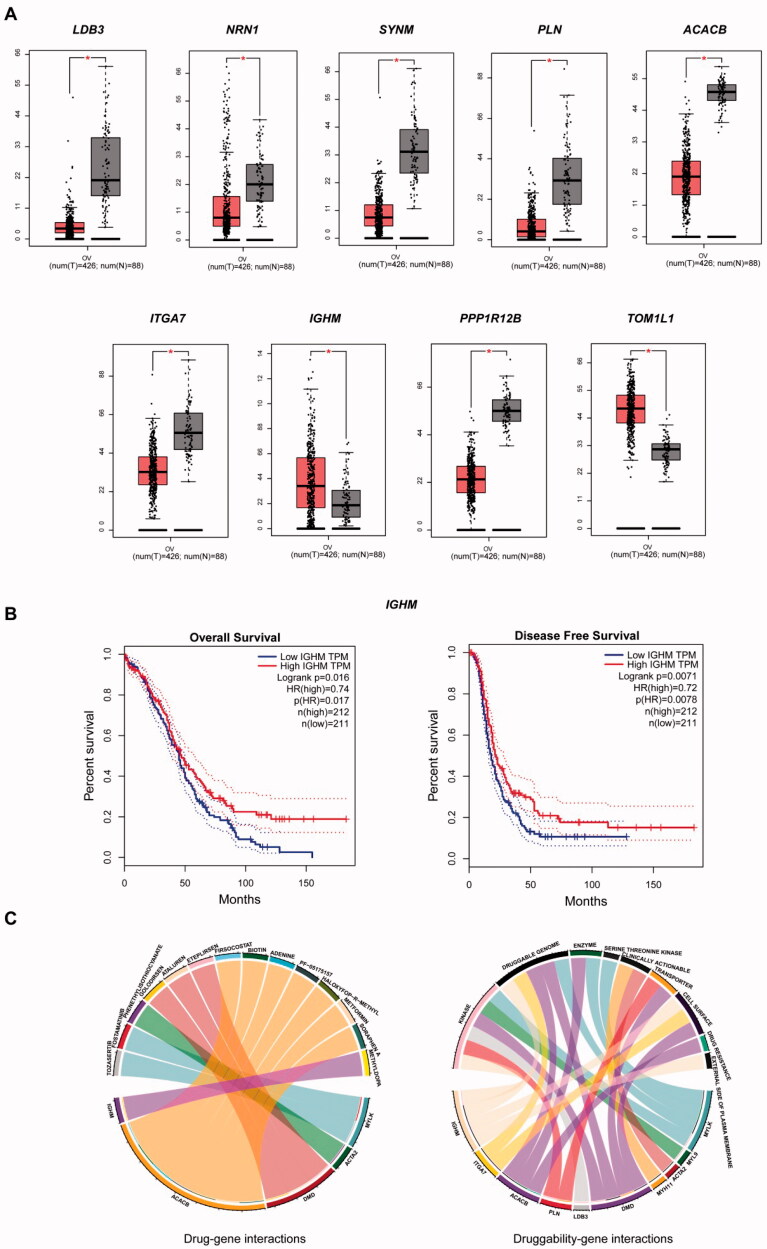
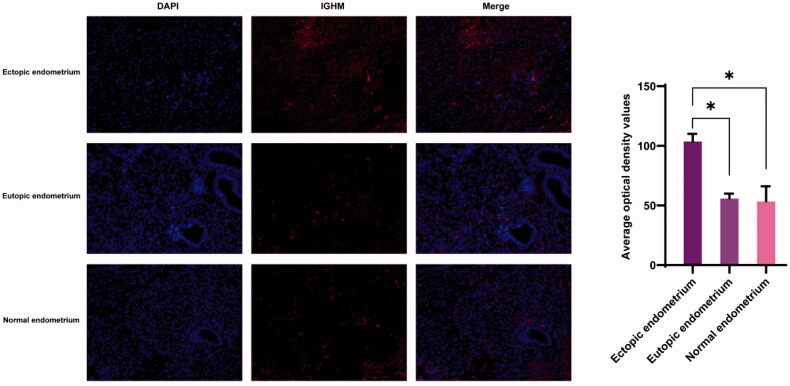
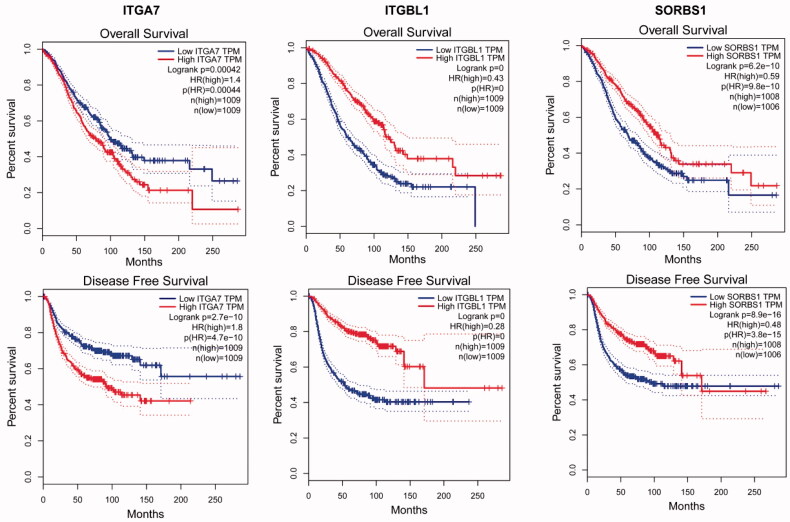
In total, 104 DEGs were identified in the endometriosis datasets, and the main enriched GO functions included cell adhesion, extracellular exosome and actin binding. Fifty DEGs were identified between endometriosis and ovarian cancer datasets including 11 consistently regulated genes, and nine DEGs with significant expression in TCGA/GTEx. Only had both significant expression and an association with survival, three module DEGs and two significantly expressed DEGs had drug associations, and 10 DEGs had druggability.
, and may help us understand the invasive nature of endometriosis, and might be related to recurrence; moreover, these genes all may be potential therapeutic targets.KEY MESSAGEThis manuscript used a bioinformatics approach to find target genes for the treatment of endometriosis.This manuscript used a new approach to find target genes by drawing on common characteristics between ovarian cancer and endometriosis.We screened relevant therapeutic agents for target genes in the drug database, and performed histological validation of target genes with both expression and survival analysis difference in cancer databases.
子宫内膜异位症是最常见的生殖系统疾病之一,但疾病进展的机制仍不清楚。由于其高复发率,寻找潜在的治疗生物标志物参与子宫内膜异位症的发病机制是当务之急。
由于子宫内膜异位症和卵巢癌之间存在相似性,我们从基因表达综合数据库(GEO)下载了四个子宫内膜异位症数据集和一个卵巢癌数据集。鉴定差异表达基因(DEGs),随后进行基因本体(GO)、京都基因与基因组百科全书(KEGG)通路和蛋白质-蛋白质相互作用(PPI)分析。然后,我们在 TCGA/GTEx 数据库中验证基因表达并进行卵巢浆液性囊腺癌(OV)数据集的生存分析,并在药物-基因相互作用数据库中搜索潜在药物。最后,我们探索关键基因的 miRNA,寻找与子宫内膜异位症复发相关的生物标志物。
总共在子宫内膜异位症数据集中鉴定出 104 个 DEGs,主要富集的 GO 功能包括细胞粘附、细胞外外泌体和肌动蛋白结合。在子宫内膜异位症和卵巢癌数据集中鉴定出 50 个 DEGs,包括 11 个一致调节的基因,以及在 TCGA/GTEx 中具有显著表达的 9 个 DEGs。只有 具有显著表达且与生存相关,三个模块 DEGs 和两个显著表达的 DEGs 具有药物关联,10 个 DEGs 具有可药性。
、和可能有助于我们了解子宫内膜异位症的侵袭性,并且可能与复发有关;此外,这些基因都可能是潜在的治疗靶点。
本文使用生物信息学方法寻找治疗子宫内膜异位症的靶基因。本文使用一种新方法,通过借鉴卵巢癌和子宫内膜异位症之间的共同特征来寻找靶基因。我们在药物数据库中筛选了与靶基因相关的治疗药物,并在癌症数据库中进行了靶基因的表达和生存分析差异的组织学验证。