Peking University Sixth Hospital, Peking University Institute of Mental Health, NHC Key Laboratory of Mental Health (Peking University), National Clinical Research Center for Mental Disorders (Peking University Sixth Hospital), Chinese Academy of Medical Sciences Research Unit (No. 2018RU006), Peking University, 100191, Beijing, China.
Beijing Key Laboratory of Applied Experimental Psychology, National Demonstration Center for Experimental Psychology Education (Beijing Normal University), Faculty of Psychology, Beijing Normal University, 100875, Beijing, China.
Transl Psychiatry. 2021 Aug 24;11(1):441. doi: 10.1038/s41398-021-01566-6.
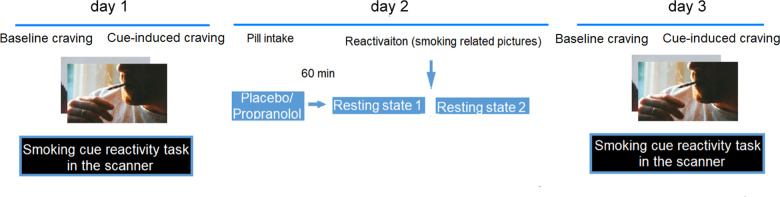
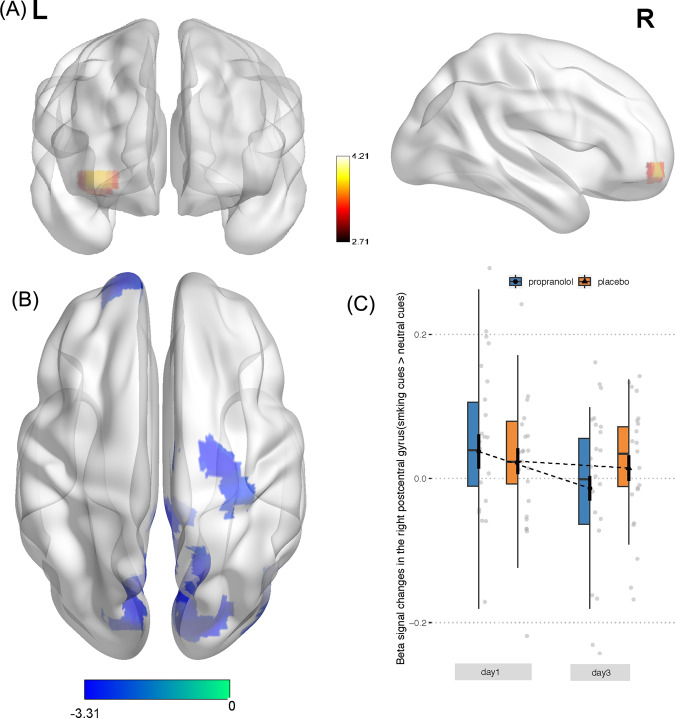
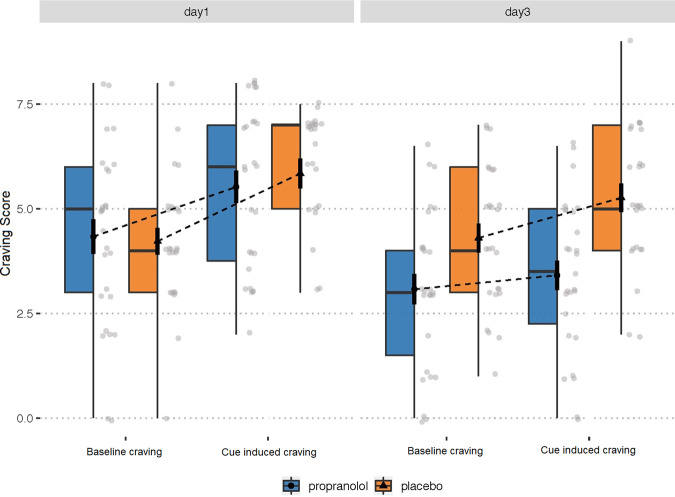
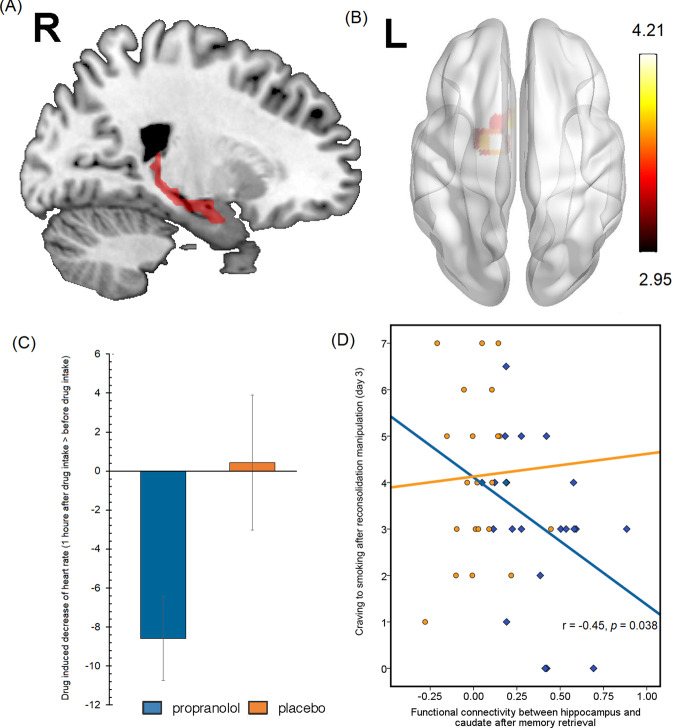
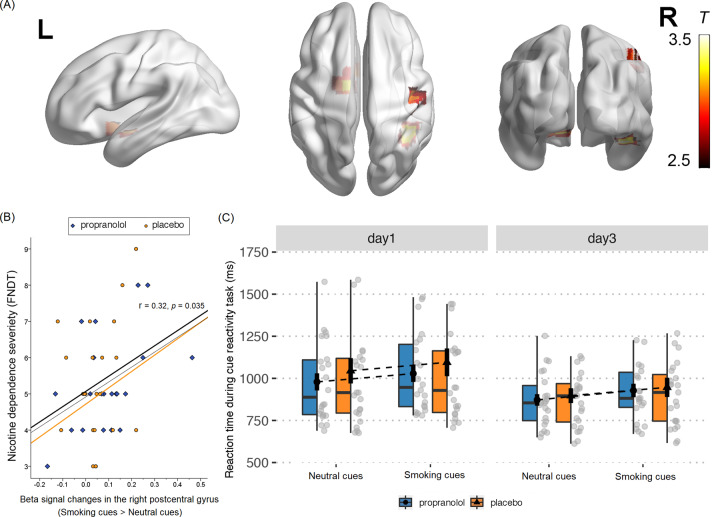
The majority of smokers relapse even after successfully quitting because of the craving to smoking after unexpectedly re-exposed to smoking-related cues. This conditioned craving is mediated by reward memories that are frequently experienced and stubbornly resistant to treatment. Reconsolidation theory posits that well-consolidated memories are destabilized after retrieval, and this process renders memories labile and vulnerable to amnestic intervention. This study tests the retrieval reconsolidation procedure to decrease nicotine craving among people who smoke. In this study, 52 male smokers received a single dose of propranolol (n = 27) or placebo (n = 25) before the reactivation of nicotine-associated memories to impair the reconsolidation process. Craving for smoking and neural activity in response to smoking-related cues served as primary outcomes. Functional magnetic resonance imaging was performed during the memory reconsolidation process. The disruption of reconsolidation by propranolol decreased craving for smoking. Reactivity of the postcentral gyrus in response to smoking-related cues also decreased in the propranolol group after the reconsolidation manipulation. Functional connectivity between the hippocampus and striatum was higher during memory reconsolidation in the propranolol group. Furthermore, the increase in coupling between the hippocampus and striatum positively correlated with the decrease in craving after the reconsolidation manipulation in the propranolol group. Propranolol administration before memory reactivation disrupted the reconsolidation of smoking-related memories in smokers by mediating brain regions that are involved in memory and reward processing. These findings demonstrate the noradrenergic regulation of memory reconsolidation in humans and suggest that adjunct propranolol administration can facilitate the treatment of nicotine dependence. The present study was pre-registered at ClinicalTrials.gov (registration no. ChiCTR1900024412).
大多数吸烟者即使成功戒烟后也会复吸,因为在意外重新接触到与吸烟相关的线索后,会产生吸烟的渴望。这种条件性的渴望是由经常经历且顽固抵抗治疗的奖励记忆介导的。再巩固理论假设,在检索后,记忆会被破坏,这个过程使记忆变得不稳定,容易受到健忘的干预。这项研究测试了检索再巩固程序,以减少吸烟者的尼古丁渴望。在这项研究中,52 名男性吸烟者在激活与尼古丁相关的记忆之前,接受了单次普罗帕酮(n = 27)或安慰剂(n = 25)治疗,以损害再巩固过程。吸烟渴望和对吸烟相关线索的神经活动作为主要结果。在记忆再巩固过程中进行了功能磁共振成像。普罗帕酮对再巩固的破坏降低了吸烟的渴望。在再巩固操作后,普罗帕酮组中与吸烟相关线索反应的后中央回的反应性也降低。在普罗帕酮组中,在记忆再巩固期间,海马体和纹状体之间的功能连接性更高。此外,海马体和纹状体之间的耦合增加与普罗帕酮组再巩固操作后渴望的降低呈正相关。在记忆再激活之前给予普罗帕酮可通过介导参与记忆和奖励处理的大脑区域来破坏吸烟者与吸烟相关的记忆再巩固。这些发现证明了人类记忆再巩固的去甲肾上腺素能调节,并表明辅助普罗帕酮给药可以促进尼古丁依赖的治疗。本研究在 ClinicalTrials.gov 上进行了预先注册(注册号 ChiCTR1900024412)。