Department of Haematology-Oncology, National University Cancer Institute, Singapore, National University Hospital, Singapore
Yong Loo Lin School of Medicine, National University of Singapore, Singapore.
Gut. 2022 Jul;71(7):1277-1288. doi: 10.1136/gutjnl-2021-324420. Epub 2021 Aug 25.
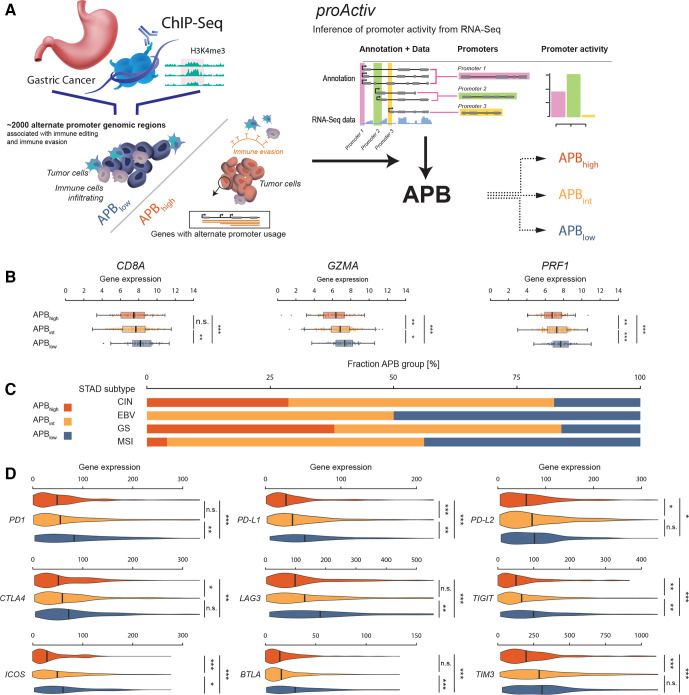
Epigenomic alterations in cancer interact with the immune microenvironment to dictate tumour evolution and therapeutic response. We aimed to study the regulation of the tumour immune microenvironment through epigenetic alternate promoter use in gastric cancer and to expand our findings to other gastrointestinal tumours.
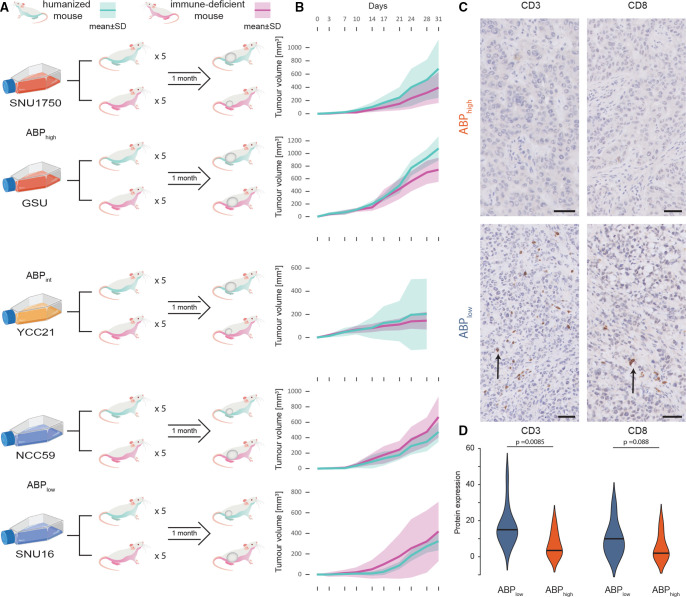
Alternate promoter burden (APB) was quantified using a novel bioinformatic algorithm () to infer promoter activity from short-read RNA sequencing and samples categorised into APB, APB and APB Single-cell RNA sequencing was performed to analyse the intratumour immune microenvironment. A humanised mouse cancer in vivo model was used to explore dynamic temporal interactions between tumour kinetics, alternate promoter usage and the human immune system. Multiple cohorts of gastrointestinal tumours treated with immunotherapy were assessed for correlation between APB and treatment outcomes.
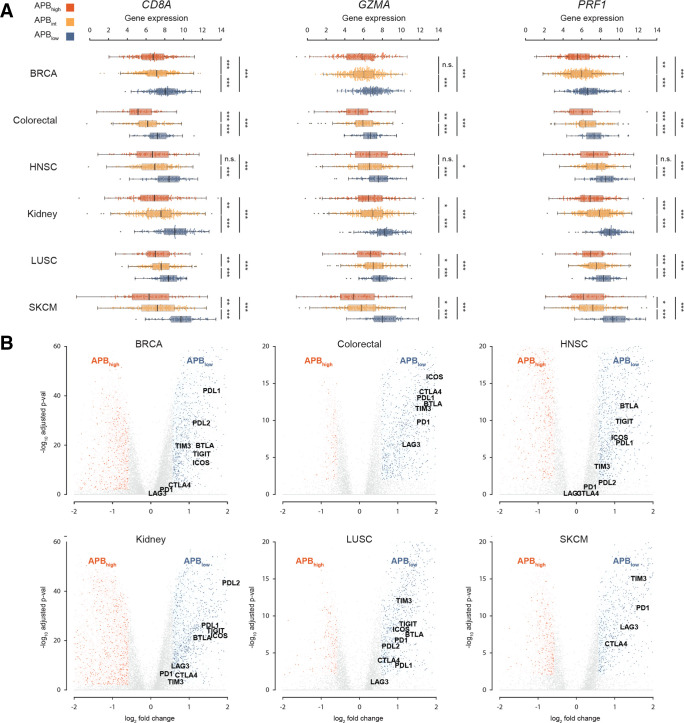
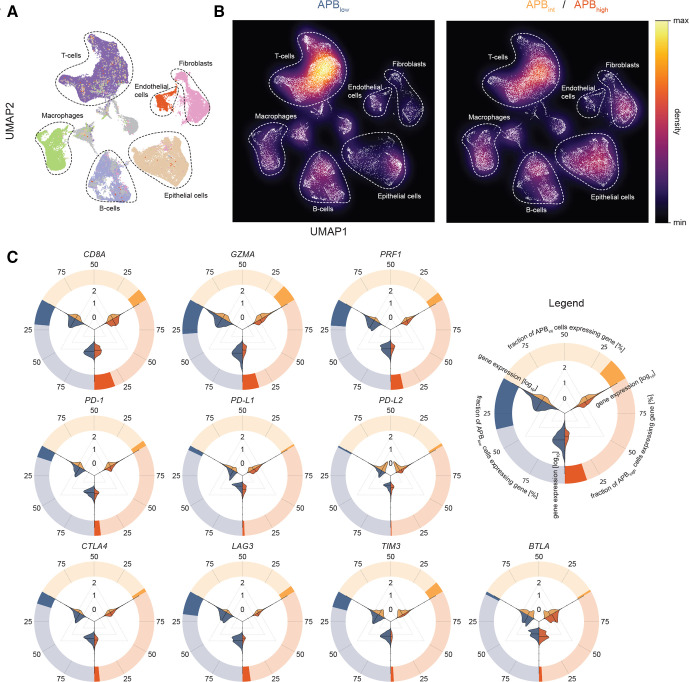
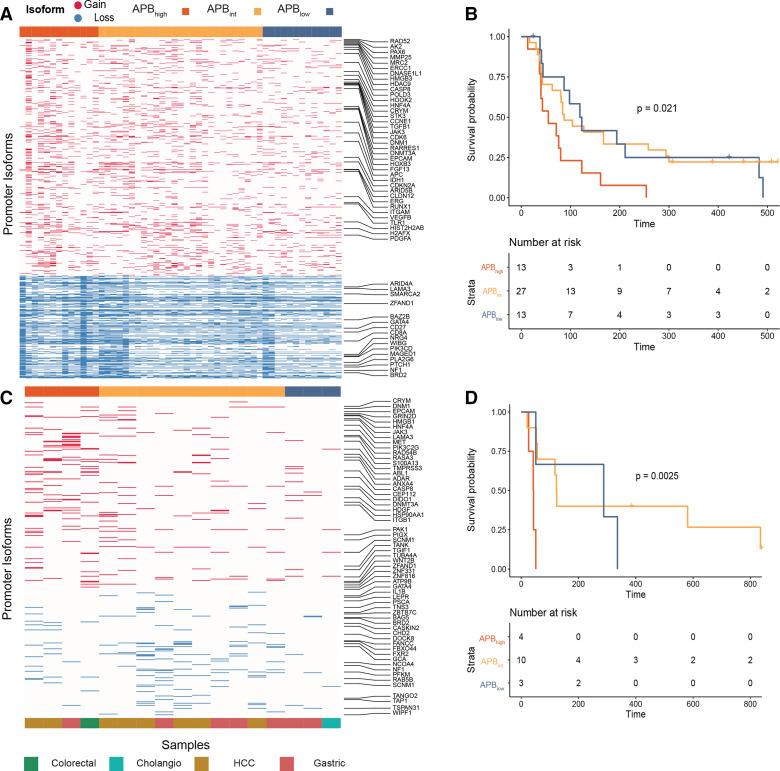
APB gastric cancer tumours expressed decreased levels of T-cell cytolytic activity and exhibited signatures of immune depletion. Single-cell RNAsequencing analysis confirmed distinct immunological populations and lower T-cell proportions in APB tumours. Functional in vivo studies using 'humanised mice' harbouring an active human immune system revealed distinct temporal relationships between APB and tumour growth, with APB tumours having almost no human T-cell infiltration. Analysis of immunotherapy-treated patients with GI cancer confirmed resistance of APB tumours to immune checkpoint inhibition. APB gastric cancer exhibited significantly poorer progression-free survival compared with APB (median 55 days vs 121 days, HR 0.40, 95% CI 0.18 to 0.93, p=0.032).
These findings demonstrate an association between alternate promoter use and the tumour microenvironment, leading to immune evasion and immunotherapy resistance.
癌症中的表观遗传改变与免疫微环境相互作用,决定肿瘤的进化和治疗反应。我们旨在研究通过胃癌中表观遗传替代启动子的使用来调节肿瘤免疫微环境,并将我们的发现扩展到其他胃肠道肿瘤。
使用新的生物信息学算法()来量化替代启动子负担(APB),以从短读 RNA 测序推断启动子活性,并将样本分类为 APB、APB 和 APB。单细胞 RNA 测序用于分析肿瘤内免疫微环境。使用人源化小鼠癌症体内模型来探索肿瘤动力学、替代启动子使用与人体免疫系统之间的动态时间相互作用。评估了多个接受免疫治疗的胃肠道肿瘤队列,以确定 APB 与治疗结果之间的相关性。
APB 胃癌肿瘤表达的 T 细胞细胞毒性活性降低,并表现出免疫耗竭的特征。单细胞 RNA 测序分析证实了 APB 肿瘤中存在不同的免疫群体和较低的 T 细胞比例。使用“人源化小鼠”进行的体内功能研究,这些小鼠具有活跃的人体免疫系统,揭示了 APB 与肿瘤生长之间的独特时间关系,APB 肿瘤几乎没有人类 T 细胞浸润。对接受 GI 癌症免疫治疗的患者进行分析证实,APB 肿瘤对免疫检查点抑制具有抗性。APB 胃癌的无进展生存期明显短于 APB(中位 55 天 vs 121 天,HR 0.40,95%CI 0.18 至 0.93,p=0.032)。
这些发现表明替代启动子的使用与肿瘤微环境之间存在关联,导致免疫逃逸和免疫治疗耐药。