Viertel Cancer Research Centre, Cancer Council Queensland, Fortitude Valley, Brisbane, QLD 4006, Australia.
Centre for Health Research, University of Southern Queensland, Springfield, QLD 4300, Australia.
Curr Oncol. 2021 Aug 9;28(4):3041-3057. doi: 10.3390/curroncol28040266.
As cancer survival rates continue to increase, so will the demand for care from family and friends, particularly in more isolated settings. This study aims to examine the needs of cancer caregivers in regional and remote Australia.
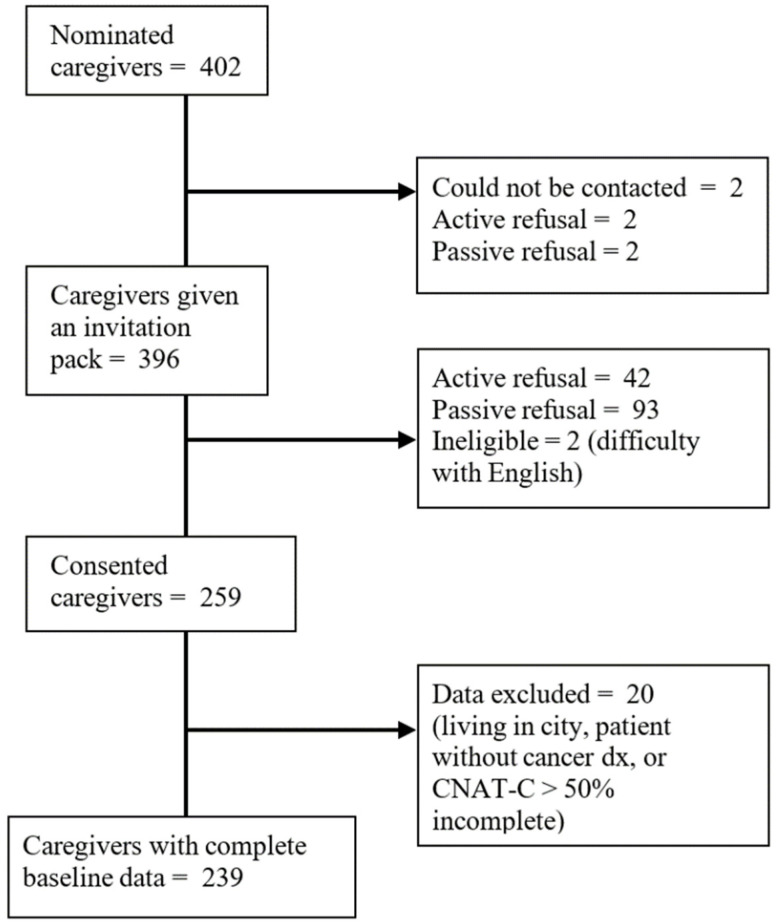
A total of 239 informal (i.e., non-professional) cancer caregivers (e.g., family/friends) from regional and remote Queensland, Australia, completed the Comprehensive Needs Assessment Tool for Cancer Caregivers (CNAT-C). The frequencies of individuals reporting specific needs were calculated. Logistic regression analyses assessed the association between unmet needs and demographic characteristics and cancer type.
The most frequently endorsed needs were lodging near hospital (77%), information about the disease (74%), and tests and treatment (74%). The most frequent unmet needs were treatment near home (37%), help with economic burden (32%), and concerns about the person being cared for (32%). Younger and female caregivers were significantly more likely to report unmet needs overall (OR = 2.12; OR = 0.58), and unmet healthcare staff needs (OR = 0.35; OR = 1.99, respectively). Unmet family and social support needs were also significantly more likely among younger caregivers (OR = 0.35). Caregivers of breast cancer patients (OR = 0.43) and older caregivers (OR = 0.53) were significantly less likely to report unmet health and psychology needs. Proportions of participants reporting needs were largely similar across demographic groups and cancer type with some exceptions.
Caregiver health, practical issues associated with travel, and emotional strain are all areas where regional and remote caregivers require more support. Caregivers' age and gender, time since diagnosis and patient cancer type should be considered when determining the most appropriate supportive care.
随着癌症存活率的持续提高,家庭和朋友对癌症患者的护理需求也将增加,尤其是在较为偏远的地区。本研究旨在调查澳大利亚偏远地区癌症护理者的需求。
本研究共纳入来自澳大利亚昆士兰州偏远地区的 239 名非正式(即非专业)癌症护理者(如家人/朋友),他们均填写了《癌症护理者综合需求评估工具》(CNAT-C)。计算了报告特定需求的个体的频率。采用逻辑回归分析评估了未满足需求与人口统计学特征和癌症类型之间的关系。
报告率最高的需求依次为医院附近的住宿(77%)、疾病相关信息(74%)和检查与治疗(74%)。报告率最高的未满足需求依次为居家治疗(37%)、经济负担援助(32%)和对被照顾者的担忧(32%)。年轻和女性护理者总体上更有可能报告存在未满足需求(OR=2.12;OR=0.58),以及未满足医护人员的需求(OR=0.35;OR=1.99)。年轻护理者也更有可能报告未满足的家庭和社会支持需求(OR=0.35)。乳腺癌患者(OR=0.43)和年长护理者(OR=0.53)的护理者报告未满足健康和心理需求的可能性显著较低。除了一些例外情况,不同人口统计学群体和癌症类型的参与者报告需求的比例大致相似。
护理者的健康、与旅行相关的实际问题以及情绪压力都是需要更多支持的领域。在确定最合适的支持性护理时,应考虑护理者的年龄和性别、诊断后时间和患者的癌症类型。