Department of Medical, Oral and Biotechnological Sciences, University "G. d'Annunzio" Chieti-Pescara, 66100 Chieti, Italy.
Center for Advanced Studies and Technology (C.A.S.T.), University "G. d'Annunzio" Chieti-Pescara, 66100 Chieti, Italy.
Nutrients. 2021 Aug 17;13(8):2823. doi: 10.3390/nu13082823.
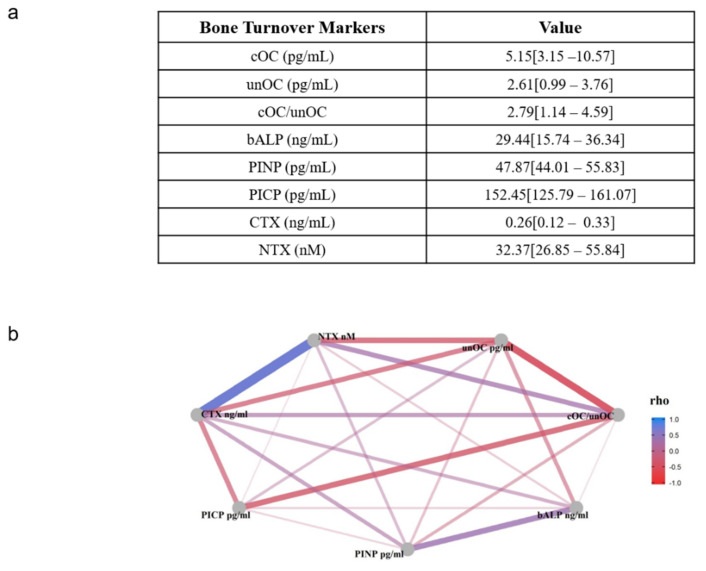
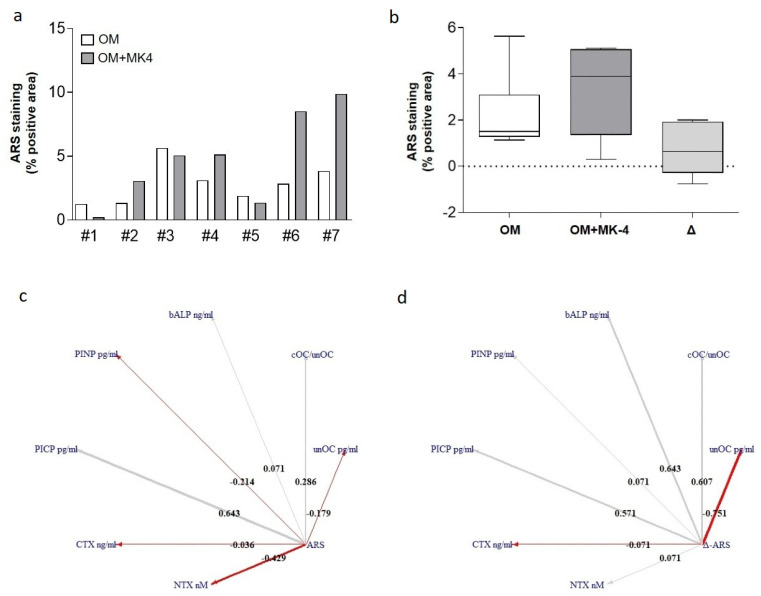
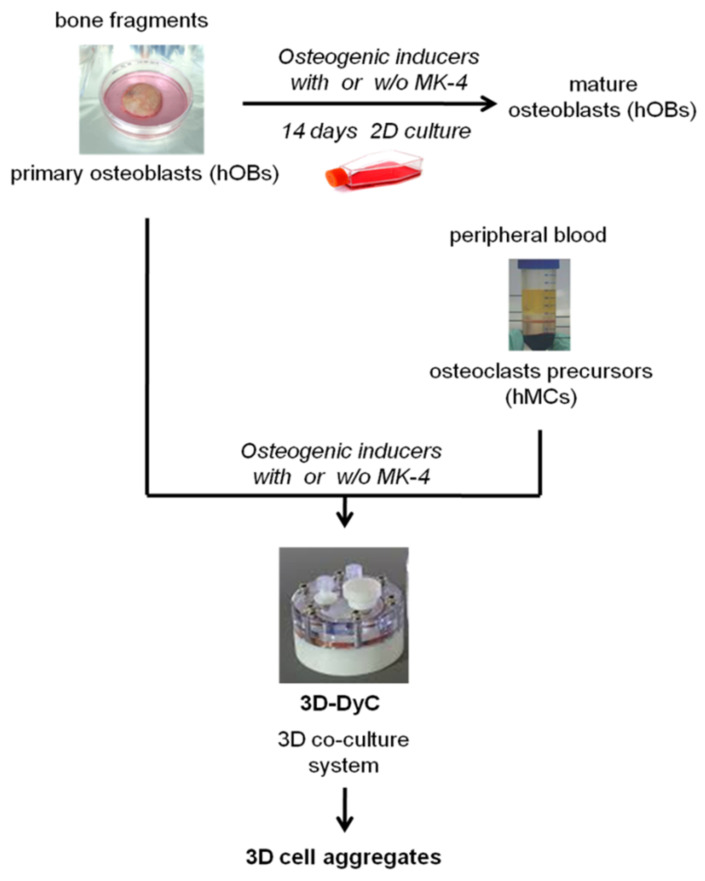
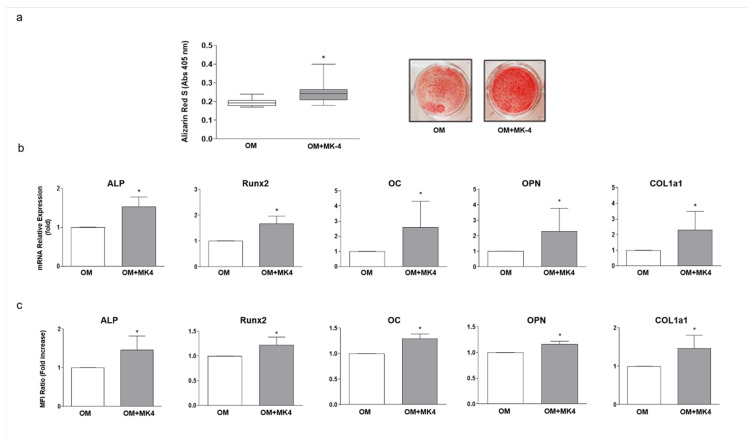
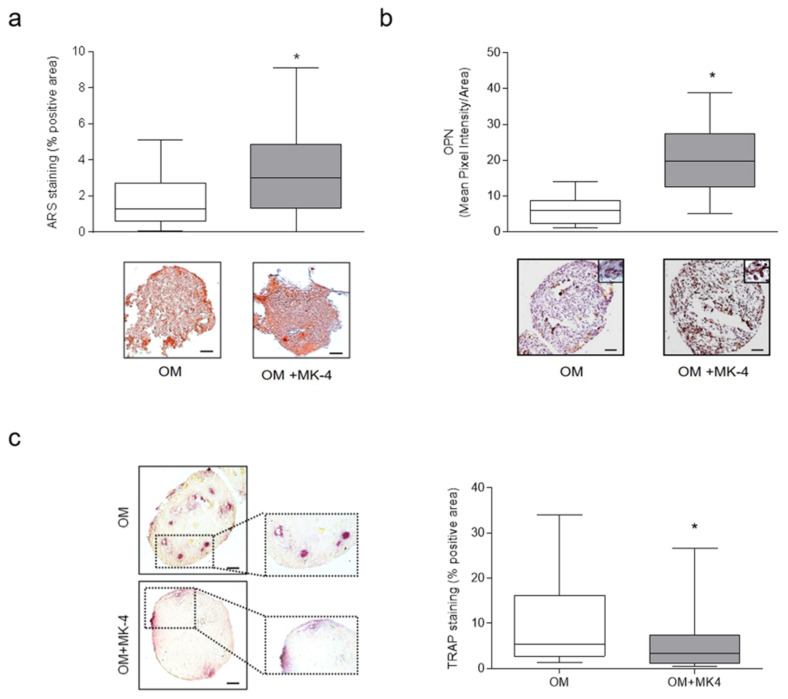
Several natural compounds, such as vitamin K2, have been highlighted for their positive effects on bone metabolism. It has been proposed that skeletal disorders, such as osteoporosis, may benefit from vitamin K2-based therapies or its regular intake. However, further studies are needed to better clarify the effects of vitamin K2 in bone disorders. To this aim, we developed in vitro a three-dimensional (3D) cell culture system one step closer to the bone microenvironment based on co-culturing osteoblasts and osteoclasts precursors obtained from bone specimens and peripheral blood of the same osteoporotic patient, respectively. Such a 3-D co-culture system was more informative than the traditional 2-D cell cultures when responsiveness to vitamin K2 was analyzed, paving the way for data interpretation on single patients. Following this approach, the anabolic effects of vitamin K2 on the osteoblast counterpart were found to be correlated with bone turnover markers measured in osteoporotic patients' sera. Overall, our data suggest that co-cultured osteoblasts and osteoclast precursors from the same osteoporotic patient may be suitable to generate an in vitro 3-D experimental model that potentially reflects the individual's bone metabolism and may be useful to predict personal responsiveness to nutraceutical or drug molecules designed to positively affect bone health.
几种天然化合物,如维生素 K2,因其对骨骼代谢的积极影响而受到关注。有人提出,骨骼疾病,如骨质疏松症,可以受益于基于维生素 K2 的治疗或其常规摄入。然而,需要进一步的研究来更好地阐明维生素 K2 在骨骼疾病中的作用。为此,我们开发了一种更接近基于共培养成骨细胞和破骨细胞前体的骨微环境的体外 3D 细胞培养系统,这些前体分别从骨标本和同一骨质疏松症患者的外周血中获得。与传统的 2D 细胞培养相比,这种 3D 共培养系统在分析对维生素 K2 的反应时提供了更多信息,为单个人的数据解释铺平了道路。采用这种方法,发现维生素 K2 对成骨细胞对应物的合成代谢作用与在骨质疏松症患者血清中测量的骨转换标志物相关。总的来说,我们的数据表明,来自同一骨质疏松症患者的共培养成骨细胞和破骨细胞前体可以生成体外 3D 实验模型,该模型可能反映个体的骨骼代谢,并且可能有助于预测对旨在积极影响骨骼健康的营养药物分子的个人反应。