Canadian Institute for Substance Use Research, University of Victoria, Victoria, BC V8P 5C2, Canada.
Centre for Addiction and Mental Health, Toronto, ON M5V 2B4, Canada.
Nutrients. 2021 Aug 19;13(8):2846. doi: 10.3390/nu13082846.
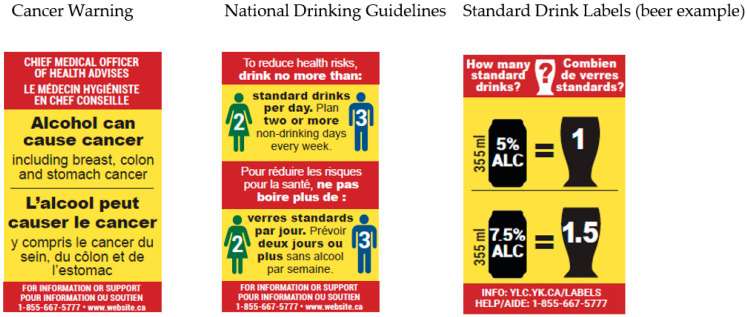
Evidence for effective government policies to reduce exposure to alcohol's carcinogenic and hepatoxic effects has strengthened in recent decades. Policies with the strongest evidence involve reducing the affordability, availability and cultural acceptability of alcohol. However, policies that reduce population consumption compete with powerful commercial vested interests. This paper draws on the Canadian Alcohol Policy Evaluation (CAPE), a formal assessment of effective government action on alcohol across Canadian jurisdictions. It also draws on alcohol policy case studies elsewhere involving attempts to introduce minimum unit pricing and cancer warning labels on alcohol containers. Canadian governments collectively received a failing grade (F) for alcohol policy implementation during the most recent CAPE assessment in 2017. However, had the best practices observed in any one jurisdiction been implemented consistently, Canada would have received an A grade. Resistance to effective alcohol policies is due to (1) lack of public awareness of both need and effectiveness, (2) a lack of government regulatory mechanisms to implement effective policies, (3) alcohol industry lobbying, and (4) a failure from the public health community to promote specific and feasible actions as opposed to general principles, e.g., 'increased prices' or 'reduced affordability'. There is enormous untapped potential in most countries for the implementation of proven strategies to reduce alcohol-related harm. While alcohol policies have weakened in many countries during the COVID-19 pandemic, societies may now also be more accepting of public health-inspired policies with proven effectiveness and potential economic benefits.
近年来,有证据表明,有效的政府政策可减少人们接触酒精的致癌和肝毒性影响。具有最强证据的政策涉及降低酒精的可负担性、可得性和文化可接受性。然而,降低人口消费的政策与强大的商业既得利益相竞争。本文借鉴了加拿大酒精政策评估 (CAPE),这是对加拿大各司法管辖区政府在酒精问题上采取有效行动的正式评估。它还借鉴了其他地方的酒精政策案例研究,这些案例研究涉及在酒精容器上引入最低单位定价和癌症警告标签的尝试。在 2017 年最近一次 CAPE 评估中,加拿大政府在执行酒精政策方面的总体得分为 F。然而,如果在任何一个司法管辖区观察到的最佳做法得到一致实施,加拿大将获得 A 级。对有效酒精政策的抵制是由于以下原因:(1)公众对必要性和有效性缺乏认识,(2)缺乏政府监管机制来实施有效政策,(3)酒精行业游说,以及(4)公共卫生界未能推广具体可行的行动,而是推广一般原则,例如“提高价格”或“降低可负担性”。在大多数国家,实施经证实的减少与酒精相关的伤害的策略具有巨大的未开发潜力。虽然在 COVID-19 大流行期间,许多国家的酒精政策有所削弱,但现在社会可能也更容易接受具有经证实的有效性和潜在经济利益的公共卫生驱动的政策。