Zhang Wenwen, Zhang Fangling, Hu Qichao, Xiao Xiaolin, Ou Linbo, Chen Yuan, Luo Shiqing, Cheng Yonghong, Jiang Yinxiao, Ma Xiao, Zhao Yanling
State Key Laboratory of Southwestern Chinese Medicine Resources, School of Pharmacy, Chengdu University of Traditional Chinese Medicine, Chengdu, 611137, China.
Hospital of Chengdu University of Traditional Chinese Medicine, School of Clinical Medicine, Chengdu University of Traditional Chinese Medicine, Chengdu, 611137, China.
Chin Med. 2021 Aug 28;16(1):86. doi: 10.1186/s13020-021-00486-3.
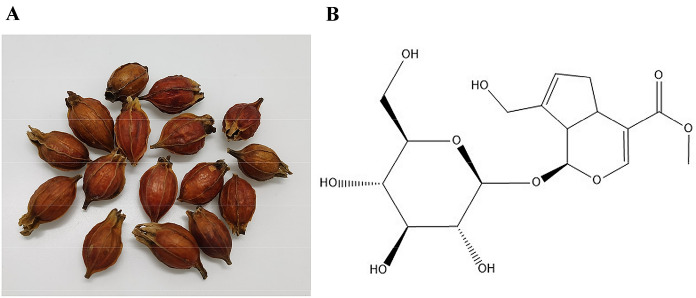
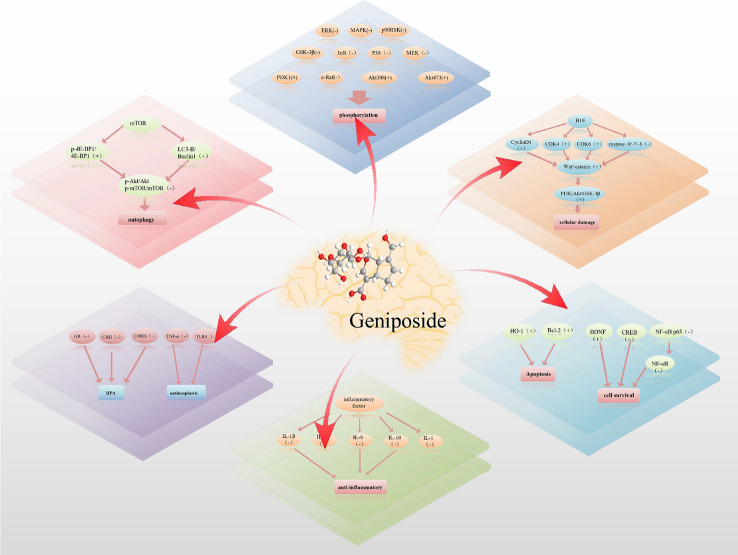
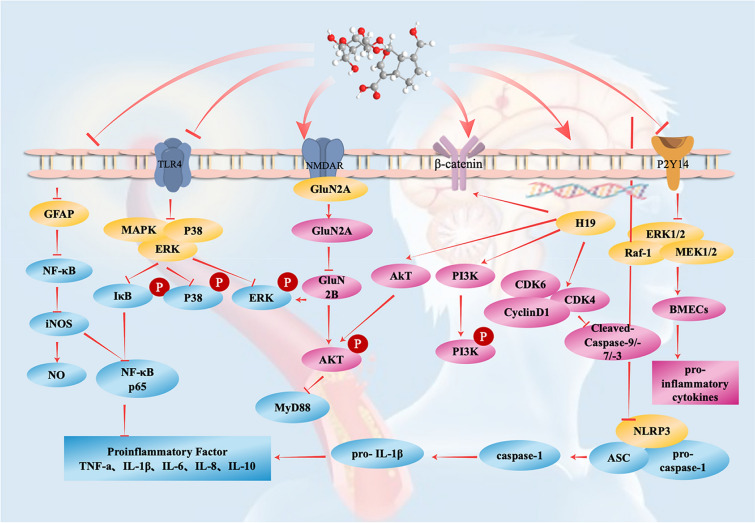
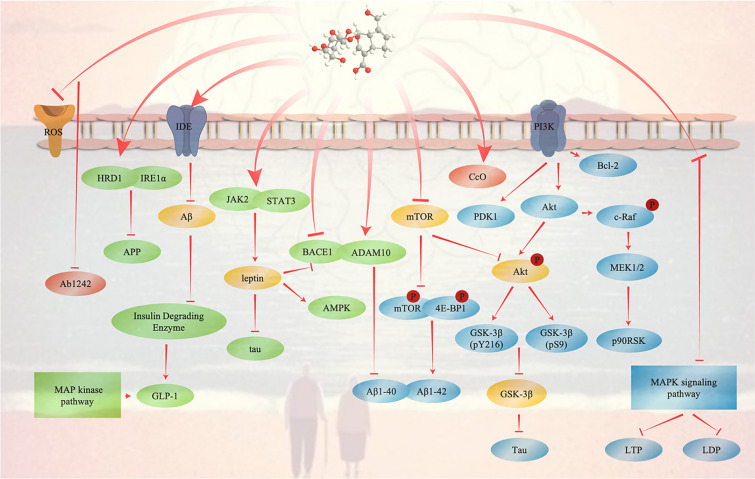
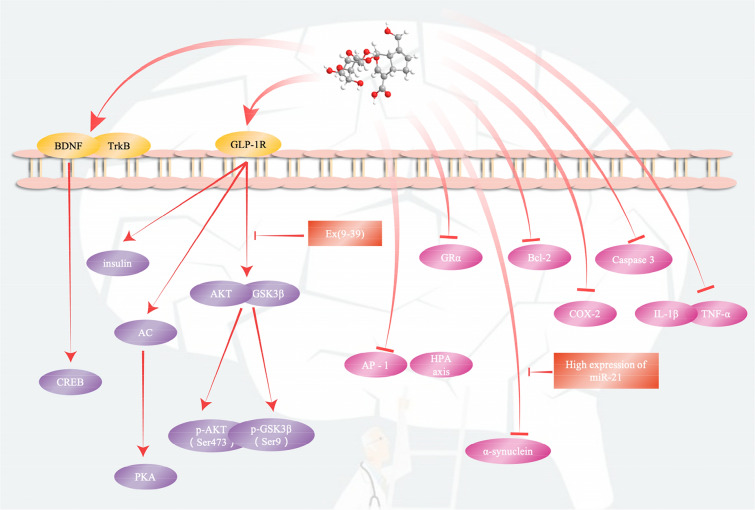
With the advanced discoveries in the field of pathogenesis, a series of cerebral diseases, such as cerebral ischaemia, Alzheimer's disease, and depression, have been found to have multiple signalling targets in the microenvironment. Only a few existing agents have been shown to have curative effects due to this specific circumstance. In recent decades, active ingredients isolated from natural plants have been shown to be crucial for original drug development. Geniposide, mainly extracted from Gardenia jasminoides Ellis, is representative of these natural products. Geniposide demonstrates various biological activities in the treatment of cerebral, cardiovascular, hepatic, tumorous, and other diseases. The multiple protective effects of geniposide on the brain have especially drawn increasing attention. Thus, this article specifically reviews the characteristics of current models of cerebral ischaemia and illustrates the possible effects of geniposide and its pathogenetic mechanisms on these models. Geniposide has been shown to significantly reduce the area of cerebral infarction and alleviate neuronal damage and necrosis mainly by inhibiting inflammatory signals, including NLRP3, TNF-α, IL-6, and IL-1β. Neuronal protection was also involved in activating the PI3K/Akt and Wnt/catenin pathways. Geniposide was able to increase autophagy and inhibit apoptosis by regulating the function of mTOR in treating Alzheimer's disease. Geniposide has also been shown to act as a glucagon-like peptide-1 receptor (GLP-1R) agonist to reduce amyloid plaques and inhibit oxidative stress to alleviate memory impairment as well as synaptic loss. Moreover, geniposide has been shown to exert antidepressant effects primarily by regulating the hypothalamic-pituitary-adrenal (HPA) axis. Detailed explorations have shown that the biological activities of inhibiting inflammatory cytokine secretion, alleviating oxidative stress, and suppressing mitochondrial damage are also involved in the mechanism of action of geniposide. Therefore, geniposide is a promising agent awaiting further exploration for the treatment of cerebral diseases via various phenotypes or signalling pathways.
随着发病机制领域的先进发现,一系列脑部疾病,如脑缺血、阿尔茨海默病和抑郁症,已被发现在微环境中具有多个信号靶点。由于这种特殊情况,现有的药物中只有少数显示出治疗效果。近几十年来,从天然植物中分离出的活性成分已被证明对原创药物开发至关重要。栀子苷主要从栀子中提取,是这些天然产物的代表。栀子苷在治疗脑部、心血管、肝脏、肿瘤等疾病方面表现出多种生物活性。栀子苷对大脑的多种保护作用尤其受到越来越多的关注。因此,本文专门综述了当前脑缺血模型的特点,并阐述了栀子苷对这些模型可能的作用及其发病机制。栀子苷已被证明能显著减少脑梗死面积,主要通过抑制包括NLRP3、TNF-α、IL-6和IL-1β在内的炎症信号来减轻神经元损伤和坏死。神经元保护还涉及激活PI3K/Akt和Wnt/连环蛋白通路。在治疗阿尔茨海默病时,栀子苷能够通过调节mTOR的功能增加自噬并抑制细胞凋亡。栀子苷还被证明可作为胰高血糖素样肽-1受体(GLP-1R)激动剂,减少淀粉样斑块并抑制氧化应激,以减轻记忆障碍以及突触丧失。此外,栀子苷已被证明主要通过调节下丘脑-垂体-肾上腺(HPA)轴发挥抗抑郁作用。详细研究表明,抑制炎症细胞因子分泌、减轻氧化应激和抑制线粒体损伤的生物活性也参与了栀子苷的作用机制。因此,栀子苷是一种有前途的药物,有待通过各种表型或信号通路进一步探索其在脑部疾病治疗中的应用。