Gross Chase, Ramirez Dominique A, McGrath Stephanie, Gustafson Daniel L
Department of Clinical Sciences, Colorado State University, Fort Collins, CO, United States.
University of Colorado Cancer Center, Aurora, CO, United States.
Front Pharmacol. 2021 Aug 11;12:725136. doi: 10.3389/fphar.2021.725136. eCollection 2021.
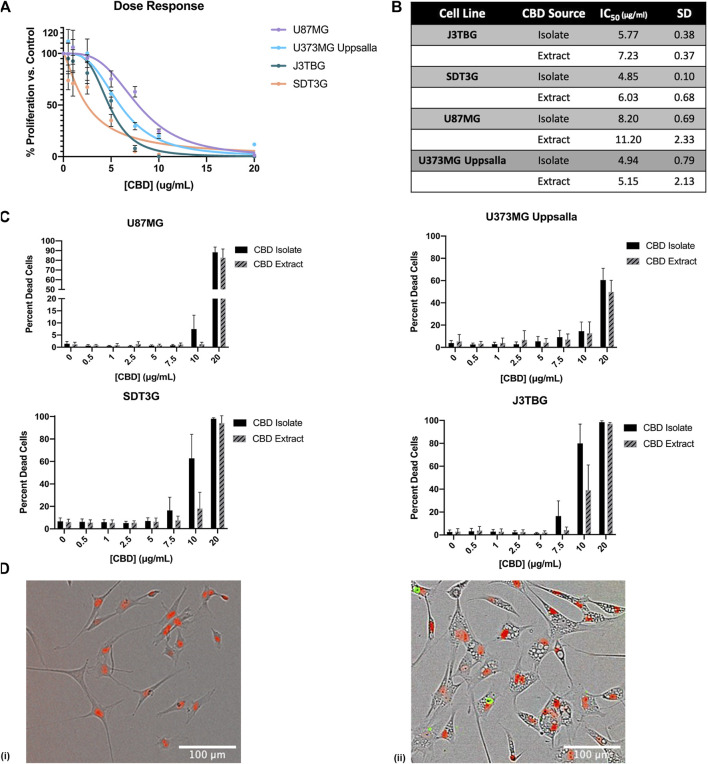
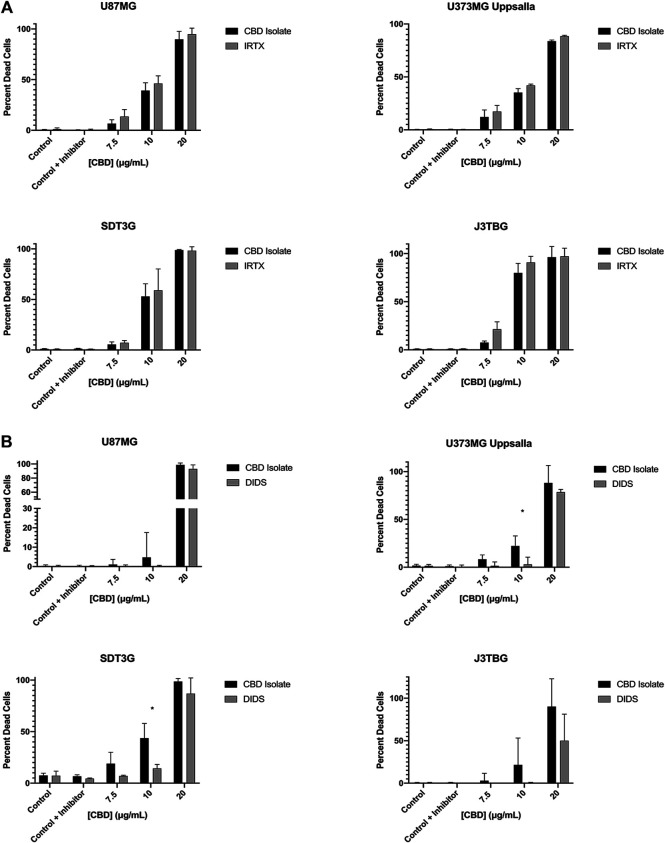
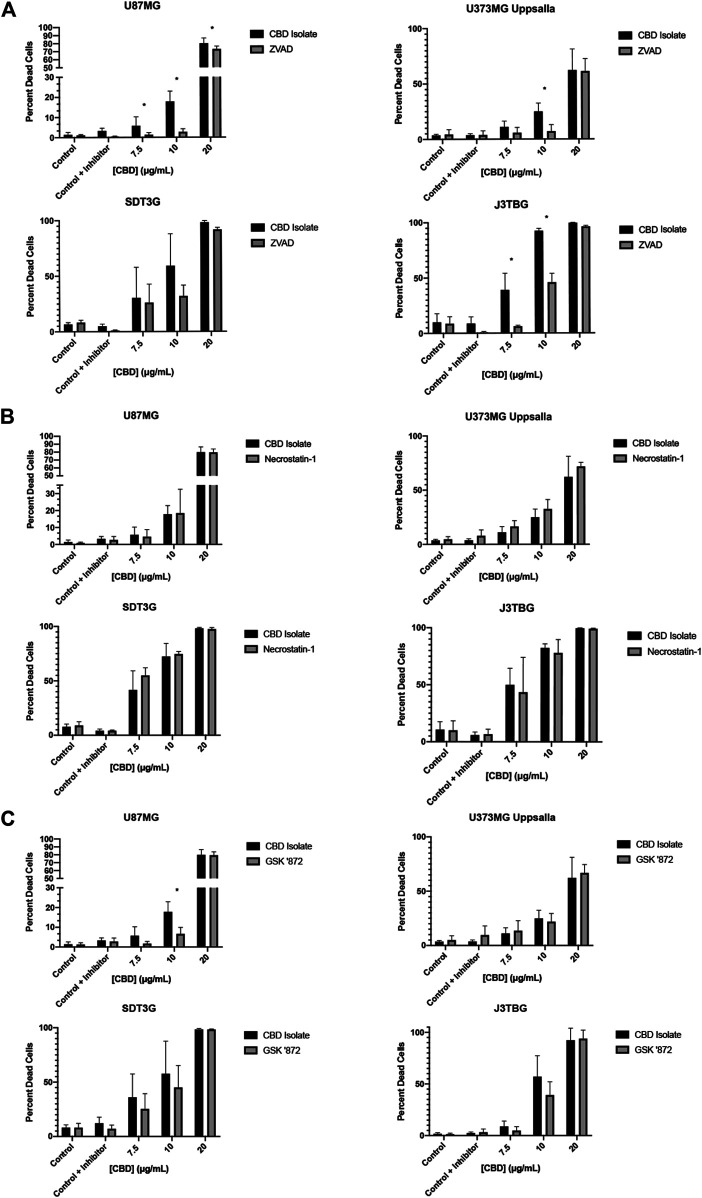
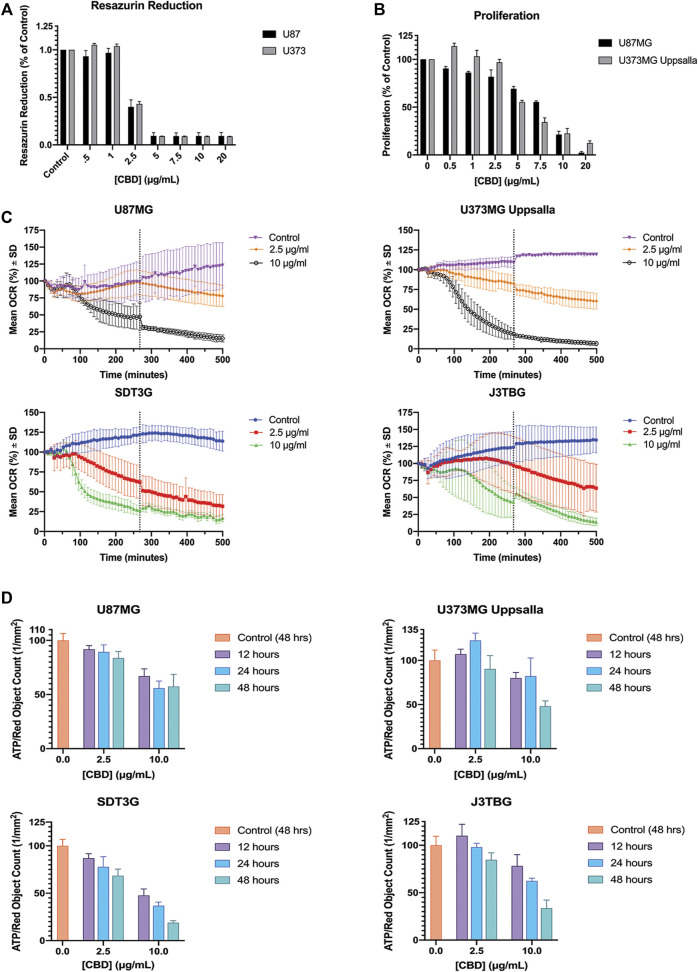
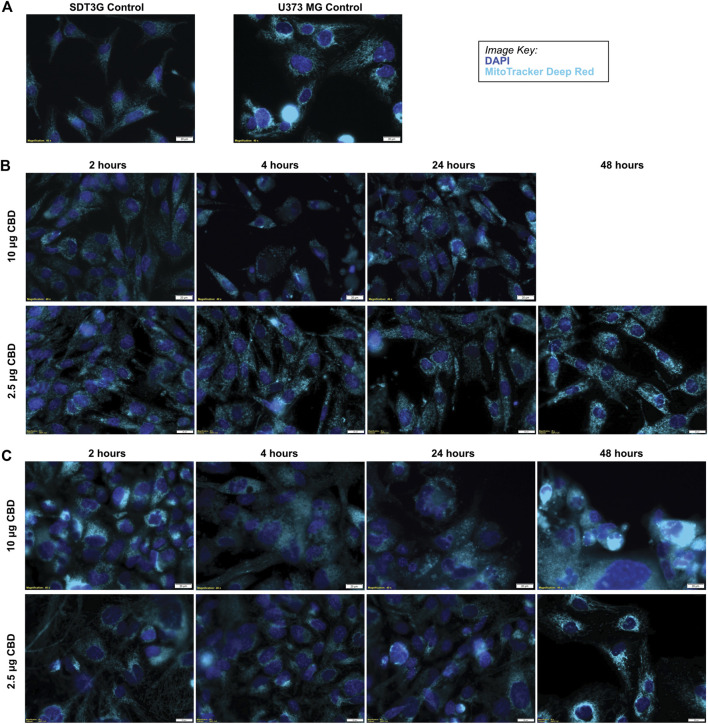
Cannabidiol (CBD), the major non-psychoactive compound found in cannabis, is frequently used both as a nutraceutical and therapeutic. Despite anecdotal evidence as an anticancer agent, little is known about the effect CBD has on cancer cells. Given the intractability and poor prognoses of brain cancers in human and veterinary medicine, we sought to characterize the cytotoxicity of CBD on human and canine gliomas. Glioma cells treated with CBD showed a range of cytotoxicity from 4.9 to 8.2 μg/ml; canine cells appeared to be more sensitive than human. Treatment with >5 μg/ml CBD invariably produced large cytosolic vesicles. The mode of cell death was then interrogated using pharmacologic inhibitors. Inhibition of apoptosis was sufficient to rescue CBD-mediated cytotoxicity. Inhibition of RIPK3, a classical necroptosis kinase, also rescued cells from death and prevented the formation of the large cytosolic vesicles. Next, cellular mitochondrial activity in the presence of CBD was assessed and within 2 hours of treatment CBD reduced oxygen consumption in a dose dependent manner with almost complete ablation of activity at 10 μg/ml CBD. Fluorescent imaging with a mitochondrial-specific dye revealed that the large cytosolic vesicles were, in fact, swollen mitochondria. Lastly, calcium channels were pharmacologically inhibited and the effect on cell death was determined. Inhibition of mitochondrial channel VDAC1, but not the TRPV1 channel, rescued cells from CBD-mediated cytotoxicity. These results demonstrate the cytotoxic nature of CBD in human and canine glioma cells and suggest a mechanism of action involving dysregulation of calcium homeostasis and mitochondrial activity.
大麻二酚(CBD)是大麻中主要的非精神活性化合物,常用于营养保健品和治疗。尽管有作为抗癌剂的传闻证据,但人们对CBD对癌细胞的作用知之甚少。鉴于人类和兽医学中脑癌的难治性和预后不良,我们试图表征CBD对人和犬类神经胶质瘤的细胞毒性。用CBD处理的神经胶质瘤细胞显示出4.9至8.2μg/ml的细胞毒性范围;犬类细胞似乎比人类细胞更敏感。用>5μg/ml的CBD处理总是会产生大量的胞质囊泡。然后使用药理学抑制剂研究细胞死亡模式。抑制凋亡足以挽救CBD介导的细胞毒性。抑制经典坏死性凋亡激酶RIPK3也能使细胞免于死亡并防止大的胞质囊泡形成。接下来,评估了在CBD存在下的细胞线粒体活性,在处理2小时内CBD以剂量依赖性方式降低了氧气消耗,在10μg/ml的CBD下活性几乎完全消失。用线粒体特异性染料进行的荧光成像显示,大的胞质囊泡实际上是肿胀的线粒体。最后,药理学抑制钙通道并确定其对细胞死亡的影响。抑制线粒体通道VDAC1而不是TRPV1通道可使细胞免于CBD介导的细胞毒性。这些结果证明了CBD在人和犬类神经胶质瘤细胞中的细胞毒性性质,并提示了一种涉及钙稳态和线粒体活性失调的作用机制。