Faculty of Health Sciences, Curtin Medical School, Curtin University, Kent Street, Bentley, Perth, Western Australia, 6102, Australia.
Child and Adolescent Services Research Center, 3665 Kearny Villa Rd., Suite 200N, San Diego, CA, 92123, USA.
Implement Sci. 2021 Aug 30;16(1):86. doi: 10.1186/s13012-021-01152-w.
Implementation scientists and practitioners often rely on frontline providers for reporting on implementation outcomes. Furthermore, measures of sustainment are few, and available sustainment measures are mainly setting or evidenced-based practice (EBP) specific, require organizational and system-level knowledge to complete, and often lack psychometric rigor. The aim of this study was to develop a brief, pragmatic, and generalizable measure for completion by frontline service providers of the implementation outcome, sustainment.
We utilized a Rasch measurement theory approach to scale the development and testing of psychometric parameters. Sustainment items were developed to be relevant for direct service providers to complete. In order to promote generalizability, data were collected and items were tested across four diverse psychosocial evidence-based practices (motivational interviewing [MI], SafeCare®, classroom pivotal response training [CPRT], and an individualized mental health intervention for children with autism spectrum disorder [AIM-HI]) and in four service settings (substance use disorder treatment, child welfare, education, and specialty mental health). Associations between the sustainment measure and sustainment leadership, sustainment climate, and attitudes towards the adoption and use of each of the EBPs were assessed to confirm construct validity.
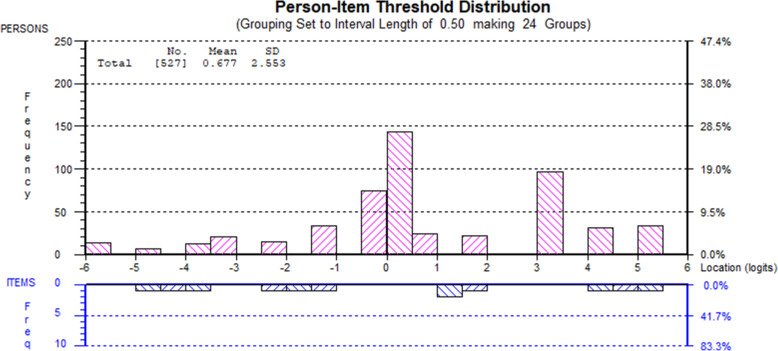
Three items for the Provider REport of Sustainment Scale (PRESS) were assessed for measuring the core component of sustainment: continued use of the EBP. Internal consistency reliability was high. The scale indicated fit to the Rasch measurement model with no response dependency, ordered thresholds, no differential item functioning, and supported unidimensionality. Additionally, construct validity evidence was provided based on the correlations with related variables.
The PRESS measure is a brief, three-item measure of sustainment that is both pragmatic and useable across different EBPs, provider types, and settings. The PRESS captures frontline staffs' report of their clinic, team, or agency's continued use of an EBP. Future testing of the PRESS for concurrent and predictive validity is recommended.
实施科学家和从业者通常依赖一线服务提供者来报告实施结果。此外,维持的措施很少,现有的维持措施主要是针对特定环境或基于证据的实践(EBP),需要组织和系统层面的知识来完成,并且往往缺乏心理测量学的严谨性。本研究的目的是开发一种简洁、实用且可推广的测量工具,由一线服务提供者完成实施结果的维持测量。
我们利用 Rasch 测量理论方法来构建和测试心理测量学参数。维持项目是为直接服务提供者完成而开发的。为了促进推广性,我们在四个不同的心理社会循证实践(动机访谈[MI]、SafeCare®、课堂关键反应训练[CPRT]和针对自闭症谱系障碍儿童的个体化心理健康干预[aim-HI])和四个服务环境(药物滥用治疗、儿童福利、教育和专业心理健康)中收集数据并测试项目。评估维持措施与维持领导力、维持氛围以及对每种循证实践的采用和使用的态度之间的关联,以确认构念效度。
对 Provider REport of Sustainment Scale(PRESS)的三个项目进行了评估,以衡量维持的核心组成部分:持续使用 EBP。内部一致性信度很高。该量表符合 Rasch 测量模型,没有反应依赖性、有序阈值、无差异项目功能,支持单维性。此外,还根据与相关变量的相关性提供了结构有效性证据。
PRESS 量表是一种简洁、三项目的维持测量工具,既实用又可在不同的 EBP、提供者类型和环境中使用。PRESS 捕捉了一线员工对其诊所、团队或机构持续使用 EBP 的报告。建议未来对 PRESS 进行同时和预测有效性的测试。