Abuelezz Nermeen Z, E Shabana Marwa, Rashed Laila, Nb Morcos George
Biochemistry Department, College of Pharmaceutical Sciences and Drug Manufacturing, Misr University for Science and Technology, Giza, Egypt.
Pathology Department, Medical Division, National Research Center, Cairo, Egypt.
J Exp Pharmacol. 2021 Aug 26;13:873-888. doi: 10.2147/JEP.S323962. eCollection 2021.
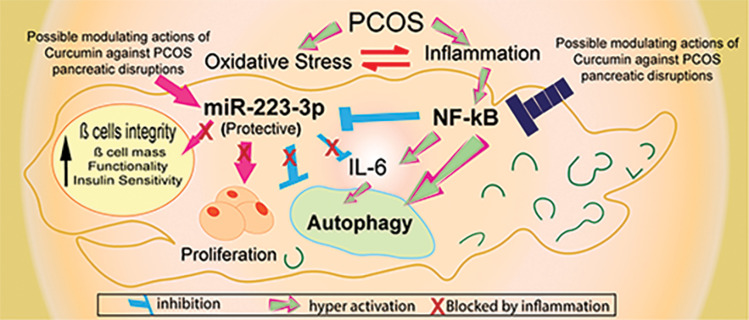
Polycystic ovary syndrome (PCOS) is a prevalent female endocrine disorder. 50-70% of PCOS patients suffer from glucose intolerance, insulin and β cell impairments. Updated studies reveal the crucial regulatory role of inflammation modulators in various diseases, by manipulating autophagy and oxidative stress. However, the data available about autophagy in PCOS pancreas, especially in relation to inflammation key players are little. This study investigated pancreatic autophagy status in PCOS rat model, with miR-223-3p and NF-κB levels as pivotal regulators of oxidative stress-autophagy axis, insulin, and β cell integrity. We then analyzed nanocurcumin effects as a putative anti-inflammatory nutraceutical on the disrupted parameters.
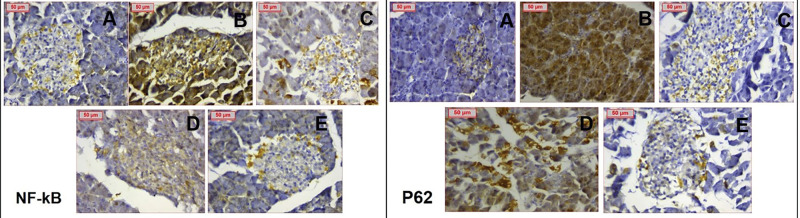
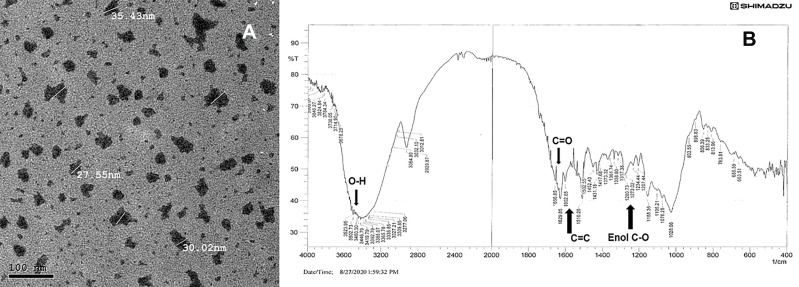
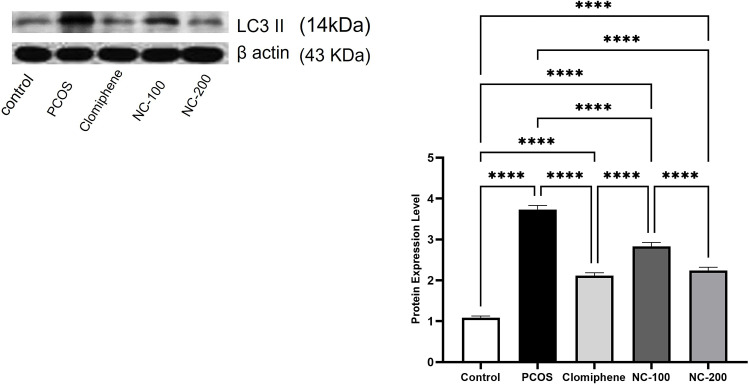
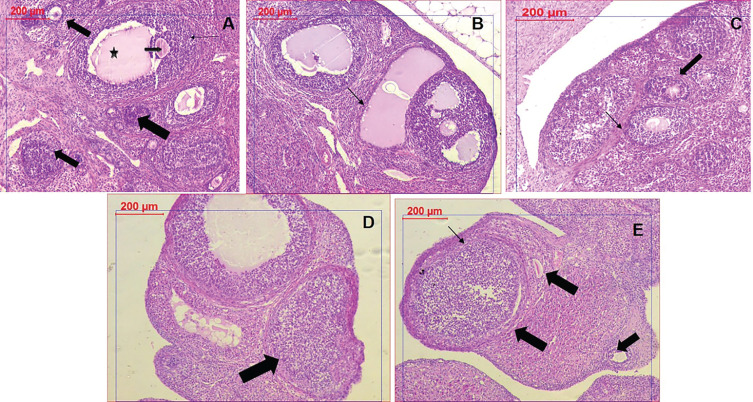
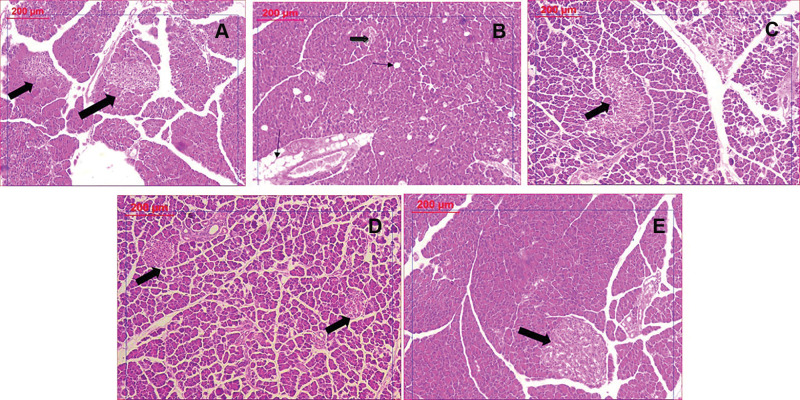
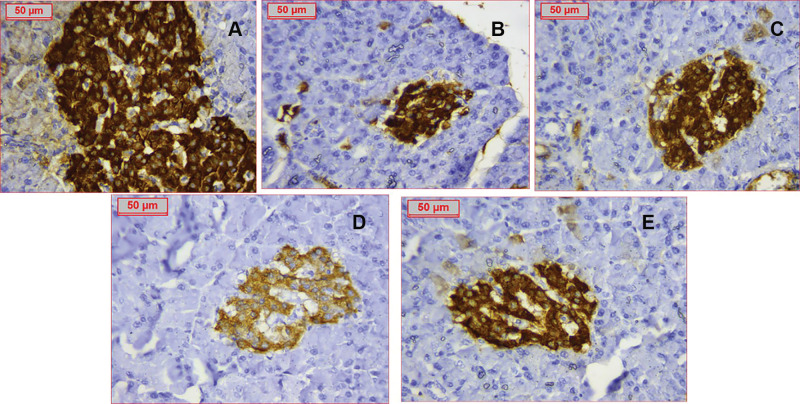
Nanocurcumin was characterized using transmission electron microscopy (TEM) and Fourier-transform IR (FT-IR) spectroscopy. Adult virgin Wistar rats were selected, and PCOS was induced using letrozole (1mg/kg). Nanocurcumin was ingested following letrozole. Sex hormones and insulin resistance were determined. miR-223-3p expression was determined using real-time PCR. Immunohistochemistry and Western blotting determined β cells, NF-κB, and autophagy markers p62 and LC3II.
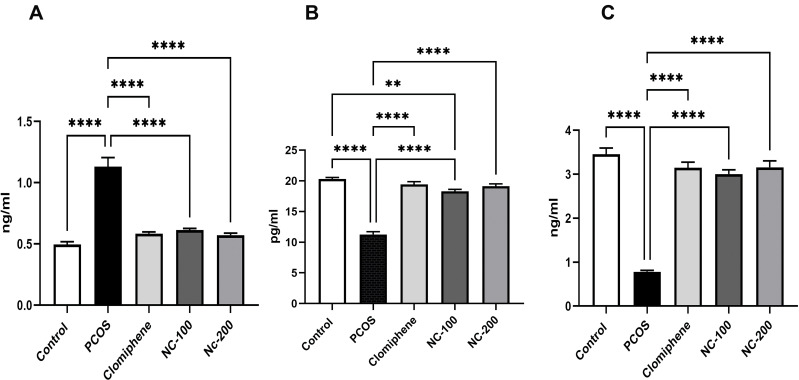
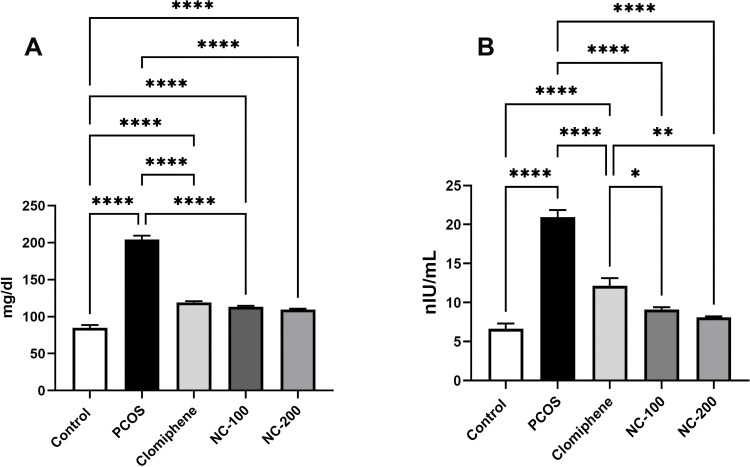
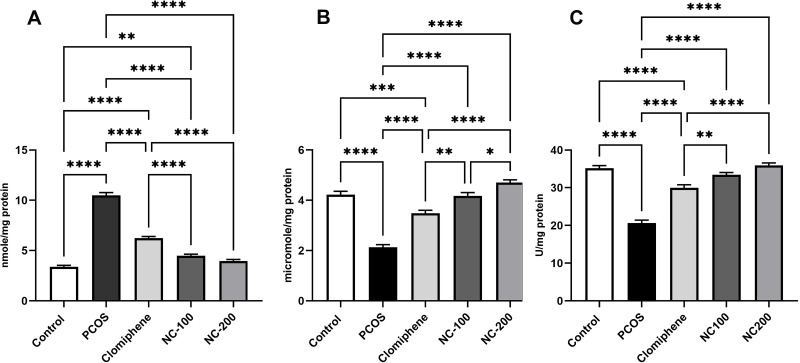
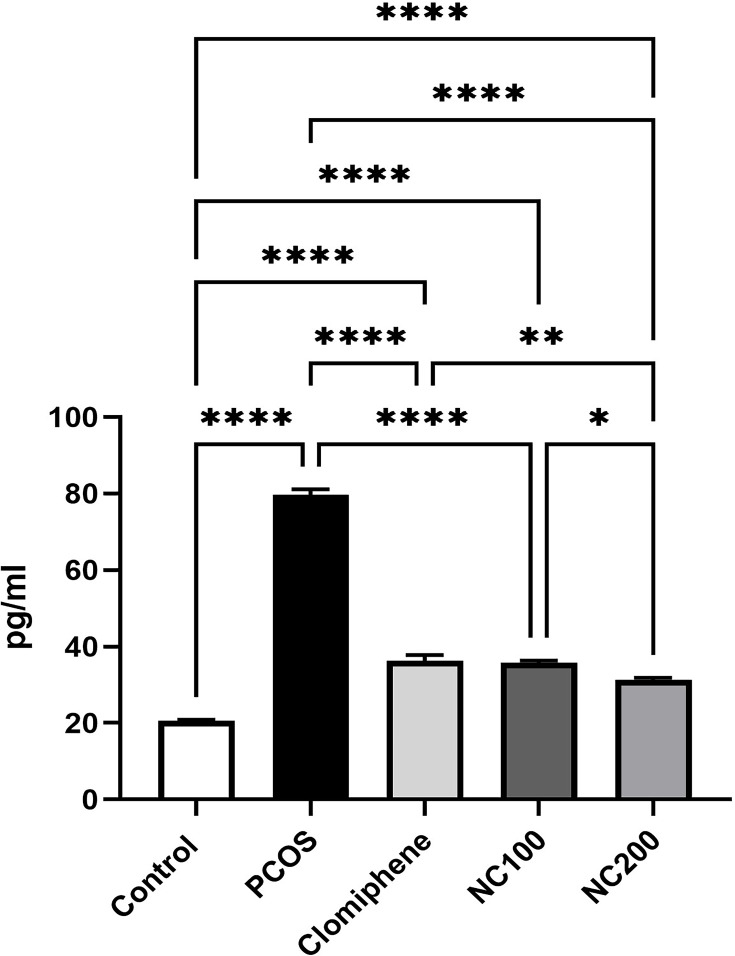
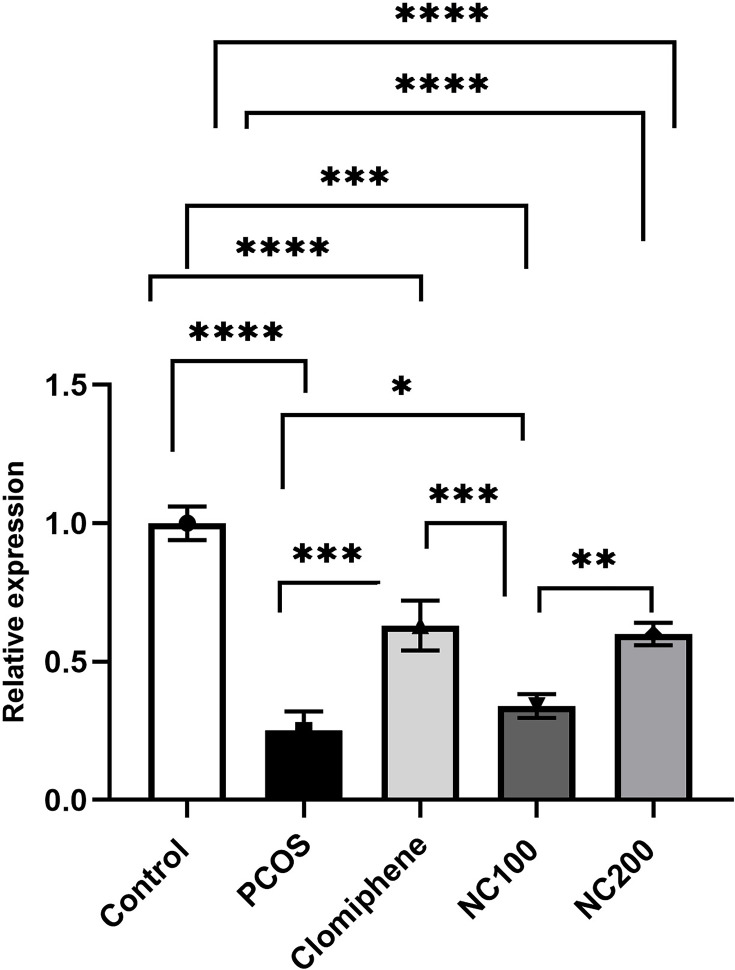
PCOS group showed significant disruptions in sex hormones and a double fold increase in glucose and insulin levels, exhibiting insulin resistance. Immunostaining confirmed around 46% deterioration of ß cell mass. Real-time PCR showed significant downregulation of miR-223-3p. Immunohistochemistry and Western blotting revealed a drastic upsurge of NF-κB, and autophagy markers p62 and LC3II, confirming bioinformatics target analysis. Interestingly, compared to PCOS group, nanocurcumin (200mg/kg) significantly upregulated miR-223-3p expression by 30%. It subsided NF-κB and autophagy eruption to restore ß cell mass and attenuate insulin resistance.
To the best of our knowledge, this study is the first to highlight the vital contribution of miR-223-3p and NF-κB levels in aggravating PCOS pancreatic autophagy and consequent impairments. It spots nanocurcumin potential as an inflammation and autophagy modulator, for possible better management of PCOS complications.
多囊卵巢综合征(PCOS)是一种常见的女性内分泌疾病。50 - 70%的PCOS患者存在葡萄糖不耐受、胰岛素及β细胞功能障碍。最新研究表明,炎症调节因子通过调控自噬和氧化应激在多种疾病中发挥关键作用。然而,关于PCOS胰腺中自噬的数据,尤其是与炎症关键因子相关的数据较少。本研究以miR - 223 - 3p和NF - κB水平作为氧化应激 - 自噬轴、胰岛素及β细胞完整性的关键调节因子,研究PCOS大鼠模型的胰腺自噬状态。然后分析了纳米姜黄素作为一种潜在的抗炎营养剂对这些紊乱参数的影响。
利用透射电子显微镜(TEM)和傅里叶变换红外(FT - IR)光谱对纳米姜黄素进行表征。选取成年未孕Wistar大鼠,用来曲唑(1mg/kg)诱导PCOS。来曲唑处理后给予纳米姜黄素。测定性激素和胰岛素抵抗。用实时定量PCR测定miR - 223 - 3p表达。通过免疫组织化学和蛋白质印迹法检测β细胞、NF - κB以及自噬标志物p62和LC3II。
PCOS组性激素显著紊乱,血糖和胰岛素水平增加两倍,表现出胰岛素抵抗。免疫染色证实β细胞量减少约46%。实时定量PCR显示miR - 223 - 3p显著下调。免疫组织化学和蛋白质印迹法显示NF - κB以及自噬标志物p62和LC3II急剧增加,证实了生物信息学靶点分析。有趣的是,与PCOS组相比,纳米姜黄素(200mg/kg)使miR - 223 - 3p表达显著上调30%。它减轻了NF - κB和自噬的爆发,以恢复β细胞量并减轻胰岛素抵抗。
据我们所知,本研究首次强调了miR - 223 - 3p和NF - κB水平在加重PCOS胰腺自噬及后续功能障碍中的重要作用。它发现了纳米姜黄素作为炎症和自噬调节剂的潜力,可能有助于更好地管理PCOS并发症。