Division of Gastroenterology and Hepatology, Department of Medicine, Mayo Clinic, Charlton 8-142, 200 First St. S.W., Rochester, MN 55905, United States of America.
Precision Medicine for Obesity Program, United States of America.
Clin Res Hepatol Gastroenterol. 2022 Feb;46(2):101794. doi: 10.1016/j.clinre.2021.101794. Epub 2021 Sep 1.
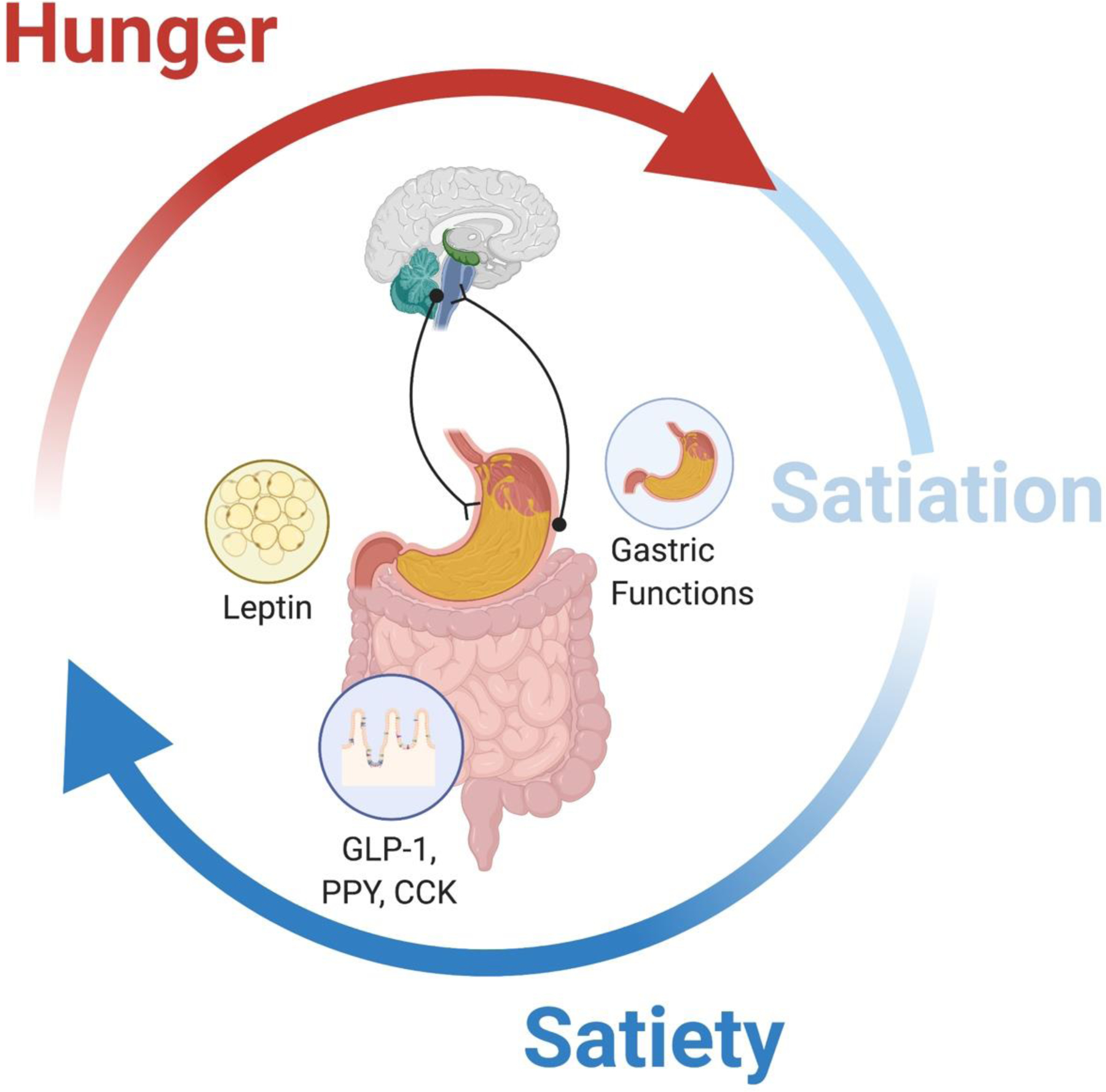
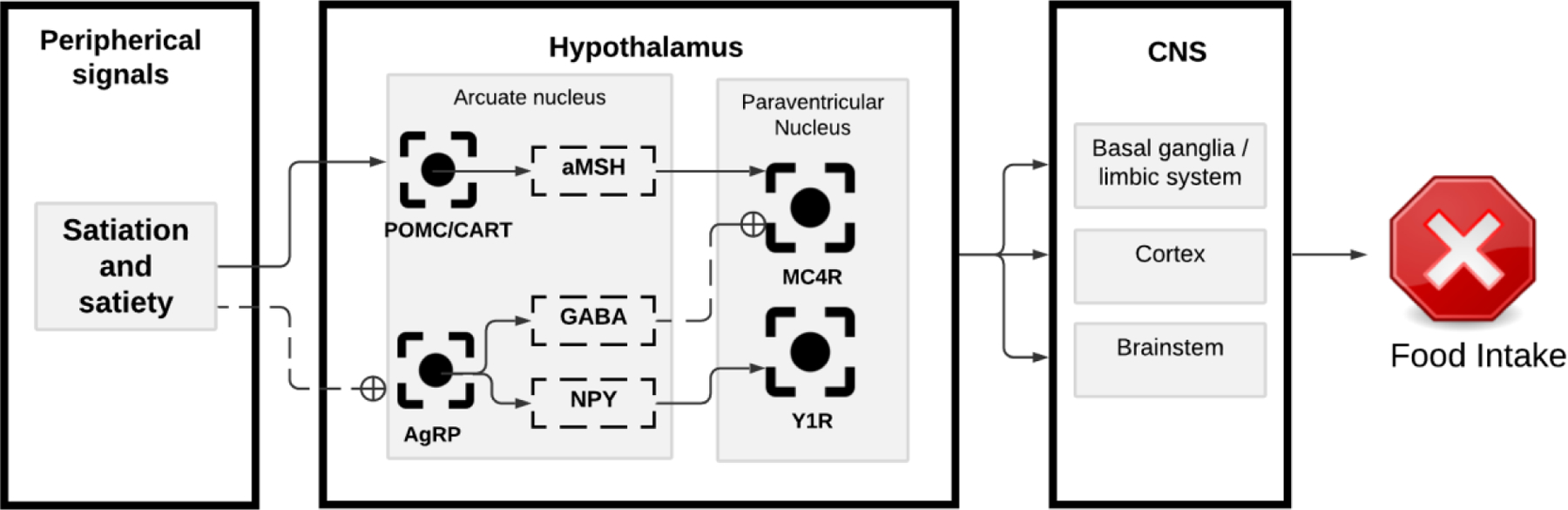
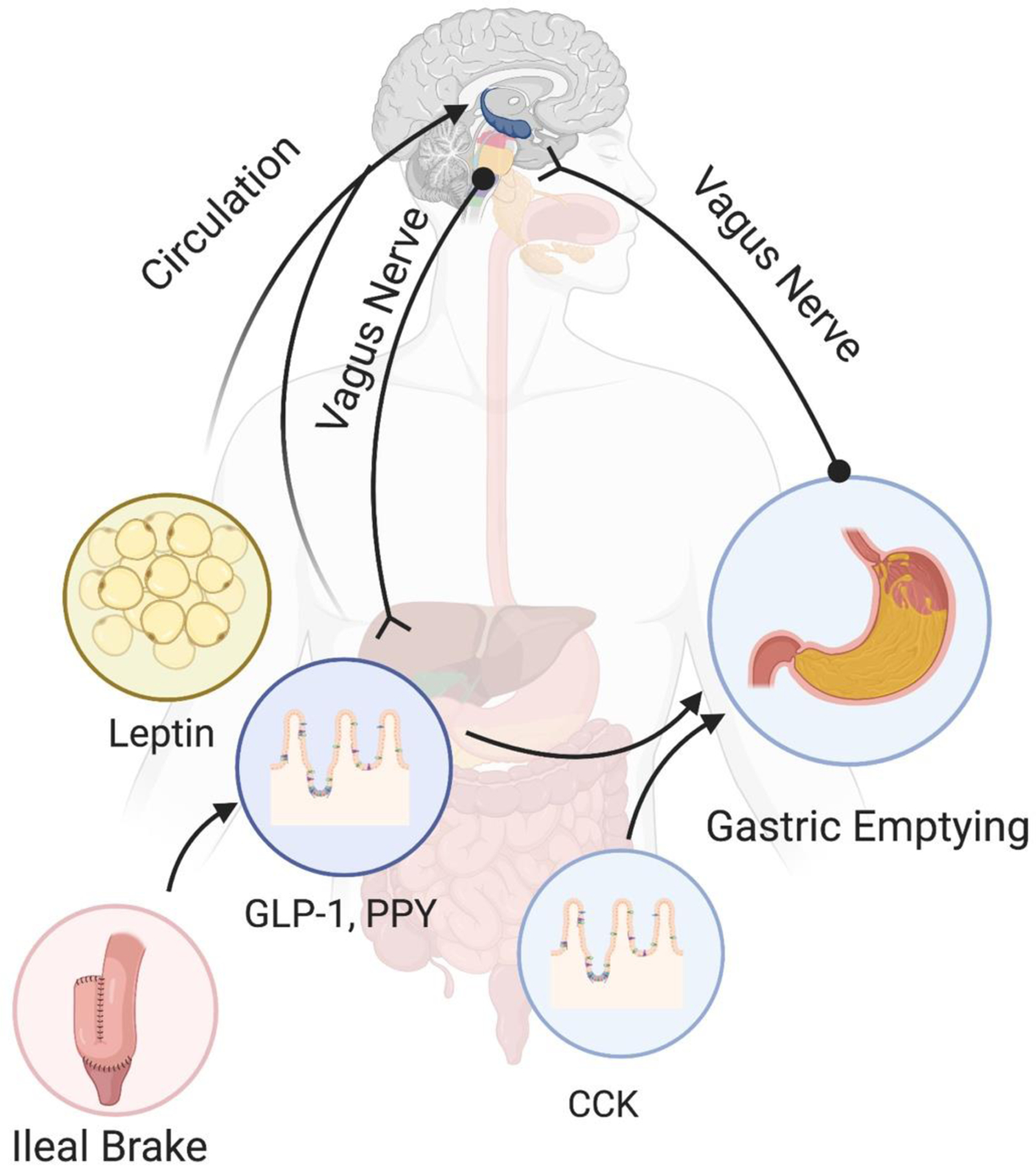
Food intake and energy expenditure are key regulators of body weight. To regulate food intake, the brain must integrate physiological signals and hedonic cues. The brain plays an essential role in modulating the appropriate responses to the continuous update of the body energy-status by the peripheral signals and the neuronal pathways that generate the gut-brain axis. This regulation encompasses various steps involved in food consumption, include satiation, satiety, and hunger. It is important to have a comprehensive understanding of the mechanisms that regulate food consumption as well as to standardize the vocabulary for the steps involved. This review discusses the current knowledge of the regulation and the contribution peripheral and central signals at each step of the cycle to control appetite. We also highlight how food intake has been measured. The increasingly complex understanding of regulation and action mechanisms intervening in the gut-brain axis offers ambitious targets for new strategies to control appetite.
食物摄入和能量消耗是体重调节的关键因素。为了调节食物摄入,大脑必须整合生理信号和享乐线索。大脑在调节对外周信号和产生肠脑轴的神经元通路的持续更新的身体能量状态的适当反应方面发挥着至关重要的作用。这种调节包括与食物消费相关的各种步骤,包括饱腹感、饱足感和饥饿感。全面了解调节食物消费的机制以及为涉及的步骤规范词汇非常重要。这篇综述讨论了调节的最新知识以及外周和中枢信号在控制食欲的循环各个步骤中的贡献。我们还强调了如何测量食物摄入。对干预肠脑轴的调节和作用机制的日益复杂的理解为控制食欲的新策略提供了雄心勃勃的目标。