Bose Sanjukta N, Greenstein Joseph L, Fackler James C, Sarma Sridevi V, Winslow Raimond L, Bembea Melania M
Institute for Computational Medicine, The Johns Hopkins University, Baltimore, MD, United States.
Department of Electrical and Computer Engineering, The Johns Hopkins University, Baltimore, MD, United States.
Front Pediatr. 2021 Aug 16;9:711104. doi: 10.3389/fped.2021.711104. eCollection 2021.
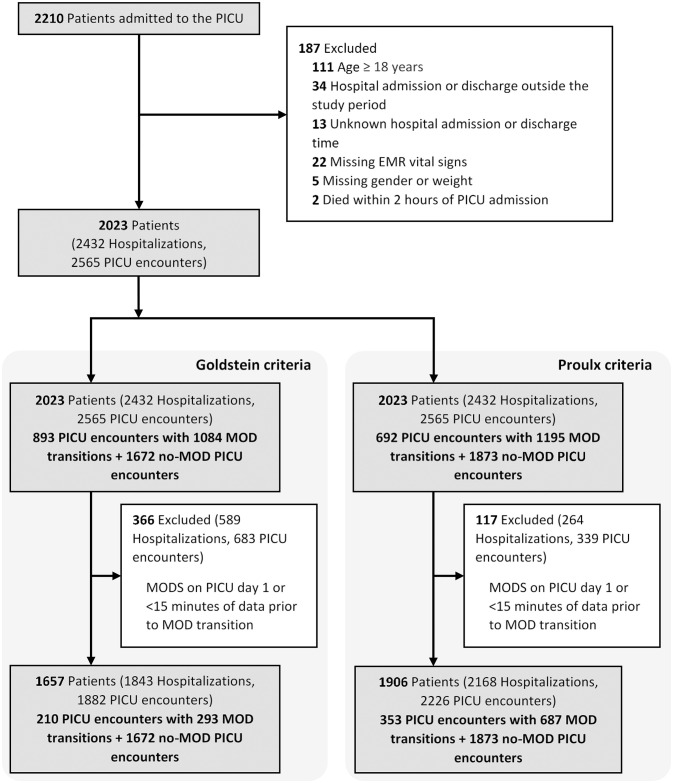
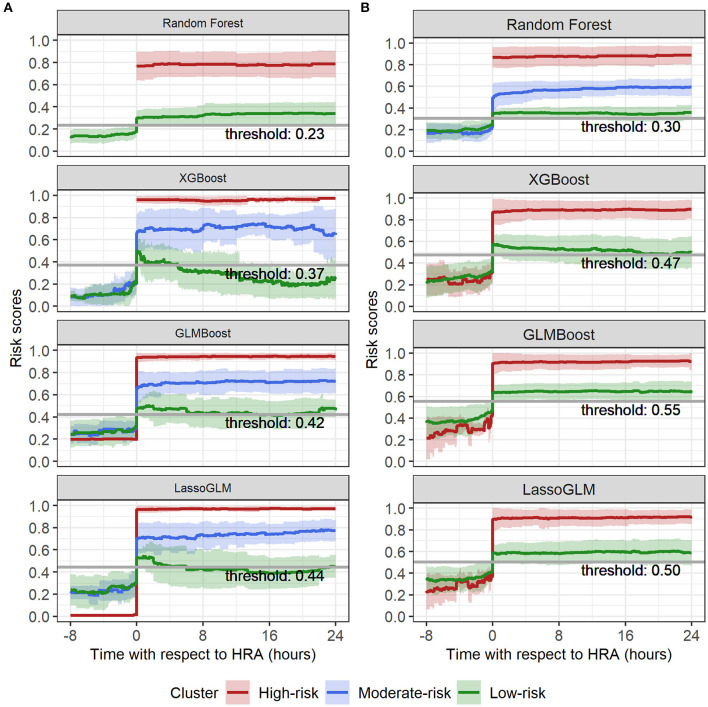
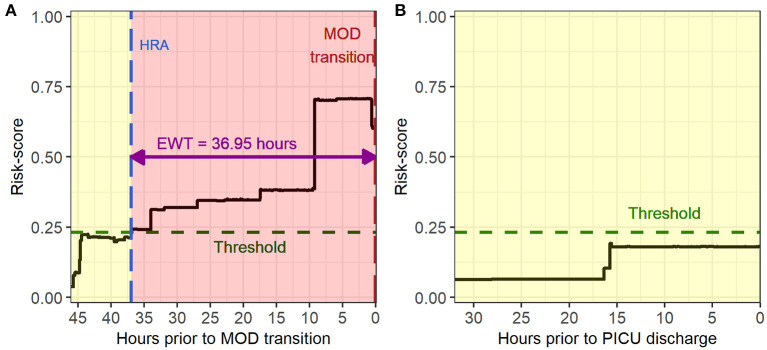
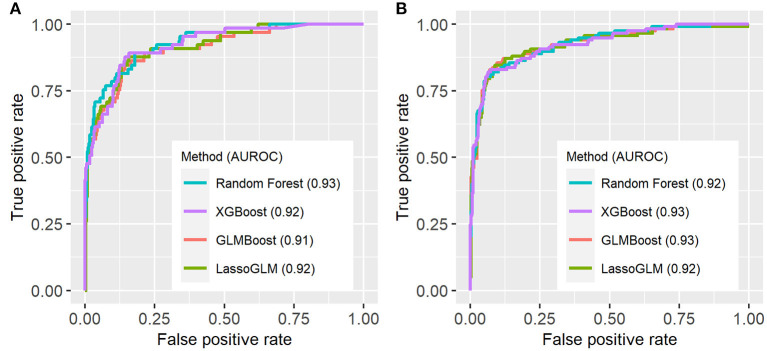
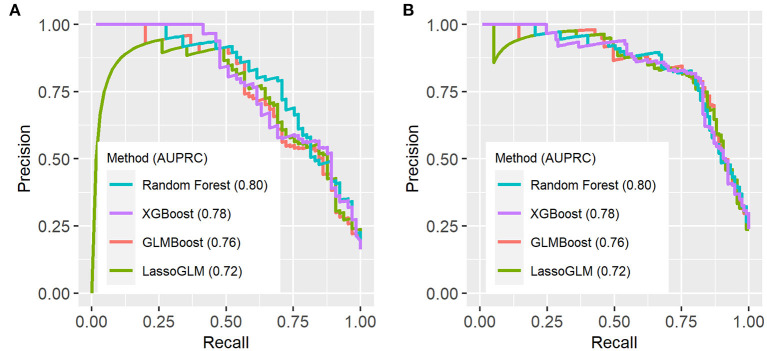
The objective of the study is to build models for early prediction of risk for developing multiple organ dysfunction (MOD) in pediatric intensive care unit (PICU) patients. The design of the study is a retrospective observational cohort study. The setting of the study is at a single academic PICU at the Johns Hopkins Hospital, Baltimore, MD. The patients included in the study were <18 years of age admitted to the PICU between July 2014 and October 2015. Organ dysfunction labels were generated every minute from preceding 24-h time windows using the International Pediatric Sepsis Consensus Conference (IPSCC) and Proulx et al. MOD criteria. Early MOD prediction models were built using four machine learning methods: random forest, XGBoost, GLMBoost, and Lasso-GLM. An optimal threshold learned from training data was used to detect high-risk alert events (HRAs). The early prediction models from all methods achieved an area under the receiver operating characteristics curve ≥0.91 for both IPSCC and Proulx criteria. The best performance in terms of maximum F1-score was achieved with random forest (sensitivity: 0.72, positive predictive value: 0.70, F1-score: 0.71) and XGBoost (sensitivity: 0.8, positive predictive value: 0.81, F1-score: 0.81) for IPSCC and Proulx criteria, respectively. The median early warning time was 22.7 h for random forest and 37 h for XGBoost models for IPSCC and Proulx criteria, respectively. Applying spectral clustering on risk-score trajectories over 24 h following early warning provided a high-risk group with ≥0.93 positive predictive value. Early predictions from risk-based patient monitoring could provide more than 22 h of lead time for MOD onset, with ≥0.93 positive predictive value for a high-risk group identified pre-MOD.
本研究的目的是建立模型,用于早期预测儿科重症监护病房(PICU)患者发生多器官功能障碍(MOD)的风险。本研究的设计为回顾性观察队列研究。研究地点为马里兰州巴尔的摩市约翰霍普金斯医院的一个学术性PICU。纳入研究的患者为2014年7月至2015年10月期间入住PICU的18岁以下患者。使用国际儿科脓毒症共识会议(IPSCC)和普鲁克斯等人的MOD标准,从前24小时时间窗每分钟生成器官功能障碍标签。使用四种机器学习方法构建早期MOD预测模型:随机森林、XGBoost、GLMBoost和套索广义线性模型(Lasso-GLM)。从训练数据中学习到的最佳阈值用于检测高风险警报事件(HRA)。对于IPSCC和普鲁克斯标准,所有方法的早期预测模型在受试者操作特征曲线下面积均≥0.91。对于IPSCC和普鲁克斯标准,随机森林(敏感性:0.72,阳性预测值:0.70,F1分数:0.71)和XGBoost(敏感性:0.8,阳性预测值:0.81,F1分数:0.81)分别在最大F1分数方面表现最佳。对于IPSCC和普鲁克斯标准,随机森林模型的中位早期预警时间分别为22.7小时,XGBoost模型为37小时。对预警后24小时内的风险评分轨迹应用谱聚类,得到一个阳性预测值≥0.93的高风险组。基于风险的患者监测的早期预测可为MOD发作提供超过22小时的提前期,对于MOD发生前识别出的高风险组,阳性预测值≥0.93。