Lyashenko Claudia, Herrman Elisa, Irwin Jessica, James Allie, Strauss Shay, Warner John, Khor Brandon, Snow Michael, Ortiz Stephanie, Waid Erin, Nasry Bishoy, Chai Jennifer, Choong Carissa, Palmer Elizabeth, Kutsch Kim, Forsyth Anna, Choi Dongseok, Maier Tom, Machida Curtis A
Department of Integrative Biomedical and Diagnostic Sciences, Oregon Health & Science University School of Dentistry, United States.
Academic DMD Program, Oregon Health & Science University School of Dentistry, United States.
Hum Microb J. 2020 Dec;18. doi: 10.1016/j.humic.2020.100077. Epub 2020 Aug 31.
The oral microbiome is a complex assembly of microbial species, whose constituents can tilt the balance towards progression of oral disease or sustained health. Recently we identified sex-specific differences in the salivary microbiome contained within caries-active and caries-free children. In this study, we sought to ascertain if adjunctive dental therapies, including povidone iodine and chlorhexidine, were effective in shifting the cariogenic microbiome from dysbiosis to non-cariogenic health.
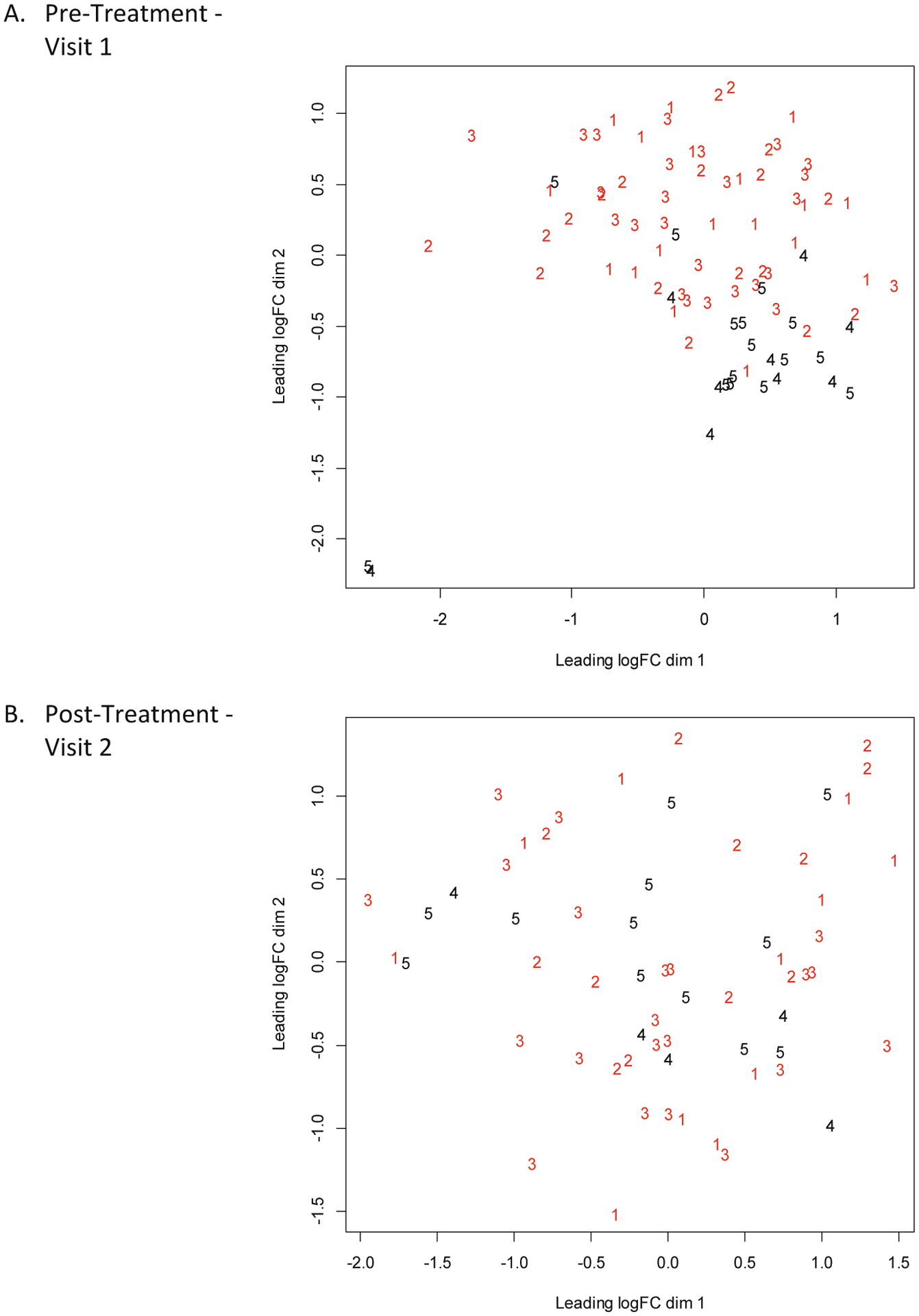
We recruited young children (ages 2-12 years) to enter five enrollment groups, with each group (N = 9-30 participants/group) receiving caries restorative and/or adjunctive therapies, either singularly or in combination (OHSU IRB #6535). Saliva specimens were collected pre- and post-treatment (4-8 weeks) of caries preventive measures, and oral microbiota were identified using next generation sequencing (HOMI, Forsyth Institute, Cambridge, MA).
With the use of multi-dimensional scaling plots, support vector machine learning, odds ratio analysis, and other statistical methods, we have determined that treatment with povidone iodine can shift the composition of the salivary cariogenic microbiome to include higher proportions of aerobic microorganisms, such as , as well as non-cariogenic, anaerobic microorganisms including and species.
We have identified microorganisms that are associated with caries-active children and have determined that povidone iodine is an effective adjunctive therapy that has the potential to shift the composition of the cariogenic microbiome to one more closely aligned with non-cariogenic health.
口腔微生物群是微生物种类的复杂组合,其组成成分可使平衡向口腔疾病进展或持续健康倾斜。最近,我们在患龋儿童和无龋儿童的唾液微生物群中发现了性别差异。在本研究中,我们试图确定包括聚维酮碘和洗必泰在内的辅助牙科治疗方法是否能有效地将致龋微生物群从不平衡状态转变为非致龋健康状态。
我们招募了幼儿(2至12岁)进入五个入组,每组(每组N = 9 - 30名参与者)接受龋齿修复和/或辅助治疗,单独或联合使用(俄勒冈健康与科学大学机构审查委员会编号#6535)。在进行龋齿预防措施治疗前和治疗后(4 - 8周)收集唾液样本,并使用下一代测序技术(马萨诸塞州剑桥市福赛斯研究所的HOMI)鉴定口腔微生物群。
通过使用多维标度图、支持向量机学习、比值比分析和其他统计方法,我们确定聚维酮碘治疗可使唾液致龋微生物群的组成发生变化,包括需氧微生物(如 )以及非致龋厌氧微生物(包括 和 种)的比例更高。
我们已鉴定出与患龋儿童相关的微生物,并确定聚维酮碘是一种有效的辅助治疗方法,有可能将致龋微生物群的组成转变为更接近非致龋健康状态的组成。