Center for Microbial Ecology and Technology, Coupure Links 653, 9000, Gent, Belgium.
Department of Oral Health Sciences, KU Leuven, Kapucijnenvoer 33, 3000, Leuven, Belgium.
NPJ Biofilms Microbiomes. 2020 Mar 20;6(1):13. doi: 10.1038/s41522-020-0124-3.
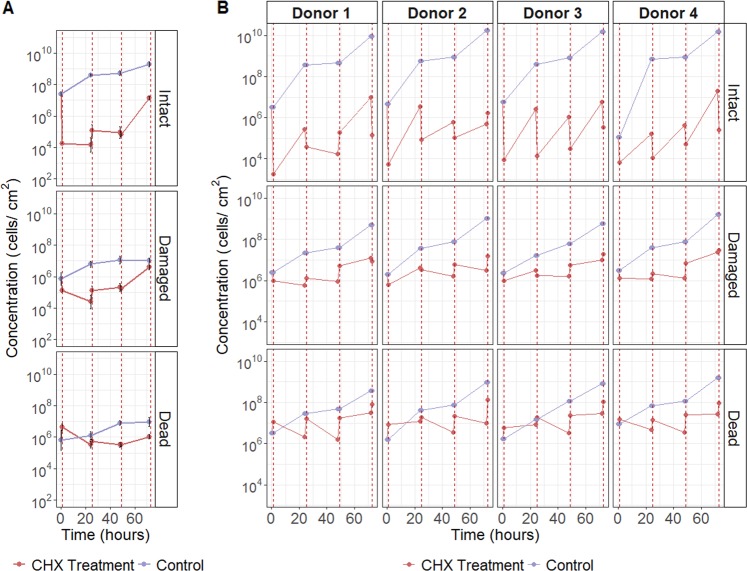
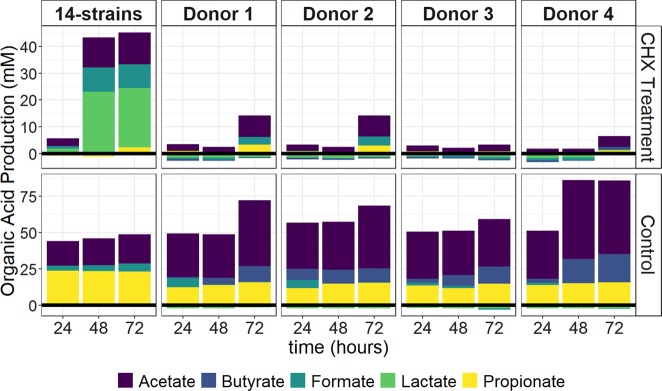
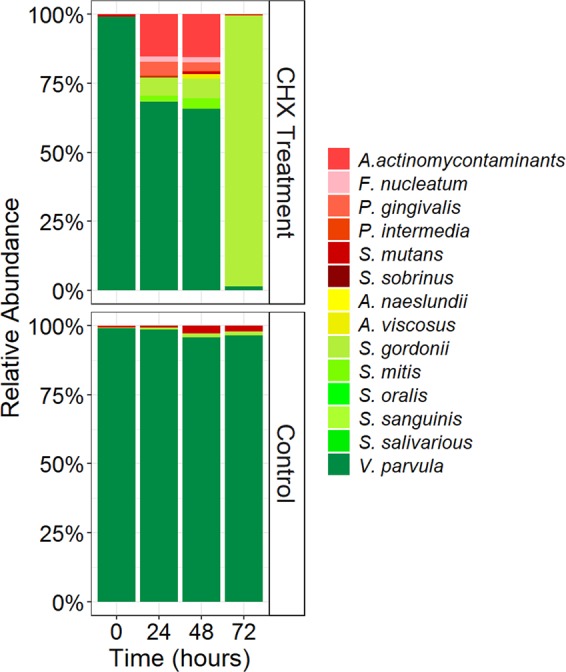
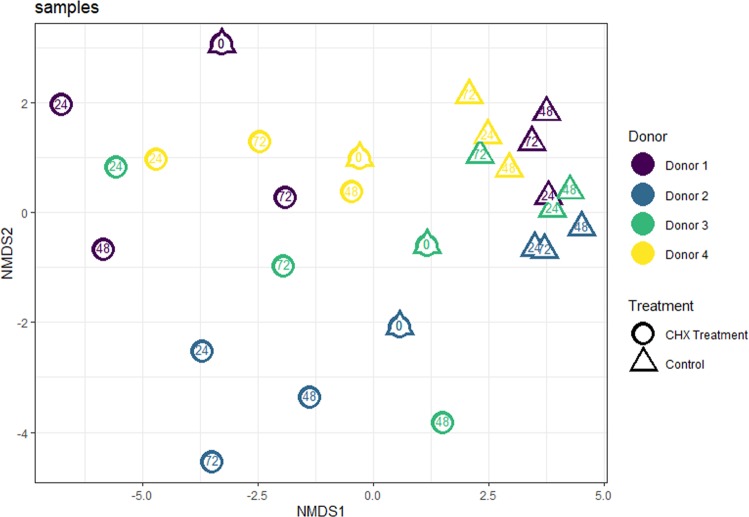
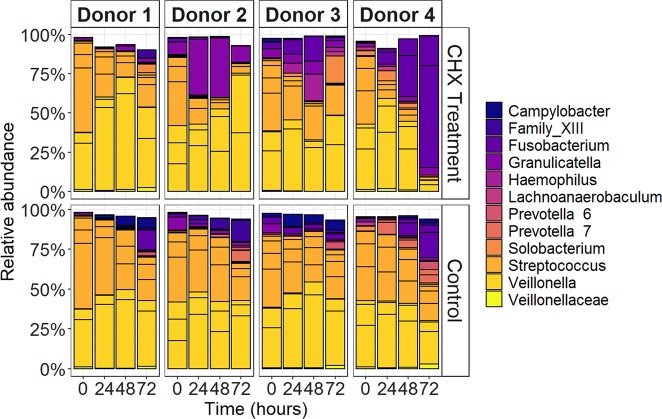
Oral diseases (e.g., dental caries, periodontitis) are developed when the healthy oral microbiome is imbalanced allowing the increase of pathobiont strains. Common practice to prevent or treat such diseases is the use of antiseptics, like chlorhexidine. However, the impact of these antiseptics on the composition and metabolic activity of the oral microbiome is poorly addressed. Using two types of oral biofilms-a 14-species community (more controllable) and human tongue microbiota (more representative)-the impact of short-term chlorhexidine exposure was explored in-depth. In both models, oral biofilms treated with chlorhexidine exhibited a pattern of inactivation (>3 log units) and fast regrowth to the initial bacterial concentrations. Moreover, the chlorhexidine treatment induced profound shifts in microbiota composition and metabolic activity. In some cases, disease associated traits were increased (such as higher abundance of pathobiont strains or shift in high lactate production). Our results highlight the need for alternative treatments that selectively target the disease-associated bacteria in the biofilm without targeting the commensal microorganisms.
口腔疾病(例如龋齿、牙周炎)是在健康的口腔微生物组失衡时发展起来的,这使得病原菌菌株增加。预防或治疗此类疾病的常见做法是使用防腐剂,如洗必泰。然而,这些防腐剂对口腔微生物组的组成和代谢活性的影响尚未得到充分解决。本研究使用两种类型的口腔生物膜——一个 14 种物种的群落(更可控)和人类舌微生物组(更具代表性),深入探讨了短期接触洗必泰对其的影响。在这两种模型中,用洗必泰处理的口腔生物膜表现出失活模式(>3 个对数单位),并且迅速恢复到初始细菌浓度。此外,洗必泰处理还诱导了微生物组组成和代谢活性的深刻变化。在某些情况下,与疾病相关的特征增加(例如病原菌菌株丰度增加或高乳酸产生的转变)。我们的研究结果强调了需要替代治疗方法,这些方法选择性地靶向生物膜中的与疾病相关的细菌,而不靶向共生微生物。