Department of Molecular Biology, the Hamon Center for Regenerative Science and Medicine, University of Texas Southwestern Medical Center, Dallas, TX, USA.
Senator Paul D. Wellstone Muscular Dystrophy Specialized Research Center, University of Texas Southwestern Medical Center, Dallas, TX, USA.
Nat Commun. 2021 Sep 6;12(1):5270. doi: 10.1038/s41467-021-25653-w.
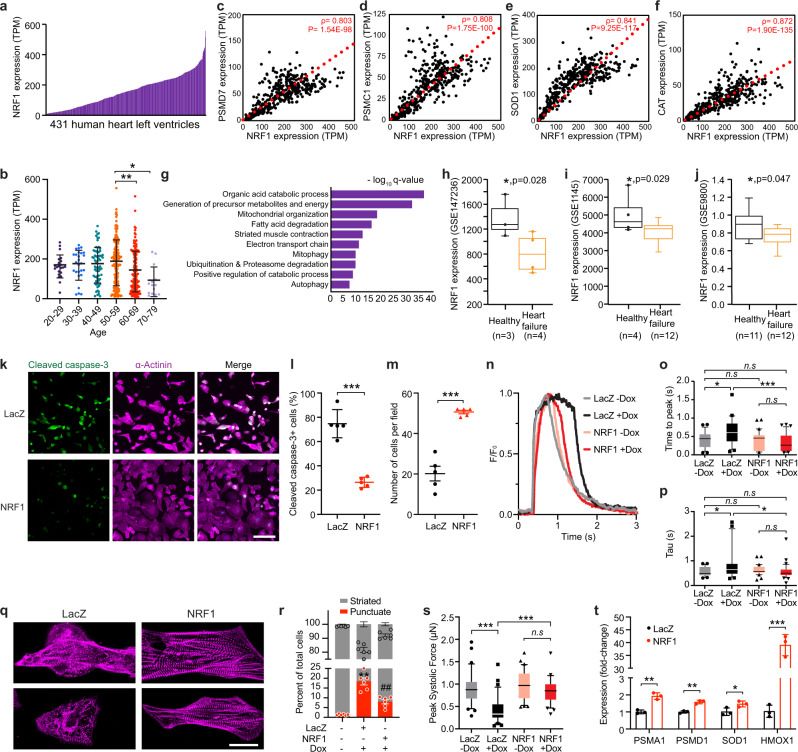
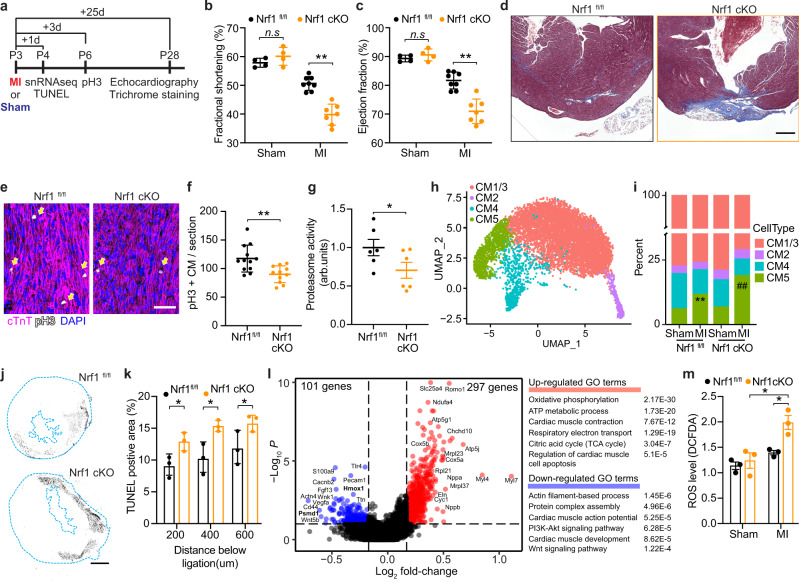
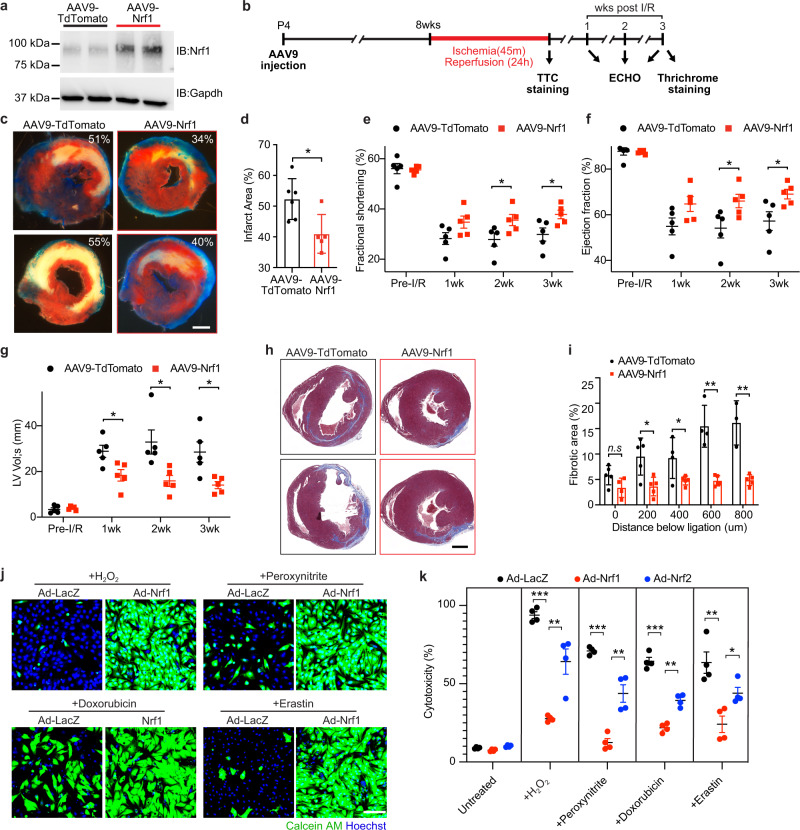
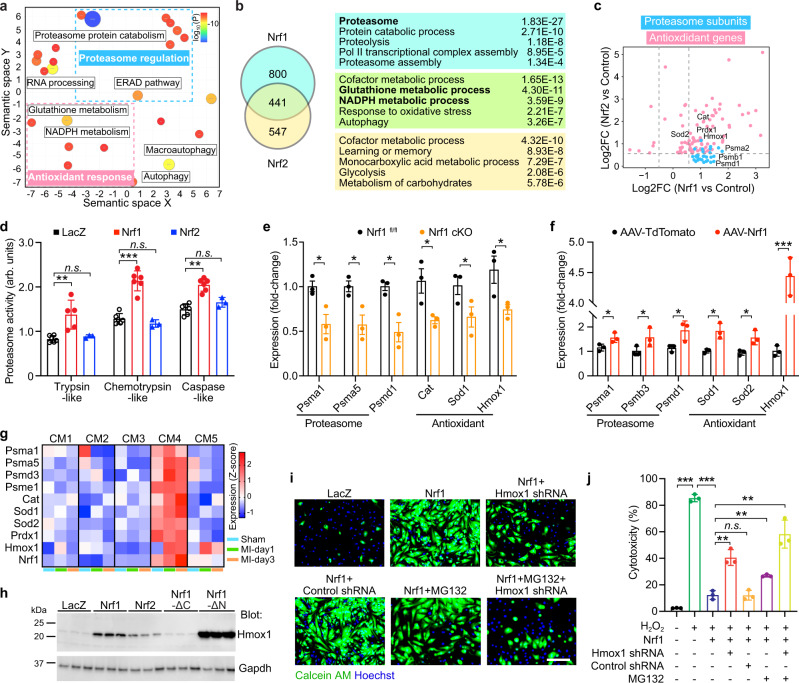
Following injury, cells in regenerative tissues have the ability to regrow. The mechanisms whereby regenerating cells adapt to injury-induced stress conditions and activate the regenerative program remain to be defined. Here, using the mammalian neonatal heart regeneration model, we show that Nrf1, a stress-responsive transcription factor encoded by the Nuclear Factor Erythroid 2 Like 1 (Nfe2l1) gene, is activated in regenerating cardiomyocytes. Genetic deletion of Nrf1 prevented regenerating cardiomyocytes from activating a transcriptional program required for heart regeneration. Conversely, Nrf1 overexpression protected the adult mouse heart from ischemia/reperfusion (I/R) injury. Nrf1 also protected human induced pluripotent stem cell-derived cardiomyocytes from doxorubicin-induced cardiotoxicity and other cardiotoxins. The protective function of Nrf1 is mediated by a dual stress response mechanism involving activation of the proteasome and redox balance. Our findings reveal that the adaptive stress response mechanism mediated by Nrf1 is required for neonatal heart regeneration and confers cardioprotection in the adult heart.
受伤后,再生组织中的细胞具有再生的能力。然而,再生细胞适应损伤诱导的应激条件并激活再生程序的机制仍有待确定。在这里,我们使用哺乳动物新生儿心脏再生模型表明,Nrf1,一种由核因子红细胞 2 样 1(Nfe2l1)基因编码的应激反应转录因子,在再生心肌细胞中被激活。Nrf1 的基因缺失阻止了再生心肌细胞激活心脏再生所需的转录程序。相反,Nrf1 的过表达保护成年小鼠心脏免受缺血/再灌注(I/R)损伤。Nrf1 还保护人诱导多能干细胞衍生的心肌细胞免受阿霉素诱导的心脏毒性和其他心脏毒素的影响。Nrf1 的保护功能是通过涉及蛋白酶体和氧化还原平衡激活的双重应激反应机制介导的。我们的发现表明,Nrf1 介导的适应性应激反应机制是新生儿心脏再生所必需的,并赋予成年心脏心脏保护作用。