Li Lingyan, Zhang Wenting, Zhang Shengjie, Song Lei, Sun Qinglei, Zhang Huan, Xiang Hua, Dong Xiuzhu
State Key Laboratory of Microbial Resources, Institute of Microbiology, Chinese Academy of Sciences, Beijing, China.
University of Chinese Academy of Sciences, Beijing, China.
mSystems. 2021 Oct 26;6(5):e0070321. doi: 10.1128/mSystems.00703-21. Epub 2021 Sep 7.
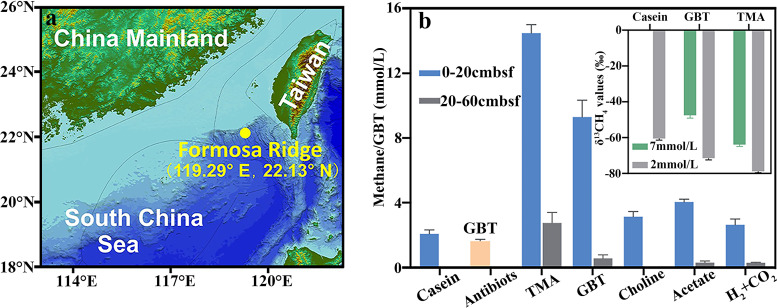
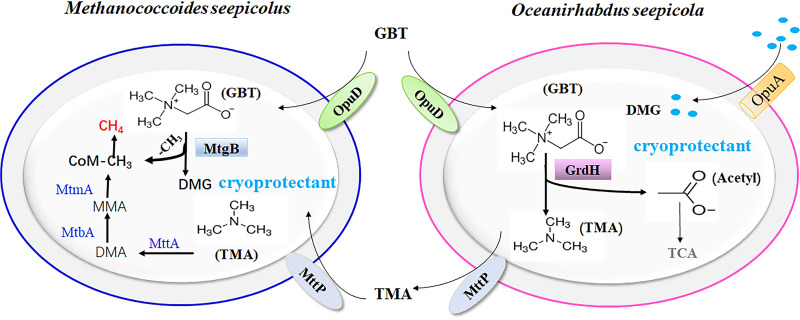
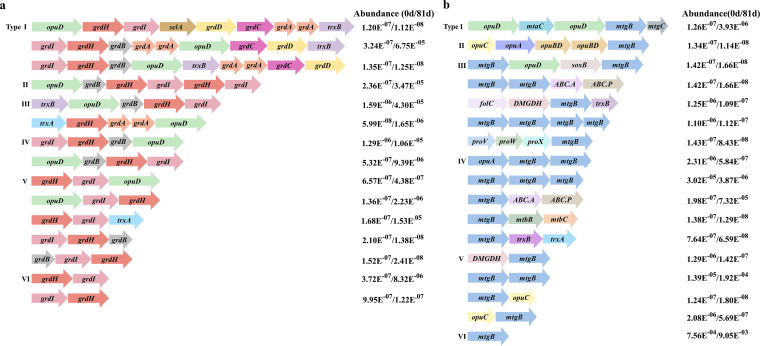
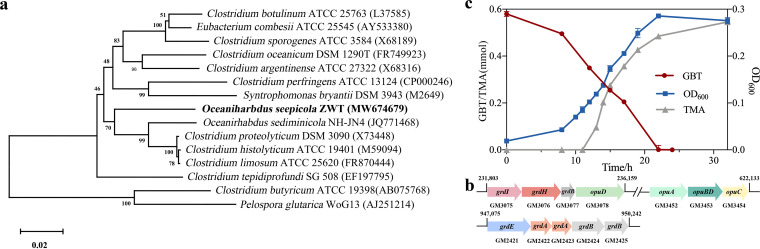
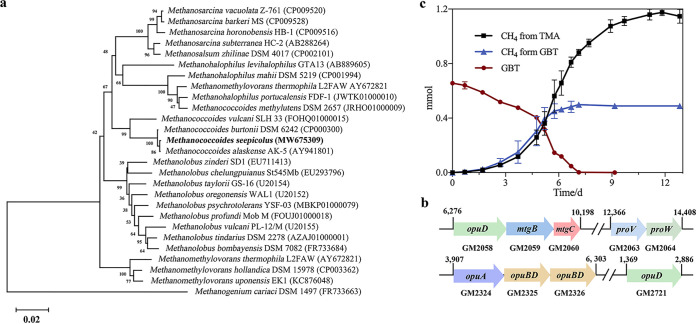
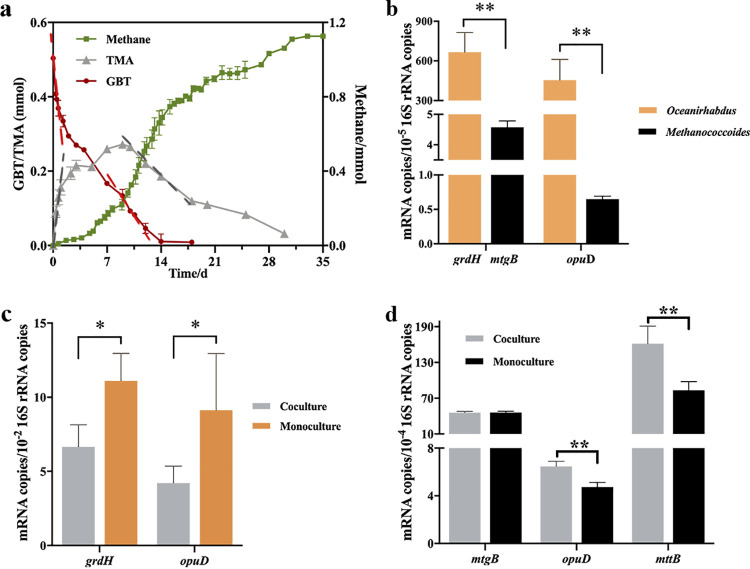
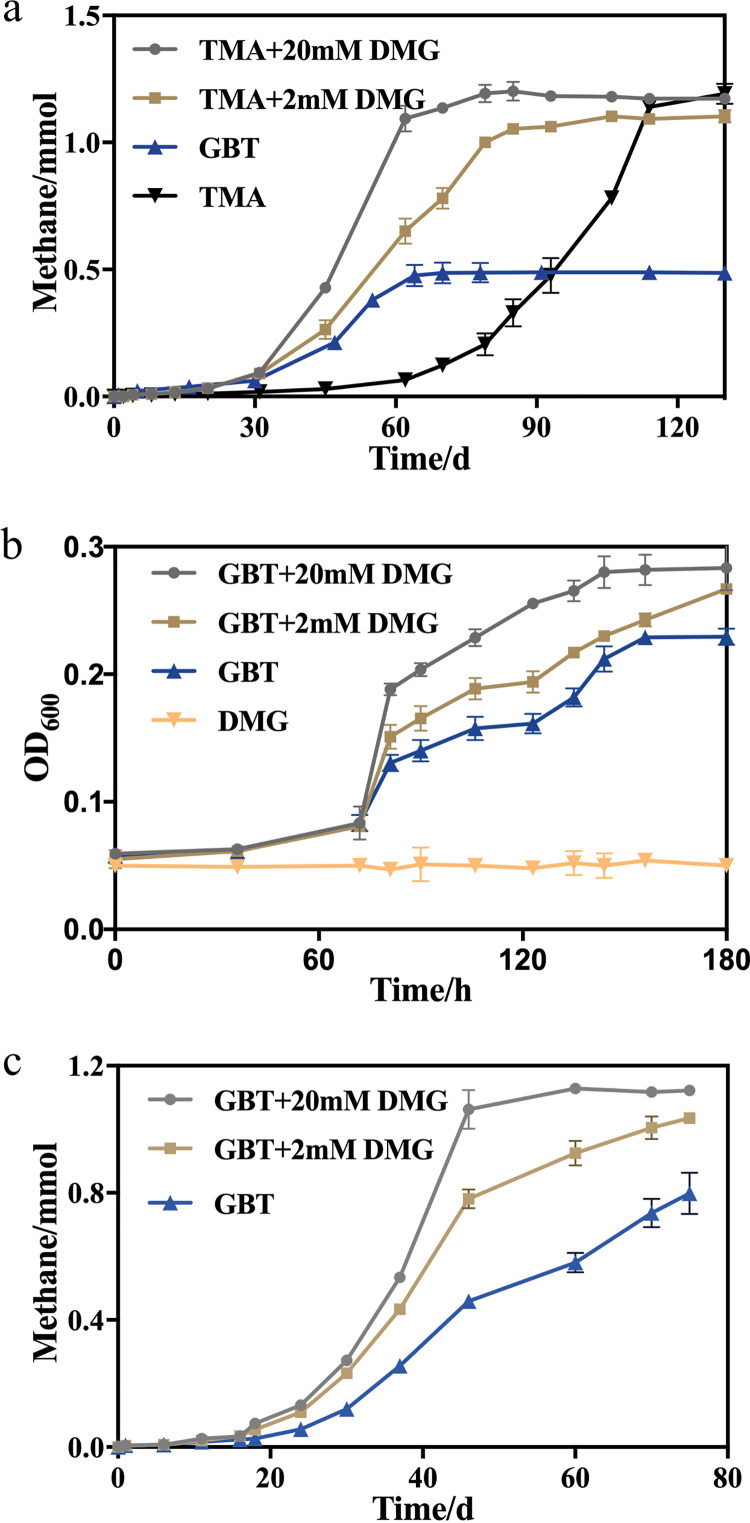
Cold seeps are globally widespread seafloor ecosystems that feature abundant methane production and flourishing chemotrophic benthic communities. Chemical evidence indicates that cold seep methane is largely biogenic; however, the primary methane-producing organisms and associated pathways involved in methanogenesis remain elusive. This work detected methane production when glycine betaine (GBT) or trimethylamine (TMA) was added to the sediment microcosms of the Formosa cold seep, South China Sea. The methane production was suppressed by antibiotic inhibition of bacteria, while GBT was accumulated. This suggests that the widely used osmoprotectant GBT could be converted to cold seep biogenic methane via the synergistic activity of bacteria and methanogenic archaea because archaea are not sensitive to antibiotics and no bacteria are known to produce ample methane (mM). 16S rRNA gene diversity analyses revealed that the predominant bacterial and archaeal genera in the GBT-amended methanogenic microcosms included and . Moreover, metagenomic analyses detected the presence of and genes that are involved in GBT reduction and demethylation, respectively. Two novel species were obtained, including bacterium Oceanirhabdus seepicola, which reduces GBT to TMA, and a methanogenic archaeon, Methanococcoides seepicolus, which produces methane from TMA and GBT. The two strains reconstituted coculture efficiently converted GBT to methane at 18°C; however, at 4°C addition of dimethylglycine (DMG), the GBT demethylation product, was necessary. Therefore, this work demonstrated that GBT is the precursor not only of the biogenic methane but also of the cryoprotectant DMG to the microorganisms at the Formosa cold seep. Numerous cold seeps have been found in global continental margins where methane is enriched in pore waters that are forced upward from sediments. Therefore, high concerns have been focused on the methane-producing organisms and the metabolic pathways in these environments because methane is a potent greenhouse gas. In this study, GBT was identified as the main precursor for methane in the Formosa cold seep of the South China Sea. Further, synergism of bacteria and methanogenic archaea was identified in GBT conversion to methane via the GBT reduction pathway, while methanogen-mediated GBT demethylation to methane was also observed. In addition, GBT-demethylated product dimethyl glycine acted as a cryoprotectant that promoted the cold seep microorganisms at cold temperatures. GBT is an osmoprotectant that is widely used by marine organisms, and therefore, the GBT-derived methanogenic pathway reported here could be widely distributed among global cold seep environments.
冷泉是全球广泛分布的海底生态系统,其特点是甲烷产量丰富,化能自养底栖生物群落繁茂。化学证据表明,冷泉甲烷主要是生物成因的;然而,甲烷生成过程中主要的产甲烷生物及相关途径仍不明确。这项研究发现,当向南海福尔摩沙冷泉的沉积物微观世界中添加甘氨酸甜菜碱(GBT)或三甲胺(TMA)时会产生甲烷。甲烷生成受到细菌抗生素抑制的影响,而GBT会积累。这表明,广泛使用的渗透保护剂GBT可通过细菌和产甲烷古菌的协同活性转化为冷泉生物成因甲烷,因为古菌对抗生素不敏感,且已知没有细菌能产生大量甲烷(毫摩尔)。16S rRNA基因多样性分析表明,在添加GBT的产甲烷微观世界中,主要的细菌和古菌属包括 和 。此外,宏基因组分析检测到分别参与GBT还原和去甲基化的 和 基因的存在。获得了两个新物种,包括将GBT还原为TMA的细菌海洋栖居杆菌(Oceanirhabdus seepicola)和从TMA和GBT产生甲烷的产甲烷古菌福尔摩沙甲烷球菌(Methanococcoides seepicolus)。这两种菌株重组的共培养物在18°C时能有效地将GBT转化为甲烷;然而,在4°C时,需要添加GBT去甲基化产物二甲基甘氨酸(DMG)。因此,这项研究表明,GBT不仅是福尔摩沙冷泉生物成因甲烷的前体,也是微生物的低温保护剂DMG的前体。在全球大陆边缘发现了许多冷泉,那里孔隙水中富含从沉积物中向上涌出的甲烷。因此,人们高度关注这些环境中的产甲烷生物和代谢途径,因为甲烷是一种强效温室气体。在本研究中,GBT被确定为南海福尔摩沙冷泉甲烷的主要前体。此外,通过GBT还原途径,在GBT转化为甲烷的过程中发现了细菌和产甲烷古菌的协同作用,同时也观察到了产甲烷菌介导的GBT去甲基化生成甲烷的过程。此外,GBT去甲基化产物二甲基甘氨酸在低温下起低温保护剂的作用,促进了冷泉微生物的生长。GBT是一种被海洋生物广泛使用的渗透保护剂,因此,这里报道的源自GBT的产甲烷途径可能广泛分布于全球冷泉环境中。