• 文献检索
  • 文档翻译
  • 深度研究
  • 学术资讯
  • Suppr Zotero 插件Zotero 插件
  • 邀请有礼
  • 套餐&价格
  • 历史记录
应用&插件
Suppr Zotero 插件Zotero 插件浏览器插件Mac 客户端Windows 客户端微信小程序
定价
高级版会员购买积分包购买API积分包
服务
文献检索文档翻译深度研究API 文档MCP 服务
关于我们
关于 Suppr公司介绍联系我们用户协议隐私条款
关注我们

Suppr 超能文献

核心技术专利:CN118964589B侵权必究
粤ICP备2023148730 号-1Suppr @ 2026

文献检索

告别复杂PubMed语法,用中文像聊天一样搜索,搜遍4000万医学文献。AI智能推荐,让科研检索更轻松。

立即免费搜索

文件翻译

保留排版,准确专业,支持PDF/Word/PPT等文件格式,支持 12+语言互译。

免费翻译文档

深度研究

AI帮你快速写综述,25分钟生成高质量综述,智能提取关键信息,辅助科研写作。

立即免费体验

个体对具有习惯性面部表情和面部外观的虚拟化身的社会感知。

Individual's Social Perception of Virtual Avatars Embodied with Their Habitual Facial Expressions and Facial Appearance.

机构信息

School of Design, Savannah College of Art and Design, Savannah, GA 31401, USA.

Department of Emotion Engineering, Sangmyung University, Jongno-gu, Seoul 03016, Korea.

出版信息

Sensors (Basel). 2021 Sep 6;21(17):5986. doi: 10.3390/s21175986.

DOI:10.3390/s21175986
PMID:34502877
原文链接:https://pmc.ncbi.nlm.nih.gov/articles/PMC8434682/
Abstract

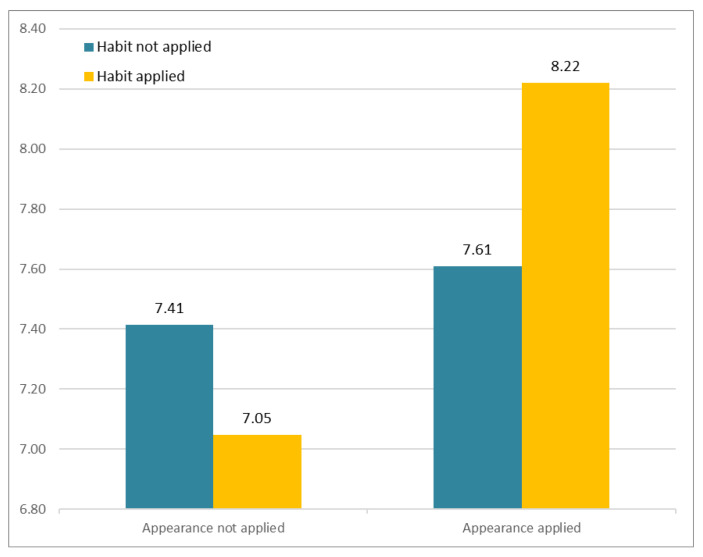
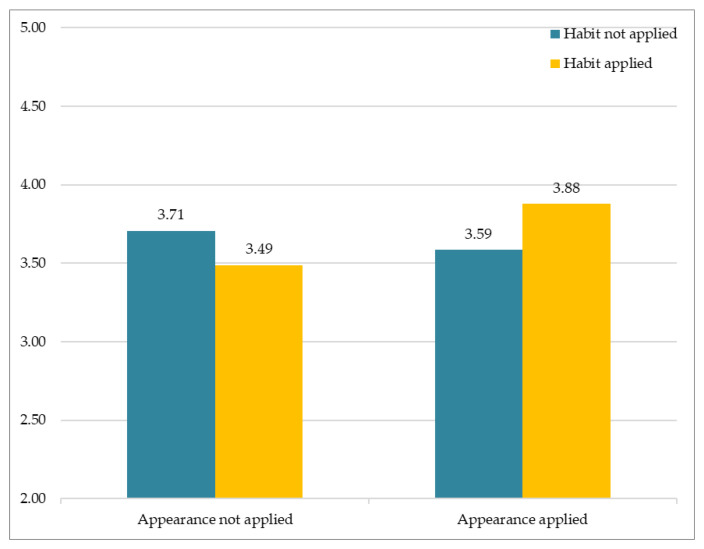
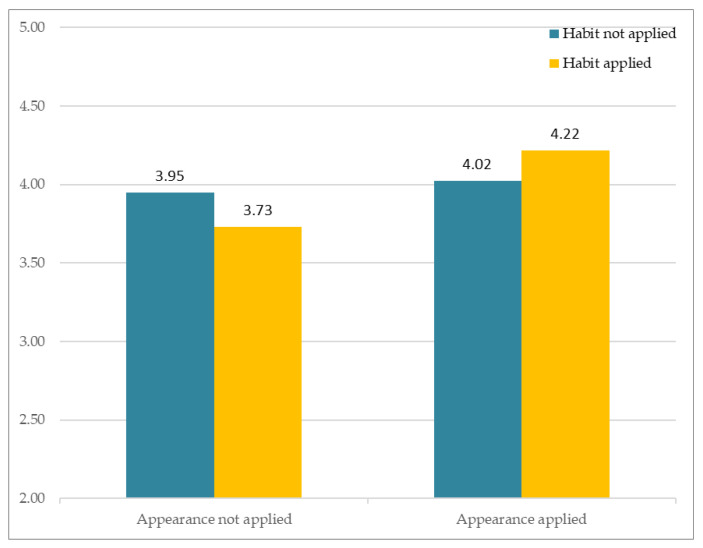
With the prevalence of virtual avatars and the recent emergence of metaverse technology, there has been an increase in users who express their identity through an avatar. The research community focused on improving the realistic expressions and non-verbal communication channels of virtual characters to create a more customized experience. However, there is a lack in the understanding of how avatars can embody a user's signature expressions (i.e., user's habitual facial expressions and facial appearance) that would provide an individualized experience. Our study focused on identifying elements that may affect the user's social perception (similarity, familiarity, attraction, liking, and involvement) of customized virtual avatars engineered considering the user's facial characteristics. We evaluated the participant's subjective appraisal of avatars that embodied the participant's habitual facial expressions or facial appearance. Results indicated that participants felt that the avatar that embodied their habitual expressions was more similar to them than the avatar that did not. Furthermore, participants felt that the avatar that embodied their appearance was more familiar than the avatar that did not. Designers should be mindful about how people perceive individuated virtual avatars in order to accurately represent the user's identity and help users relate to their avatar.

摘要

随着虚拟头像的普及和元宇宙技术的最近出现,越来越多的用户通过头像来表达自己的身份。研究人员专注于改进虚拟角色的逼真表达和非言语沟通渠道,以创造更具个性化的体验。然而,人们对于头像如何体现用户的标志性表情(即用户习惯性的面部表情和面部外观)以提供个性化体验的理解还存在不足。我们的研究重点是确定可能影响用户对考虑用户面部特征设计的定制化虚拟头像的社会感知(相似性、熟悉度、吸引力、喜欢和投入)的因素。我们评估了参与者对体现他们习惯性面部表情或面部外观的头像的主观评价。结果表明,参与者认为体现他们习惯性表情的头像比不体现的头像更像他们。此外,参与者认为体现他们外貌的头像比不体现的头像更熟悉。设计师应该注意人们如何感知个性化的虚拟头像,以便准确地代表用户的身份并帮助用户与他们的头像建立联系。
https://cdn.ncbi.nlm.nih.gov/pmc/blobs/97a8/8434682/7c45edc5d4f2/sensors-21-05986-g013.jpg
https://cdn.ncbi.nlm.nih.gov/pmc/blobs/97a8/8434682/7118dd52df30/sensors-21-05986-g001.jpg
https://cdn.ncbi.nlm.nih.gov/pmc/blobs/97a8/8434682/6aa399739f7b/sensors-21-05986-g002.jpg
https://cdn.ncbi.nlm.nih.gov/pmc/blobs/97a8/8434682/0a3b05a95116/sensors-21-05986-g003.jpg
https://cdn.ncbi.nlm.nih.gov/pmc/blobs/97a8/8434682/bc92b58d4bfe/sensors-21-05986-g004.jpg
https://cdn.ncbi.nlm.nih.gov/pmc/blobs/97a8/8434682/73bba4a1683a/sensors-21-05986-g005.jpg
https://cdn.ncbi.nlm.nih.gov/pmc/blobs/97a8/8434682/beced598454f/sensors-21-05986-g006.jpg
https://cdn.ncbi.nlm.nih.gov/pmc/blobs/97a8/8434682/4fc96408e1f6/sensors-21-05986-g007.jpg
https://cdn.ncbi.nlm.nih.gov/pmc/blobs/97a8/8434682/1d36fa22de32/sensors-21-05986-g008.jpg
https://cdn.ncbi.nlm.nih.gov/pmc/blobs/97a8/8434682/8214dc650118/sensors-21-05986-g009.jpg
https://cdn.ncbi.nlm.nih.gov/pmc/blobs/97a8/8434682/1312600514db/sensors-21-05986-g010.jpg
https://cdn.ncbi.nlm.nih.gov/pmc/blobs/97a8/8434682/47c8f53d49e2/sensors-21-05986-g011.jpg
https://cdn.ncbi.nlm.nih.gov/pmc/blobs/97a8/8434682/9fd87f1183cd/sensors-21-05986-g012.jpg
https://cdn.ncbi.nlm.nih.gov/pmc/blobs/97a8/8434682/7c45edc5d4f2/sensors-21-05986-g013.jpg
https://cdn.ncbi.nlm.nih.gov/pmc/blobs/97a8/8434682/7118dd52df30/sensors-21-05986-g001.jpg
https://cdn.ncbi.nlm.nih.gov/pmc/blobs/97a8/8434682/6aa399739f7b/sensors-21-05986-g002.jpg
https://cdn.ncbi.nlm.nih.gov/pmc/blobs/97a8/8434682/0a3b05a95116/sensors-21-05986-g003.jpg
https://cdn.ncbi.nlm.nih.gov/pmc/blobs/97a8/8434682/bc92b58d4bfe/sensors-21-05986-g004.jpg
https://cdn.ncbi.nlm.nih.gov/pmc/blobs/97a8/8434682/73bba4a1683a/sensors-21-05986-g005.jpg
https://cdn.ncbi.nlm.nih.gov/pmc/blobs/97a8/8434682/beced598454f/sensors-21-05986-g006.jpg
https://cdn.ncbi.nlm.nih.gov/pmc/blobs/97a8/8434682/4fc96408e1f6/sensors-21-05986-g007.jpg
https://cdn.ncbi.nlm.nih.gov/pmc/blobs/97a8/8434682/1d36fa22de32/sensors-21-05986-g008.jpg
https://cdn.ncbi.nlm.nih.gov/pmc/blobs/97a8/8434682/8214dc650118/sensors-21-05986-g009.jpg
https://cdn.ncbi.nlm.nih.gov/pmc/blobs/97a8/8434682/1312600514db/sensors-21-05986-g010.jpg
https://cdn.ncbi.nlm.nih.gov/pmc/blobs/97a8/8434682/47c8f53d49e2/sensors-21-05986-g011.jpg
https://cdn.ncbi.nlm.nih.gov/pmc/blobs/97a8/8434682/9fd87f1183cd/sensors-21-05986-g012.jpg
https://cdn.ncbi.nlm.nih.gov/pmc/blobs/97a8/8434682/7c45edc5d4f2/sensors-21-05986-g013.jpg

相似文献

1
Individual's Social Perception of Virtual Avatars Embodied with Their Habitual Facial Expressions and Facial Appearance.个体对具有习惯性面部表情和面部外观的虚拟化身的社会感知。
Sensors (Basel). 2021 Sep 6;21(17):5986. doi: 10.3390/s21175986.
2
Performance-driven facial animation: basic research on human judgments of emotional state in facial avatars.基于表现的面部动画:关于人类对面部虚拟形象情绪状态判断的基础研究。
Cyberpsychol Behav. 2001 Aug;4(4):471-87. doi: 10.1089/109493101750527033.
3
Facial Motion Capture System Based on Facial Electromyogram and Electrooculogram for Immersive Social Virtual Reality Applications.基于面部肌电图和眼电图的沉浸式社交虚拟现实应用的面部运动捕捉系统。
Sensors (Basel). 2023 Mar 29;23(7):3580. doi: 10.3390/s23073580.
4
Impact of Body Size Match to an Avatar on the Body Ownership Illusion and User's Subjective Experience.人体大小匹配对化身的影响与用户的主观体验。
Cyberpsychol Behav Soc Netw. 2020 Apr;23(4):234-241. doi: 10.1089/cyber.2019.0136. Epub 2020 Feb 19.
5
Exploring the Influence of Virtual Avatar Heads in Mixed Reality on Social Presence, Performance and User Experience in Collaborative Tasks.探索混合现实中的虚拟头像对协作任务中的社交存在感、绩效和用户体验的影响。
IEEE Trans Vis Comput Graph. 2024 May;30(5):2206-2216. doi: 10.1109/TVCG.2024.3372051. Epub 2024 Apr 19.
6
Let the Avatar Brighten Your Smile: Effects of Enhancing Facial Expressions in Virtual Environments.让阿凡达点亮你的笑容:在虚拟环境中增强面部表情的效果。
PLoS One. 2016 Sep 7;11(9):e0161794. doi: 10.1371/journal.pone.0161794. eCollection 2016.
7
Assessing empathy and managing emotions through interactions with an affective avatar.通过与情感化身的互动来评估同理心和管理情绪。
Health Informatics J. 2018 Jun;24(2):182-193. doi: 10.1177/1460458216661864. Epub 2016 Sep 30.
8
Dynamic human and avatar facial expressions elicit differential brain responses.动态的人和虚拟形象的面部表情会引起大脑不同的反应。
Soc Cogn Affect Neurosci. 2020 May 19;15(3):303-317. doi: 10.1093/scan/nsaa039.
9
Examining the effects of altered avatars on perception-action in virtual reality.研究虚拟化身变化对虚拟现实中感知-行动的影响。
J Exp Psychol Appl. 2019 Mar;25(1):1-24. doi: 10.1037/xap0000192. Epub 2018 Oct 22.
10
Beyond my Real Body: Characterization, Impacts, Applications and Perspectives of "Dissimilar" Avatars in Virtual Reality.超越我的真实身体:虚拟现实中“异类”化身的特征、影响、应用及展望
IEEE Trans Vis Comput Graph. 2023 Nov;29(11):4426-4437. doi: 10.1109/TVCG.2023.3320209. Epub 2023 Nov 2.

引用本文的文献

1
Special Issue "Emotion Intelligence Based on Smart Sensing".特刊征稿:基于智能传感的情绪智力
Sensors (Basel). 2023 Jan 18;23(3):1098. doi: 10.3390/s23031098.

本文引用的文献

1
Eliciting positive, negative and mixed emotional states: A film library for affective scientists.诱发积极、消极和混合情绪状态:情感科学家的电影库。
Cogn Emot. 2016 Aug;30(5):827-56. doi: 10.1080/02699931.2015.1031089. Epub 2015 May 1.
2
The empathic brain: how, when and why?共情大脑:如何、何时以及为何?
Trends Cogn Sci. 2006 Oct;10(10):435-41. doi: 10.1016/j.tics.2006.08.008. Epub 2006 Sep 1.
3
Digital chameleons: automatic assimilation of nonverbal gestures in immersive virtual environments.数字变色龙:沉浸式虚拟环境中非语言手势的自动同化
Psychol Sci. 2005 Oct;16(10):814-9. doi: 10.1111/j.1467-9280.2005.01619.x.
4
Facial expression and emotion.面部表情与情感。
Am Psychol. 1993 Apr;48(4):384-92. doi: 10.1037//0003-066x.48.4.384.
5
Physical attractiveness and marriage adjustment in older American couples.美国老年夫妇的外貌吸引力与婚姻调适
J Psychol. 1980 Jul;105(2d Half):247-52. doi: 10.1080/00223980.1980.9915158.
6
Magnitude of positive and negative reinforcements as a determinant of attraction.正负强化的程度作为吸引力的一个决定因素。
J Pers Soc Psychol. 1965 Dec;2(6):884-9. doi: 10.1037/h0022656.
7
Perception of form by the human infant.人类婴儿对形状的感知。
Psychol Bull. 1972 Apr;77(4):225-45. doi: 10.1037/h0032382.
8
Understanding face recognition.理解人脸识别。
Br J Psychol. 1986 Aug;77 ( Pt 3):305-27. doi: 10.1111/j.2044-8295.1986.tb02199.x.
9
Segregation of form, color, movement, and depth: anatomy, physiology, and perception.形状、颜色、运动和深度的分离:解剖学、生理学与感知
Science. 1988 May 6;240(4853):740-9. doi: 10.1126/science.3283936.
10
Looking at faces: first-order and second-order features as determinants of facial appearance.观察面部:一阶和二阶特征作为面部外观的决定因素。
Perception. 1988;17(1):43-63. doi: 10.1068/p170043.