Department of Chemical Engineering and Biotechnology, University of Cambridge, Cambridge, UK.
Department of Clinical and Experimental Epilepsy, University College London, London, UK.
Acta Neuropathol Commun. 2021 Sep 9;9(1):149. doi: 10.1186/s40478-021-01246-y.
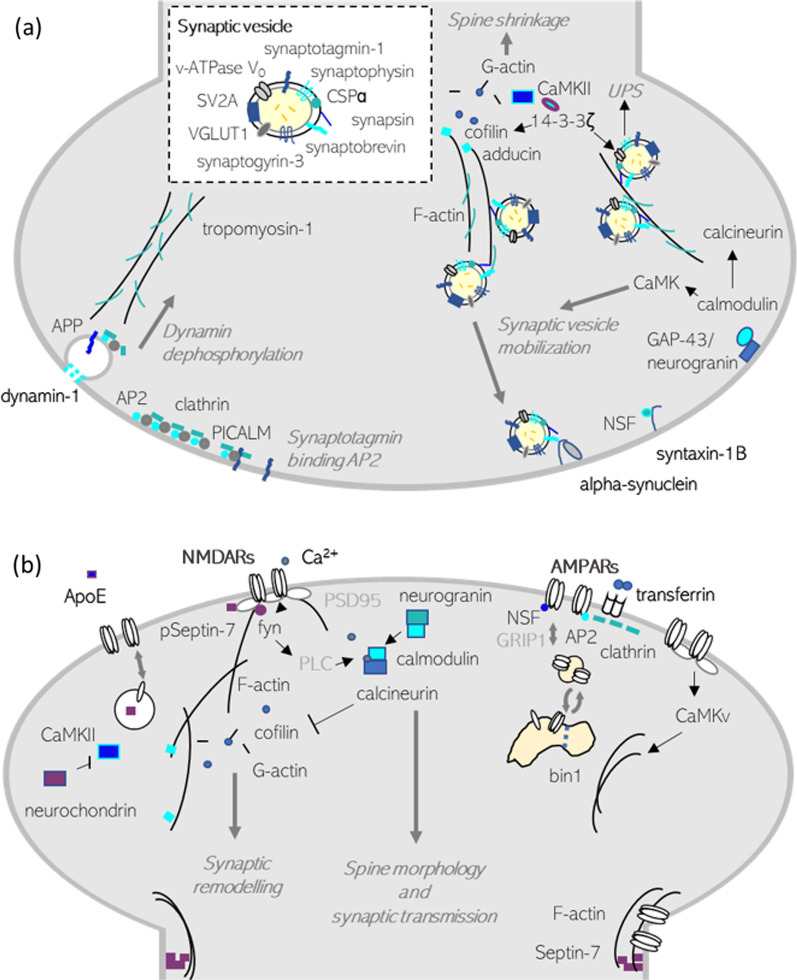
In this review, we discuss the synaptic aspects of Tau pathology occurring during Alzheimer's disease (AD) and how this may relate to memory impairment, a major hallmark of AD. Whilst the clinical diagnosis of AD patients is a loss of working memory and long-term declarative memory, the histological diagnosis is the presence of neurofibrillary tangles of hyperphosphorylated Tau and Amyloid-beta plaques. Tau pathology spreads through synaptically connected neurons to impair synaptic function preceding the formation of neurofibrillary tangles, synaptic loss, axonal retraction and cell death. Alongside synaptic pathology, recent data suggest that Tau has physiological roles in the pre- or post- synaptic compartments. Thus, we have seen a shift in the research focus from Tau as a microtubule-stabilising protein in axons, to Tau as a synaptic protein with roles in accelerating spine formation, dendritic elongation, and in synaptic plasticity coordinating memory pathways. We collate here the myriad of emerging interactions and physiological roles of synaptic Tau, and discuss the current evidence that synaptic Tau contributes to pathology in AD.
在这篇综述中,我们讨论了阿尔茨海默病(AD)期间 Tau 病理学的突触方面,以及这如何与记忆障碍相关,记忆障碍是 AD 的主要标志。虽然 AD 患者的临床诊断是工作记忆和长期陈述性记忆的丧失,但组织学诊断是存在过度磷酸化 Tau 的神经纤维缠结和淀粉样β斑块。Tau 病理学通过突触连接的神经元传播,在形成神经纤维缠结、突触丧失、轴突回缩和细胞死亡之前损害突触功能。除了突触病理学,最近的数据表明 Tau 在突触前或突触后区具有生理作用。因此,我们已经看到研究重点从 Tau 作为轴突中的微管稳定蛋白,转变为 Tau 作为具有加速棘突形成、树突伸长和协调记忆途径的突触可塑性的作用的突触蛋白。我们在这里汇集了突触 Tau 不断涌现的相互作用和生理作用,并讨论了目前的证据表明突触 Tau 导致 AD 中的病理学。