Wu Zheng, Sabel Bernhard A
Institute of Medical Psychology, Medical Faculty, Otto-von-Guericke University of Magdeburg, Magdeburg, Germany.
Data and Knowledge Engineering Group, Faculty of Computer Science, Otto-von-Guericke University of Magdeburg, Magdeburg, Germany.
Sci Rep. 2021 Sep 9;11(1):17940. doi: 10.1038/s41598-021-96971-8.
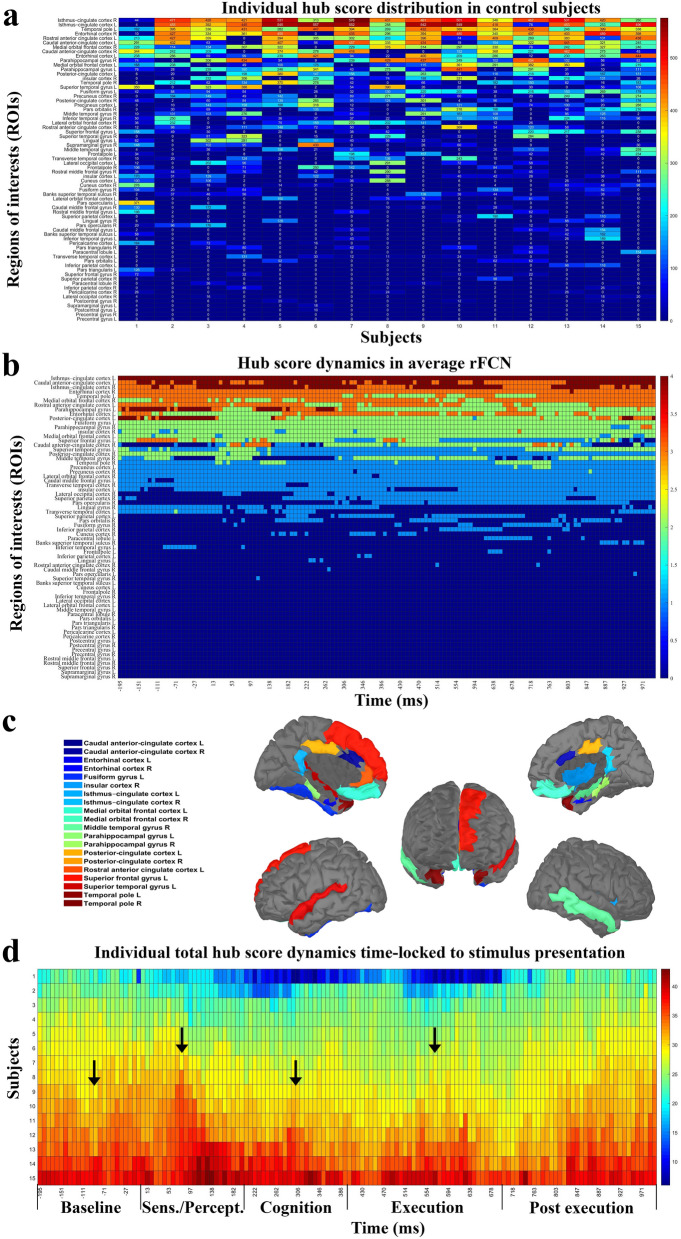
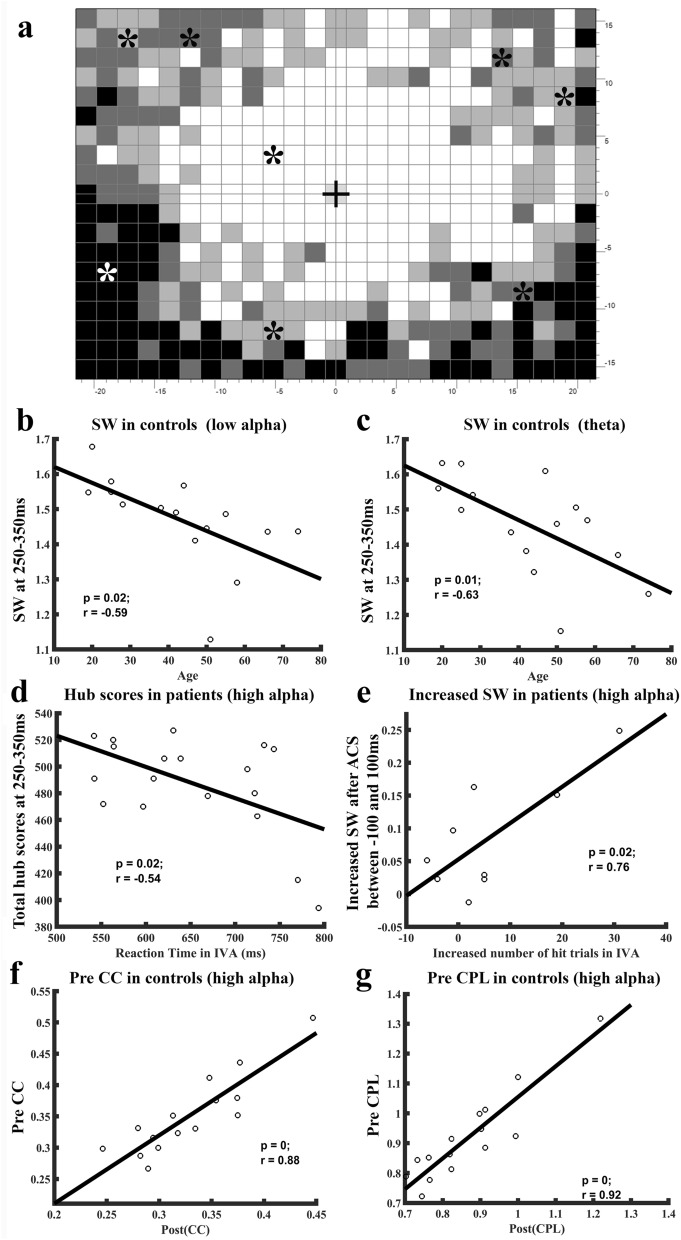
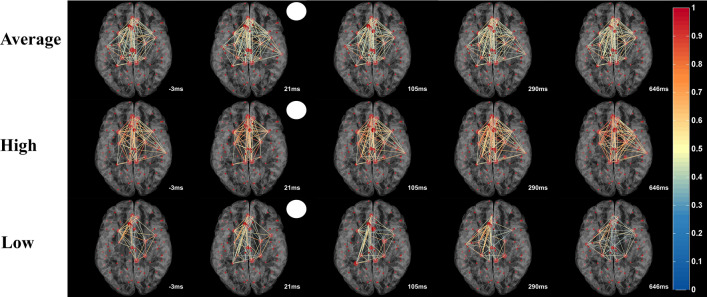
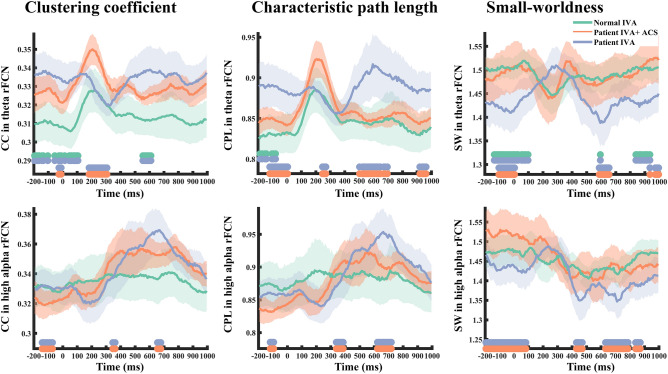
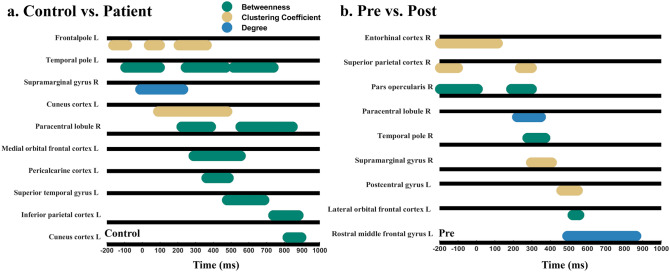
Functional connectivity networks (FCN) are the physiological basis of brain synchronization to integrating neural activity. They are not rigid but can reorganize under pathological conditions or during mental or behavioral states. However, because mental acts can be very fast, like the blink of an eye, we now used the visual system as a model to explore rapid FCN reorganization and its functional impact in normal, abnormal and post treatment vision. EEG-recordings were time-locked to visual stimulus presentation; graph analysis of neurophysiological oscillations were used to characterize millisecond FCN dynamics in healthy subjects and in patients with optic nerve damage before and after neuromodulation with alternating currents stimulation and were correlated with visual performance. We showed that rapid and transient FCN synchronization patterns in humans can evolve and dissolve in millisecond speed during visual processing. This rapid FCN reorganization is functionally relevant because disruption and recovery after treatment in optic nerve patients correlated with impaired and recovered visual performance, respectively. Because FCN hub and node interactions can evolve and dissolve in millisecond speed to manage spatial and temporal neural synchronization during visual processing and recovery, we propose "Brain Spacetime" as a fundamental principle of the human mind not only in visual cognition but also in vision restoration.
功能连接网络(FCN)是大脑同步以整合神经活动的生理基础。它们并非一成不变,而是能够在病理状况下或精神或行为状态期间进行重组。然而,由于心理活动可能非常迅速,比如眨眼,我们现在以视觉系统作为模型,来探究快速的FCN重组及其在正常、异常和治疗后视觉中的功能影响。脑电图记录与视觉刺激呈现进行时间锁定;利用神经生理振荡的图形分析来表征健康受试者以及视神经损伤患者在交流电刺激神经调节前后的毫秒级FCN动态,并将其与视觉表现相关联。我们表明,人类快速且短暂的FCN同步模式在视觉处理过程中能够以毫秒级速度演变和解散。这种快速的FCN重组在功能上具有相关性,因为视神经患者治疗后的破坏和恢复分别与视觉表现受损和恢复相关。由于FCN枢纽和节点的相互作用能够以毫秒级速度演变和解散,以在视觉处理和恢复过程中管理空间和时间神经同步,我们提出“脑时空”作为人类思维的一项基本原则,不仅适用于视觉认知,也适用于视力恢复。