Pilanc Paulina, Wojnicki Kamil, Roura Adria-Jaume, Cyranowski Salwador, Ellert-Miklaszewska Aleksandra, Ochocka Natalia, Gielniewski Bartłomiej, Grzybowski Marcin M, Błaszczyk Roman, Stańczak Paulina S, Dobrzański Paweł, Kaminska Bozena
Laboratory of Molecular Neurobiology, Nencki Institute of Experimental Biology of the Polish Academy of Sciences, Warsaw, Poland.
Postgraduate School of Molecular Medicine, Medical University of Warsaw, Warsaw, Poland.
Front Oncol. 2021 Aug 24;11:703465. doi: 10.3389/fonc.2021.703465. eCollection 2021.
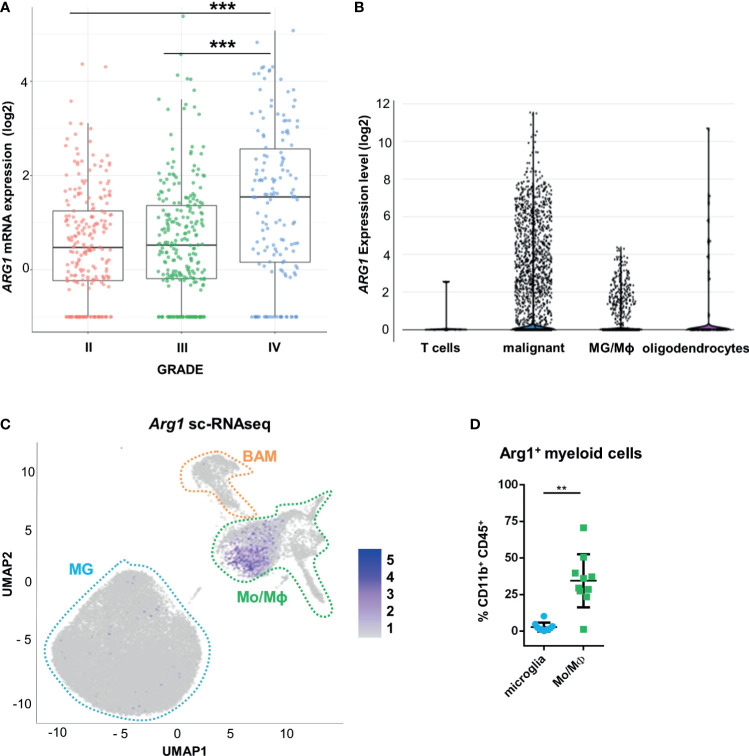
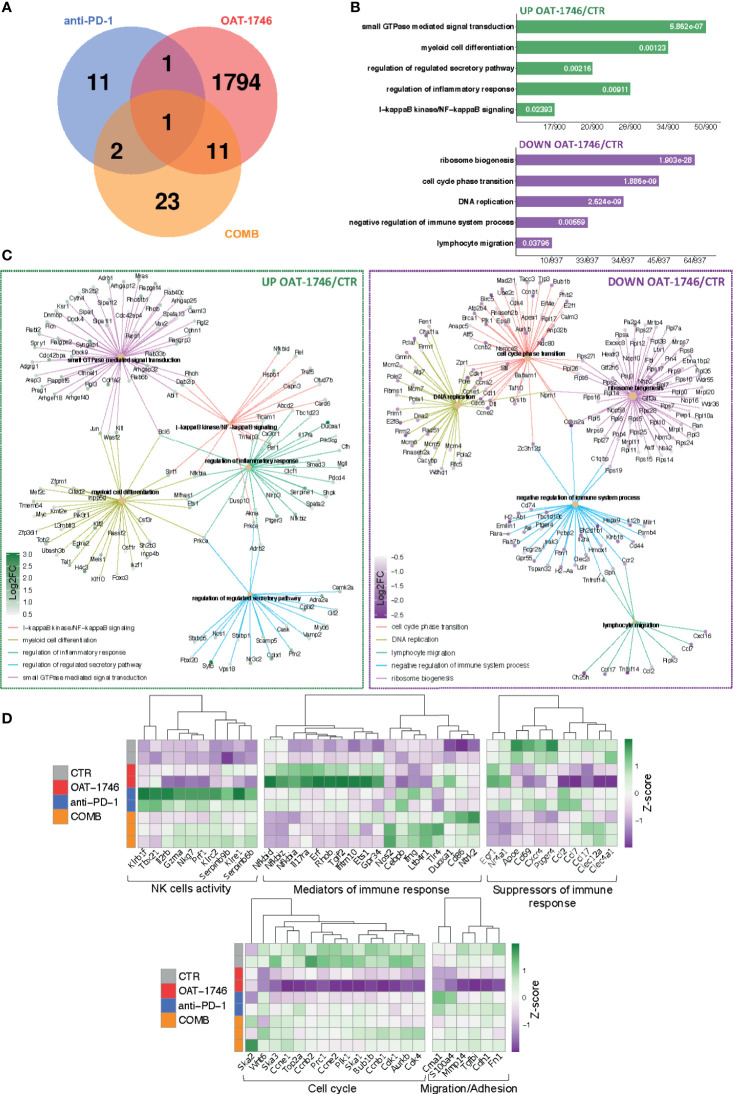
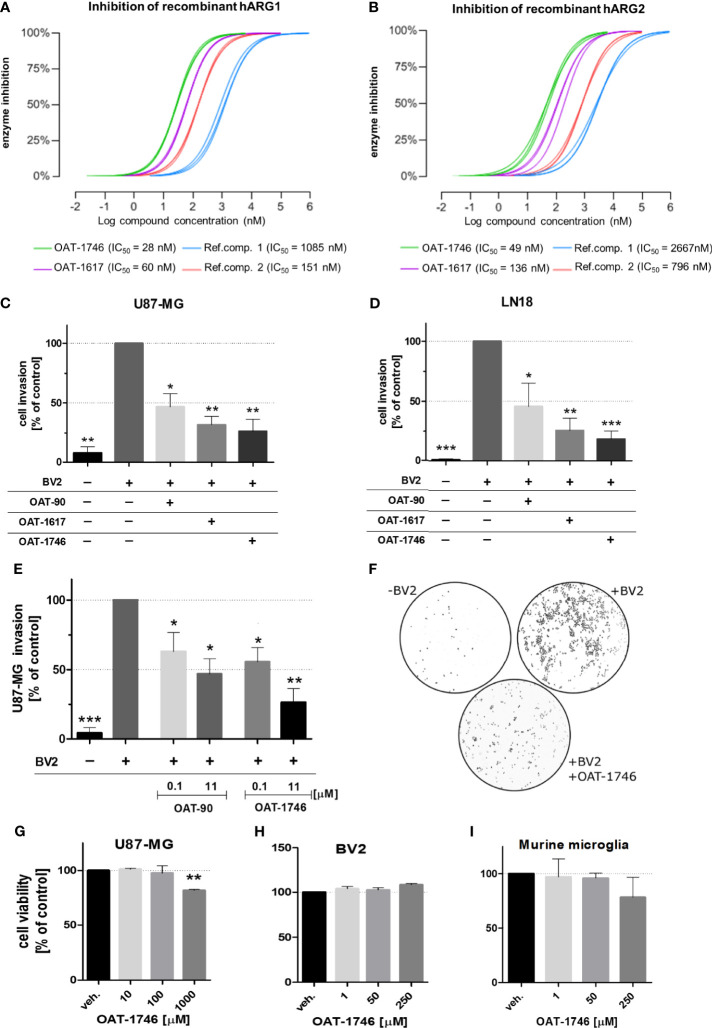
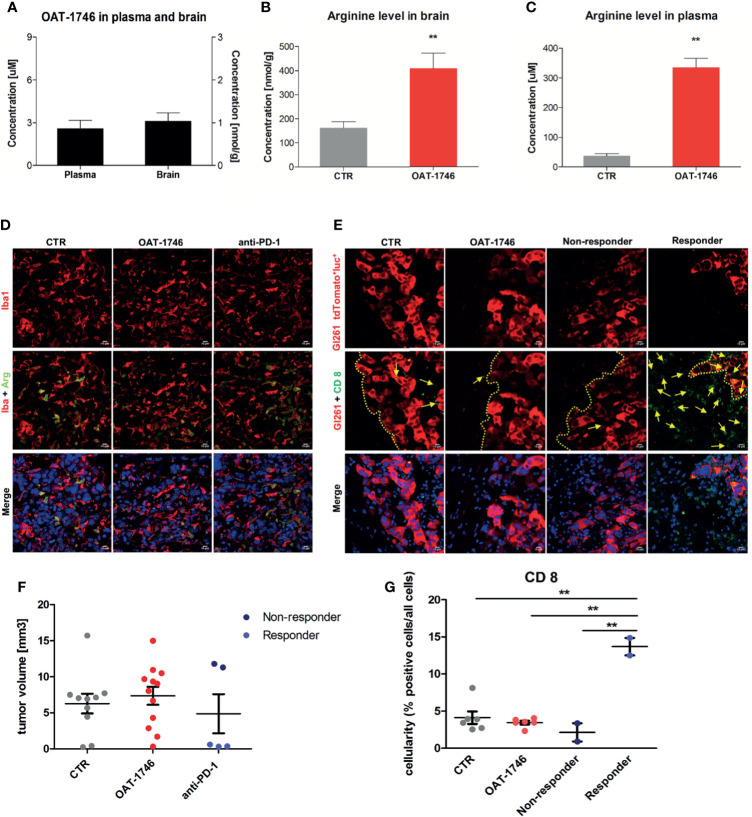
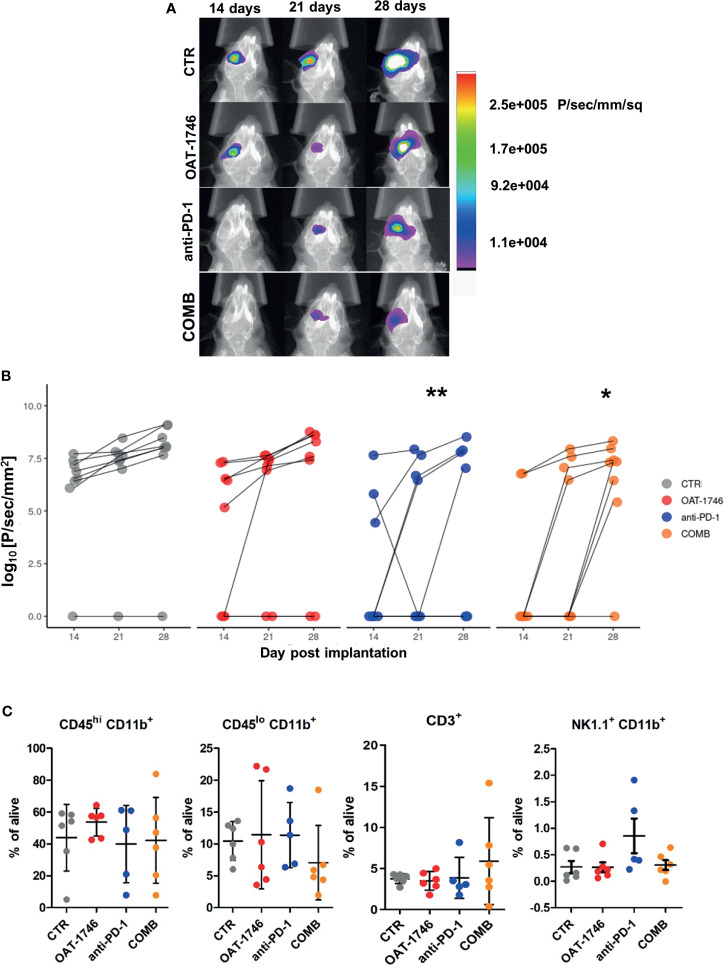
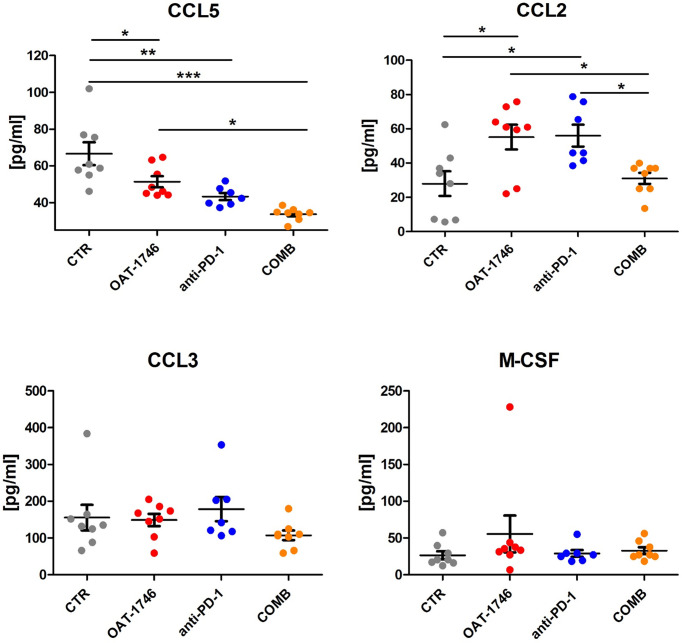
Glioblastomas (GBM) are the common and aggressive primary brain tumors that are incurable by conventional therapies. Immunotherapy with immune checkpoint inhibitors is not effective in GBM patients due to the highly immunosuppressive tumor microenvironment (TME) restraining the infiltration and activation of cytotoxic T cells. Clinical and experimental studies showed the upregulation of expression of the arginase 1 and 2 (ARG1 and ARG2, respectively) in murine and human GBMs. The elevated arginase activity leads to the depletion of L-arginine, an amino-acid required for the proliferation of T lymphocytes and natural killer cells. Inhibition of ARG1/2 in the TME may unblock T cell proliferation and activate effective antitumor responses. To explore the antitumor potential of ARG1/2 inhibition, we analyzed bulk and single-cell RNA sequencing (scRNA-seq) data from human and murine gliomas. We found the upregulation of expression in GBMs, both in tumor cells and in tumor infiltrating microglia and monocytes/macrophages. We employed selective arginase inhibitors to evaluate if ARG1/2 inhibition and exerts the antitumor effects. A novel, selective ARG1/2 inhibitor - OAT-1746 blocked microglia-dependent invasion of U87-MG and LN18 glioma cells in a Matrigel invasion assay better than reference compounds, without affecting the cell viability. OAT-1746 effectively crossed the blood brain barrier in mice and increased arginine levels in the brains of GL261 glioma bearing mice. We evaluated its antitumor efficacy against GL261 intracranial gliomas as a monotherapy and in combination with the PD-1 inhibition. The oral treatment with OAT-1746 did not affect the immune composition of TME, it induced profound transcriptomic changes in CD11b cells immunosorted from tumor-bearing brains as demonstrated by RNA sequencing analyses. Treatment with OAT-1746 modified the TME resulting in reduced glioma growth and increased antitumor effects of the anti-PD-1 antibody. Our findings provide the evidence that inhibition of ARG1/2 activity in tumor cells and myeloid cells in the TME unblocks antitumor responses in myeloid cells and NK cells, and improves the efficacy of the PD-1 inhibition.
胶质母细胞瘤(GBM)是常见且侵袭性强的原发性脑肿瘤,传统疗法无法治愈。由于高度免疫抑制的肿瘤微环境(TME)抑制细胞毒性T细胞的浸润和激活,免疫检查点抑制剂免疫疗法对GBM患者无效。临床和实验研究表明,在小鼠和人类GBM中,精氨酸酶1和2(分别为ARG1和ARG2)的表达上调。精氨酸酶活性升高导致L-精氨酸耗竭,而L-精氨酸是T淋巴细胞和自然杀伤细胞增殖所需的氨基酸。抑制TME中的ARG1/2可能会解除对T细胞增殖的阻滞并激活有效的抗肿瘤反应。为了探索抑制ARG1/2的抗肿瘤潜力,我们分析了来自人类和小鼠胶质瘤的批量和单细胞RNA测序(scRNA-seq)数据。我们发现GBM中肿瘤细胞以及肿瘤浸润小胶质细胞和单核细胞/巨噬细胞中表达上调。我们使用选择性精氨酸酶抑制剂来评估抑制ARG1/2是否能发挥抗肿瘤作用。一种新型的选择性ARG1/2抑制剂——OAT-1746在基质胶侵袭试验中比参考化合物更能有效阻断小胶质细胞依赖的U87-MG和LN18胶质瘤细胞侵袭,且不影响细胞活力。OAT-1746能有效穿过小鼠血脑屏障,并提高荷GL261胶质瘤小鼠大脑中的精氨酸水平。我们评估了其作为单一疗法以及与PD-1抑制联合使用时对GL261颅内胶质瘤的抗肿瘤疗效。口服OAT-1746不影响TME的免疫组成,RNA测序分析表明,它在从荷瘤大脑中免疫分选的CD11b细胞中诱导了深刻的转录组变化。用OAT-1746治疗可改变TME,导致胶质瘤生长减缓,并增强抗PD-1抗体的抗肿瘤作用。我们的研究结果证明,抑制TME中肿瘤细胞和髓样细胞中的ARG1/2活性可解除髓样细胞和NK细胞中的抗肿瘤反应,并提高PD-1抑制的疗效。