• 文献检索
  • 文档翻译
  • 深度研究
  • 学术资讯
  • Suppr Zotero 插件Zotero 插件
  • 邀请有礼
  • 套餐&价格
  • 历史记录
应用&插件
Suppr Zotero 插件Zotero 插件浏览器插件Mac 客户端Windows 客户端微信小程序
定价
高级版会员购买积分包购买API积分包
服务
文献检索文档翻译深度研究API 文档MCP 服务
关于我们
关于 Suppr公司介绍联系我们用户协议隐私条款
关注我们

Suppr 超能文献

核心技术专利:CN118964589B侵权必究
粤ICP备2023148730 号-1Suppr @ 2026

文献检索

告别复杂PubMed语法,用中文像聊天一样搜索,搜遍4000万医学文献。AI智能推荐,让科研检索更轻松。

立即免费搜索

文件翻译

保留排版,准确专业,支持PDF/Word/PPT等文件格式,支持 12+语言互译。

免费翻译文档

深度研究

AI帮你快速写综述,25分钟生成高质量综述,智能提取关键信息,辅助科研写作。

立即免费体验

抱歉,但不抱歉:不同类型的道歉和自我监控对非语言行为的影响。

Sorry, Not Sorry: Effects of Different Types of Apologies and Self-Monitoring on Non-verbal Behaviors.

作者信息

Yamamoto Kyoko, Kimura Masanori, Osaka Miki

机构信息

Department of Psychology, Kobe Gakuin University, Kobe, Japan.

Department of Psychological and Behavioral Sciences, Kobe College, Nishinomiya, Japan.

出版信息

Front Psychol. 2021 Aug 26;12:689615. doi: 10.3389/fpsyg.2021.689615. eCollection 2021.

DOI:10.3389/fpsyg.2021.689615
PMID:34512447
原文链接:https://pmc.ncbi.nlm.nih.gov/articles/PMC8428520/
Abstract

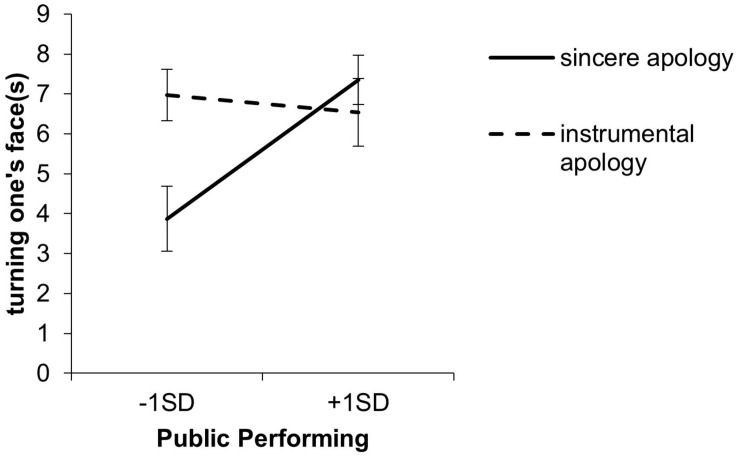
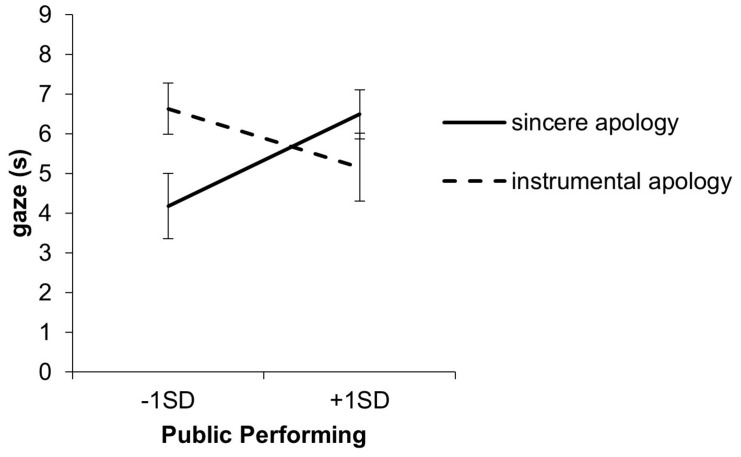
This study examines the effects of different types of apologies and individual differences in self-monitoring on non-verbal apology behaviors involving a server apologizing to a customer. Apologies divide into sincere apologies that reflect genuine recognition of fault, and instrumental apologies, made for achieving a personal goal such as avoiding punishment or rejection by others. Self-monitoring (public-performing and other-directedness) were also examined. Fifty-three female undergraduate students participated in the experiment. Participants were assigned randomly to either a sincere apology condition or an instrumental apology condition. They watched the film clip of the communication between a customer and server and then role-played how they would apologize if they were the server. Participants' non-verbal behavior during the role-play was videotaped. The results showed an interaction between the apology condition and self-monitoring on non-verbal behaviors. When public-performing was low, gaze avoidance was more likely to occur with a sincere apology than an instrumental apology. There was no difference when the public-performing was high. Facial displays of apology were apparent in the instrumental apology compared to the sincere apology. This tendency became more conspicuous with increased public-performing. Our results indicated that the higher the public-performing, the more participants tried to convey the feeling of apology by combining a direct gaze and facial displays in an instrumental apology. On the other hand, results suggest that lower levels of public-performing elicited less immediacy in offering a sincere apology. Further studies are needed to determine whether these results apply to other conflict resolution situations.

摘要

本研究考察了不同类型的道歉以及自我监控方面的个体差异对涉及服务员向顾客道歉的非言语道歉行为的影响。道歉分为反映对过错真诚认知的真诚道歉和为实现个人目标(如避免他人惩罚或拒绝)而做出的工具性道歉。同时也考察了自我监控(在公众场合的表现和关注他人)。五十三名本科女生参与了该实验。参与者被随机分配到真诚道歉组或工具性道歉组。她们观看了一段顾客与服务员交流的视频片段,然后角色扮演如果自己是服务员会如何道歉。角色扮演过程中参与者的非言语行为被录像。结果显示道歉类型和自我监控在非言语行为上存在交互作用。当在公众场合的表现较低时,真诚道歉比工具性道歉更可能出现回避目光的情况。当在公众场合的表现较高时则没有差异。与真诚道歉相比,工具性道歉中明显有更多道歉的面部表情。随着在公众场合表现的增加,这种趋势变得更加明显。我们的结果表明,在工具性道歉中,在公众场合的表现越高,参与者越试图通过直视和面部表情来传达歉意。另一方面,结果表明在公众场合表现较低时,真诚道歉的即时性较低。需要进一步研究来确定这些结果是否适用于其他冲突解决情境。
https://cdn.ncbi.nlm.nih.gov/pmc/blobs/e38d/8428520/d10ffe4c7485/fpsyg-12-689615-g002.jpg
https://cdn.ncbi.nlm.nih.gov/pmc/blobs/e38d/8428520/fc57b1c07e07/fpsyg-12-689615-g001.jpg
https://cdn.ncbi.nlm.nih.gov/pmc/blobs/e38d/8428520/d10ffe4c7485/fpsyg-12-689615-g002.jpg
https://cdn.ncbi.nlm.nih.gov/pmc/blobs/e38d/8428520/fc57b1c07e07/fpsyg-12-689615-g001.jpg
https://cdn.ncbi.nlm.nih.gov/pmc/blobs/e38d/8428520/d10ffe4c7485/fpsyg-12-689615-g002.jpg

相似文献

1
Sorry, Not Sorry: Effects of Different Types of Apologies and Self-Monitoring on Non-verbal Behaviors.抱歉,但不抱歉:不同类型的道歉和自我监控对非语言行为的影响。
Front Psychol. 2021 Aug 26;12:689615. doi: 10.3389/fpsyg.2021.689615. eCollection 2021.
2
Costly group apology communicates a group's sincere "intention".昂贵的群体道歉传达了群体真诚的“意图”。
Soc Neurosci. 2020 Apr;15(2):244-254. doi: 10.1080/17470919.2019.1697745. Epub 2019 Nov 29.
3
"If your feelings were hurt, I'm sorry…": How Third-Year Medical Students Observe, Learn From, and Engage in Apologies.“如果你的感受受到了伤害,我很抱歉……”:三年级医学生如何观察、学习和参与道歉。
J Gen Intern Med. 2021 May;36(5):1352-1358. doi: 10.1007/s11606-020-06263-6. Epub 2020 Oct 6.
4
The Social Consequences of Frequent Versus Infrequent Apologizing.频繁道歉与偶尔道歉的社会后果。
Pers Soc Psychol Bull. 2023 Mar;49(3):331-343. doi: 10.1177/01461672211065286. Epub 2021 Dec 29.
5
The power of apology: how saying sorry can leave both patients and nurses feeling better.
Nurs Times. 2009;105(44):16-9.
6
When Saying Sorry May Not Help: The Impact of Apologies on Social Rejections.当道歉可能无济于事时:道歉对社交排斥的影响。
Front Psychol. 2017 Aug 11;8:1375. doi: 10.3389/fpsyg.2017.01375. eCollection 2017.
7
Two is better than one: Apologies from two robots are preferred.两个总比一个好:两个机器人的道歉比一个机器人的道歉更受欢迎。
PLoS One. 2023 Feb 22;18(2):e0281604. doi: 10.1371/journal.pone.0281604. eCollection 2023.
8
What happens when groups say sorry: the effect of intergroup apologies on their recipients.群体道歉时会发生什么:群体间道歉对接受者的影响。
Pers Soc Psychol Bull. 2008 Apr;34(4):474-87. doi: 10.1177/0146167207311283.
9
How voluntariness of apologies affects actual and hypothetical victims' perceptions of the offender.道歉的自愿性如何影响实际和假设受害者对冒犯者的看法。
J Soc Psychol. 2012 Nov-Dec;152(6):727-45. doi: 10.1080/00224545.2012.697079.
10
Influence of apologies and trait hostility on recovery from anger.道歉与特质性敌意对愤怒情绪恢复的影响。
J Behav Med. 2006 Aug;29(4):347-58. doi: 10.1007/s10865-006-9062-7. Epub 2006 Jul 15.

引用本文的文献

1
An investigation of how gender shapes the appearance and judgment of apologetic faces.关于性别如何塑造歉意表情的外观及判断的一项调查。
Group Process Intergroup Relat. 2025 Mar 22;28(6):1193-1212. doi: 10.1177/13684302251322754. eCollection 2025 Sep.
2
British Cardiovascular Intervention Society Training Culture Focus Group Position Statement: Bringing Trainees and Trainers Together.英国心血管介入学会培训文化焦点小组立场声明:拉近学员与培训师的距离。
Interv Cardiol. 2024 Nov 4;19:e22. doi: 10.15420/icr.2024.07. eCollection 2024.
3
How to Tackle Mental Fatigue: A Systematic Review of Potential Countermeasures and Their Underlying Mechanisms.

本文引用的文献

1
Embodied remorse: Physical displays of remorse increase positive responses to public apologies, but have negligible effects on forgiveness.具身悔恨:悔恨的身体表现会增加公众对道歉的积极反应,但对宽恕几乎没有影响。
J Pers Soc Psychol. 2020 Aug;119(2):367-389. doi: 10.1037/pspi0000208. Epub 2019 Sep 12.
2
The Eyes Are the Windows to the Mind: Direct Eye Gaze Triggers the Ascription of Others' Minds.眼睛是心灵的窗户:直接的目光接触会引发对他人心理状态的归因。
Pers Soc Psychol Bull. 2016 Dec;42(12):1666-1677. doi: 10.1177/0146167216669124. Epub 2016 Oct 13.
3
Strong, but Wrong: Lay People's and Police Officers' Beliefs about Verbal and Nonverbal Cues to Deception.
如何应对心理疲劳:潜在对策及其潜在机制的系统评价。
Sports Med. 2022 Sep;52(9):2129-2158. doi: 10.1007/s40279-022-01678-z. Epub 2022 May 11.
有力却错误:外行人与警察对欺骗的言语和非言语线索的信念
PLoS One. 2016 Jun 3;11(6):e0156615. doi: 10.1371/journal.pone.0156615. eCollection 2016.
4
Neurophysiology of spontaneous facial expressions: I. Motor control of the upper and lower face is behaviorally independent in adults.自发面部表情的神经生理学:I. 成人上下面部的运动控制在行为上是独立的。
Cortex. 2016 Mar;76:28-42. doi: 10.1016/j.cortex.2016.01.001. Epub 2016 Jan 15.
5
A contemporary taxometric analysis of the latent structure of self-monitoring.自我监控潜在结构的当代税ometric分析。 (注:“taxometric”可能是一个特定领域术语,这里保留英文,具体含义可能需结合专业背景进一步理解,常规翻译为“税ometric” )
Psychol Assess. 2015 Jun;27(2):353-64. doi: 10.1037/pas0000030. Epub 2015 Jan 5.
6
Crocodile tears: facial, verbal and body language behaviours associated with genuine and fabricated remorse.鳄鱼的眼泪:与真正的和虚假的悔恨相关的面部、言语和身体语言行为。
Law Hum Behav. 2012 Feb;36(1):51-9. doi: 10.1037/h0093950.
7
A WORLD OF LIES.一个充满谎言的世界。
J Cross Cult Psychol. 2006 Jan;37(1):60-74. doi: 10.1177/0022022105282295.
8
The road to forgiveness: a meta-analytic synthesis of its situational and dispositional correlates.宽恕之路:情境和性格相关性的元分析综合
Psychol Bull. 2010 Sep;136(5):894-914. doi: 10.1037/a0019993.
9
Reading between the lies: identifying concealed and falsified emotions in universal facial expressions.洞察表情背后的真相:识别通用面部表情中隐藏和伪造的情绪
Psychol Sci. 2008 May;19(5):508-14. doi: 10.1111/j.1467-9280.2008.02116.x.
10
From flawed self-assessment to blatant whoppers: the utility of voluntary and involuntary behavior in detecting deception.从有缺陷的自我评估到公然的谎言:自愿和非自愿行为在检测欺骗中的效用。
Behav Sci Law. 2006;24(5):673-86. doi: 10.1002/bsl.729.