Department of Respiratory and Critical Care Medicine, Shanghai General Hospital, Shanghai Jiao Tong University School of Medicine, Shanghai, China.
Department of Gastroenterology, Shanghai General Hospital, Shanghai Jiao Tong University School of Medicine, Shanghai, China.
Front Public Health. 2021 Aug 26;9:712190. doi: 10.3389/fpubh.2021.712190. eCollection 2021.
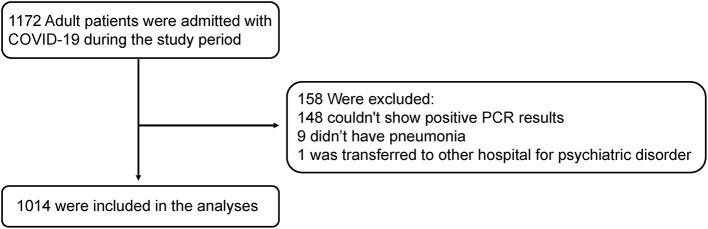
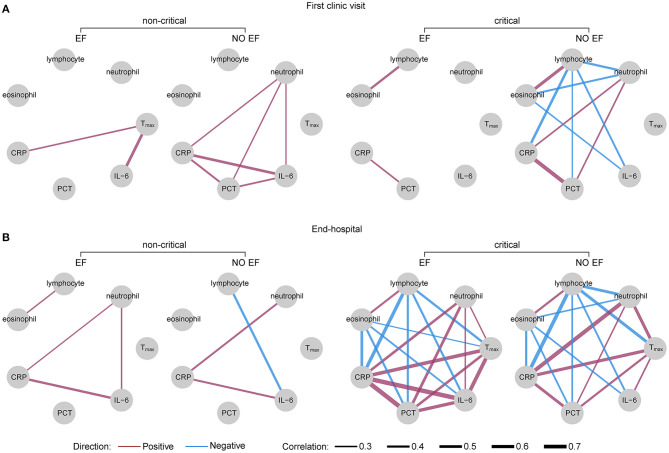
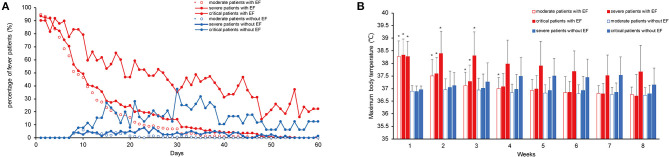
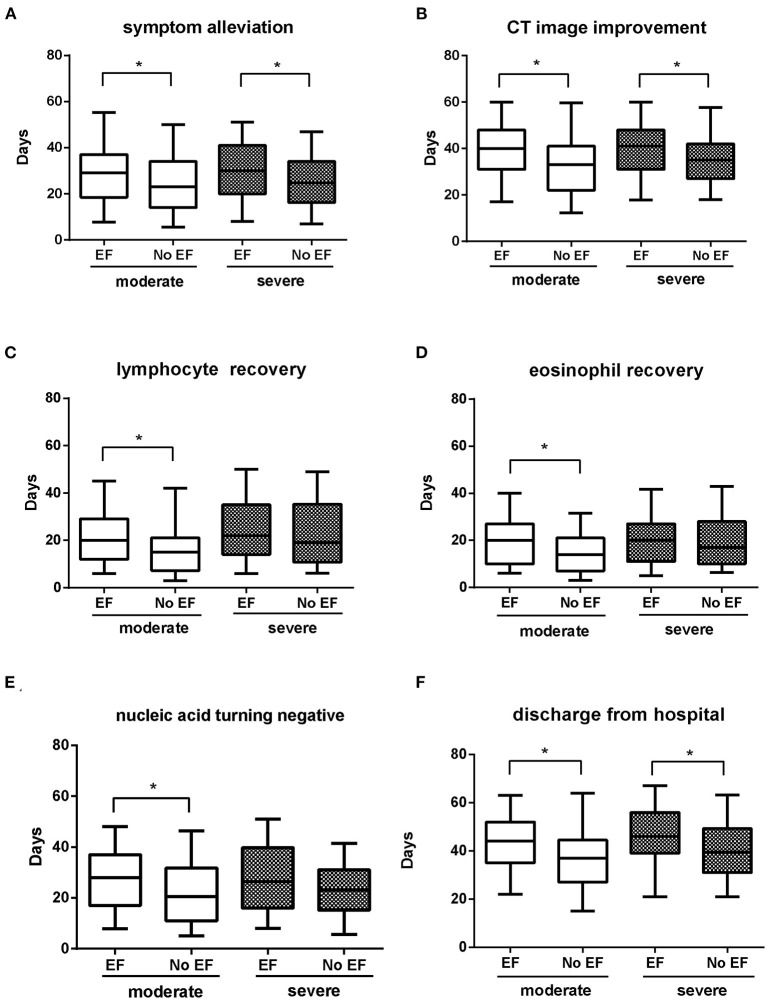
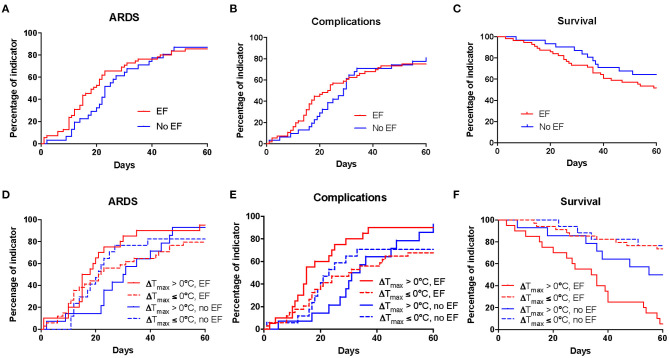
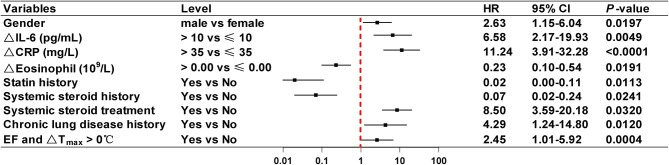
Fever is one of the typical symptoms of coronavirus disease (COVID-19). We aimed to investigate the association between early fever (EF) and clinical outcomes in COVID-19 patients. A total of 1,014 COVID-19 patients at the Leishenshan Hospital were enrolled and classified into the EF and non-EF groups based on whether they had fever within 5 days of symptom onset. Risk factors for clinical outcomes in patients with different levels of disease severity were analyzed using multivariable analyses. Time from symptom onset to symptom alleviation, CT image improvement, and discharge were longer for patients with moderate and severe disease in the EF group than in the non-EF group. Multivariable analysis showed that sex, EF, eosinophil number, C-reactive protein, and IL-6 levels were positively correlated with the time from symptom onset to hospital discharge in moderate cases. The EF patients showed no significant differences in the development of acute respiratory distress syndrome, compared with the non-EF patients. The Kaplan-Meier curve showed no obvious differences in survival between the EF and non-EF patients. However, EF patients with increased temperature showed markedly lower survival than the non-EF patients with increased temperature. EF had no significant impact on the survival of critically ill patients, while an increase in temperature was identified as an independent risk factor. EF appears to be a predictor of longer recovery time in moderate/severe COVID-19 infections. However, its value in predicting mortality needs to be considered for critically ill patients with EF showing increasing temperature.
发热是冠状病毒病(COVID-19)的典型症状之一。我们旨在探讨 COVID-19 患者早期发热(EF)与临床结局的关系。共纳入 1014 例来自雷神山医院的 COVID-19 患者,根据症状出现后 5 天内是否发热,将其分为 EF 组和非 EF 组。采用多变量分析分析不同严重程度患者的临床结局的危险因素。EF 组中中度和重度疾病患者从症状出现到症状缓解、CT 图像改善和出院的时间均长于非 EF 组。多变量分析显示,性别、EF、嗜酸性粒细胞数、C 反应蛋白和 IL-6 水平与中度患者从症状出现到出院的时间呈正相关。EF 患者与非 EF 患者相比,急性呼吸窘迫综合征的发生率无明显差异。Kaplan-Meier 曲线显示 EF 组和非 EF 组患者的生存率无明显差异。然而,EF 组中体温升高的患者的生存率明显低于非 EF 组中体温升高的患者。EF 对危重症患者的生存率无显著影响,而体温升高则被确定为独立的危险因素。EF 似乎是中度/重度 COVID-19 感染恢复时间延长的预测因素。然而,对于 EF 且体温升高的危重症患者,EF 预测死亡率的价值需要进一步考虑。