Department of Molecular Machines and Signaling, Max Planck Institute of Biochemistry, Martinsried, Germany.
Department of Structural Cell Biology, Max Planck Institute of Biochemistry, Martinsried, Germany.
Nat Chem Biol. 2021 Oct;17(10):1075-1083. doi: 10.1038/s41589-021-00858-8. Epub 2021 Sep 13.
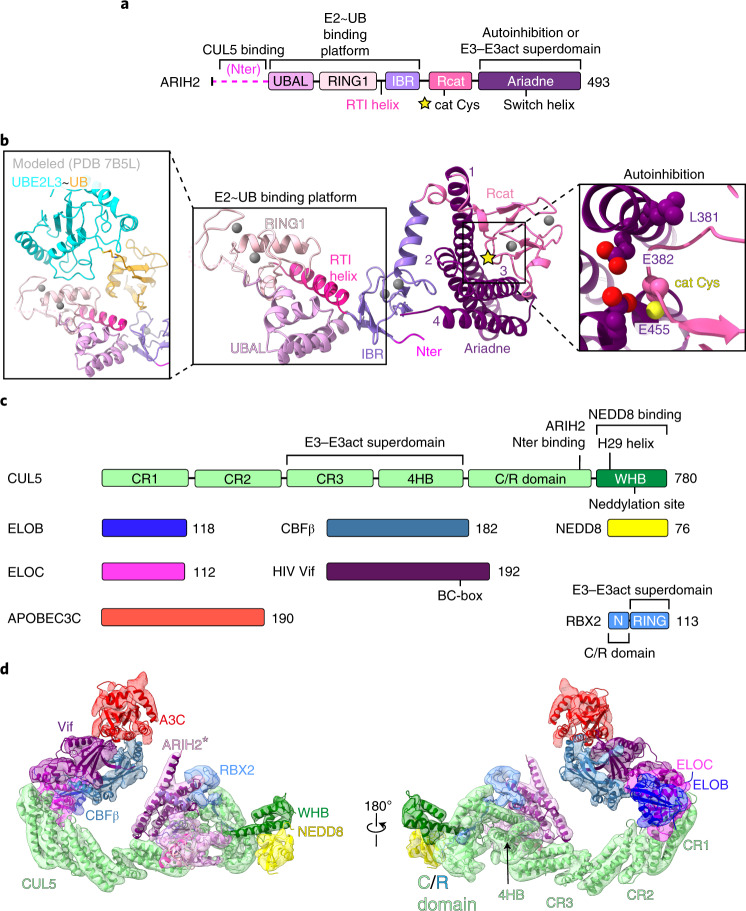
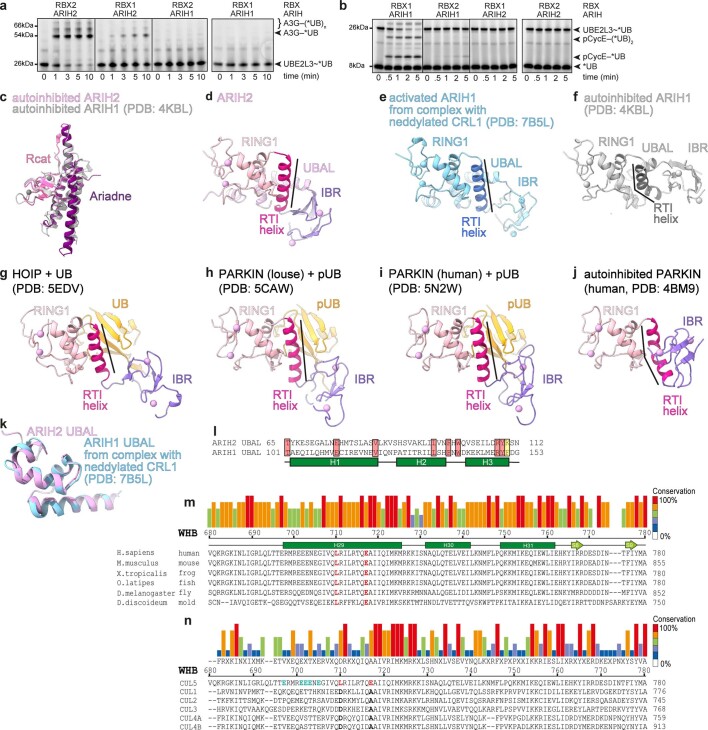
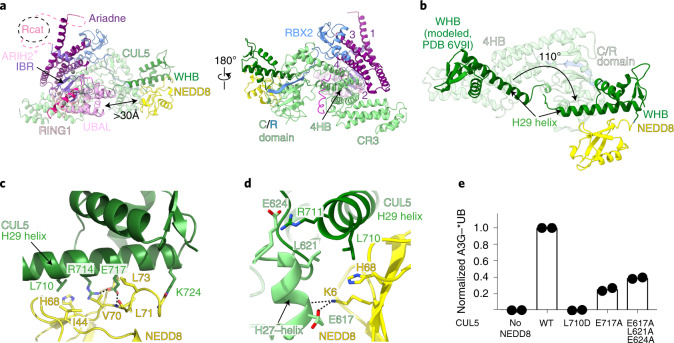
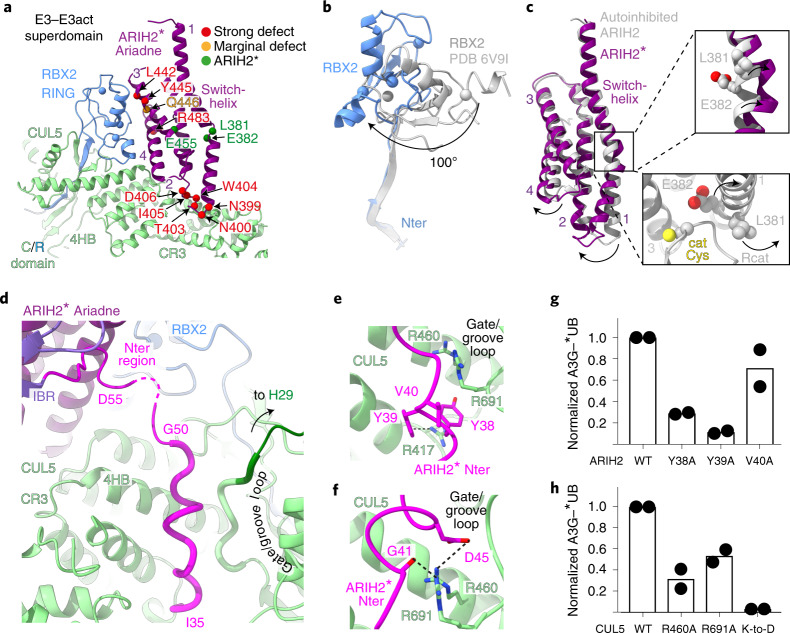
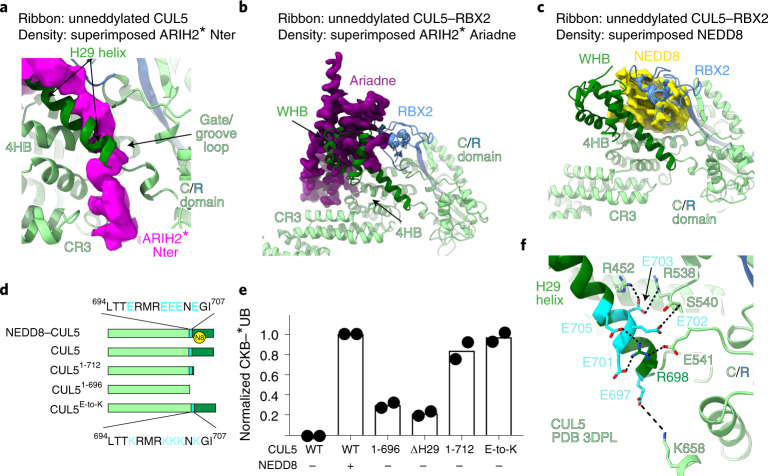
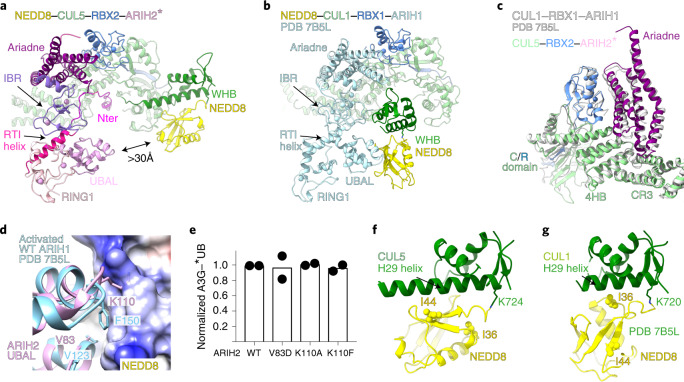
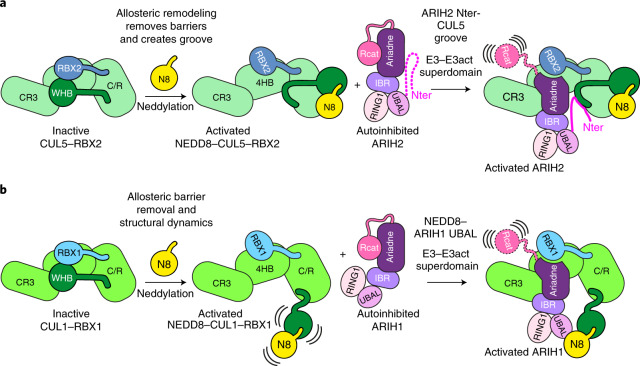
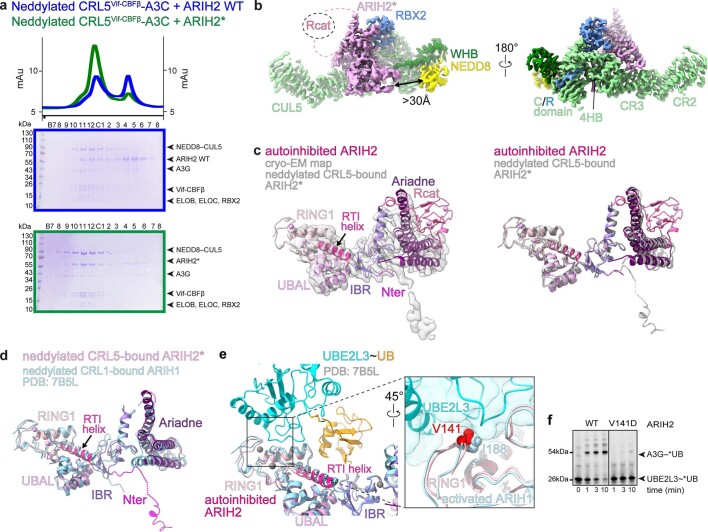
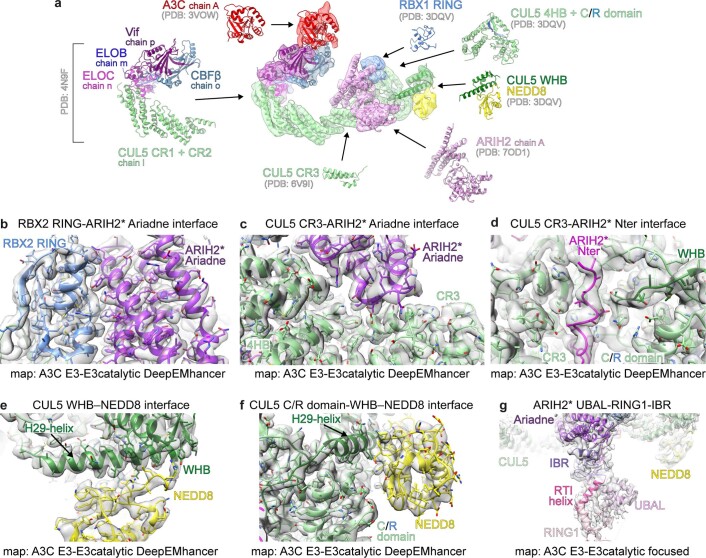
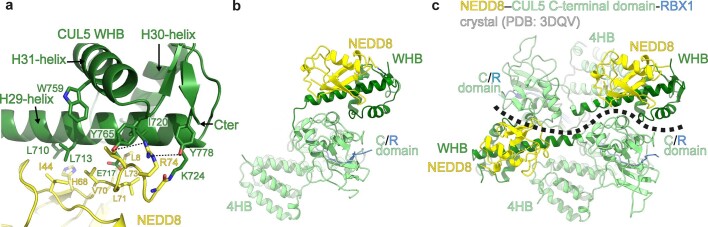
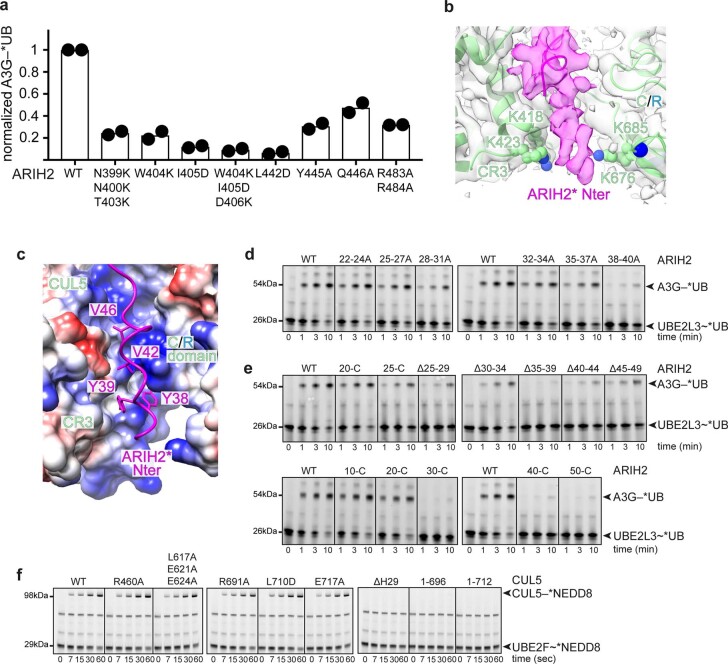
An emerging mechanism of ubiquitylation involves partnering of two distinct E3 ligases. In the best-characterized E3-E3 pathways, ARIH-family RING-between-RING (RBR) E3s ligate ubiquitin to substrates of neddylated cullin-RING E3s. The E3 ARIH2 has been implicated in ubiquitylation of substrates of neddylated CUL5-RBX2-based E3s, including APOBEC3-family substrates of the host E3 hijacked by HIV-1 virion infectivity factor (Vif). However, the structural mechanisms remained elusive. Here structural and biochemical analyses reveal distinctive ARIH2 autoinhibition, and activation on assembly with neddylated CUL5-RBX2. Comparison to structures of E3-E3 assemblies comprising ARIH1 and neddylated CUL1-RBX1-based E3s shows cullin-specific regulation by NEDD8. Whereas CUL1-linked NEDD8 directly recruits ARIH1, CUL5-linked NEDD8 does not bind ARIH2. Instead, the data reveal an allosteric mechanism. NEDD8 uniquely contacts covalently linked CUL5, and elicits structural rearrangements that unveil cryptic ARIH2-binding sites. The data reveal how a ubiquitin-like protein induces protein-protein interactions indirectly, through allostery. Allosteric specificity of ubiquitin-like protein modifications may offer opportunities for therapeutic targeting.
一种新兴的泛素化机制涉及两种不同 E3 连接酶的配对。在研究最充分的 E3-E3 途径中,ARIH 家族 RING 之间 RING(RBR)E3 将泛素连接到 neddylated 环结构域 RING 型 E3 的底物上。E3 ARIH2 已被牵连到 neddylated CUL5-RBX2 为基础的 E3 的底物的泛素化,包括 HIV-1 病毒感染因子(Vif)劫持的宿主 E3 的 APOBEC3 家族底物。然而,结构机制仍然难以捉摸。这里的结构和生化分析揭示了独特的 ARIH2 自动抑制,以及与 neddylated CUL5-RBX2 组装时的激活。与包括 ARIH1 和 neddylated CUL1-RBX1 为基础的 E3 的 E3-E3 组装结构的比较表明,NEDD8 对 cullin 具有特异性调节。虽然 CUL1 连接的 NEDD8 直接招募 ARIH1,但 CUL5 连接的 NEDD8 不与 ARIH2 结合。相反,数据显示了一种变构机制。NEDD8 独特地接触共价连接的 CUL5,并引发结构重排,揭示出隐藏的 ARIH2 结合位点。该数据揭示了泛素样蛋白如何通过变构间接诱导蛋白质-蛋白质相互作用。泛素样蛋白修饰的变构特异性可能为治疗靶向提供机会。